Video: Ancient corn variety that makes its own nitrogen could lead to more sustainable farming

cor
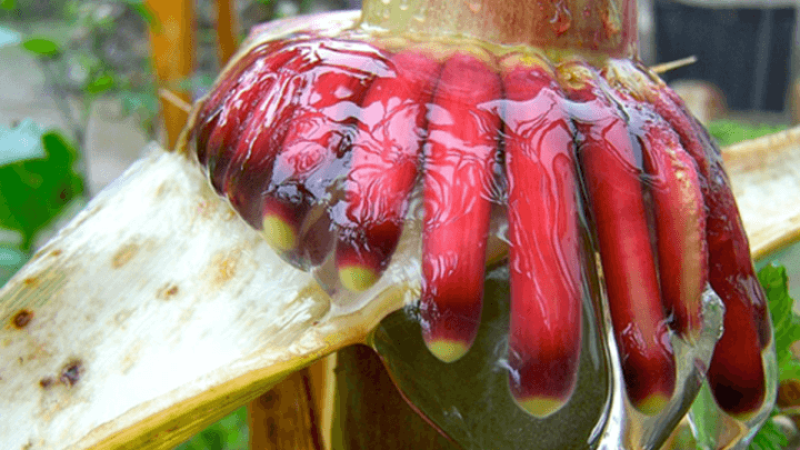
Ancient corn variety that makes its own nitrogen could lead to more sustainable farming. Image Credit: ALAN BENNETT / UC DAVIS

In the 1980s, Howard-Yana Shapiro, now chief agricultural officer at Mars, Incorporated, was looking for new kinds of corn. He was in the Mixes District of Oaxaca in southern Mexico, the area where the precursors to maize (aka corn) first evolved, when he located some of the strangest corn ever seen. Not only was it 16 to 20 feet tall …. Yet it grew to those impressive heights in what can charitably be called poor soil, without the use of fertilizer. But the strangest part of the corn was its aerial roots–green and rose-colored, finger-like protrusions sticking out of the corn’s stalk, dripping with a clear, syrupy gel.

Shapiro suspected that …. the roots allowed this unique variety of corn, dubbed Sierra Mixe and locally bred over hundreds or even thousands of years, to produce its own nitrogen, an essential nutrient for crops ….

Now, after over a decade of field research and genetic analysis, the team has published their work in the journal PLOS Biology. If the nitrogen-fixing trait could be bred into conventional corn, allowing it to produce even a portion of its own nitrogen, it could reduce the cost of farming, reduce greenhouse gas emissions and halt one of the major pollutants in lakes, rivers and the ocean ….

Read full, original article: The Corn of the Future Is Hundreds of Years Old and Makes Its Own Mucus

{{ reviewsTotal }}{{ options.labels.singularReviewCountLabel }}
{{ reviewsTotal }}{{ options.labels.pluralReviewCountLabel }}
{{ options.labels.newReviewButton }}
{{ userData.canReview.message }}

Related Articles

Infographic: Global regulatory and health research agencies on whether glyphosate causes cancer

Infographic: Global regulatory and health research agencies on whether glyphosate causes cancer

Does glyphosate—the world's most heavily-used herbicide—pose serious harm to humans? Is it carcinogenic? Those issues are of both legal and ...

Most Popular

Screenshot-2026-04-22-at-12.21.32-PM
Viewpoint: Why the retracted Monsanto glyphosate study doesn’t change the science—the world’s most popular herbicide is safe 
ChatGPT-Image-Apr-16-2026-02_56_53-PM
Financial incentives, over diagnosis, and weak oversight: Autism claims are driving up Medicare costs
Picture1
The FDA couldn’t find a vaccine safety crisis, so it buried its own research
global warming
‘Implausible’: Top climate scientists reject worst-case scenario—soaring temperatures and fast-rising sea levels
ChatGPT-Image-May-1-2026-11_42_59-AM-2
Viewpoint: NAD is the wellness grifters latest evidence-lite longevity fad. At least the mice are impressed.

Sorry. No data so far.

glp menu logo outlined

Get news on human & agricultural genetics and biotechnology delivered to your inbox.