Teen farmer challenges myths about GMOs, ‘factory farming’

d a fc a e fe

Growing up on a production agriculture farm …. I help to produce the food that we enjoy on a daily basis. On my family’s farm, we raise yellow dent corn (the hard corn that you wouldn’t want to eat off the cob), soybeans, wheat and occasionally oats or forage crops, along with beef cattle.

[Editor’s note: Author Avery Plote is is a senior at Leland High School, a public school in Leland, Illinois]

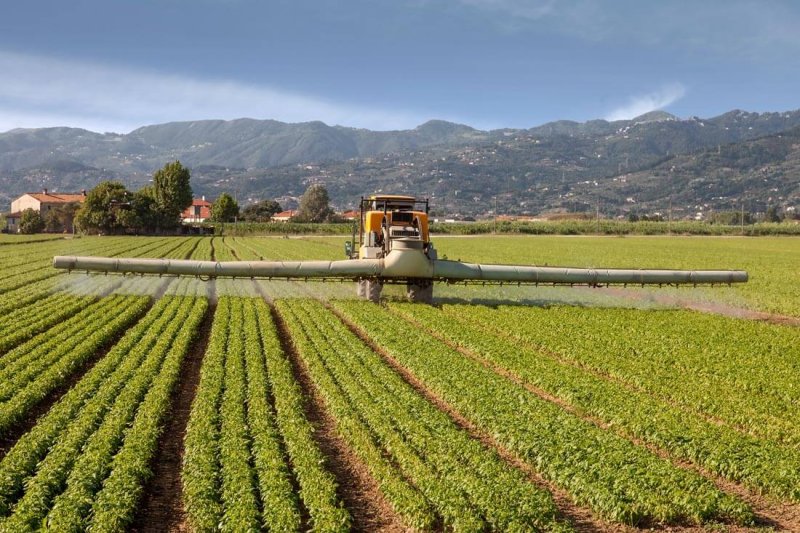
[I]n today’s modern society, many people look at big tractors and frown, thinking of how the days of the big red barns and friendly faces have been replaced with “factory farms.” But, according to the USDA in 2015, 97 percent of farms are family owned. The truth is, most farmers have embraced new technology, because that technology allows farmers to produce more food more efficiently and …. preserve the land.

Farmers would never want to hurt what they raise, whether it be animals or crops, because that would only in turn hurt their bottom line (as well as their conscience). Farmers want to preserve the land and raise healthy plants and animals that can be used to feed people around the world …. We seem to have this notion practically forced upon us that “all-natural,” “non-GMO” and “organic” are superior products to everything else ….

All foods approved for GMO use have to go under years of testing to ensure their absolute safety, and there are only 10 crops …. that have a GMO seed option.

Read full, original article: TEENS: Behind the scenes of where food comes from

{{ reviewsTotal }}{{ options.labels.singularReviewCountLabel }}
{{ reviewsTotal }}{{ options.labels.pluralReviewCountLabel }}
{{ options.labels.newReviewButton }}
{{ userData.canReview.message }}

Related Articles

Infographic: Global regulatory and health research agencies on whether glyphosate causes cancer

Infographic: Global regulatory and health research agencies on whether glyphosate causes cancer

Does glyphosate—the world's most heavily-used herbicide—pose serious harm to humans? Is it carcinogenic? Those issues are of both legal and ...

Most Popular

Screenshot-2026-04-22-at-12.21.32-PM
Viewpoint: Why the retracted Monsanto glyphosate study doesn’t change the science—the world’s most popular herbicide is safe 
ChatGPT-Image-Apr-16-2026-02_56_53-PM
Financial incentives, over diagnosis, and weak oversight: Autism claims are driving up Medicare costs
Picture1
The FDA couldn’t find a vaccine safety crisis, so it buried its own research
ChatGPT-Image-May-1-2026-11_42_59-AM-2
Viewpoint: NAD is the wellness grifters latest evidence-lite longevity fad. At least the mice are impressed.
global warming
‘Implausible’: Top climate scientists reject worst-case scenario—soaring temperatures and fast-rising sea levels
Screenshot-2026-05-21-at-12.15.17-PM
UK gene-editing milestone: Livestock barley that increases ruminant value and reduces methane emissions is first-approved CRISPR crop
Screenshot-2026-05-21-at-3.15.53-PM
Chiropractors may no longer be modern-day snake oil salesmen, but the benefits of their therapy are limited–at best

Sorry. No data so far.

glp menu logo outlined

Get news on human & agricultural genetics and biotechnology delivered to your inbox.