‘Blueprint’ of plant’s immune system could speed breeding of disease-resistant crops

flower
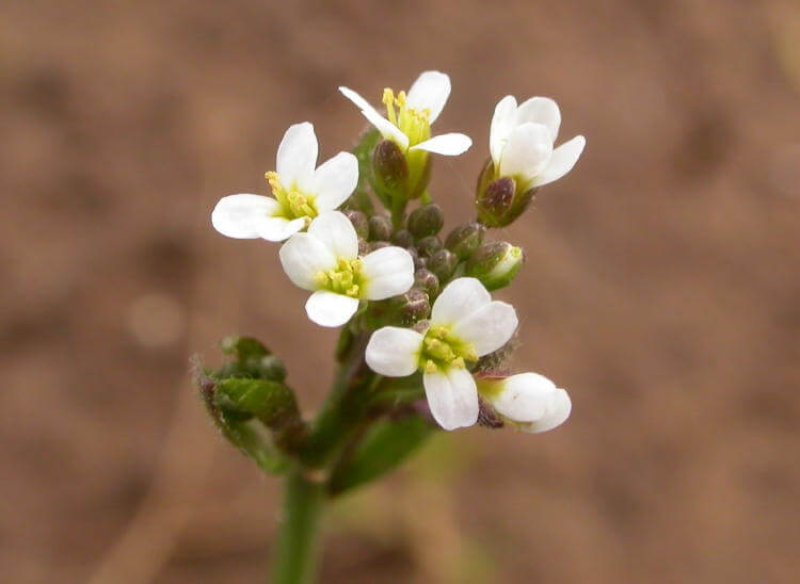
Researchers used Arabidopsis thaliana (mouse-ear cress) to investigate plant immune response. Credit: Oregon State University

Washington State University researchers have discovered the way plants respond to disease-causing organisms, and how they protect themselves, leading the way to potential breakthroughs in breeding resistance to diseases or pests.

The results were published in the journal Plant Physiology and describe how plants respond to a molecule released during damage caused by infection or outside entities. The paper shows how adenosine 5-triphospate (ATP), a part of DNA and  in cells, becomes a signal for injury or infection when outside cells. That signal triggers  responses in plants.

“We found the pathways that connect ATP to plant cell responses protecting the plant,” said David Gang, WSU professor in the Institute of Biological Chemistry.

“This is a blueprint for how a plant’s immune system works,” [said WSU Plant Pathology assistant professor Kiwamu Tanaka]. “In some respects, even the most innovative breeding programs are still groping around in the dark to build resistance. But if you have the blueprint, you can reach the goal much faster.”

“Future plant breeding can now increase plant defense or resistance based on knowing these pathways,” Gang said. “They can be bred to respond faster, or to not waste energy by turning on the entire immune system if only a specific defense is required. The potential for this is pretty incredible for helping  and crops.”

Read full, original article: Blueprint for plant immune response found

{{ reviewsTotal }}{{ options.labels.singularReviewCountLabel }}
{{ reviewsTotal }}{{ options.labels.pluralReviewCountLabel }}
{{ options.labels.newReviewButton }}
{{ userData.canReview.message }}

Related Articles

Infographic: Global regulatory and health research agencies on whether glyphosate causes cancer

Infographic: Global regulatory and health research agencies on whether glyphosate causes cancer

Does glyphosate—the world's most heavily-used herbicide—pose serious harm to humans? Is it carcinogenic? Those issues are of both legal and ...

Most Popular

Screenshot-2026-04-22-at-12.21.32-PM
Viewpoint: Why the retracted Monsanto glyphosate study doesn’t change the science—the world’s most popular herbicide is safe 
ChatGPT-Image-Apr-16-2026-02_56_53-PM
Financial incentives, over diagnosis, and weak oversight: Autism claims are driving up Medicare costs
Picture1
The FDA couldn’t find a vaccine safety crisis, so it buried its own research
global warming
‘Implausible’: Top climate scientists reject worst-case scenario—soaring temperatures and fast-rising sea levels
ChatGPT-Image-May-1-2026-11_42_59-AM-2
Viewpoint: NAD is the wellness grifters latest evidence-lite longevity fad. At least the mice are impressed.

Sorry. No data so far.

glp menu logo outlined

Get news on human & agricultural genetics and biotechnology delivered to your inbox.