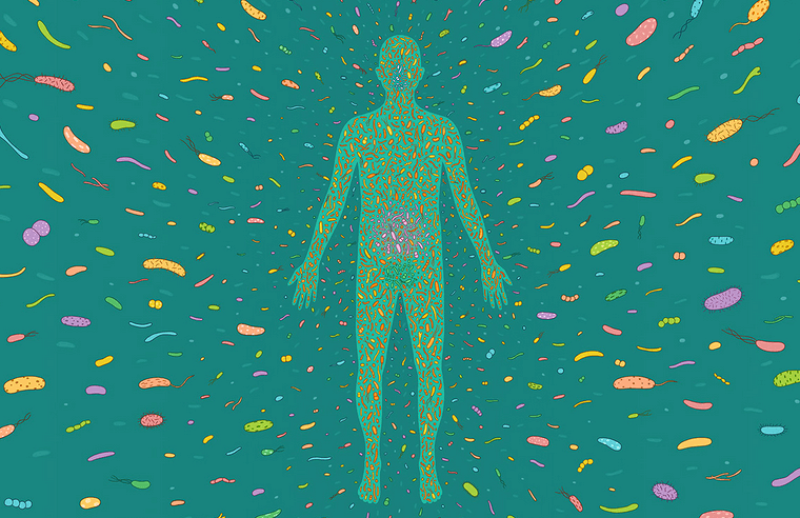
In the latest episode of Genetics Unzipped, geneticist Kat Arney investigates the trillions of bacteria that live inside our guts and make up what’s known as the microbiome. Rather than just a bunch of useless bugs, the microbiome is now believed to play a role in virtually every aspect of health and disease. But how do they do that?
To find out, Arney speaks with Tim Spector, professor of genetic epidemiology at King’s College London, author of The Diet Myth and scientific co-founder of the precision nutrition company ZOE, whose PREDICT research study is investigating how the microbiome and other factors affect individual responses to food.
Creating a gut microbiome profile involves collecting a stool sample, extracting the DNA from all the bacteria and running it through a DNA sequencer, then sifting through all the data to try and figure out which bacterial species are present.
This approach is known as metagenomics, and researchers are now using it to study bacterial communities in all sorts of places, from every nook and cranny of the human body to soil and the world’s oceans. The results of this research are shedding light on human health and disease – including antimicrobial resistance – and revealing new ideas for biotechnology applications. But deciphering all this genetic data isn’t an easy task, according to Rob Finn, a team leader at the European Bioinformatics Institute in Cambridge, UK.
Kat also talks to Hilary Browne, a researcher at the Wellcome Sanger Institute in Cambridge, UK, about the challenges of growing and studying gut bacteria in the lab.

Full transcript, credits and show notes are available here.
Genetics Unzipped is presented by award-winning science communicator and biologist Kat Arney and produced by First Create the Media for the UK Genetics Society. Follow Kat on Twitter @Kat_Arney and Genetics Unzipped @geneticsunzip
Listen to Genetics Unzipped on Apple Podcasts (iTunes) Google Play, Spotify, or wherever you get your podcasts