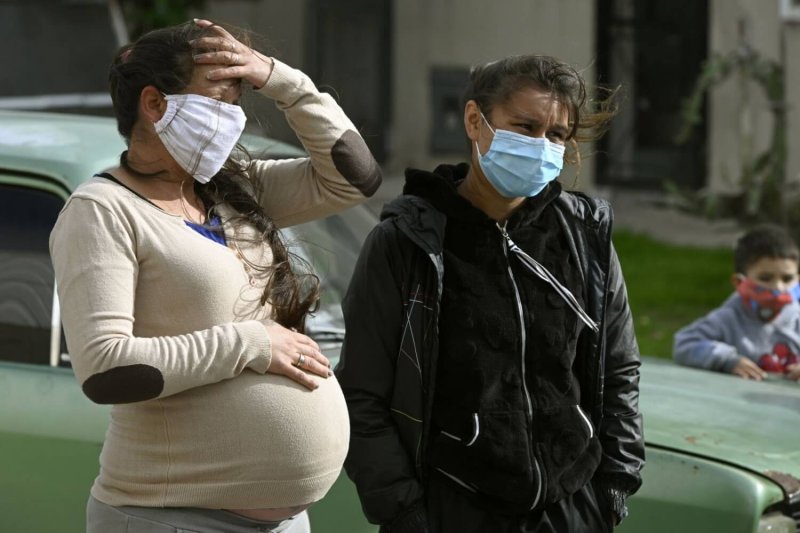
Stress on pregnant women from COVID will lead to smaller newborn babies

unnamed file
Credit: AFP/Getty Images

The impact of chronic emotional stress on human growth has been investigated by scientists for decades, with many studies specifically focusing on how the birth weight of babies is impacted as this is one of the key predictors of health risks at birth and in later life.

The consequences of low birth weight—defined as a weight of less than 2500 grams for a pregnancy duration between 37-42 weeks (weight adjusted for shorter pregnancies)—include an increased risk of: infection; poor learning and school performance; psychological problems; reduced adult earnings; adult overweight, diabetes, and heart disease; and, on average, an earlier age at death, say researchers.

[Researchers Barry Bogin and Carlos Varea] predict that “it will take two or more generations to assess the biocultural consequences of the COVID‐19 crisis on people—from fetuses to the aged.”

However, “one may hypothesize that for the immediate future there will be a global rise in maternal emotional stress and a decline in birth weight.”

Follow the latest news and policy debates on sustainable agriculture, biomedicine, and other ‘disruptive’ innovations. Subscribe to our newsletter.

Professor Bogin and Dr. Varea said: “Fear of pandemic disease spreads as fast and as deep as the disease itself. The fear plays‐out in in many ways, from extremes of paranoia and violence, to xenophobia, closed borders, economic lockdowns, and social distancing. The fear pervades every level of society. The fear causes emotional stress. Chronic emotional stress—from insecurity that lasts for months or years—has biological impacts on people.”


Read the original post

{{ reviewsTotal }}{{ options.labels.singularReviewCountLabel }}
{{ reviewsTotal }}{{ options.labels.pluralReviewCountLabel }}
{{ options.labels.newReviewButton }}
{{ userData.canReview.message }}

Related Articles

Infographic: Global regulatory and health research agencies on whether glyphosate causes cancer

Infographic: Global regulatory and health research agencies on whether glyphosate causes cancer

Does glyphosate—the world's most heavily-used herbicide—pose serious harm to humans? Is it carcinogenic? Those issues are of both legal and ...

Most Popular

Screenshot-2026-04-22-at-12.21.32-PM
Viewpoint: Why the retracted Monsanto glyphosate study doesn’t change the science—the world’s most popular herbicide is safe 
ChatGPT-Image-Apr-16-2026-02_56_53-PM
Financial incentives, over diagnosis, and weak oversight: Autism claims are driving up Medicare costs
Picture1
The FDA couldn’t find a vaccine safety crisis, so it buried its own research
global warming
‘Implausible’: Top climate scientists reject worst-case scenario—soaring temperatures and fast-rising sea levels
ChatGPT-Image-May-1-2026-11_42_59-AM-2
Viewpoint: NAD is the wellness grifters latest evidence-lite longevity fad. At least the mice are impressed.

Sorry. No data so far.

glp menu logo outlined

Get news on human & agricultural genetics and biotechnology delivered to your inbox.