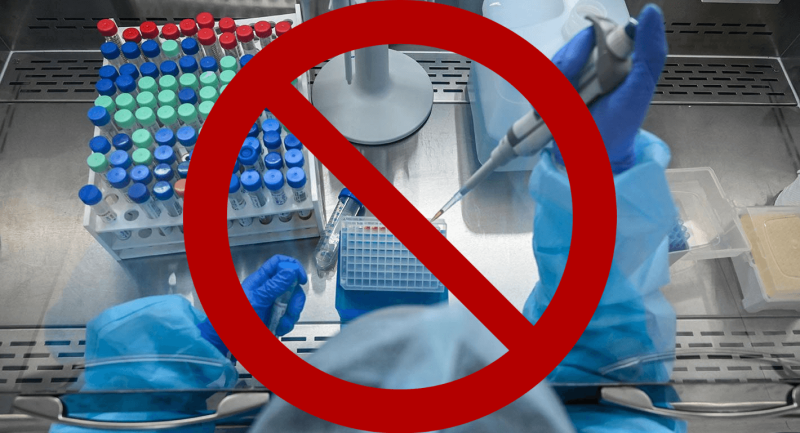
Viewpoint: ‘Lefty food and farm’ group’s implacable opposition to genetic engineering imperils life-saving virus research, writes Mother Jones

Credit: Getty Images

[Recently, the Center for Food Safety] sued the National Institutes of Health in an attempt to force the agency to reveal information about its funding for what is known as “gain-of-function” research — the term refers to a category of lab work that seeks to understand how viruses create pandemics.

Why would this lefty food and farms group—and they aren’t alone—rail against high-level virology research? The key to the answer has to do with the Center for Food Safety’s long opposition to the practice of genetic engineering. In a recent phone call, I spoke to CFS’s [Andrew] Kimbrell, who explained what he sees as the connection. 

[See the GLP profile on the Center for Food Safety here.]

“You genetically engineer bacteria and plants, then you genetically engineer animals, then you genetically engineer embryos—all that has happened, with some promise, but also a tremendous amount of danger and threat,” he said. “Now, viruses are not technically an organism, but they are living biological elements. So, they fit certainly within that narrative: Just because we can do something doesn’t mean we should do something.”

Follow the latest news and policy debates on sustainable agriculture, biomedicine, and other ‘disruptive’ innovations. Subscribe to our newsletter.

With tens of thousands of followers on social media, anti-GMO groups have the potential to turn the tide of public opinion; hanging in the balance is science that could potentially help prevent the next pandemic.


Read the original post

{{ reviewsTotal }}{{ options.labels.singularReviewCountLabel }}
{{ reviewsTotal }}{{ options.labels.pluralReviewCountLabel }}
{{ options.labels.newReviewButton }}
{{ userData.canReview.message }}

Related Articles

Infographic: Global regulatory and health research agencies on whether glyphosate causes cancer

Infographic: Global regulatory and health research agencies on whether glyphosate causes cancer

Does glyphosate—the world's most heavily-used herbicide—pose serious harm to humans? Is it carcinogenic? Those issues are of both legal and ...

Most Popular

Screenshot-2026-04-22-at-12.21.32-PM
Viewpoint: Why the retracted Monsanto glyphosate study doesn’t change the science—the world’s most popular herbicide is safe 
Picture1
The FDA couldn’t find a vaccine safety crisis, so it buried its own research
ChatGPT-Image-Apr-16-2026-02_56_53-PM
Financial incentives, over diagnosis, and weak oversight: Autism claims are driving up Medicare costs
global warming
‘Implausible’: Top climate scientists reject worst-case scenario—soaring temperatures and fast-rising sea levels
cousin
Marrying your cousin: Might it provide some evolutionary benefits?
ChatGPT-Image-May-1-2026-11_42_59-AM-2
Viewpoint: NAD is the wellness grifters latest evidence-lite longevity fad. At least the mice are impressed.

Sorry. No data so far.

glp menu logo outlined

Get news on human & agricultural genetics and biotechnology delivered to your inbox.