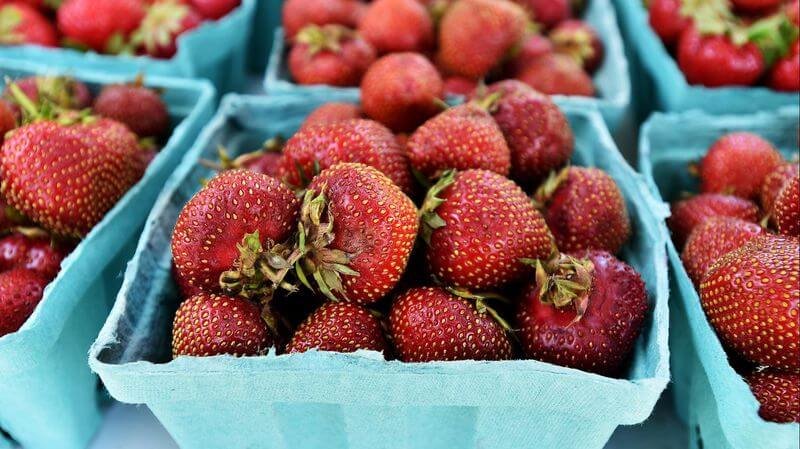
Over a third of strawberries harvested are discarded due to their short shelf life. Here’s how CRISPR could help them last longer

Credit: April Gamiz/Morning Call

More than a third of all fresh strawberries that consumers buy end up getting tossed out because they’re bruised, moldy or mushy. Now, two companies have teamed up to solve this problem.

The J.R. Simplot Company and Plant Sciences Inc. plan to edit the DNA of strawberries and make these new-and-improved fruits available on the commercial market, reports Keith Ridler for the Associated Press (AP).

The goal is to modify the strawberries’ genes in a way that improves their shelf life, extends the growing season and reduces consumer waste, according to a press release. For farmers, that means they can grow healthier strawberry plants more efficiently for a greater part of the year, and the fruits that make it into our grocery baskets will stay fresh for longer.

Follow the latest news and policy debates on sustainable agriculture, biomedicine, and other ‘disruptive’ innovations. Subscribe to our newsletter.

The companies will use CRISPR-Cas9 to edit the strawberries’ genes, reports Lexi Lonas for the Hill. This technology works like the cut-and-paste command on a computer: It allows scientists to identify a gene in the strawberry and cut it out. Then, they can stitch the two ends of the gene back together or replace the old gene with a one that codes for an improvement, like longer shelf life. 

This is an excerpt. Read the original post here.

{{ reviewsTotal }}{{ options.labels.singularReviewCountLabel }}
{{ reviewsTotal }}{{ options.labels.pluralReviewCountLabel }}
{{ options.labels.newReviewButton }}
{{ userData.canReview.message }}

Related Articles

Infographic: Global regulatory and health research agencies on whether glyphosate causes cancer

Infographic: Global regulatory and health research agencies on whether glyphosate causes cancer

Does glyphosate—the world's most heavily-used herbicide—pose serious harm to humans? Is it carcinogenic? Those issues are of both legal and ...

Most Popular

Screenshot-2026-04-22-at-12.21.32-PM
Viewpoint: Why the retracted Monsanto glyphosate study doesn’t change the science—the world’s most popular herbicide is safe 
ChatGPT-Image-Apr-16-2026-02_56_53-PM
Financial incentives, over diagnosis, and weak oversight: Autism claims are driving up Medicare costs
Picture1
The FDA couldn’t find a vaccine safety crisis, so it buried its own research
global warming
‘Implausible’: Top climate scientists reject worst-case scenario—soaring temperatures and fast-rising sea levels
ChatGPT-Image-May-1-2026-11_42_59-AM-2
Viewpoint: NAD is the wellness grifters latest evidence-lite longevity fad. At least the mice are impressed.

Sorry. No data so far.

glp menu logo outlined

Get news on human & agricultural genetics and biotechnology delivered to your inbox.