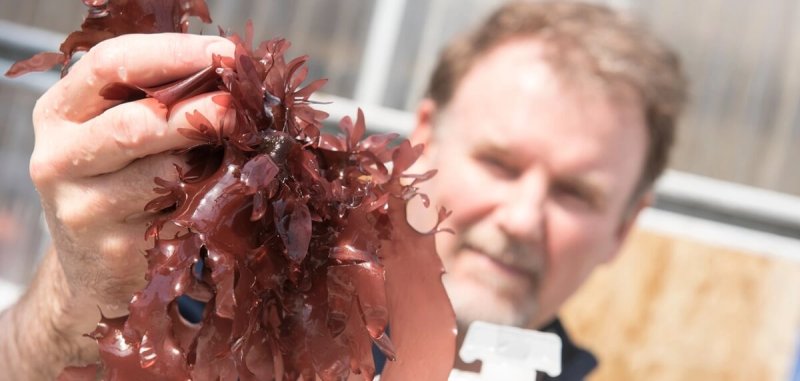
A new paper published in the journal Oceanography speculates future global food production problems could be solved by growing protein-dense microalgae in coastal aquaculture farms. The modeling boldly projects 100% of global protein demands could be provided by marine microalgae in 2050.
…
As well as predicting global yields of protein to effectively feed billions of people, the paper models the best geographical locations for these onshore aquaculture facilities. In terms of suitable land, it is suggested the optimal locations for these algae farms would be across coasts of northern Australia, eastern Africa and the northwest of America.
A recent article from Jules Siedenburg, at the University of East Anglia, proposed several key applications for algae that could significantly reduce current agricultural impacts on the environment. Alongside using it as a nutritional food supplement, Siedenburg said microalgae could be used to feed livestock and serve as a new kind of fertilizer for crop production.

…
Algae is undeniably an easy-to-cultivate, high-protein crop and researchers are working on plenty of ways to get it into our diets without forcing us to munch a handful of it in its natural form. Earlier this year a startup presented a smoked salmon substitute made completely from spirulina, a common blue-green algae. Another company a few years ago proposed an engineered form of seaweed designed to taste like bacon. Maybe the solution here is bacon-flavored algae?