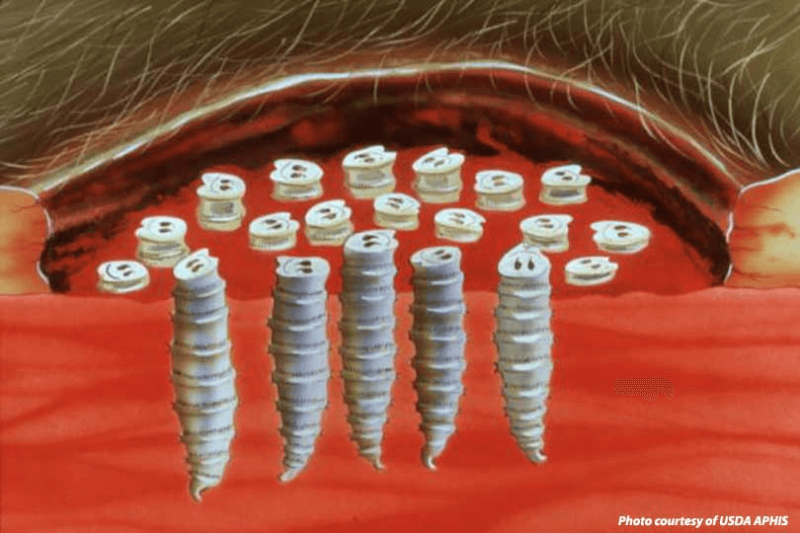
When a female screwworm fly attacks cattle, it lays eggs, which hatch and turn into worm-like larvae that screw down into the host animal, feeding on flesh along their way and damaging the animal’s skin. Left untreated, the animals eventually die in excruciating agony.
But [veterinarian Alejo] Menchaca and colleagues have a plan. Using the genome-editing system CRISPR, they’ve developed what’s known as a gene drive, a type of genetic element that manipulates the reproductive process to spread farther and faster than an ordinary gene. They are about to move into the next stage of caged trials in the lab, with a view to eventually using the genetic tool to decimate the screwworm fly population. In collaboration with Institut Pasteur de Montevideo, they have received a $450,000 grant from the Inter-American Development Bank (IDB) for the research.
The plan is to create a population of male screwworms with edited versions of genes that are essential for fertility in the female screwworms. When the engineered males are released into the wild, they should mate with females and pass on that gene.

Over successive generations, more and more female screwworms will inherit copies of the gene drive and become sterile, causing a population crash.
“The thing that’s attractive is if you knock a gene drive into the female, you could disrupt female development,” says Maxwell Scott, an entomologist at North Carolina State University who is working with the Uruguayan team. “It’s potentially a very efficient system.”