Seed bank ransacked as Sudan’s civil war destroys a critical resource in a starving nation

9043004777_cf5ec2af67_o

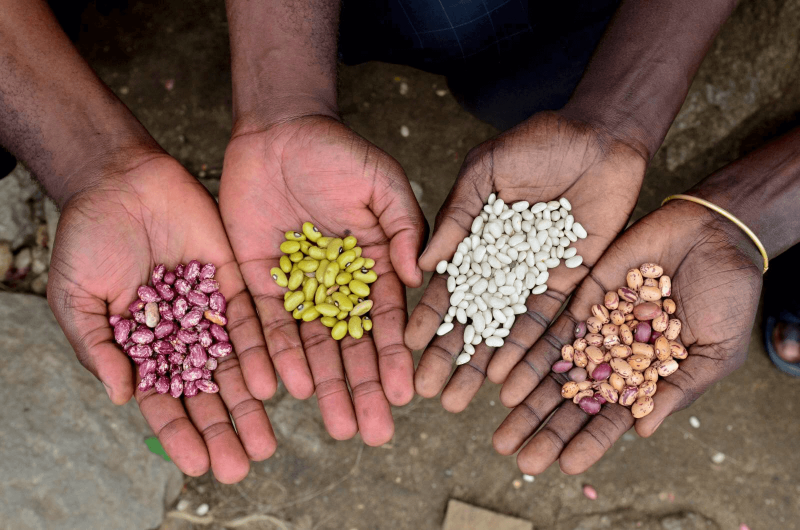
More than 100 universities have been damaged or destroyed, according to Mohamed Hassan, president of the Sudanese National Academy of Sciences, and the country’s scientific and academic infrastructure has been largely shut down as scientists have been forced to flee. The escalating violence is also threatening an irreplaceable scientific resource: the country’s seed bank has been ransacked, putting at risk more than 15,000 samples of the region’s plant life.

Follow the latest news and policy debates on sustainable agriculture, biomedicine, and other ‘disruptive’ innovations. Subscribe to our newsletter.

Carefully preserved in aluminum packets inside moisture-controlled deep freezers, the seeds held in the gene bank provide a backup of the region’s unique and diverse native plants – among them the likely ancestor of the watermelon, as well as varieties of sorghum, one of the most widely planted cereal crops.

In 2023, the Sudanese National Academy of Sciences called for solidarity from scientists around the world to help their colleagues at risk. The [International Science Couincil] has expressed deep concern over the “abhorrent impacts” of the conflict on civilians and its catastrophic effect on the country’s science system.


This is an excerpt. Read the original post here

{{ reviewsTotal }}{{ options.labels.singularReviewCountLabel }}
{{ reviewsTotal }}{{ options.labels.pluralReviewCountLabel }}
{{ options.labels.newReviewButton }}
{{ userData.canReview.message }}

Related Articles

Infographic: Global regulatory and health research agencies on whether glyphosate causes cancer

Infographic: Global regulatory and health research agencies on whether glyphosate causes cancer

Does glyphosate—the world's most heavily-used herbicide—pose serious harm to humans? Is it carcinogenic? Those issues are of both legal and ...

Most Popular

Screenshot-2026-04-22-at-12.21.32-PM
Viewpoint: Why the retracted Monsanto glyphosate study doesn’t change the science—the world’s most popular herbicide is safe 
Picture1
The FDA couldn’t find a vaccine safety crisis, so it buried its own research
ChatGPT-Image-May-1-2026-11_42_59-AM-2
Viewpoint: NAD is the wellness grifters latest evidence-lite longevity fad. At least the mice are impressed.
ChatGPT-Image-Apr-16-2026-02_56_53-PM
Financial incentives, over diagnosis, and weak oversight: Autism claims are driving up Medicare costs
global warming
‘Implausible’: Top climate scientists reject worst-case scenario—soaring temperatures and fast-rising sea levels
Screenshot-2026-05-21-at-12.15.17-PM
UK gene-editing milestone: Livestock barley that increases ruminant value and reduces methane emissions is first-approved CRISPR crop
Screenshot-2026-05-21-at-3.15.53-PM
Chiropractors may no longer be modern-day snake oil salesmen, but the benefits of their therapy are limited–at best

Sorry. No data so far.

glp menu logo outlined

Get news on human & agricultural genetics and biotechnology delivered to your inbox.