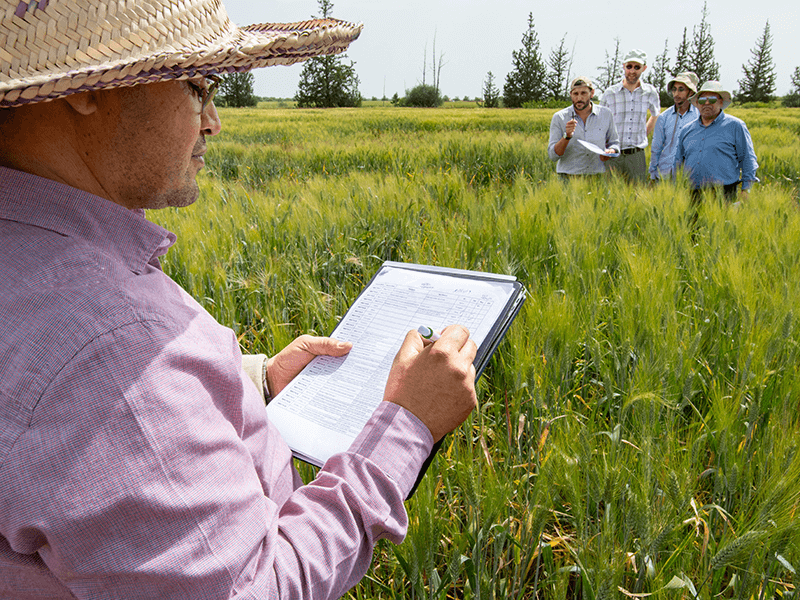
The result of 18 months of workshops and analysis, the Agroecological Intelligence project brought together agroecological farmers and growers for a series of in-depth discussions about the role of technology in their farming systems and the main factors at play when making their decisions.
Agroecology – rooted in cyclical systems, functional biodiversity, resilience and ecological efficiency; and built on values of justice, equity, knowledge sharing and community-based governance – has traditionally been seen as low-tech with no or limited external inputs. As such, the values on which it is based are distant and disconnected from those of Agriculture 4.0.
…
We… began with a couple of assumptions. One was that choices around technology are not values- neutral. The other is that while the agroecological ‘umbrella’, made up of these different approaches, provides a narrative canopy made up of language and concepts – such as natural, holistic, food sovereignty, social justice, equity, health, small- scale, co-creation and indigenous knowledge – strict allegiance to these concepts likely varies between the different strands, which might make consensus over technology criteria, choices and implementation difficult.
…
We wished to understand what UK agroecological farmers and growers wanted and needed from technology developers and from the government

We did not find definitive answers to all these things. Nor was it possible to answer with any certainty whether agritech was a transition pathway or a ‘Trojan horse’. What we did find was an eloquent antidote to the agritech hard-sell based on deeply held values and an interest in technology that serves those values, but little to no interest in technology that does not.
The farmers and growers we spoke to emphasised the importance of a more critical and context-specific approach to technological innovation, one that involved creating and evaluating technology based on its compatibility with agroecological principles and practices.
[Editor’s note: Download the final report here: Final Report]