Winning rape conviction, woman loses privacy and control over her DNA

dna forensic b

As Maryland’s highest court upheld a rape conviction based on DNA collected from the arm of a police station chair, a veteran judge issued a stark warning about the consequences of the ruling.

“The majority’s approval of such police procedure means, in essence, that a person desiring to keep her DNA profile private, must conduct her public affairs in a hermetically sealed hazmat suit,” Judge Sally D. Adkins wrote in a dissenting opinion.

The rapist, Glenn Joseph Raynor, had challenged his conviction, arguing that police were wrong to swab his genetic material from the chair after he had refused to consent to giving a sample. But four judges of the Court of Appeals disagreed, ruling that police are free to scoop up DNA wherever they may come across it.

Raynor’s attorney could not be reached for comment.

The case reflects the continuing debate in Maryland and across the nation about the use of DNA and other technology to solve crimes. Forensic and digital evidence can be powerfully persuasive at trial, but some privacy advocates worry that it could be abused — especially as the technology to analyze the information improves.

Read the full, original story: Judge warns privacy of DNA at stake after ruling

Genetic causes of glaucoma identified

Researchers have discovered six specific genetic variations that may be linked to glaucoma. Findings published in the journal Nature Genetics discuss how three separate studies reveal telltale variants of genes that also play a role in regulating cholesterol in cells and the age-related arterial disease, atherosclerosis.

“It’s rock solid that this is an important result because it has been found in three different ways,” said lead study author Jamie Craig, who is also from Flinders University’s Centre for Ophthalmology and Eye Vision Research, in a news release.

“All the papers were done in different populations with different strategies and all identified the same gene,” he added. “It has been shown to be involved in eye pressure in normal people and tells us for sure it is contributing to glaucoma at least partly through intraocular pressure pathways.”

As glaucoma remains a leading cause of irreversible blindness according to the World Health Organization (WHO), health officials continue to work on new research that uncovers new potential treatments for the future.

Read the full, original story: Certain gene variants reveal glaucoma risk

Activists seek endangered status for monarch butterflies, blame pesticides and GMOs

flat x f

As monarch butterfly populations dwindle to unprecedented low levels, activists say the colorful and far-ranging insects need protection of the Endangered Species Act to survive.

In a formal listing petition to the U.S. Fish and Wildlife Service, a coalition of advocacy groups say the widespread use of pesticides and genetically modified crops are the biggest threats to the butterflies.

In the petition, the Center for Biological Diversity, the Center for Food Safety, the Xerces Society and renowned monarch scientist Dr. Lincoln Brower say monarch butterflies have declined by more than 90 percent in less than 20 years. By some estimates, they may have lost more than 165 million acres of habitat — an area about the size of Texas — including nearly a third of their summer breeding grounds.

“The widespread decline of monarchs is driven by the massive spraying of herbicides on genetically engineered crops, which has virtually eliminated monarch habitat in cropland that dominates the Midwest landscape,” said Bill Freese, a Center for Food Safety science policy analyst. “Doing what is needed to protect monarchs will also benefit pollinators and other valuable insects, and thus safeguard our food supply.”

Read the full, original article: Biodiversity: Endangered species protection sought for dwindling monarch butterflies

GE microbes address climate change, sequester carbon dioxide by making plastics

What’s the fix for a warming planet? Just one word: Plastics.

As the world grapples with greenhouse gas emissions still rising despite years of political wrangling over how to combat global climate change, a technology to convert carbon dioxide and methane into plastic is emerging as one potential market-driven solution. To boot, the process can be less expensive than producing plastics from petroleum. The market for plastics is massive — and thus the ability to sequester carbon. Plastics are found everywhere from beverage and food containers to toys, furniture and car parts.

The engines behind the greenhouse gas to plastic conversion technology are microorganisms that feed on methane or carbon dioxide pumped into vessels of liquid. The microbes — some enhanced through genetic engineering, others improved via selective breeding – accumulate a biopolymer inside their cell walls as they feast.

“There are pluses and minuses here,” Daniel Kammen, director of the Renewable and Appropriate Energy Laboratory at the University of California at Berkeley, said of the greenhouse gas to plastic technology in an email to NBC News. “At the one level, capturing what would otherwise be (methane) emissions into products is a big step forward.”

Read the full, original article: Climate hack? How plastics could help save us from greenhouse gases

Oregonian editorial: ‘No, thanks’ to Oregon’s GMO labeling measure

Oregonians “place a priority on personal freedom and individual choice in how we live our lives,” gushes the website supporting the campaign to disparage genetically engineered foods through mandatory labeling. And because we Oregonians are such rugged individualists, the reasoning goes, we must jettison a system that provides clear and simple options for consumers who don’t like genetic engineering and replace it with one that will mislead the less-informed and place a disproportionate financial burden on the poor. No, thanks.

How can the appearance of labels containing factual information misinform consumers, you ask? The answer begins with the Food and Drug Administration, the federal government’s food-safety cop, which has declined to mandate GE labels for the simple reason that there’s no nutritionally valid reason to do so.

Measure 92 would require what federal regulators, relying upon science, have denied: a label whose mere presence suggests that the food within differs in some nutritionally significant way from other foods.

Oregonians may or may not like genetically engineered food products and the big companies that provide them, but such antipathy is a lousy reason to approve a measure that will mislead many consumers and place a disproportionate financial burden on those least able to carry it.

Read the full, original article: Voters should oppose mandatory-labeling measure: Editorial endorsement

China needs open debate on GMO public policy

Biosafety certificates permitting Chinese researchers to grow genetically modified rice and corn expired last week, with little indication that the Ministry of Agriculture will renew them.

In China today, scientific and environmental decision-making is fragmented and far less technocratic than is often assumed, and public and elite anxiety does seem to run high when it comes to genetic modification. But it would be careless to simply write off the situation as reflecting public, or even elite, ignorance and paranoia about food and agriculture.

Certainly, some of the discourse around GM in China is paranoid and misguided, and much like its championing of clean energy, Chinese government support for innovation could perhaps be game changing for agricultural biotechnology. But focusing exclusively on one vision of high-tech innovation — or writing off its critics as purveyors of “anti-science” (when perhaps there are legitimate reasons for concern) — could not only obscure avenues for engagement on scientific and environmental decision-making, but also overlook other, emergent innovations addressing China’s agricultural, food and environmental challenges. It’s pertinent instead to ask how more open approaches to scientific governance could transform a debate, which – as demand for food and animal feed continues to rise – has surely only just begun.

Read the full, original article: GM in China: ‘Paranoia’ and public opinion

Parasite practices genetic mind control to spread infection

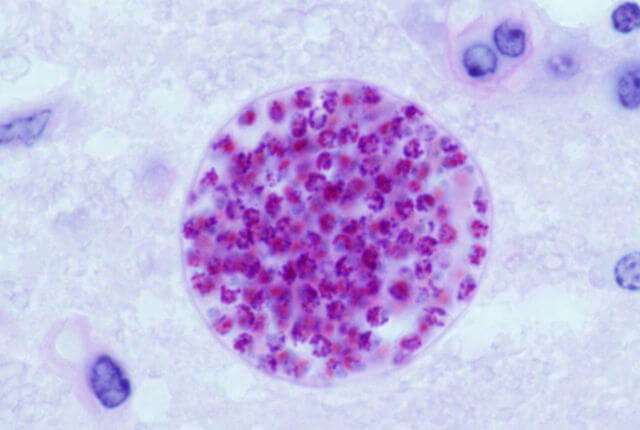
px Toxoplasma gondii tissue cyst in mouse brain

Toxoplasma gondii, a.k.a. the reason pregnant women are often advised not to change the cat box, is a parasitic infection carried by cats and spread, most often, by mice and rats who pick up eggs in contaminated soil. Although something of an innocent bystander, humans can also become infected with flu-like symptoms via our domesticated cats.

To further incentivize its transfer, a new study has shown that Toxo can make the rodents less afraid of cats through changing the gene expression by altering the chemical caps on genes that turn them on or off. These caps are, at least in part, responsible for making a hair cell different than a blood cell even though both contain identical genetic material, all the genes in the body. And they’re different in infected and non-infects rats Carl Zimmer reports:

First neurobiologist Ajai Vyas and his team looked at the gene for arginine vasopressin in the medial amygdala of rats. In infected rats, they found, many of the molecular caps were missing, suggesting that Toxoplasma had “unsilenced” the gene in order to increase production of the neurotransmitter. The arginine vasopressin then might alter their response to cats…
Vaya and his colleagues removed molecular caps from the arginine vasopressin gene, mimicking what Toxoplasma might be doing to its hosts. The rats became reckless, feeling no fear at the whiff of cats.
“The animals looked like they were infected, even though there was no parasite around,” said Dr. Vyas.

Although the results are preliminary, they do beg the question: Could the Toxo parasite also be controlling our genes? Czech evolutionary biologist Jaroslav Fleger thinks so:

If Flegr is right, the “latent” parasite may be quietly tweaking the connections between our neurons, changing our response to frightening situations, our trust in others, how outgoing we are, and even our preference for certain scents. And that’s not all. He also believes that the organism contributes to car crashes, suicides, and mental disorders such as schizophrenia.

Fleger came to this conclusion, first, because of changes he noticed rapidly in his own fear-avoidance behavior. He crossed busy roads and snubbed his nose at the communist party, Kathleen McAuliffe reports in the Atlantic. He began testing students and military members for other cognitive and emotional changes. Surprisingly all the infected participants showed delayed reaction times, subtle personality trends and were increasingly likely to have been in car accidents.

Other parasites are known to change the behavior of their hosts. Rabies, for instance, makes dogs extremely aggressive and copious salivates, ensuring any bite would transfer the infection. And the insect world is riddled with examples, like this parasitic wasp taking over a caterpillar from National Geographic.

As measuring genetic expression changes during infection becomes cheaper and more widely available, it will be interesting to see all the ways in which infection can alter our behavioral through our genes. And, this might not be limited to parasites. Bacteria and viruses could act on our genetic control systems to make us more likely to spread them, just like Toxo and the rats.

Meredith Knight is a blogger for Genetic Literacy Project and a freelance science and health writer in Austin, Texas. Follow her @meremereknight.

Additional Resources:

Indian ag minister: Biotech will play ‘significant role’ in second Green Revolution

Agriculture Minister Radha Mohan Singh today pitched for biotech crops especially in eastern states for achieving second green revolution in the country.

Opening a new agricultural biotechnology institute in the state will pave way for preparing trained human resources, he said after laying the foundation stone of Indian Institute of Agricultural Bio-Technology at Garh Khatanga near Ranchi.

Stating that there is a need to bring second Green Revolution particularly in eastern states, Singh said: “As such agricultural biotechnology will play a significant role in increasing quality production in these states.”

In the backdrop of limited natural resources and growing population, there is an urgent need to change the traditional methods of agriculture, he added. The mission of the institute will be to strengthen ongoing research work, fundamental research in the field of biotechnology, as also building capacity for human resources.

Read the full, original article: Government pitches for biotech crops to achieve 2nd green revolution

Lobby money flows into Oregon as GMO labeling vote nears

Money Large

Oregon’s food fight is just getting started.

A ballot measure that would require the labeling of genetically modified foods has already seen significant amounts of cash raised by businesses on both sides of the issue, according to campaign finance filings, even though the election is more than two months away.

A committee formed to fight the Oregon measure, ‘No on 92,’ has raised more than $300,000 in cash contributions so far. Half of that amount — $150,000 — was donated by the Grocery Manufacturers Association, an industry trade group. Those numbers only reflect contributions through the end of July.

Oregon Right to Know, which sponsored the measure, has raised more than $1.4 million in cash contributions through the end of July, nearly half of which was raised last month, according to campaign finance filings. Mercola.com, the centerpiece of Joseph Mercola’s natural foods business which includes a variety of branded products, contributed $350,000.

If recent history is any guide, the money in Oregon is just an appetizer. A group opposed to a similar measure in Washington last year, Initiative 522, won its fight, and along the way made that ballot measure campaign the most expensive in state history.

Read the full, original article: Money begins to flow in Oregon over its GMO ballot measure

Total Recall: Are we nearing the era, for better and worse, of reprogramming memories?

Total Recall Arnold Schwarzenegger Douglas Quaid

Last week was big, very big, for news about the science of memory.

First, researchers in the MIT lab of Nobel Prize winner Susumu Tonegawa were able to change an unpleasant memory to an enjoyable one. The study was in mice, the research technique is physically invasive, and the mice were GMOs. So the results are not directly applicable to human memories. But the work makes it possible believe that someday there will be a cure for post-traumatic stress disorder and treatments that can wipe out traumatic memories that are wrecking people’s lives.

The other noteworthy new report does apply directly to people, and it’s not decades away, either. Researchers have improved memory by zapping people’s brains with weak pulses of electromagnetic energy. It wasn’t a big gain in memory, and it lasted no more than 24 hours. But this work has potential for treating dementia (including Alzheimer’s disease), brain injury, stroke, and other conditions involving memory loss. The researchers, based at Northwestern, employed transcranial magnetic stimulation, which has been around for a while. In TMS, the researchers use a magnet to activate specific parts of the brain for study.

I won’t describe the research in detail because I want to raise here some worries about a related topic: the implications, ethical and otherwise, of altering memories. Descriptions of both studies are available in many news stories. Not all the articles describing the very complex mouse work were illuminating, as Faye Flam noted at the Knight Science Journalism Tracker; the Tracker is an MIT-based blog that evaluates science journalism (and is, unfortunately, about to go out of business.) Here’s a piece on the mouse study that Flam particularly recommends, an open-access story at Science by Emily Underwood.

For details on the human TMS study, consult Virginia Hughes’s blog Only Human at National Geographic. Susannah Locke described the human study too, in a Vox post that is also an explainer about memory and memory enhancement.

Even the head of the National Institute of Mental Health, who is on top of everything brainy, is a bit awed by these two papers. Last Thursday Thomas Insel blogged that this research “may be moving the study of memory into a brave new world, where we can not only monitor memory but manipulate it.” He noted, “the introduction of neurotechnologies that can target specific memories by tuning brain circuits takes us into a new era in the study of memory.”

And that’s not just hype. He also notes that, while we already possess techniques that can alter memory, such as psychotherapy, doing it with neurotechnology “raises thorny ethical issues.”

Transcranial magnetic stimulation: Some thorny ethical issues

The good news about the idea of TMS for memory enhancement is that it’s applied to quite specific brain regions, whereas drugs taken for enhancement — college students popping ritalin, for instance — flood the entire brain and body. On the other hand, although TMS has been around for a while, and the FDA has even approved it for treating depression, its long-term effects are unknown.

If TMS does turn out to improve memory, it will prompt the same kind of questions as drugs for improving performance in sports. What’s legitimate? Is enhancement unfair to other competitors who don’t enhance? If all of the players do it, is it unfair and dishonest to the audience? Does it make the idea of top performance meaningless? What about the health consequences? What about questions of justice: with TMS in particular, treatments would probably be costly and available most easily to people who already possess many advantages. Why shouldn’t everybody have access to them?

Whether future studies confirm that TMS improves memory or not, it already has produced a problem: Do-it-yourself electrical stimulation of the brain. People are building TMS equipment with parts from Radio Shack. An Atlanta doc charges $2400 for a TMS kit and training for DIY zapping, Greg Miller reports for Wired. Companies are selling DIY TMS equipment. At least one of them promotes it to enhance video gaming performance so that the company can avoid having to get medical device approval from the FDA.

All this amateur enthusiasm has taken off despite the fact that TMS is not yet proven. One British researcher reports that he has been unable to repeat a “successful” TMS experiment he published himself, and he has savaged the methodology he and other researchers have employed. There are known risks to TMS, like seizures. Particularly worrisome is the use of DIY TMS by the young, whose brains are still growing. Researchers at Oxford have called recently for regulation of commercial DIY TMS providers.

Changing memories: Some thorny ethical issues

We have long known that memory is unreliable and that eyewitness accounts of an event can be untrustworthy. But the ability to alter memories deliberately could have profound impacts, for instance on law enforcement, the legal system, maybe on national security. Not to mention personal relationships.

Bioethicist Arthur Caplan (Disclosure: a former colleague at the Hastings Center) has argued that changing memories could be worth it if the changes enabled someone who is a prisoner of an awful memory to function. No argument there, at least in principle.

On the other hand, we don’t even know, at this point, whether memories can be separated from each other. Maybe altering a particular memory will have unpredictable ripple effects on other memories. That seems plausible, since memories are linked to each other in the brain.

Each of us is, in a sense, the sum of our memories. If my memories are changed in specific ways with the help of technology, do I become a different person? Does the idea of an accurate memory, already a bit shaky, cease to have any meaning at all?

What, in fact, is reality? In part, at least, reality is memories. And maybe they don’t have to be real memories.

This idea was fun in the movie Total Recall (the 1990 original, with Sharon Stone and what’s-his-name, the former governor of some western state, not the even more incoherent recent remake.) I suspect it would be messy and scary and sometimes appalling in real life. If we even knew what real life was anymore.

Tabitha M. Powledge is a long-time science journalist and a contributing columnist for the Genetic Literacy Project. She also writes On Science Blogs  for the PLOS Blogs Network. Follow her @tamfecit

Anti-GMO group GM Watch says Biofortified’s GENERA project ‘useful’

In a discussion about the scientific literature on genetically engineered crops, Claire Robinson of GM Watch has previously said: ”I am, as you say, unaware of your GENERA project. A comprehensive list of studies on all aspects of GMOs is badly needed but beyond our means to gather together.”

Biology Fortified, Inc., with our limited resources and volunteer staff, have come to the rescue and created this “badly needed” resource. Happily, GM Watch is now aware that GENERA is in beta testing, with more to come.

In response to our recent press release about the beta test of GENERA, GM Watch* tried the resource out, and found it useful. They were able to use GENERA to search for literature, find the information they wanted, and they agreed with our evaluation of the scientific literature in at least two cases, as discussed in a post they published in response to our press release about GENERA.

Although they thought it both needed and useful, their post took an odd tone in the form of a criticism – claiming that we were misrepresenting the research contained in GENERA and leaving out important information.

As we say in the press release, there are only 400 randomly selected studies in GENERA right now. Surely there are other studies that GM Watch and similar organizations would like to see represented in GENERA. And we say that’s just fine! We fully acknowledge that there are many more studies than just these 400 randomly selected ones in our beta test, and we fully acknowledge that the format and function of the database still need some tweaking.

Check out GENERA and take our survey to let us know if you spot any errors, and let us know if we are missing any studies (but first check our page about what is included in GENERA).

Read the full, original article: GM Watch finds GENERA useful, “badly needed”

When the media hypes epigenetics, mothers take the blame

A whole host of things parents do – from what they eat to where they live – affect the wellbeing of their children, even before conception. We now know these can affect a person’s biology and even their genetic inclinations.

Understanding epigenetics – modifications in how genes are expressed and behavior altered – can help prevent and treat genetic disorders at birth, but we have to be wary of placing too large a burden on parents, especially mothers, in trying to shape their children’s health and development.

That is the concern voiced by a team of health and social scientists, writing in Nature, who warn that any conclusions drawn from studies at this time are premature, and reports such as this one in Discover Magazine titled “Grandma’s Experiences Leave a Mark on Your Genes” feed a false understanding of current epigenetic research to the detriment of mothers.

DOHaD [Deveopmental Origins of Health and Disease] would ideally guide policies that support parents and children, but exaggerations and over-simplifications are making scapegoats of mothers, and could even increase surveillance and regulation of pregnant women. As academics working in DOHaD and cultural studies of science, we are concerned. We urge researchers, press officers and journalists to consider the ramifications of irresponsible discussion.

They identified two major problems with the Discover Magazine article and a recent string of similar reports. The headline places inflated importance on the impact that a woman’s personal life choices have on her progenies’ health – a claim invoked in the past to justify restrictions on women’s rights.

Second, they address the problem of extrapolating from animal studies. If a pattern appears to be significant in rats, as in a study linking maternal lead exposure to obesity, how do we know what it means for humans? We don’t, because ethical constraints prohibit such a study in humans. And, as the Nature article explained, animal models in epigenetics studies are “poor proxies for human reproduction” because of their “short lifespans and large litter sizes.”

Frances Champagne, a researcher at Columbia University who studies epigenetics in child development, states:

The thing I’ve gained from the work I do is that stress is a big suppressor of maternal behavior. We see it in the animal studies, and it’s true in humans. So the best thing you can do is not to worry all the time about whether you’re doing the right thing. Keeping the stress level down is the most important thing. And tactile interaction — that’s certainly what the good mother rats are doing with their babies. That sensory input, the touching, is so important for the developing brain.

This is the approach that, according to the authors in Nature, needs to be stressed in DOHaD reports on epigenetics. We have known that good health and supportive parenting really do matter since long before we found evidence of that at the genetic level. Fathers, too, have a part to play in their children’s and grandchildren’s epigenome: germline epigenetic changes in sperm cells might even allow memories of specific fears to pass from fathers to offspring for three generations.

We still don’t really know how epigenetics works, much less what to do with the data we have – which often raises more questions than it answers. But distorted headlines that point a finger at moms or dads or grandparents misconstrue the purpose of epigenetics research. They place unfair blame on, among others, parents who can’t afford to feed their family the most nutritious meals or move away from a highly polluted area.

Epigenetics is an extremely promising field, and it may eventually help answer a lot of riddles in the vast science of developmental biology. Until we know how to interpret it, though, speculating will probably only do more harm than good.

Additional resources:

Potato industry poised for approval of new GM variety

The biotech industry is working to shape a more balanced conversation on GMOs. Attendees at the Idaho Grower-Shipper Association’s 86th annual meeting heard a presentation on biotechnology and the GMO conversation by Kate Hall, partnership and programs manager for food and agriculture with the Washington, D.C.-based Biotechnology Industry Organization.

Hall gave an overview of biotechnology and its increasingly critical role in global agriculture. Hall said the low level of consumer awareness about the engineering process and benefits of GMO agricultural products offers an opportunity for the industry to redefine the GMO conversation. This conversation will become relevant to the potato industry when the first generation of Innate, a GMO potato, comes to the market next year.

Doug Cole, director of company marketing and communications for Boise, Idaho-based J.R. Simplot Co., said his company has been developing the potato for 14 years, with the U.S. Department of Agriculture set to approve Innate this fall. Innate potatoes have been engineered for benefits to both growers and consumers, with low black spot bruising, low asparagine and low sugars for reduced browning when cut or processed, Cole said.

Read the full, original article: Potato industry prepares for GMO offering

My garden is organic and I grow GMOs

Enter by the wooden gate, you’ll find a lush vegetable garden with red veined chard, green cabbages, spicy arugula, bright orange pumpkins, and even a few merry xenias and cosmos. Golden squash blossoms draw bees from the busy garden hive.

Watered by drip irrigation, nourished by homegrown chicken fertilizer and compost, and protected by marigolds and other non-chemical insect deterrents, my garden is a model of organic horticulture.

This fall, as I reap the produce of my organic garden, I will be voting “no” on Proposition 105, the genetically modified organisms (GMO) labeling initiative on the ballot in Colorado. I have researched ways to produce food with fewer chemicals and less water, and have determined that GMOs are the answer for sustainable food production. Requiring food to be labeled “Produced With Genetic Engineering” will unfairly stigmatize GM crops and food processed from GM ingredients.

Even though GM technology is helping mankind grow more nutritional food on smaller acreage, with less water, and fewer chemicals, no one should be forced to eat such food. In fact, Ben & Jerry’s is in the process of sourcing all of its ingredients from non-GM crops.

This voluntary business decision will no doubt boost sales among those for whom genetic modification is a concern. The forced labeling approach of Proposition 105 is not about providing information but provoking fear and ultimately stopping scientific progress.

Read the full, original article: My garden is organic and I’m pro-GMO

New generation Amish farmer’s view of next Green Revolution

In 2010, a young man on a quest for enlightenment walked into the office of Jerry Hatfield, director of the USDA’s National Laboratory for Agriculture and the Environment in Ames, Iowa.

His name was John Kempf, and he was eager to learn more about Hatfield’s plant physiology work, which deals with the complicated interactions of plants, soils and the atmosphere. Desperate to rescue his family farm from worsening disease and pest problems, Kempf dove into deep-end science, looking for solutions he couldn’t find in the conventional farming playbook.

In the process, Kempf became a staple on the alternative-ag lecture circuit and the CEO of a rapidly growing consulting firm that his followers hail as the next best thing in sustainable, profitable agriculture. The most hopeful even say that he and his company offer a glimpse of a better farming future, uniting the best that our various schools of agricultural thought have to offer.

Kempf eschews the phrase “sustainable” because that would imply there’s much worth sustaining about the current state of farming. Instead, he calls his approach “regenerative agriculture.” He occupies a curious niche, advocating that farmers ditch pesticides while simultaneously critiquing organic farming.

Mainstream organic agriculture, says Kempf, is all about “negative certification” and is preoccupied with what farmers aren’t allowed to do – no GMOs, no chemical pesticides, no this, no that, etc. While that ensures that organic products are largely free of pesticides, it provides no assurance that crops in an organic farmer’s field are thriving, or that organic produce is healthier than its conventional counterparts, according to Kempf.

Kempf is just 26 years old. He is also Amish, and has only an eighth grade education.

Read the full, original article: This twenty-something hopes to unleash the next green revolution

California stem cell industry reviving

Almost three years after a Bay Area company shut down the world’s first clinical trial of a therapy using embryonic stem cells, another local company is reviving the therapy.

The treatment drew international attention in 2010, when Geron in Menlo Park began testing it in patients with severe spinal cord injuries. But it scrapped the project a year later because of a lack of funds – a move seen as a major blow to the nascent field.

The therapy was then sold to Asterias Biotherapeutics, also in Menlo Park. On Wednesday, Asterias said it had gained regulatory permission to test whether the treatment, which is derived from human embryonic stem cells, helps heal patients with a different kind of spinal cord injury.

Observers saw the news as a promising advancement for research in stem cells, which have the unique ability to both reproduce themselves and become tissue- or organ-specific cells. That regenerative capability could be harnessed to treat intractable diseases and injuries, scientists believe. But no stem cell-based therapies have made it to market.

Read the full, original story: Stem cell industry’s ‘huge development’ in Bay Area

Could genetic testing make having a disabled child immoral?

The summer’s “ice bucket challenge” has brought an extraordinary amount of attention to amyotrophic lateral sclerosis (ALS), a neurodegenerative disease impacting nerve cells in the brain and spinal cord.

What you may not know about ALS is that it is only very rarely inherited, at least through any determined genetic mechanism. It is currently thought that “only about 5 percent of all patients with ALS will have a genetic change” causing the disease. Genetic testing is available for patients who have both symptoms and a family history, but it is rarely recommended.

This does not mean that genetic testing for ALS will not be marketed to people concerned for their health, or for that of their children, especially given the peak in interest at this time. Genetic screening for the “breast cancer genes” BRCA1 and BRCA2 has become widespread, and prenatal genetic tests to detect them are also on the rise. But as with ALS, the vast majority of breast cancer cases have nothing to do with inherited genes.

Of course, there are plenty of traits that are more clearly and commonly linked to genetic variations. Prenatal genetic testing for such conditions significantly raises the stakes of what can be done with that knowledge.

All parents-to-be must be able to make their own choices about their ability to raise any child, but unfortunately too many are presented with a prenatal diagnosis without accompanying information about what it actually means for their child or their family.

The slick marketing of prenatal genetic testing has sparked concern about its propensity to dehumanize conditions while normalizing specific responses. This is certainly true for the most frequent chromosomal disorder, Down syndrome, which has also been a prevalent media subject this summer thanks to a couple of strange and sad happenings.

Read the full, original story: Disability will never be immoral 

Nap and coffee combo clears neurotransmitters so buzz more effective

Screen Shot at AM

It might sound crazy: conventional wisdom is that caffeine interferes with sleep. But if you caffeinate immediately before napping and sleep for 20 minutes or less, you can exploit a quirk in the way both sleep and caffeine affect your brain to maximize alertness. Here’s the science behind the idea.

To understand a coffee nap, you have to understand how caffeine affects you. After it’s absorbed through your small intestine and passes into your bloodstream, it crosses into your brain. There, it fits into receptors that are normally filled by a similarly-shaped molecule, called adenosine.

Adenosine is a byproduct of brain activity, and when it accumulates at high enough levels, it plugs into these receptors and makes you feel tired. But with the caffeine blocking the receptors, it’s unable to do so. As Stephen R. Braun writes in Buzz: the Science and Lore of Alcohol and Caffeine, it’s like “putting a block of wood under one of the brain’s primary brake pedals.

Read the full, original story: Scientists agree: Coffee naps are better than coffee or naps alone

New Yorker editor David Remnick responds to Vandana Shiva criticism of Michael Specter’s profile

Screen Shot at AM

In the August 18, 2014 The New Yorker magazine, in “Seeds of Doubt,” Michael Specter profiled the work of the environmental activist Vandana Shiva, who for many years has led a campaign against genetically modified crops.

On August 26, Vandana Shiva responded with a scathing rebuttal, posting “SEEDS OF TRUTH–A RESPONSE TO THE NEW YORKER” on her website, commenting:

I wonder why a journalist who has been Bureau Chief in Moscow for The New York Times and Bureau Chief in New York for the Washington Post, and clearly is an experienced reporter, would submit such a misleading piece. Or why The New Yorker would allow it to be published as honest reporting, with so many fraudulent assertions and deliberate attempts to skew reality.

Today The New Yorker released its response to Dr. Shiva sent on August 27. The New Yorker originally intended this to be private communication to address concerns she had expressed to its editors in private emails but decided to release it after Dr. Shiva published her criticism. We reproduce it unedited in its entirety as sent to the GLP by The New Yorker:

Dear Dr. Shiva:

This is in reply to the letter you sent and subsequently posted on the Internet earlier this week. It is not for publication in any way or on your website, but I thought you were asking for a serious reply. So here it is: I should say that since you have said that the entire scientific establishment has been bought and paid for by Monsanto, I fear it will be difficult to converse meaningfully about your accusation that the story contained “fraudulent assertions and deliberate attempts to skew reality.” But maybe I am wrong; I’ll try.

As to some of your more specific problems: Mr. Specter met you in the lobby of your New York hotel; you then talked in a café in that hotel. He didn’t interview you in the lobby. I regret that we suggested you were in Greece when you were not. You did, however, invite Mr. Specter to join the caravan there, and then sent him to an informational site titled: International Solidarity Caravan with Vandana Shiva. The dates on the site were April 26th to May 4th and it gave as locations: Greece, Italy, France.

Part of the problem is that after encouraging Mr. Specter to travel with you both in Italy and India, you apparently changed your mind, and stopped replying to his interview requests (or emails.) Our fact checker also tried for more than a week to contact you directly, as well as through your headquarters in New Delhi. You never replied. Without any participation from you it was impossible to know you changed your plans. Mr. Specter never suggested that the journey was an “unscientific joyride.”

You also charge that Mr. Specter misrepresented your education. We were interested in the field you entered as a doctoral student; but nobody disputes that you received a master’s degree in physics and I am sorry we didn’t note that in the piece. Nonetheless, Mr. Specter “twisted” neither your words nor your intentions when writing about your work history.  When he realized you were not going to grant him another interview he sent you a quite detailed list of questions, two of which asked about your work history as a physicist. Instead of answering his questions, you replied – to me – asking why we were “interested in academic qualifications of four decades ago.

One hardly needs to hold a Ph.D. in physics to become an effective environmental activist, as you have demonstrated. Yet, when a prominent figure, such as yourself, is described for decades—in interviews, on web sites, in award citations, and on many of your own book jackets, as having been “one of India’s leading physicists” it seems fair to ask whether or not you ever worked as one.

It is not true, as you claim, that Mr. Specter neglected to include Africa in his piece.  He discussed research in Africa on Golden Rice, cassava, and maize – which he described as the most commonly grown staple crop in Africa. He mentioned Tanzania’s efforts to produce a version of cassava that is resistant to endemic brown-streak virus, as well as research into insect-resistant cowpea and nutritionally enriched sorghum. Specter also quoted Sir Gordon Conway, who is a member of the board of the African Agricultural Technology Foundation, and perhaps the world’s most renowned agricultural ecologist. “In Africa, the pests and diseases of agriculture are as devastating as human diseases.” Conway also told Specter that the impact of diseases like the fungus black sigatoka, the parasitic weed striga, and the newly identified syndrome maize lethal necrosis—all of which attack Africa’s most important crops—are “in many instances every bit as deadly as H.I.V. and TB.”

Your math and conclusions on the issues of farmer suicides and seed prices and values differ from the math in studies carried out by many independent, international and government organizations.  Mr. Specter is far from alone in rejecting, based on data, your charge that Monsanto is responsible for “genocide” in India. In your letter you state that “Specter promotes a system of agriculture that fails to deliver on its promises of higher yield and lower costs and propagates exploitation.” This has always been your position, but as Mr. Specter pointed out in his article, there have been many studies on the effects of planting BT cotton in India, and on the whole, scientists – none of whom were connected to Monsanto –have found the opposite to be true.

You say that the prices of seeds are extremely high, but also that as a result of your action the government regulates their price.  Several recent studies have shown that Bt cotton has been highly beneficial to cotton farmers in India. One of the best recent studies on the economic impact of Bt cotton on farmers found that “Bt has caused a 24% increase in cotton yield per acre through reduced pest damage and a 50% gain in cotton profit among smallholders. These benefits are stable; there are even indications that they have increased over time.’’ The researchers also show that Bt cotton adoption has raised consumption expenditures, a common measure of household living standard, by 18% during the 2006–2008 period and conclude that Bt cotton has created large and sustainable benefits, which contribute to positive economic and social development in India.

You describe in your letter the stories of farmers who you believe were driven to suicide by Monsanto. Specter saw different farmers with different stories. Anecdotes involving a few people out of millions prove nothing. That was why he included the following sentence in his piece: “It would be presumptuous to generalize about the complex financial realities of India’s two hundred and sixty million farmers after having met a dozen of them.”  The anecdotes happened, however, to support the vast preponderance of data that demonstrate that farmer suicides are driven largely by debt.

In the piece, Mr. Specter wrote that you had confused “a correlation with a causation.” That was specifically in reference to your charges that glyphosate caused increases in Alzheimer’s, diabetes, kidney disease and autism rates in America. But you have applied the phrase to another issue entirely.

On a few of the other points you raise:

1.) The Orissa Cyclone occurred in the last week of October 1999. Specter referred to letters from you and Oxfam, both of which are freely available on the internet. It might also be noted that your letter to Oxfam was dated November 4th, the day after the worst of the cyclone had passed.

2.) Corn is considered both a grain, and a vegetable (and by some, a fruit.)

3.) Specter used the anecdote about the farmer and the elephant to illustrate the remarkable complexity and clear signs of progress evident in even the most rural parts of India. Having been to India many times, several of them for this magazine, he is well aware how ubiquitous cell phones are there.

4.) We take particular exception to your charge that Mr. Specter’s physical description of a farmer, with  “skin the color of burnt molasses and the texture of a worn saddle” was racist. It wasn’t. In a 2005 profile he described the Italian designer Valentino this way:  “Valentino spends a lot of time in the sun. His skin, the color of melted caramel, has the texture of a lovingly preserved Etruscan ruin.” Last year, Specter described a sixty-eight year old American farmer as having “ a tan, weather beaten face.”

Dr. Shiva, I was distressed to read in your letter that you have been harassed and have received death threats. Nobody has a right to threaten you for expressing your views. It was all the more dismaying then, to learn that just a few weeks ago you posted on your web site a suggestion, made by Mike Adams, who runs the NaturalNews web site, that publishers, journalists, and scientists who support agricultural biotechnology have “signed on to the Nazi genocide machine of our day”, and that they should be “tried for crimes against humanity.” I am glad to see that you have now removed that awful screed from your web site.

Sincerely,

David Remnick

********

NOTE: For additional context, read the Genetic Literacy Project’s backgrounder on Vandana Shiva–a complete history of her campaigns and views. Also check out the GLP’s in-depth profile of Shiva: Who is Vandana Shiva and why is she saying such awful things about GMOs?