


Sustainability & Climate Change

Calley Means’ demonization of glyphosate is ‘just craziness’. Farmers are responding with science.
Former MAHA adviser Calley Means has taken his case against glyphosate on a podcast tour, and farmers aren't buying it ...

European General Court sides with scientists, dismisses activist claims that glyphosate is toxically dangerous
Europe’s most widely used weedkiller has won another round in court. On November 4, the EU General Court threw out ...

30 years of GMO farming: Is the boom in glyphosate and glufosinate use harming the environment? Data show they’re the most sustainable choice
Few farm chemicals draw as much criticism as glyphosate. Since herbicide-tolerant (HT) GM crops arrived in the mid-1990s, activists have ...

Viewpoint: EU-backed climate “disinformation” crackdown—who polices what’s false?
Climate disinformation isn’t just an online nuisance — it’s a public health threat governments should treat as seriously as heat ...

30 years of GMO farming: Defying cynics, we’ve had larger harvests, lower costs, and $385 billion in added global farmer income
When genetically modified crops first reached farmers’ fields in 1996, critics made bold predictions. Biotech seeds, they warned, would trap ...

Here’s how biotechnology can reduce threats from disease and pests without resorting to sometimes-problematic chemicals
A handful of startups are using gene editing to turn crops into their own early-warning systems, programming plants to glow ...

Why vertical farming is not the panacea for our food production crisis that its proponents claim
The Canadian government launched its first-ever National Food Security Strategy in June 2026. The strategy aims to invest $750 million ...
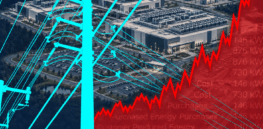
It’s the ‘juice’: What the AI data center wars are really all about
The growing backlash against AI data centers isn't just a culture-war stand-in for anxiety about Big Tech. It's mostly about ...

Slow adoption: Only 15 of Africa’s 54 nations embrace genetic engineering food revolution. Here’s why
Genetically modified crops could help Africa feed its fast-growing population, but only 15 of the continent’s 54 nations have taken ...

4 key ways the Blue Wave will upend science policy
Democrats are poised to take control of Congress, and some are vowing to do more than play defense against the ...
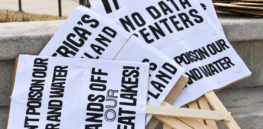
Voters hate AI data centers, yet they are crucial to establishing a critical technology. So what’s next?
Midterms delivered a jolt to the AI industry: candidates promising to freeze data-center development won statehouses in Texas, Georgia, Ohio ...
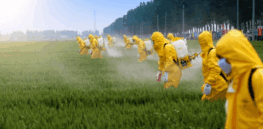
How climate change is driving increased pesticide usage
Climate change isn’t just stressing crops — it’s giving the insects that eat them a leg up. Warmer temperatures are ...
Gene editing once viewed with suspicion by UK farmers, upwards of 90% now open to their sustainability benefits
British farmers are ready to give gene-edited crops a shot. Nearly eight in 10 (78%) say they would consider growing ...

Trump is “terminating” Biden-era rule aimed at cutting climate-warming methane emissions from oil and gas drilling
President Donald Trump says his administration is “terminating” a Biden-era rule designed to curb methane leaking from oil and gas ...

Viewpoint: Activist attacks on corporations increasingly depend on “attribution” science to target oil companies for global climate change
On October 5, 2026, the Supreme Court heard a threshold question in Suncor Energy (U.S.A.) Inc. v. County Commissioners of ...

An Earth-saving benefit of global warming?: How fossil fuel-burning humans stopped the looming Ice Age
Humans may have already called off the next ice age. A new study, published in Science, finds that the Barnes ...

Solar engineering to cool the planet might well work. Could it touch off a geoengineering arms race?
Dimming the sun to cool an overheating planet may be scientifically plausible, but a U.K.-funded war game suggests the politics ...

Viewpoint: AI pioneer Anthropic is going public. Should we embrace its transformative ambitions and safety promises, remain wary—or both?
Anthropic has filed to go public, and its IPO paperwork reads less like a sales pitch than a warning label ...
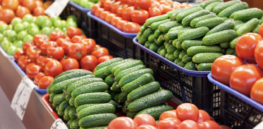
Race against food rot: How AI and gene editing could slash fruit and vegetable waste
Every year, between a quarter and half of all the fruits and vegetables grown on Earth never reach a hungry ...

What is a “normal” climate? Strategy for adapting to the unknown
Climate change is worsening. There’s now no chance of holding temperature rise to 1.5°C. The future will bring worsening floods, ...

Viewpoint: The organic, good-food, small-farm movement is seductive but wrongheaded. Here’s the sustainability and environmental case for industrial farming
Farmer and writer Wendell Berry, who died Aug. 31 at 92, was a decent, principled man and a lodestar of ...

China’s 5-year plan to accelerate science innovation is putting the U.S. and Europe in the rearview mirror
China is pouring money and political muscle into science, and the gap with the West is closing fast — by ...
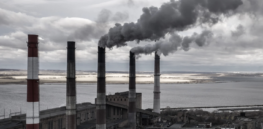
Climate disruption alert: Global emissions hold steady while Trump’s America fuels more warming
Global greenhouse gas emissions barely budged last year, but the United States went the wrong way, fast. It was the ...
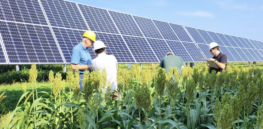
Viewpoint: Latest attack on renewable energy and farmers, new USDA rules could put solar grants out of reach for small producers
Farmers hoping to tap the US Department of Agriculture's Rural Energy for America Program (REAP) must now build their solar ...
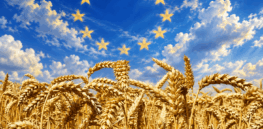
Viewpoint: ‘Bureaucratic and economic obstacles’ to agricultural biotechnology: Europe creeps into the 21st century, but blocks remain
Genetically modified crops won’t single-handedly rescue harvests from worsening droughts, but Europe’s rulebook is making sure they barely get the ...
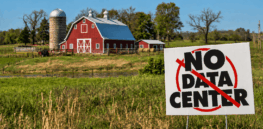
Rural revival or corporate windfall? Trump’s One Big Beautiful Bill tax law opens the door to big breaks for data centers—but tech giants aren’t cashing in
Starting January 1, data centers built on rural land could qualify for a generous set of federal tax breaks, courtesy ...

Is organic farming really more sustainable? 100 recent studies say ‘no’
Organic produce may wear a green halo, but it doesn’t earn a clear climate advantage. Organic and conventional farming come ...
