Harnessing power of fungi could play key role in sucking CO2 from the atmosphere

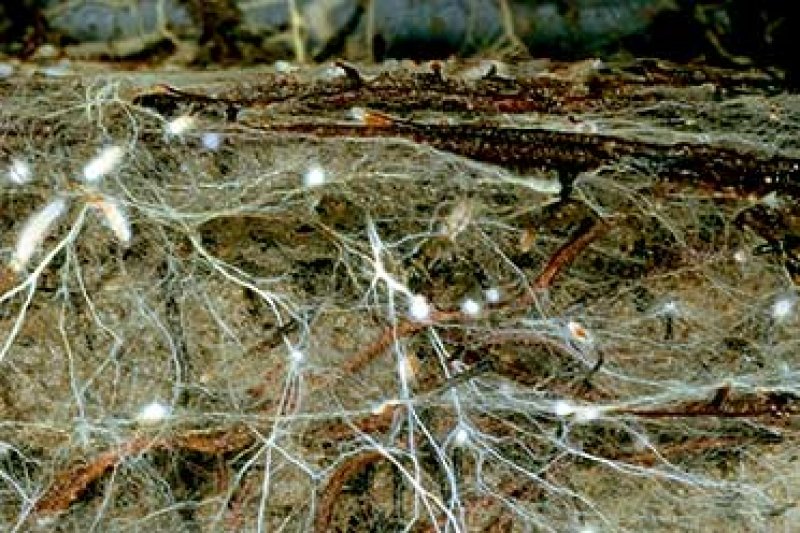
Soil fungus network. Credit: Simon Egli via Swiss Federal Institute

Fungi is being put to use in a range of planet-friendly functions, from being developed as a non-polluting flame retardant to being formed into bricks for construction and even helping to break down plastics.

Now, a biotech startup has received millions in funding to use fungi in a more conventional way: improving the health of soil that has deteriorated following agricultural practices.

According to Business Insider, Australian company Loam Bio has generated $100 million from investors to scale up operations. It uses a microbial fungi-seed coating to help soil store more carbon and improve crop health.

Follow the latest news and policy debates on sustainable agriculture, biomedicine, and other ‘disruptive’ innovations. Subscribe to our newsletter.

Soil can absorb plenty of carbon from the air, helping to reduce the planet-warming pollution that traps heat in the atmosphere and increases the risk of extreme weather conditions — such as deadly storms and flooding.

Loam Bio adds a coating to seeds that allows fungi to grow as the roots take hold in the ground. The fungi live in harmony with the resulting plant, allowing it to absorb and break down carbon compounds. This allows for stronger, healthier crops and improved yields.

According to Loam Bio, there has been a 5.1% increase in canola crop average yields and a 2.9% rise in average barley production, all thanks to fungi.


This is an excerpt. Read the original post here

{{ reviewsTotal }}{{ options.labels.singularReviewCountLabel }}
{{ reviewsTotal }}{{ options.labels.pluralReviewCountLabel }}
{{ options.labels.noReviewsLabel }}
{{ options.labels.newReviewButton }}
{{ userData.canReview.message }}

Related Articles

Infographic: Global regulatory and health research agencies on whether glyphosate causes cancer

Infographic: Global regulatory and health research agencies on whether glyphosate causes cancer

Does glyphosate—the world's most heavily-used herbicide—pose serious harm to humans? Is it carcinogenic? Those issues are of both legal and ...

Most Popular

ChatGPT-Image-Mar-10-2026-01_39_01-PM
Viewpoint—“Miracle molecule” debunked: Why acemannan supplements don’t work
ChatGPT-Image-Jul-10-2026-12_21_03-PM
Viewpoint: Is there new evidence that the animal deworming drug ivermectin decreases the risk of Covid and cancer? Don’t waste your money.
Picture1
Hiroshima at 81: America’s new nuclear bomb, a buried Iranian target, and a question no one wants to ask
Screenshot-2026-07-09-at-1.09.25-PM
Anti-vaccine myths rattle health care
leeteam
How Kennedy and his family could pocket millions from Merck’s $50 million vaccine injury settlement that he oversaw
Screenshot-2026-07-30-at-3.07.42-PM
Controversy over WNBA star Sophie Cunningham’s comment opposing trans females in women’s sports reinvigorates the culture wars
Screenshot-2026-07-30-at-2.30.35-PM
Climate scientists claim conservative activists are promoting ‘lies’ that Europe’s summer heatwaves are far from unusual
ChatGPT-Image-Jun-25-2026-12_23_17-PM
No, Bill Gates did not secretly engineer ticks to promote veganism
ChatGPT Image Jul 29, 2026, 05_50_04 PM
Fear, science, and the law: If talc powder is unlikely to cause cancer and J&J was winning in court, why did it pay more than $5.5 billion to settle?

Sorry. No data so far.

glp menu logo outlined

Get news on human & agricultural genetics and biotechnology delivered to your inbox.