[A]round 65 million years ago, an epic event catapulted a class of small, largely scavenger animals — the mammals — into a prominent role they had never occupied before. As a catastrophic asteroid strike occurred, it wiped out not only the dinosaurs, but practically every animal weighing over 25 kg (excepting leatherback sea turtles and some crocodiles). This was Earth’s most recent great mass extinction, and left a large number of niches unfilled in its wake. Mammals rose to prominence on land in the aftermath of this event, leading to the first humans, which arose fewer than 1 million years ago. Here’s our story.
Mis- and disinformation are distorting science and public policy. Subscribe to our Daily and Weekly Digests for incisive coverage of ‘disruptive’ innovations in AI, agricultural biotechnology, food, chemicals, nuclear energy, vaccines, and other disruptive innovations.
Sometime between 14 and 16 million years ago, the first among the Great Apes arose, with Orang-utans branching off from the rest of our human-ape ancestors around 14 million years ago. The Orang-utans spread into southern Asia after this, unlike the remaining Great Apes, who continued to thrive in Africa.
…
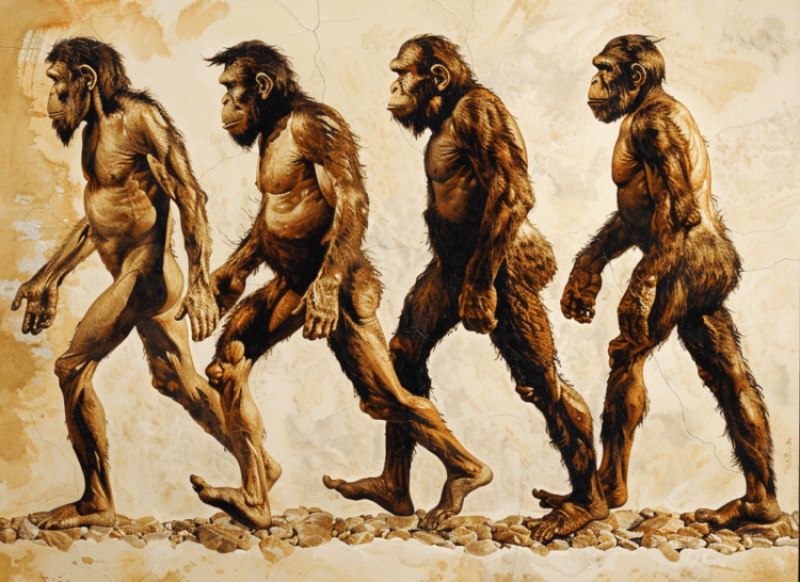
Then, about 6 million years ago the Great Apes split further into two main groups, with one direction giving rise to humanity’s ancestors and the other branch giving rise to chimpanzees and bonobos.
Approximately 300,000 years ago, the first Homo sapiens — anatomically modern humans — arose alongside our other hominid relatives.
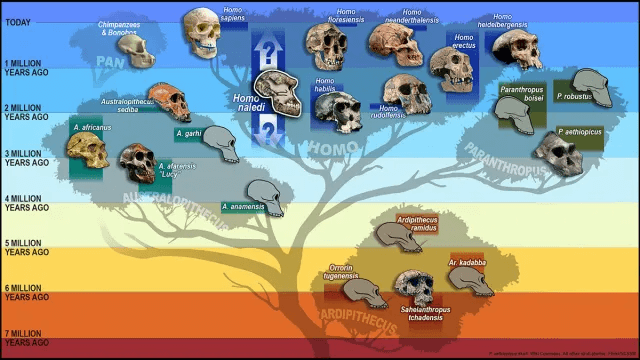
The evolution of modern humans can be mapped out, along with the history of both our extant and now-extinct cousins, thanks to an enormous wealth of evidence found worldwide in the fossil record. Various examples include Homo erectus (which arose 1.9 million years ago and only died out ~140,000 years ago), Homo habilis (the first member of the genus Homo), and the Neanderthal (which arose later than, and likely independent of, modern humans). Credit: S. V. Medaris/UW Madison