We’ve done a lot of debunks. After a while, they start to blur together because the formula is almost always the same. Personal tragedy, a miracle molecule, a wall of citations that don’t say what they claim to say, and an affiliate link at the bottom.
You’d think the details would change more than they do, but the moves are predictable:
- Lead with grief. Personal loss builds trust and disarms skepticism.
- Appeal to nature. If it comes from a plant, it feels safe before a single claim is evaluated.
- Cite volume, ignore context. A long list of sources signals credibility. Most people won’t click.
- Skip to the petri dish. Cell studies and animal models sound like human evidence if you don’t read the fine print.
- Preemptively discredit the counterevidence. If it worked, Big Pharma would have suppressed it.
- Sell certainty to people who are desperate for relief from chronic pain or illness. That’s where it stops being bad science and becomes something worse.
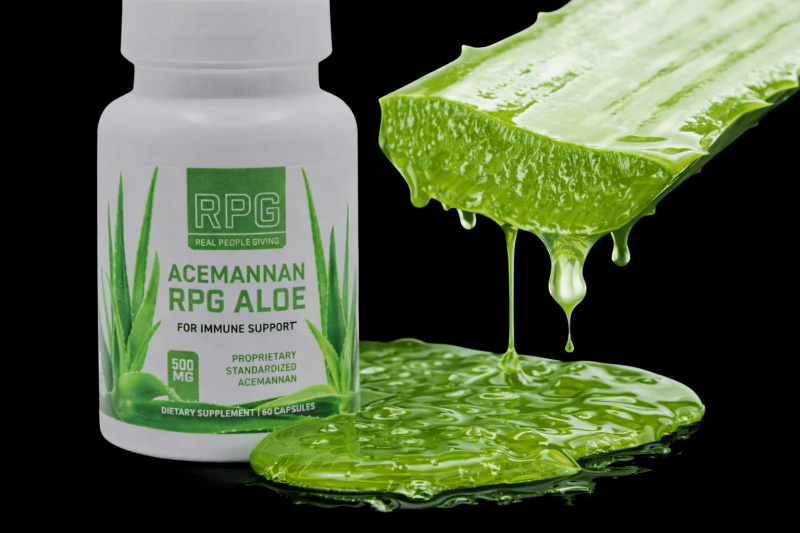
Recently, we got a flood of questions about acemannan, a supplement gaining traction in wellness spaces. It checks every box. So, it’s worth walking through — both for the specific claims, and because once you recognize this pattern, you’ll see it everywhere. Let’s discuss…
A Personal Story With a Very Convenient Product
Emily Drage is building her online kingdom, Emily Marie Wellness, on the back of family tragedy. Her mother’s death from cancer inspired her to take her family’s health into her own hands and stop waiting for “the system” to solve her problems. For Emily, this meant replacing ultraprocessed foods with “healing foods,” heavy use of supplements, and eliminating household toxins via the Yuka app (we’ve covered that one here).
Her bread-and-butter supplement is acemannan, which she calls a “miracle molecule” that can free followers from “a lifetime of prescriptions” by solving pretty much any health problem under the sun. She also claims she reversed her young son’s eczema and food allergies the “natural” way.
It’s a compelling origin story, and that’s precisely why it works.
Instead of scientific evidence, she offers an endless scroll of testimonials stating that acemannan reversed someone’s cancer or improved their lab results. The placebo effect is real, but it only goes so far.
Conveniently, Emily Marie Wellness sells acemannan supplements via affiliate links at $1.15 per serving. The product page recommends two servings a day, but Emily describes taking up to eight servings daily and giving her kids four. She notes there’s no upper limit. To put that in real numbers: two adults at 8 tablets per day plus two kids at 4 tablets per day adds up to $27.60 per day, or $193.20 per week. (Can anyone say “cha-ching”?) These supplements are sold through affiliate links, meaning Emily earns a commission on every purchase, and potentially more through a tiered MLM structure. That financial incentive has a direct bearing on why she recommends up to eight tablets a day, with ‘no upper limit.
Emily may genuinely desire to help. But she is profiting from a supplement with minimal scientific backing and marketing it directly to people with cancer. That crosses a serious ethical line, and potentially a legal one. People facing a life-threatening illness are open to trying almost anything. Promoting an unregulated substance as a cancer treatment can prevent patients from seeking evidence-based care, and often does.
What Acemannan Actually Is (and Isn’t)
Acemannan is a component of aloe vera plants, the same plant gel used to soothe sunburns. That association with something safe, green, and familiar does enormous marketing work before a single claim is even evaluated.
There is some legitimate research on acemannan. It may improve bone healing after wisdom-tooth extraction, can help treat fibrosarcoma growths in cats and dogs, and is used in some wound-dressing products to help maintain a moist healing environment. There is also some evidence, mostly from animal and cell studies, that it may stimulate the immune system and act as a growth factor.
What the evidence does not show is that acemannan can prevent cancer or prolong survival in humans. Full stop.
When a Long List of Claims Is Actually a Red Flag
When a supplement claims to address everything from thyroid health to radiation protection to animal health, that’s not versatility. It’s a big ol’ warning sign.
The Emily Marie Wellness website has a research section outlining 20 “benefits” of acemannan (a green panacea, if you will):
- Gut-brain axis
- Gut health
- Autoimmune
- Inflammation
- Thyroid health
- Immune support
- Collagen production
- Metabolism
- Skin support
- Allergies
- Liver support
- Nutrient absorption
- Blood sugar
- Neuroprotection
- Radiation protection
- Vascular health
- Bone health
- Dentistry
- Kidney health
- Animal health
Emily also notes that other aloe formulations don’t have the same benefits as the pills she sells. She claims over 700 research articles support acemannan’s benefits. What her site actually provides is a few links per topic, most of which are studies conducted in tissue culture, animals, and plants, and cannot automatically be extrapolated to humans.
The Studies Behind the Claims
You may notice that, while cancer is one of Emily’s biggest marketing claims, it doesn’t appear on her list of benefits. That’s likely because she knows there are no human results showing that acemannan can prevent, treat, or extend survival for people with cancer. Her cancer argument leans heavily on the claim that acemannan activates macrophages, T-cells, and natural killer cells to wipe out cancer cells and increases immune activation “by a factor of ten”. What does that even mean? Her guide doesn’t link to any evidence-based science to explain it. Instead, it offers testimonials.
Her website includes an “immune support” section that lists five sources: three studies, a 1993 patent application, and two YouTube videos. Patents and YouTube videos aren’t scientific evidence, so let’s look at what the actual studies say:
Tsutumi et al., 2005: This study assessed the mannose-binding protein, which is not the same as acemannan, so it is not applicable to any of her claims.




Womble & Hendlerman, 1992: This study was an in vitro immunology study, meaning it used immune cells cultured in a lab. This was not a study conducted in humans or animals. The researchers found that high doses of acemannan, when added directly to cultured cells, increased the production of “killer” T-cells. But all of this happened in a petri dish.
Ramamoorthy et al, 1996: Also an in vitro study. It found that when a specific cytokine was present in the petri dish, acemannan enhanced macrophage function.
These last two studies examined isolated immune cells under controlled laboratory conditions. Results observed in a petri dish cannot predict how a substance will behave in the human body, and neither study involved cancer cells. Of the three studies Emily cites, one isn’t even about acemannan. The other two are lab experiments that suggest that acemannan might influence immune cell activity under very specific conditions. None of this establishes that acemannan is safe or effective in humans.Subscribe
Is There a Conspiracy? No.
Emily claims that acemannan was originally developed as a pharmaceutical drug, but “when the powers-that-be realized it was supporting people’s immune systems so well that their bodies were healing, they pulled it.”
This is false.
A 1996 pilot study examined acemannan as an add-on to antiretroviral therapy for patients with advanced HIV. It found no meaningful difference in white blood cell counts or disease progression. There are also registered clinical trials assessing acemannan for oral thrush (yeast infection) and skin inflammation from radiation in breast cancer patients. The research has been ongoing for more than 20 years. The reason there aren’t more large-scale cancer trials isn’t a cover-up. It’s that the early evidence hasn’t been compelling enough to justify the investment.
Demonization of the pharmaceutical industry is common in alternative wellness spaces. But in reality, drug companies aggressively pursue new treatments. The oncology space is especially competitive: if a drug shows even marginal improvement over existing options, companies will pursue it. In 2019 alone, the industry spent $83 billion on research and development. There are also government incentives, like the Orphan Drug Act, that make drug development worthwhile even for small patient populations.
The bottleneck in drug development is the need for substantial human data. Acemannan may have real medicinal properties; it has shown antibacterial, antiviral, and antitumor activity in animal and cell models. That’s worth investigating. But “worth investigating” is a long way from “take eight pills a day and skip your prescriptions.”
What Should We Be Excited About?
Emily is right about one thing: the immune system plays a key role in fighting cancer. That’s the basis of immunotherapy, a rapidly expanding field with real evidence behind it. Immunotherapy helps the body’s immune system identify and attack cancer cells. It’s not right for every patient, but it represents a genuine, clinically validated example of harnessing the immune system to treat cancer. That’s the exciting stuff.
The Unsexy Truth About Cancer Prevention
If Emily Marie Wellness genuinely wants to help people reduce their cancer risk, there’s a better path than supplements with minimal human data to support them. Modifiable risk factors are estimated to account for 30 to 50% of cancers. The interventions with the strongest evidence are smoking cessation, HPV and hepatitis B vaccination, and regular physical activity.
The tragedy isn’t that people want better answers. It’s that we’re being sold certainty where science has only questions. Real progress in cancer care doesn’t come from miracle molecules or suppressed cures. It comes from rigorous trials, prevention, and treatments that work, even when they’re harder to market.
Jess Steier is a public health scientist dedicated to bridging the gap between complex scientific evidence and public understanding. Jess is the Founder of Unbiased Science, CEO of Vital Statistics Consulting, and Executive Director of The Science Literacy Lab (a 501c3 non-profit organization). Follow Jess on Substack @drjessicasteier
Aimee Pugh Bernard, PhD is an immunologist, educator, science communicator, and science advocate. Follow Aimee on TikTok @funsizeimmuninja
Paige Boklaschuk is an epidemiology student who loves to go down rabbit holes about reproductive health, nutrition, global health, and exercise science. Find Paige on LinkedIn
A version of this article was originally posted at Unbiased Science and has been reposted here with permission. Any reposting should credit the original author and provide links to both the GLP and the original article. Find Unbiased Science on X @unbiasedscipod