

Summary
PFAS contamination raises legitimate health and environmental concerns, but this diverse family of thousands of chemicals should not be treated as uniformly dangerous, and some safe uses currently lack viable substitutes.
This paper examines how alliances among anti-chemical activists, opponents of conventional agriculture, and tort lawyers often blur those distinctions—weaponizing reasonable concerns and scientific uncertainty to advance ideological goals and litigation profits, with farmers, both conventional and organic, in the crosshairs.
Per- and polyfluoroalkyl substances (PFAS)—often called “forever chemicals”—have become one of the most consequential environmental and regulatory challenges facing American agriculture. Farmers, composters, and rural communities find themselves at the center of a crisis largely not of their making: agriculture sits downstream from industrial contamination sources, yet farmers and food producers bear disproportionate regulatory, economic, and reputational consequences when PFAS are detected in soils, crops, water, or food.
The central flaw in current PFAS governance—the tendency to treat a chemically diverse class of thousands of compounds as a single, uniform hazard—is especially damaging to the agricultural sector. That flattening of distinctions distorts regulation, amplifies public alarm about food safety, and exposes farmers to liability and market consequences that are poorly calibrated to actual risk. The presence of PFAS in agricultural soils or food at trace levels does not, by itself, establish meaningful harm. Real-world risk depends on the specific compound, dose, duration, and exposure pathway.
Five core issues relevant to the agricultural community:
- First, the strongest evidence for adverse health effects is concentrated in a small number of well-studied compounds, particularly PFOA and PFOS, and in high-exposure scenarios; the science remains far weaker for most of the thousands of other PFAS.
- Second, agriculture’s primary PFAS exposure pathway is through contaminated inputs—biosolids, compost, irrigation water, and certain feeds—not through farming practices themselves.
- Third, sound agricultural governance requires compound-, pathway-, and exposure-specific analysis, with priority given to upstream source control and targeted testing rather than blanket restrictions on farming activities.
- Fourth, farmers need practical, science-based tools to test inputs, interpret results, communicate credibly with buyers and consumers, and avoid being swept into regulatory or litigation responses calibrated to industrial polluters rather than agricultural recipients.
- Fifth, the EPA’s 2025 Draft Sewage Sludge Risk Assessment and 2026 draft biosolids guidance sharpen the practical question for agriculture: biosolids remain a valuable and often necessary nutrient source, but PFOA/PFOS management now requires source control at wastewater treatment plants, targeted testing, crop- and pathway-specific land application decisions, and clearer public communication rather than blanket reassurance or prohibition (EPA Biosolids Guidance 2026).
The 2026 National Academies of Sciences, Engineering, and Medicine (NASEM) report prepared for USDA/NRCS—”PFAS in Agricultural Systems: Guidance for Conservation Programs at USDA”—reinforces this framework, emphasizing that PFAS on agricultural land should be managed through conservation planning, source and pathway analysis, and decision-making under uncertainty rather than through undifferentiated class-wide assumptions (NASEM 2026).
Introduction
Per- and polyfluoroalkyl substances (PFAS), often referred to as “forever chemicals,” present a complex challenge for public health, agriculture, and public policy. The phrase captures the persistence of many PFAS and helps explain why the issue has drawn intense public health scrutiny, regulatory pressure, and litigation attention. But it also risks implying that PFAS are a single, uniform hazard, when in fact they are a large and diverse family of fluorinated substances that differ substantially in structure, persistence, mobility, exposure pathways, and toxicity. Public discussion often flattens those differences, even though the science, the exposure scenarios, and the associated risks vary sharply across compounds and uses. That flattening is particularly costly for the agricultural sector, which faces regulatory and market consequences calibrated to the worst industrial contamination cases rather than to the diffuse, low-level exposures more typical of farming contexts. That confusion is not confined to public debate; it also shapes regulatory, legal, and remediation strategies, which have developed unevenly and sometimes in tension with one another—often without sufficient attention to compound identity, exposure pathway, dose, and agricultural context.
Harm caused by PFAS usually comes from long-term exposure rather than a single acute event, and the concern is greatest for the very young. Exposure and contamination patterns also vary significantly across places, pathways, and populations, which means that sound governance requires case-by-case analysis rather than one-size-fits-all assumptions. This is especially important in agriculture; a blanket regulatory posture that treats all PFAS detections as equally dangerous risks penalizing farmers for trace findings whose significance is scientifically uncertain, while doing little to address the upstream industrial and municipal sources that introduce PFAS into farming systems. Yet policy and litigation often blur the distinction between hazard and risk, encouraging interpretations broader than the evidence warrants. Detection alone does not establish meaningful danger; real-world risk depends on exposure—how much, how often, for how long, and by what pathway. That distinction is especially important in controversies involving chronic, low-dose exposure, where increasingly sensitive detection methods can intensify public alarm even when the health implications remain uncertain or limited.
The NASEM report begins with an admission: of the thousands of compounds called PFAS, only a handful have been studied closely enough to say what dose causes harm—and nobody has tested American farmland systematically. That is not enough to set a single nationwide limit, and experts still disagree about which chemicals even belong in the category. But a farmer deciding whether to spread biosolids in the spring cannot wait for that to be settled. What producers need, the report argues, are US Department of Agriculture (USDA) and Natural Resources Conservation Service (NRCS) tools for tracing the likely pathways on their own land—without treating every detection as equally serious.
“Farmers are partners in risk reduction, not convenient downstream targets for contamination they did not cause.”
The diversity of PFAS helps explain both their utility and the difficulty of coherent regulation. Since the 1940s, PFAS have been used in hundreds of applications because of their exceptional resistance to heat, water, oil, and chemical degradation. Their uses span military and aerospace systems, firefighting foams, nonstick cookware, stain- and water-resistant textiles, electronics and semiconductor manufacturing, medical devices, electrochemical membranes, solar components, wiring, and batteries. At the same time, these chemicals do not behave uniformly in the environment or in biological systems. Some PFAS, including certain specialized industrial and medical fluoropolymers, are less soluble, less mobile, and often associated with lower exposure potential because they are used in more controlled settings, including closed-loop manufacturing systems. Others, including well-studied perfluoroalkyl acids such as PFOA and PFOS, are more mobile in water, more environmentally persistent, and supported by a stronger evidence base for adverse health and ecological effects, particularly where drinking-water exposure is significant. Those distinctions matter most in agriculture.
The question is not whether PFAS are present, but whether the specific compounds, concentrations, and pathways involved pose risks that require intervention and whether farmers who are downstream of the contamination—biosolids, irrigation water, and deposition all move toward the farm—rather than its source, are being asked to bear costs that belong to industry and municipalities.
PFAS in Agriculture and Food
Farmers are typically downstream recipients of PFAS contamination originating elsewhere, not its generators. PFAS enter agricultural systems through industrial discharges into waterways, municipal wastewater treatment that concentrates PFAS in biosolids, contaminated irrigation water, atmospheric deposition from industrial sources, and legacy contamination in soils and groundwater near military or industrial sites. In agriculture and food systems, the most consequential PFAS concern is not background trace detection alone but localized hotspot exposure—especially when biosolids, compost, irrigation water, or other contaminated inputs introduce PFAS into soils and, in some cases, into crops, livestock, and nearby groundwater.
Agriculture nonetheless occupies an uncomfortable position. It is where PFAS become visible to consumers and regulators, and it is where the regulatory, economic, and reputational costs land. That makes agriculture not merely another exposure pathway, but a sector in which scientific uncertainty and public alarm can have immediate practical effects on livelihoods, land values, market access, and community trust.
Because PFAS behavior varies by compound and by soil, water, and crop conditions, the practical challenge in agriculture is to distinguish low-level detection from meaningful risk. Treating all PFAS as equally hazardous can lead both to underreaction by missing genuine contamination hotspots and to overreaction by penalizing producers for low-level detections whose significance remains unclear. In food and farming systems, a measured approach therefore requires upstream source control, targeted testing, careful interpretation of exposure pathways, and full disclosure of what was detected, including whether levels are high enough to pose a health risk.
The National Academies report reinforces this distinction by warning that routine, large-scale PFAS monitoring of agricultural facilities is outside NRCS’s scope and that many farms will need screening based on proximity to known PFAS sources, available monitoring data, soil and hydrologic conditions, and targeted testing when risk indicators justify it (NASEM 2026).
Measurability is not the same as harmfulness, a distinction that public discussion, and too often regulatory practice, loses sight of. The fact that nearly all Americans have detectable PFAS in their blood has fueled controversy, but health significance depends on which PFAS are involved, at what concentration, through which exposure pathways, over what period, and a person’s body size. That’s why children warrant separate consideration; the same concentration in water or food delivers a larger dose relative to body weight during years when organ systems are still forming. Early-life behavior—crawling, hand-to-mouth activity, mouthing objects—can increase contact with PFAS-bearing dusts and consumer materials.
Reported associations in the literature include immune and thyroid effects, reproductive and infant development concerns, and possible neurodevelopmental effects, which are typically framed as chronic risks except in cases of unusually high exposure (Fenton 2021; EPA 2024; Ames et al. 2025). High adult exposures are more often linked to occupational settings (e.g., industrial work or firefighting) or to residence near significant contamination sources, while the policy challenge for children is broader, lower-level, and potentially more diffuse.
“Measurability is not the same as harmfulness, a distinction that public discussion, and too often regulatory practice, loses sight of.”
The USDA’s Food Safety and Inspection Service has tested 3,199 meat and poultry samples for PFAS, with fewer than 0.1% showing detections. The US Food and Drug Administration (FDA) found no PFAS in 97% of roughly 800 fresh and processed food samples; among seafood specifically, 74% had detectable levels (USDA 2025; FDA 2025c). Long-chain PFAS are more prone to accumulate in fish muscle tissue (Chung et al. 2025).
The agricultural community’s stake in getting PFAS science right is substantial. Overregulation based on trace detection—without regard to compound identity, concentration, or actual exposure—can shut down farms, depress land values, eliminate market access, and destroy consumer confidence in food that is, by any rigorous scientific standard, safe. A lack of regulation at genuine contamination hotspots can allow real harm to accumulate in soils, water, and crops over time. The goal of this paper is to help agricultural stakeholders navigate between those two failures.
To place these agricultural concerns in context, this paper examines five questions:
1) What are PFAS, and where do they come from?
2) What is known—and not yet known—about health risks from PFAS in food and drinking water?
3) How are federal and state regulators responding, and what do those responses mean for farmers, composters, and food producers?
4) Where is PFAS litigation heading, and what liability does it create for agriculture?
5) What practical, non-punitive steps can farmers and composters take to reduce risk, preserve market confidence, and avoid being swept into reactionary policy responses?
PFAS Overview
What are PFAS?
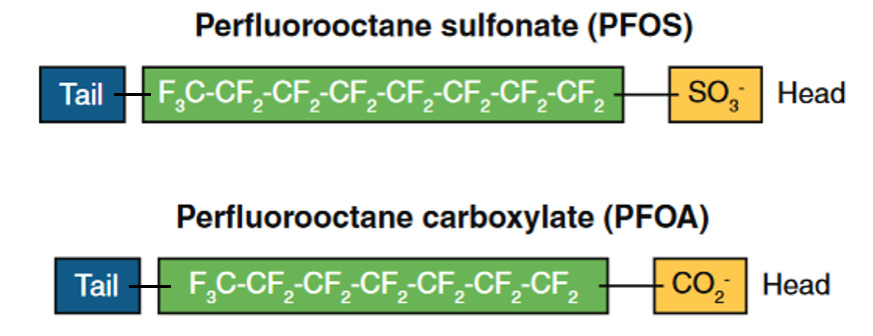
PFAS are a large class of synthetic chemicals that includes PFOA, PFOS, GenX chemicals, and many other substances. They share the characteristic of having multiple carbon-fluorine bonds, but the class is chemically diverse and its members differ substantially in structure, persistence, mobility, exposure pathways, and toxicity.
Older umbrella terms, such as “PFCs,” are imprecise; the term PFCs, or perfluorocarbons, conflates structurally distinct compounds and has largely been abandoned in scientific literature. Compounds such as PFOS and PFOA are individual PFAS, not synonyms for the whole class. For agricultural stakeholders, the critical takeaway is that regulatory and public discussions often treat all PFAS as interchangeable—equally persistent, equally toxic, equally concerning in food. That is scientifically inaccurate and often leads to exaggerated assessments of agricultural risk and poor policies.
Depending upon the definition used, PFAS inventories include thousands to tens of thousands of substances (US EPA Master 2021); EPA’s current CompTox PFAS structure list contains 21,028 in the January 2026 update (US EPA 2026). These chemicals are widely detected in the environment, although occurrence, persistence, mobility, and toxicity vary sharply by compound. The best-studied PFAS (especially PFOA and PFOS) have been associated with certain adverse outcomes in multiple studies, but the evidence and uncertainty vary substantially across the broader PFAS class.
Comparison of Selected Fluorinated-Substance Classes
Long-chain legacy PFAS
PFOA / PFOS
long fluorinated tail + ionic head
STRUCTURE
Small molecule with a long fluorinated tail
MOBILITY
Moves in water; binds more strongly to soil and proteins
EXPOSURE
Water and food; can remain in the body for years
USES
Historic surfactants, firefighting foams and stain treatments
Shorter-chain PFAS
PFBA / PFBS
shorter fluorinated tail + ionic head
STRUCTURE
Small molecule with a shorter fluorinated tail
MOBILITY
Usually travels farther with water; less retained by soil
EXPOSURE
Often waterborne; generally cleared from people faster
USES
Replacement surfactants and processing chemistries
Fluoropolymers
PTFE / FEP / PVDF
a very large repeating molecule
STRUCTURE
Enormous repeating molecules; usually solid materials
MOBILITY
Intact bulk polymer has very low mobility in water
EXPOSURE
Assess production, additives, wear and disposal separately
USES
Medical devices, chipmaking, seals, membranes and wire insulation
Single-CF₃ compounds
Included by broad definitions
one fluorinated group on a larger molecule
STRUCTURE
One CF₃ group on a mostly nonfluorinated molecule
MOBILITY
Varies widely with the rest of the molecule
EXPOSURE
Depends on dose, route, metabolism and product use
USES
Medicines, crop protection and specialty chemicals
A shared C–F motif is only the starting point: molecular size and architecture help determine mobility, exposure and use.
Fig. 1. Comparison of Selected PFAS Substances.
This definitional complexity has policy consequences for agriculture. Some EPA and state proposals and NGO campaigns could sweep fluorinated pesticides—or compounds containing a single fully-fluorinated carbon—into PFAS restrictions without first evaluating exposure, mobility, persistence, toxicity, agricultural need, or the consequences of losing crop protection tools. For example, the single-CF3 compound in Figure 1 is only defined as a PFAS under some definitions, such as OECD, where a PFAS is defined as “If a chemical has at least one carbon atom completely bonded to fluorine atoms (and no other halogens or hydrogen on that specific carbon” (OECD 2023).
The report also cautions that no single PFAS definition has been agreed to, including for agricultural purposes. A working agricultural definition may need to account for chemical structure, analytical detectability, and action thresholds, a point directly relevant to state proposals that could sweep fluorinated pesticides or compounds containing a single fully-fluorinated carbon into PFAS restrictions without first evaluating exposure, mobility, persistence, or agricultural need (NASEM 2026).
Beginning in the 1940s and expanding rapidly in the postwar period, fluorinated materials became strategically important to military and industrial development. Their early uses included the Manhattan Project, where chemically resistant materials were needed for uranium-enrichment systems handling uranium hexafluoride. PTFE (polytetrafluoroethylene), a fluoropolymer sold under the DuPont trademark Teflon™, became widely known through nonstick cookware, but its industrial uses extended far beyond consumer products.
The chemistry of PFAS helps explain both their economic value and environmental fate, but “PFAS” is too broad a category to support sweeping claims about toxicity. Many nonpolymeric PFAS function as surfactants; they contain a fluorinated carbon chain and, in some cases, a polar head group. That chemistry is why some PFAS resist heat, water, oil, and chemical degradation and why certain compounds are relatively mobile in water. But PFAS do not all behave the same way; some can migrate into groundwater and, under certain conditions, leach from contaminated soils, biosolids, or compost, while others—including many fluoropolymers—are less soluble, less mobile, and associated with different exposure pathways. These differences in mobility and persistence determine whether PFAS deposited in agricultural soils remain bound and biologically unavailable, or migrate into crops, livestock water, and groundwater, making compound-specific analysis essential before any agricultural intervention is warranted.
The very qualities that make PFAS useful in industrial materials—durability, thermal stability, and chemical resistance—also help explain why many of them persist in the environment, which is why the class is often labeled “forever chemicals.” But that shorthand can obscure important differences within the class. Some PFAS, especially certain long-chain perfluoroalkyl acids, bind to proteins in blood and liver rather than partitioning mainly into fat, which helps explain bioaccumulation in people and wildlife. Bioaccumulation, persistence, and toxicity vary substantially across PFAS. Of greatest concern to farmers are compounds that both move in water and are taken up by crops or livestock—a subset of the broader PFAS class and one that should guide testing priorities rather than untargeted class-wide surveillance.
Before the EPA’s 2024 Comprehensive Environmental Response, Compensation, and Liability Act (CERCLA) designation of PFOA and PFOS as hazardous substances, some states—especially California—had already taken significant steps to regulate certain PFAS through drinking-water monitoring, notification levels, and public-health-goal development, but those measures did not amount to a class-wide hazardous-substance designation. PFAS-bearing landfill leachate and contaminated biosolids can also act as important secondary sources of contamination, extending exposures beyond the original point of manufacture or use and creating the primary pathway through which PFAS reach agricultural soils.
Even as industry moves away from some legacy PFAS and adopts replacement chemistries for certain uses, the historic manufacture, use, and disposal of these chemicals have left PFAS widely distributed in the environment. PFAS have been detected even in pristine remote regions, including the Arctic, and Arctic wildlife such as polar bears carry substantial PFAS burdens—as much as ten times the PFAS in their blood compared to Alaskans (Main 2024). As with other persistent pollutants, including PCBs, the challenge for regulators and remediators lies not only in persistence but also in the extraordinary number, diversity, and use patterns of PFAS compounds. Some level of PFAS will be present in many farm environments for the foreseeable future, making risk management and clear communication more important than the unreachable goal of elimination.
Where are PFAS Found?
A major turning point in PFAS environmental distribution was the development of aqueous film-forming foam (AFFF) in the 1960s for flammable-liquid fires. It proved highly effective against fuel fires and was adopted first by the military and later by airports, refineries, and fire departments. After the 1967 USS Forrestal fire, in which 134 sailors died, the Navy overhauled firefighting practices and AFFF use became more widespread. Repeated training, testing, and emergency use—often without effective containment—helped create many of the PFAS hotspots later identified at military installations, airports, and fire-training areas. Farms located near such facilities have in some cases received contaminated groundwater or irrigation supplies as a result—contamination generated entirely by military or industrial activities, not by farming.
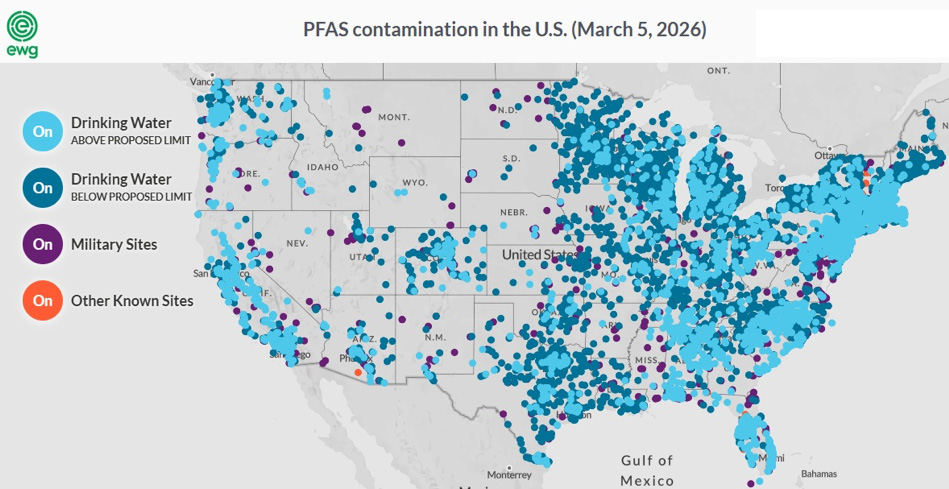
AFFF became a major source of PFAS contamination at military bases, airports, fuel depots, refineries, and other facilities that store or handle flammable liquids. Firefighters often trained (US Department of Transportation 2010), tested equipment, and responded to emergencies with AFFF, and releases from those activities allowed PFAS to drain into stormwater systems, surface waters, soils, groundwater, and, in some cases, drinking-water supplies. But AFFF is not the only important source of PFAS reaching agricultural land. PFAS have also entered the environment through industrial wastewater discharges, air emissions and deposition, landfill leachate, and wastewater residuals such as biosolids (Kritzer and Mackey 2017). Biosolids—the treated solid residue from municipal wastewater treatment—represent one of the most direct and consequential pathways through which PFAS move from industrial and municipal sources into agricultural soils, and they are discussed in detail in Section VII. According to the Environmental Working Group (EWG), an NGO that tracks PFAS locations, as of June 2025, there were 9,728 PFAS-affected locations across all 50 US states, though the definition of “affected location” and the methods for compiling this figure vary and may not align with regulatory thresholds (EWG 2026).
The EPA’s Biosolids Guidance 2026 reinforces this source-control framing: before states or farmers can manage PFAS in soil amendments, wastewater systems need monitoring, industrial pretreatment, and source-identification programs that reduce PFOA/PFOS before they are concentrated in sludge and land-applied (EPA Biosolids Guidance 2026).
The geographic distribution of these hotspots reflects not only where PFAS were used, but also where states have looked hardest for them. States that have invested heavily in PFAS investigation—Michigan, Minnesota, and Maine—have identified more agricultural impacts, not necessarily because those states have more contamination, but because they have looked harder. Michigan’s PFAS Action Response Team has pursued a statewide, multi-agency response since 2017. Maine has conducted an extensive investigation of sludge land-application sites that has revealed widespread PFAS loading in agricultural soils from decades of biosolids application.
As regulatory attention and drinking-water standards have moved into very low parts-per-trillion ranges, investigators have had to look beyond AFFF to other PFAS sources and pathways (ASWDA 2025).
That broader search has reinforced a central point: PFAS are found not only where flammable-liquid firefighting occurred, but across a wide range of industrial, consumer, and waste-management settings. Their resistance to water, oil, heat, and chemical degradation made them useful in nonstick cookware, grease-resistant food packaging, stain-resistant fabrics, electronics, construction materials, waterproof textiles like Gore-Tex®, and many industrial processes. More than 3,000 PFAS chemicals are, or have been, on the global market, yet most research and regulation still focuses on a limited group of well-studied compounds, such as PFOA and PFOS (Wang et al. 2017). For farmers seeking to understand their risk, this means that testing programs targeting only PFOA and PFOS may miss other compounds of concern, while testing programs that attempt to screen for all PFAS may generate data that cannot be meaningfully interpreted given current toxicological knowledge.
PFAS Become Widespread and Persistent
PFAS are now widely detected in soil and water worldwide, and the cost estimates are staggering. ChemSec, a Swedish advocacy NGO, estimates the global societal cost of PFAS at roughly €16 trillion a year (ChemSec 2023). A peer-reviewed study estimates that removing and destroying the PFAS released into the environment each year would cost more than global GDP, or about $106 trillion (Ling 2024).
The estimates vary enormously depending on which compounds are counted, the thoroughness of the cleanup, and whether the goal is removing PFAS everywhere or reducing exposure where it is highest. The ChemSec figure extrapolates from a Nordic estimate rather than a global inventory, and the $106 trillion figure describes a scenario its own authors call unachievable.
These are global numbers. A farmer faces more concrete and expensive questions: what to test, and where. Both the NAS and EPA’s draft biosolids guidance point toward remediating the places where exposure is documented and heavily concentrated, such as biosolids spread near known contamination sources or irrigation drawn from affected groundwater, rather than uniform testing of every field (NASEM 2026; EPA Biosolids Guidance 2026). The emergence of PFAS-free labeling of food under standards like NSF 537 could drive creation of zones of production that are relatively free of PFAS (NSF 2025).
Before presenting the headline cost figures that often dominate policy discussions, it is important to understand the assumptions behind them because those assumptions bear directly on what is achievable in agricultural settings. These figures depend heavily on (1) which PFAS are included, (2) what cleanup level will be required, and (3) whether policy is aimed at global removal or at targeted risk reduction at high-exposure sites. With those caveats in mind, ChemSec, a Swedish advocacy NGO, estimated global societal costs for PFAS at roughly €16 trillion per year (Chemsec 2025)—a figure extrapolated from a Nordic estimate rather than built from a global inventory. The theoretical cost of removing and destroying the annual mass of PFAS released into the environment has been estimated to exceed global GDP—about $106 trillion—while also emphasizing that such universal treatment is neither technically nor economically achievable (Ling 2024). Agricultural stakeholders need risk standards that are science-based and bring the PFAS problem into focus so that real risks are addressed without turning worst-case abstractions into default policy (Ling 2024; EPA Biosolids Guidance 2026). For agriculture specifically, this means focusing resources on the highest-exposure pathways—particularly biosolids application near known contamination sources—rather than attempting universal soil remediation that is neither technically achievable nor scientifically warranted.
Those headline figures can obscure the very point that makes PFAS so difficult to govern: the class is chemically diverse, and toxicity, persistence, and mobility vary widely across its members, while data gaps remain substantial for many PFAS whose hazards are still poorly characterized. Accordingly, risk depends on the specific compound, dose, duration, and exposure pathway. Technically and economically, that argues for source control, emissions reduction, and remediation at significant exposure sites rather than any attempt to remove PFAS everywhere. The pace of innovation in removal technologies could limit the expense of remediation of PFAS (Desotec 2025). At the same time, some regulatory programs, including California Proposition 65—a state law requiring businesses to warn Californians about significant exposures to chemicals that cause cancer, birth defects, or other reproductive harm—operate through chemical-specific listing and warning requirements rather than through a class-wide PFAS ban. These requirements can increase compliance costs, but they do not resolve broader scientific questions about risk across the PFAS class. For agricultural producers selling into California markets, Proposition 65 listings for PFOA and PFOS create potential labeling exposure even where actual dietary risk from their products is minimal, underscoring the importance of proactive testing and documentation.
The same properties that complicate cleanup also help explain why PFAS became so widely used in the first place. PFAS play important roles in high-precision manufacturing, including semiconductor fabrication steps involving EUV lithography, photolithography, etching, deposition, heat-transfer applications, and chip packaging. Fluoropolymers are also used in many medical devices, and the FDA states that the fluoropolymers used in medical devices are not the same as the PFAS most often associated with environmental health concerns and therefore should not be discussed as though all uses carry the same risk profile or the same replacement prospects (FDA 2025a). The agricultural community itself relies on PFAS in some equipment, sensors, and processing materials—a point that underscores why the goal must be managed stewardship, not blanket elimination.
In hindsight, many nonessential or poorly controlled uses were introduced long before disposal risks were adequately understood or managed. PFAS delivered obvious functional benefits—fire control, stain resistance, nonstick performance, and grease resistance—but their life-cycle risks were often poorly understood. In some applications, substitutions or reformulations have already reduced reliance on legacy PFAS; in others, replacement remains harder or involves tradeoffs of its own.
Industry and regulators have already reduced or phased out some legacy PFAS uses while preserving others that are harder to replace or useful in more controlled settings. But the legacy of decades of manufacture, use, disposal, and wastewater treatment means that PFAS entered water systems, and, in some places, biosolids and agricultural soils. We cannot, however, assume that every use of PFAS should be treated identically. Policy should press hardest against low-value or poorly controlled uses while allowing essential uses to continue under strict waste management and exposure controls where benefits are clear and substitutes are not yet adequate. The equivalent principle for farming is that policy should focus on the inputs and pathways where PFAS loading is highest and best documented—biosolids from certain municipal systems, compost containing contaminated paper fibers, and irrigation from affected groundwater—rather than imposing blanket restrictions on farming operations based on trace detections of uncertain significance.
The same caution applies to crop protection chemistry. Some state and NGO proposals treat any pesticide containing a PFAS-like structural feature as suspect, even when the compound does not resemble long-chain PFOA/PFOS in mobility, bioaccumulation, persistence, or exposure potential. For growers, broad restrictions on fluorinated pesticides could reduce pest- and weed-control options, increase repeated applications of alternatives, and raise production costs without necessarily reducing meaningful PFAS risk (NASEM 2026).
How Knowledge of PFAS Toxicity Emerged and What It Means for Agricultural Risk Assessment
The first evidence that some PFAS might pose toxic effects began to surface in the mid-1950s. Over the decades that followed, company and academic research, occupational studies, community investigations, and later regulatory reviews gradually expanded what was known, even as major uncertainties persisted across the broader PFAS class. Understanding this history helps agricultural stakeholders calibrate how much confidence to place in current health claims and regulatory thresholds, some of which rest on stronger evidence than others.
In the 1950s, PFAS were treated largely as industrial specialty chemicals and attracted limited public scrutiny. Over time, however, internal testing, scientific studies, and litigation discovery showed that certain manufacturers and regulators were aware of persistence, bioaccumulation, and potential toxicity concerns long before PFAS became a major public issue. Early warning signs came from animal studies, occupational evidence, and persistence and bioaccumulation data; clearer evidence about specific human health effects developed later and remains strongest for a limited number of compounds and endpoints.
Over the next twenty years, outside scientific work and internal company research were already raising concerns about C8/PFOA, including liver effects in animals and the tendency of some fluorinated compounds to bind to blood proteins (Nordby 1955). Internal DuPont documents later cited in litigation described C8’s “possible toxicity” in 1954 and, by 1961, as “toxic,” and recommended careful handling. As the evidence accumulated, concern inside DuPont and 3M appears to have grown (Lerner 2015). In 1961, John Zapp, then director of DuPont’s Haskell Laboratories, was alerted that even low doses of a related surfactant could increase the size of rats’ livers, a classic toxicological warning sign.
Those records matter, but they should not be overstated as proof that the full range of later human health effects was already understood at the time. Industrial safety documentation also reflected early concerns about persistence and ecotoxicity well before PFAS became a major public issue. Those signals should have prompted stronger source control and disposal stewardship, especially for products likely to enter waste streams and the environment. The failure to act on those signals is why agriculture now faces the biosolids contamination problem it does—a legacy of industrial disposal decisions made decades before modern PFAS governance existed.
From Science to Litigation: What the Evidence Actually Shows
In 2005-2006, litigation in West Virginia over PFOA contamination in the mid-Ohio Valley (depicted in the film Dark Waters) advanced scientific understanding of possible human health effects. The C8 Health Project enrolled more than 69,000 participants, and the C8 Science Panel subsequently reported probable links with high cholesterol, ulcerative colitis, thyroid disease, testicular cancer, kidney cancer, and pregnancy-induced hypertension (Vaughan 2013). These findings, generated from a population with unusually high PFOA exposures from a specific industrial source, are sometimes extrapolated to much lower agricultural exposure scenarios—an extrapolation the science does not support.
Since the C8 Science Panel era, additional epidemiology and major reviews have continued to debate which endpoints are causal, which are associative, and how to handle confounding, exposure misclassification, and mixture effects. Later research has been mixed about whether there is a causal relationship between PFOA exposure and kidney cancer or thyroid disease (Boston et al. 2025). While one study reported evidence consistent with an association between PFAS exposure and childhood obesity, epidemiological evidence for most other specific PFAS–disease causal links was found to be limited and contested (Geiger 2021). Another found that PFAS can cross the placenta, creating a pathway for prenatal exposure (Lu et al. 2021).
Litigation strategies and some media coverage continue to rely heavily on earlier epidemiological findings, even as subsequent research has complicated or qualified those conclusions—and even as the high-exposure industrial scenarios that generated those findings differ substantially from the lower-exposure agricultural contexts now drawing regulatory attention. That history is important, but it should not be treated as the final word on general causation across all PFAS, all exposure settings, or a range of diseases, including kidney, testicular, liver, and thyroid cancer, as well as ulcerative colitis. Agricultural stakeholders communicating with the public about PFAS should be aware that media coverage and advocacy often cite the C8 findings without noting the very different exposure levels involved and should be prepared to explain that distinction clearly.
The strongest evidence of harm is concentrated in a handful of compounds—chiefly PFOA and PFOS—and in a limited set of health effects. Standards for food, drinking water, and cleanup should therefore name the compound, the route of exposure, and the dose, and should be revised as evidence accumulates. In practice, that means resisting pressure to apply worst-case standards written for industrial contamination to farms, where exposures are typically far lower and the routes are different.
The Federal-State Regulatory Landscape for PFAS and its Implications for Agriculture
PFAS regulation in the United States has developed as a layered federal-state system rather than through a single, unified statutory framework. In practice, PFAS contamination has often first come to public attention through hotspot events—industrial discharges, legacy disposal sites, landfill leachate, wastewater residuals, and the use of AFFF in military and firefighting contexts. States were therefore often first to issue health advisories, conduct site investigations, and, in some cases, adopt drinking-water actions or product restrictions.
That state-first posture also reflected scientific and institutional reality. Analytical detection improved rapidly, occurrence data accumulated faster than federal rulemaking, and states often had to make infrastructure, sampling, and risk-communication decisions before the EPA established national baselines (EPA 2025; UCMR 2025; CA SWRCB 2025; MN PFAS 2025; MI 2026).
In recent years, however, the EPA has increasingly used the Safe Drinking Water Act (SDWA) to establish national drinking-water requirements for some PFAS, the Toxic Substances Control Act (TSCA) to require broad reporting on PFAS in commerce, and CERCLA to expand cleanup liability for PFOA and PFOS. Even so, the federal baseline remains unsettled. The EPA retained the 2024 maximum contaminant levels for PFOA and PFOS, but in 2025 announced its intent—formally proposed in 2026— to extend compliance deadlines and to rescind and reconsider the standards for PFHxS, PFNA, HFPO-DA (GenX), and the Hazard Index mixture. This regulatory flux creates direct uncertainty for farmers and food processors trying to understand what standards will govern their operations, their inputs, and their markets.
The federal framework is therefore best understood as an evolving national floor, while states continue to supply much of the implementation detail, acceleration, and pathway-specific innovation, especially with respect to soils, biosolids, compost, waste streams, fish and wildlife advisories, and agricultural interfaces (EPA NPDWR 2024; EPA TSCA 2023; EPA CERCLA 2024; Oosting 2020; EPA 2025). For farmers, this means that the most immediately relevant PFAS rules are often state level and that the regulatory environment can vary significantly depending on where a farm is located and where its products are sold.
At the federal level, PFAS policy is organized through a handful of major statutes and agencies, but its practical consequences are felt most directly in water systems, waste management, and food-and-agriculture policy (EPA 2025; UCMR 2025; CA SWRCB 2025; MN PFAS 2025; MI 2026).
Federal Action on PFAS: Core Statutes and Agencies
Federal PFAS regulation operates through multiple statutes and agencies rather than a single comprehensive PFAS law. The EPA is the central rulemaking and enforcement body. It sets enforceable limits for PFAS in drinking water under SDWA, requires manufacturers to report what they make and use under TSCA, and can compel cleanup and assign liability for contaminated sites under CERCLA, the Superfund law. Other agencies play complementary roles. The Centers for Disease Control and Prevention and the Agency for Toxic Substances and Disease Registry measure PFAS in people’s blood. The FDA decides which PFAS may be used in food packaging and tests the food supply for residues. These agencies do not have clear authority over PFAS on farmland.
Neither does the USDA. It can test meat and milk and pay indemnities to dairy farmers whose herds are contaminated. A grower whose fields might be contaminated by biosolids, or whose irrigation well sits downgradient of an airport, has no such recourse. And for any producer, the central question is beyond USDA’s authority; it cannot set a limit for PFAS in soil, irrigation water, or a crop. Its conservation arm, the NRCS, is by statute voluntary and nonregulatory. NRCS can offer farmers funding for voluntary options to reduce PFAS exposure source.
USDA’s NRCS— the agency that helps farmers with soil and water practices — asked the National Academies what it should tell farmers about PFAS. The report that came back offers a framework, not rules: help producers decide field-by-field, avoid bringing PFAS in through contaminated inputs, keep it from moving off fields where it is already found, and document good-faith decisions. It is candid about why it goes no further: the data are limited, the toxicology incomplete, and there is no affordable way to clean up contaminated ground. So, the questions farmers most need answered — what biosolids testing should precede land application, how much PFAS do different crops take up, and what does a detection actually mean for a given field— are left to them, without a standard to follow or an agency to consult (NASEM 2026).
Drinking Water: From Health Advisories to Enforceable Standards under SDWA
The EPA has never settled on how broadly to regulate the class of PFAS—whether to set limits for individual chemicals or to cover all PFAS at once. The scope keeps changing, and so do the standards farmers must meet.
That confusion is clearest in drinking water. The Safe Drinking Water Act sets enforceable limits for public water systems, based on lifetime daily consumption. There is no separate limit for irrigation or livestock water, where PFAS would reach a person indirectly and likely at lower concentrations through a crop or an animal.
- In 2022, the EPA issued low lifetime drinking-water health advisories for selected PFAS, most notably PFOA (0.004 ppt) and PFOS (0.02 ppt), GenX chemicals (10 ppt), and PFBS (2,000 ppt). (One part per trillion is roughly a single drop in twenty Olympic swimming pools [Kavusi et al. 2023]). Although these standards were not enforceable, they influenced utility planning and state risk communication by signaling the level of stringency the EPA viewed as safe (EPA HA 2022).
- During 2023–2025, under the Fifth Unregulated Contaminant Monitoring Rule (UCMR 5), the EPA required monitoring for 29 PFAS and lithium in drinking water, generating the first nationally representative occurrence dataset for these compounds at ultra-trace levels (EPA UCMR 5 2021; EPA UCMR 5 Program Overview 2021).
- In 2024, the EPA finalized the PFAS National Primary Drinking Water Regulation—the first national PFAS drinking-water rule—setting MCLs for five PFAS and a Hazard Index for certain mixtures. Compliance requires ultra-trace sampling, laboratory capacity, QA/QC, and verification monitoring, with disproportionate burdens likely for smaller systems (EPA NPDWR 2024).
- In May 2026, the EPA proposed two related drinking-water actions: one would preserve the enforceable PFOA and PFOS MCLs while allowing eligible systems up to two additional years, until 2031, to comply; the other would rescind and reconsider the PFHxS, PFNA, HFPO-DA (GenX), and Hazard Index portions of the 2024 rule on procedural grounds. For agricultural communities, the practical message is regulatory instability: PFOA/PFOS remain under federal jurisdiction, but deadlines, compounds covered, and implementation burdens continue to shift (EPA PFOA/PFOS Extension 2026; EPA PFAS Rescission 2026).
PFAS compliance burdens do not fall into a single, predictable pattern, and that variability has direct consequences for how farmers and rural utilities plan and invest. PFAS occurrence patterns reflect industrial history, system size, source type, and sampling intensity, and the systems facing the greatest compliance strain are not always the same systems with the highest concentrations. Small and rural systems, for example, may face acute treatment and financing burdens even when their occurrence profiles differ from those of older, denser systems with long industrial histories.
Early PFAS occurrence data pose interpretive problems of their own. Using emerging UCMR5-based analyses (e.g., Switzer and Teodoro 2018; Powell et al. 2026), reported correlations differ by contaminant and even by PFAS compound. PFOA and PFOS may show different association with Hispanic and Black populations depending on population density and income measures.
Other contaminants, such as nitrates, may pose greater risk to rural residents. This matters for policy triage: PFAS can impose disproportionate burdens on some historically disadvantaged groups, but they may also be more prevalent in older, densely populated systems with industrial histories—communities that sometimes have more institutional capacity to respond than rural systems. A compound-specific and contaminant-specific approach is therefore essential to avoid misallocating attention and resources based on a single aggregated storyline.
Federal drinking-water policy remains in flux, both politically and technically. The issue is no longer only what levels the EPA can justify scientifically, but also what timelines, exemptions, and implementation burdens the EPA can sustain administratively and politically (Ajasa 2025). For agricultural stakeholders, the practical priority is ensuring that irrigation water and livestock water testing programs keep pace with evolving drinking-water standards, even where formal requirements for agricultural water have not yet been established.
The 2026 proposed rules make that flux more concrete. Rural and small systems may gain compliance time for PFOA and PFOS, but farmers and processors still need to plan for testing, buyer expectations, and state-level water rules that may remain stricter or broader than the federal baseline.
Federal Controls Beyond Drinking Water
The EPA’s role extends well beyond drinking-water regulation. Under TSCA, it can compel companies to generate and hand over data; under CERCLA and RCRA, it shapes cleanup, waste management, and liability; and through analytical methods, Toxic Release Inventory (TRI) disclosures, and Clean Water Act permitting, it helps build the infrastructure through which PFAS are identified, measured, and controlled across media. The most consequential of these authorities concern biosolids, the pathway through which municipal and industrial PFAS most directly reach farm fields.
TSCA Reporting and Data Gaps
In 2023, the EPA finalized a reporting and recordkeeping rule requiring any person who has manufactured or imported PFAS, including PFAS-containing articles, in any year since January 1, 2011, to report information on uses, production volumes, disposal, exposures, and existing health and environmental information (EPA TSCA 2025). The rule addresses a basic information problem in PFAS governance: regulators know far more about a few legacy PFAS than about the broader universe of replacement and lesser-characterized compounds. TSCA reporting is therefore one of the principal federal tools for building a fuller picture of PFAS in commerce. While the United States is not likely to adopt the EU REACH approach, one aspect of REACH that could still prove useful in the PFAS context is its emphasis on the life cycle of substances, including environmental impacts, whereas TSCA has historically focused more narrowly on risks associated with chemical exposure (Freya 2026). Better life cycle tracking of PFAS would benefit agriculture by generating earlier warnings when contaminated products, including biosolids and compostable materials, are likely to reach farm fields.
CERCLA, RCRA, and Cleanup Authority
The EPA’s cleanup and waste authorities have expanded more unevenly than its drinking-water authority, but several milestones are especially important for agricultural stakeholders.
- In 2006, the EPA launched the 2010/2015 PFOA Stewardship Program, under which major companies committed to reduce facility emissions and product content of PFOA and related chemicals by 95% by 2010 and to work toward elimination by 2015 (Zanolli 2019; EPA 2018).
- Beginning in 2020 and continuing through later reporting years, PFAS were added to the Toxics Release Inventory through the National Defense Authorization Act framework, increasing public disclosure of industrial releases (EPA TRI 2025).
- The EPA has also used the Clean Water Act permitting framework to press states and permitting authorities to address PFAS discharges, even where formal effluent guidelines remain incomplete.
- On February 8, 2024, the EPA proposed adding nine PFAS, their salts, and their structural isomers to RCRA’s list of hazardous constituents in Appendix VIII—though this remains a proposal rather than a final rule (EPA RCRA 2025).
- The EPA’s analytical-methods program, including methods for drinking water, wastewater, groundwater, solids, biosolids, and tissue, has become the measurement backbone for regulation across water, soil, and tissue (EPA Methods 2025).
These measures are best understood as regulatory infrastructure. They help identify PFAS, quantify releases, improve enforcement, and manage cross-media transfer, even when drinking-water standards remain the most visible compliance driver.
The EPA’s 2024 CERCLA designation of PFOA and PFOS has generated significant debate over liability allocation, especially for so-called passive receivers such as water utilities, publicly owned treatment works, municipal landfills, airports, and farms that received and applied contaminated biosolids in good faith, following regulatory guidance in effect at the time. The EPA responded with an enforcement-discretion and settlement policy stating that it generally does not intend to pursue those categories as CERCLA targets, while focusing on entities that significantly contributed to PFAS releases (Bhimani 2025; EPA CERCLA 2024; Ferrell 2025). That enforcement discretion policy provides some near-term reassurance for farmers, but it does not create a permanent legal shield and could shift under future administrations, making proactive documentation of good-faith compliance practices an important risk-management step for any farm that has accepted biosolids.
In agriculture, enforcement discretion is not the same as immunity. Farms, composters, and publicly owned treatment works that received or managed contaminated materials in good faith should preserve records showing source, testing history, regulatory compliance, and communication with state agencies. Those records are likely to matter if CERCLA cost recovery, state cleanup orders, or private claims later shift toward downstream “passive receiver” targets.
Replacement chemistries such as HFPO-DA (GenX) have created a second-generation regulatory problem; substitution may reduce reliance on some legacy PFAS while shifting attention to compounds that are less studied but not necessarily less consequential (EPA HA 2022; EPA 2018; NC 2019).
“In agriculture, enforcement discretion is not the same as immunity.”
Remediation remains difficult, but it is no longer accurate to imply that innovation is merely speculative. For drinking water, the EPA identifies granular activated carbon, ion exchange, reverse osmosis, and nanofiltration as best available or small-system compliance technologies for regulated PFAS. For destruction and disposal, the EPA’s 2024 interim guidance recognizes that new technologies are emerging, but it does not endorse a single universal destruction method. Promising developments not yet independently field-validated include granular activated carbon (Soker 2025), non-thermal (“cold”) fusion plasma treatment (Plasma Blue 2025), UV light (Claros 2025), and bacterial removal (Environment 2025). In short, actual cleanup costs will depend less on hypothetical “remove PFAS everywhere” scenarios than on which PFAS are targeted, what cleanup levels are required, and how treatment and destruction technologies mature. For farms facing localized contamination from identified sources, the improving technology landscape means that remediation options—while still costly and imperfect—are more accessible than they were a decade ago.
Why Federal Action Still Leaves States a Major Role in PFAS Governance
The EPA’s designation of PFOA and PFOS as CERCLA hazardous substances is a major shift in liability and cleanup authority. The current administration has not reversed that designation. This listing strengthens federal and state authority to compel cleanup, pursue cost recovery, and drive earlier disclosure of contaminated sites and PFAS facilities. Some remediation experts worry about a piecemeal approach to landfill-related PFAS, especially where new hazardous substance designations could intensify disputes over leachate, residual streams, and who pays for investigation and cleanup (EPA CERCLA 2024; EPA 2025).
Despite expanding federal action, states will continue to play a major role in PFAS governance because contamination is encountered at local sites, implementation burdens vary sharply across utilities and regions, and many PFAS remain data-poor relative to the best-studied compounds. In practice, the federal framework increasingly sets national baseline requirements for a limited set of PFAS (drinking-water standards, manufacturer reporting, and CERCLA liability for two legacy chemicals), while states shape the ceiling through additional standards, faster timelines, broader compound lists, and pathway-specific controls (e.g., biosolids, compost, consumer products, fish/wildlife advisories, and agriculture-facing responses). The variation in state-level standards means that agricultural producers operating across state lines, or selling into multiple state markets, face a patchwork of regulatory expectations that may differ substantially on biosolids, compost, irrigation water, and food-contact requirements.
Given the simple fact that most PFAS consumer products went to the local landfill, there are likely to be many cleanup and cost-allocation disputes linked to landfills across the country, especially if landfill leachate and related waste streams become higher priorities under EPA and state cleanup statutes (EPA 2019; EPA TSCA 2023; EPA CERCLA 2024; EPA NPDWR 2024; OEHHA 2026).
States Remain Critical to PFAS Governance for Agricultural Stakeholders
Federal PFAS actions increasingly establish national baselines—notably for drinking water, reporting, and certain cleanup liabilities—but states remain the primary implementers translating those baselines into monitoring regimes, treatment investments, site decisions, waste-stream controls, and risk communication. States also often work closely with land-grant institutions and other state scientific bodies when PFAS issues intersect with agriculture, natural resources, and food systems. Land-grant universities are particularly well-positioned to serve as translators between state regulatory frameworks and the practical needs of farmers, and their engagement on PFAS should be treated as a priority by both state agencies and agricultural stakeholders.
This is especially true for pathways such as landfills and biosolids, fish and wildlife, agriculture, and state common-law doctrines that shape liability and consumer litigation even when statutory programs are still evolving. For an issue paper concerned with drinking water, food systems, soils, and agricultural inputs, state programs are therefore not merely supplemental, they often determine how PFAS governance is experienced by utilities, farmers, composters, and local communities (OEHHA 2026; MN Blueprint 2021; MPART 2022; MDHHS 2021; CA SWRCB 2025; MN PFAS 2025; MI 2026).
Three states—California, Minnesota, and Michigan—illustrate especially important state approaches to PFAS governance with direct agricultural implications. These include: (1) hazard-forward, multi-lane governance in California, where warning and hazard instruments can compress the distance between detection and regulatory consequence; (2) coordinated, cross-agency governance in Minnesota, where PFAS policy has developed through durable coordination and pathway-specific controls shaped by long-running contamination experience; and (3) crisis-driven statewide governance in Michigan, where a visible contamination episode accelerated the development of a repeatable statewide response framework and enforceable standards. Numerous other state PFAS response programs, particularly in the Northeast and Pacific states, are notable but less far-reaching.
State Approaches
Four States, Four Models
State programs illustrate very different approaches to PFAS governance with direct agricultural implications.
| State | Approach | Agricultural Interface |
|---|---|---|
| California | Hazard-forward, multi-lane governance, including Proposition 65 chemical-specific listing and warning requirements | Listings for PFOA and PFOS create potential labeling exposure for producers selling into California, even where dietary risk is minimal |
| Minnesota | Coordinated, multi-agency approach rooted in early 3M-related disposal-site investigations | Since Sept. 1, 2025, biosolids intended for land application must be tested for PFAS, with tiered response actions rather than a blanket ban |
| Michigan | Contamination-driven response that became a statewide framework through the Michigan PFAS Action Response Team | The 2025 St. Clair County settlement over PFAS-contaminated compost shows disputes moving beyond drinking water and AFFF sites |
| Maine | Among the most restrictive responses to sludge and septage land-application contamination | Farms that accepted biosolids in good faith were severely affected; the state now faces waste streams that can no longer be land-applied |
Source: CAST, PFAS in Agriculture: Science, Uncertainty, and Risk Communication (2026).
California: Hazard-Forward Governance Across Multiple Lanes
California’s PFAS focus is multi-lane rather than simply “strict.” Different legal tracks do different work. The State Water Board and Division of Drinking Water regulate PFAS through monitoring orders, notification levels, response levels, and emerging drinking-water standards. Proposition 65 operates differently; it is a chemical-specific warning and private-enforcement system, not a cleanup statute or a general ban on PFAS. That distinction is crucial for agricultural producers selling into California markets.
In January 2026, the State Water Board amended its PFAS drinking-water monitoring order, reducing notification levels for PFOA and PFOS to 4 ppt, reducing the PFHxS response level to 10 ppt, and establishing PFHxA notification and response levels. Those changes matter for water systems and farms using affected groundwater because California’s notice-and-response framework can create public communication duties and market pressure before any federal enforcement deadline arrives (CA SWRCB 2026).
California’s Proposition 65 exposure is narrower but more legally volatile. PFOA and PFOS are listed chemicals, and Proposition 65 cases are handled through notices, warnings, penalties, and private enforcement; they are not resolved by proving that a product caused a diagnosed illness. For food and agricultural products, the practical risk is therefore often a warning, consumer-fraud, or marketing claim based on alleged exposure—not a conventional toxic-tort claim requiring proof of disease causation.
That point has become more important in 2026. OEHHA opened a pre-rulemaking process for possible Proposition 65 warning-regulation amendments, while private enforcers continued to target food, beverage, supplement, apparel, and personal-care products. Reports of renewed attention to trace PFOA in beverages underscore the relevance for agricultural supply chains; California can convert low-level detections into warning and labeling disputes even when health risk remains contested (OEHHA 2026; Proposition 65 Trends 2026).
California also remains active on product and pesticide policy, including pending PFAS-related legislation. Those proposals should be treated as pending, not enacted, but they show where the state may move toward upstream restrictions, product disclosure, and potentially broader controls on intentionally added PFAS. For farms, the immediate defensive strategy is not only compliance with current water rules, but documentation, such as water sources, soil amendments, packaging inputs, buyer specifications, and any claims made about purity, sustainability, or PFAS absence.
Restrictions aimed at “PFAS pesticides” should distinguish legacy long-chain PFAS concerns from crop protection products that contain fluorinated functional groups but may not share the same fate, transport, bioaccumulation, or exposure profile. Overbroad bans could leave farmers with fewer effective tools, higher costs, and more repeated chemical applications without producing a proportionate public-health benefit.
Minnesota: Multi-Agency PFAS Governance with a Strong Agricultural Interface
Minnesota is often cited as a leading state in PFAS governance because it has developed a coordinated, multi-agency approach linking drinking-water protection, contaminated-site management, natural resource concerns, and the waste-soil-agriculture interface. Unlike states whose PFAS posture emerged primarily from a single incident or a single regulatory tool, Minnesota—home to a major 3M PFAS manufacturing and disposal history—developed its framework through repeated encounters with PFAS in water and the environment (MDH 2016).
Early investigations of 3M-related disposal sites, including findings that certain dumps had contaminated groundwater and soils, help to explain why PFAS governance matured earlier in Minnesota than in many other states (MN Blueprint 2021; MI 2026; MN PFAS 2025; MPART 2022; Ellison 2017).
That early experience gave Minnesota something more durable than an initial regulatory head start; it produced a framework capable of connecting drinking water, food and wildlife exposure, contaminated-site management, and agricultural concerns rather than treating each as a separate problem. This matters at the ultra-trace levels now associated with EPA action, where compliance depends not only on treatment itself but also on supporting infrastructure—sampling protocols, laboratory capacity, QA/QC, and treatment verification—especially for smaller systems with limited rate bases (EPA COST 2023).
Minnesota’s Blueprint acknowledges persistent gaps, including limited inventories of PFAS uses and releases, limited research supporting air-exposure screening values, and uncertainty in human-health risk characterization for many PFAS beyond the best-studied compounds. It therefore stresses prevention and source control where feasible (MN Blueprint 2021). Minnesota’s emphasis on biosolids management as a distinct agricultural pathway, rather than treating it as just another water-quality issue, offers a model that other states and USDA should examine carefully.
Minnesota’s 2025 biosolids strategy now gives that framework a concrete agricultural interface. Beginning September 1, 2025, biosolids intended for land application must be tested for PFAS before use, with response actions based on results. The strategy attempts to preserve beneficial reuse while requiring sampling, communication with landowners and farmers, and source-reduction work where PFAS levels are elevated (MPCA Biosolids 2025).
These gaps reflect a practical reality that extends beyond Minnesota, as once PFAS enter mixed waste streams such as wastewater, biosolids, and landfill leachate, management options become constrained and expensive (MPCA Blueprint 2021; MPCA cost 2023).
Minnesota stands out in PFAS governance because it combines three features that do not often appear together: (1) a strong historical driver in the form of PFAS manufacturing and disposal experience in the Twin Cities region; (2) a formal cross-agency framework in the PFAS Blueprint; and (3) concrete implementation at key exposure interfaces, notably drinking-water monitoring and biosolids management (MPCA Blueprint 2021; MPCA cost 2023; MDH 2024; MPCA biosolids 2025; MPCA Oakdale 2016).
Michigan: Contamination-Driven PFAS Governance Expanding into Agricultural Settings
Michigan’s PFAS program is best understood as a contamination-driven response that evolved into a durable statewide framework. A highly visible contamination episode involving AFFF—a firefighting foam historically used for fuel fires and in firefighter training—at the former Wurtsmith Air Force Base in Oscoda rapidly pushed PFAS from an emerging contaminant into a public health and natural resource priority. What began as a site-specific response then expanded into a statewide system of investigation, public health guidance, interagency coordination, and enforceable standards (MPART 2022; MDHHS 2021).
Several milestones help explain that trajectory. In the early 2010s, fish sampling in Clark’s Marsh led to a 2012 “Do Not Eat” fish advisory, helping make the Wurtsmith/Oscoda contamination visible as a public health issue. In 2014, Michigan developed PFAS-relevant surface-water criteria for PFOS and PFOA that distinguished drinking-water and non-drinking-water designated uses. In November 2017, the state created the Michigan PFAS Action Response Team (MPART), establishing a coordinated, multi-agency structure for investigation and response. In January 2018, Michigan adopted an enforceable groundwater cleanup benchmark of 70 ppt for the combined concentrations of PFOA and PFOS. The state’s scientific and regulatory apparatus then broadened. In 2019, agencies developed PFAS screening levels considering evolving evidence on exposure routes, including biosolids, and in 2020, Michigan promulgated maximum contaminant levels for seven PFAS compounds, tightening its drinking-water framework while increasing treatment, monitoring, and compliance burdens for utilities (MPART 2022; MPART Sampling 2022; Ellison 2017; (MDHHS 2021; EGLE 2020).
Michigan also moved aggressively through litigation. In January 2020, Attorney General Dana Nessel sued multiple manufacturers, including 3M and DuPont, alleging that PFAS contamination had damaged the state’s natural resources and seeking recovery for investigation and cleanup costs. Later in 2020, the state filed additional AFFF-related lawsuits. More recently, Michigan has also seen litigation and settlements at the waste-soil-agriculture interface, including disputes involving compost and PFAS-containing sludges. Together, these steps show how Michigan’s response expanded from a water quality and public health problem into a broader regime of statewide standards, coordinated enforcement, and materials-management oversight (Oosting 2020; Michigan AG 2025; Savitz 2018).
The 2025 St. Clair County settlement involving PFAS-contaminated compost piles at the Techni-Comp site illustrates the agriculture-facing edge of Michigan’s approach. PFAS disputes are no longer confined to drinking-water systems or AFFF sites but are reaching compost, sludge-derived materials, and soil-amendment pathways (Michigan AG 2025).
Michigan’s response illustrates how a single contamination episode can spur a state to develop a more formalized program to address mounting concerns about PFAS pollution. The Wurtsmith/Oscoda releases quickly elevated PFAS from an emerging contaminant to a statewide priority. MPART then created a repeatable, multi-agency framework for investigation, guidance, and response, and Michigan’s standards moved from site-specific benchmarks and screening levels toward enforceable MCLs across multiple PFAS. Just as important, the state’s attention expanded beyond drinking water alone to biosolids, compost, and other waste-management pathways, broadening what began as a water quality response into a wider regime of materials management, liability, and agricultural concern (MPART 2022; Ellison 2017; MDHHS 2021; Savitz 2018; Michigan AG 2025; EGLE 2020). Michigan’s trajectory is instructive for the agricultural community nationally, as once a state establishes PFAS governance infrastructure around water quality, it tends to expand into biosolids, soils, and food-system pathways. making early engagement by agricultural stakeholders in state rulemaking processes important.
Additional State Approaches in PFAS Governance
Several states have notable PFAS initiatives in drinking-water regulation, biosolids and agricultural controls, or upstream product restrictions. The EPA’s 2026 draft Biosolids Guidance adds a useful regional lens. Michigan, Wisconsin, Minnesota, Colorado, Maryland, and Virginia are examples of tiered or source-reduction approaches; Washington, Oregon, and Florida are monitoring-oriented states; and Maine and Connecticut illustrate land-application bans with very different practical consequences because land application was much more common in Maine than in Connecticut. The lesson for agriculture is that state labels, such as “ban,” “monitoring,” “tiered,” or “source reduction,” matter less than the pathway: biosolids, compost, landfill leachate, groundwater, or food-contact materials (EPA Biosolids Guidance 2026).
The National Academies report supports this regional perspective; in the absence of site-specific data, source-location databases, prior detections, soil characteristics, and watershed information can help identify agricultural lands most likely to warrant attention. This argues for state and regional risk prioritization, not uniform assumptions that all farms or all soil amendments present the same PFAS concern (NASEM 2026).
- New Jersey was an early mover in adopting enforceable drinking-water maximum contaminant levels for selected PFAS at low concentrations, along with groundwater standards and site-cleanup expectations. Its program remains one of the clearest examples of an early state commitment to formal drinking-water regulation before federal standards were settled (NJDEP 2026; NDWQI 2026).
- Maine is widely regarded as a leading state on biosolids-related PFAS policy because of its aggressive response to sludge and septage land-application contamination, including extensive site investigation, farm-facing interventions, and a policy emphasis on preventing further PFAS loading to soils and groundwater. Maine’s experience—where farms that accepted biosolids in good faith under prior regulatory guidance have faced severe market and financial consequences—serves as a cautionary tale for agricultural stakeholders in any state where biosolids land-application has been common practice (Maine 2025). Maine’s 2026 PFAS Fund report shows how that response is shifting from emergency restriction to long-term farm viability, addressing land purchases, conservation or limited-use strategies, research grants, and leasing of lower-risk contaminated land for crops such as corn, where current evidence suggests limited soil-to-crop transfer. This is a useful reminder that even restrictive states must eventually move from prohibition to managed land use, compensation, research, and communication (Maine PFAS Fund 2026).
- Washington has relied heavily on product-focused chemical policy tools to reduce PFAS upstream, including restrictions and phase-outs in selected product categories under its Safer Products framework. Its approach is notable for emphasizing prevention and source control, not just downstream treatment (Washington Ecology 2026; Millar 2025).
- Vermont has adopted very low PFAS drinking-water thresholds, illustrating how stringent standards can create substantial practical challenges for treatment, cost, and implementation, especially for small systems and private wells that serve rural and agricultural communities (Vermont Department of Health 2026).
- New Hampshire, Massachusetts, and Connecticut were also early movers on PFAS drinking-water regulation, maintaining relatively stringent benchmarks—whether as enforceable maximum contaminant levels, health-based guidance values, or action levels—often ahead of evolving federal standards, although some of those state thresholds are no longer lower than the EPA’s current limits for PFOA and PFOS (Bromley 2026; NHDES 2020; Massachusetts DEP 2020; Connecticut DPH 2025).
Proactive Industry Responses to PFAS Risks and Lessons for Agriculture
Essential Industrial Uses and Proactive Stewardship
Anticipating legal exposure, some industries responded to PFAS concerns before regulation fully caught up. That pattern is especially visible in high-technology manufacturing, where companies had strong incentives not only to reduce future liability but also to protect the continued availability of materials they considered technically essential. In semiconductor production, for example, PFAS remain important in photolithography, etching, deposition, heat-transfer fluids, lubricants, packaging processes, and other specialized applications, making immediate substitution difficult in many cases.
For firms operating in these sectors, proactive response often meant not simple elimination but tighter control. Companies handling fluorinated process wastes have had strong incentives to move beyond ordinary disposal and toward more specialized waste management arrangements. One illustrative example comes from semiconductor manufacturing, where Cymer, now part of ASML, confronted the problem of how to manage fluorinated residues associated with photolithography processes.*
They developed a strategy that includes weighing disposal costs, ecotoxicity concerns, and future liability in choosing between conventional disposal and more tightly controlled waste management options. The broader lesson is that where PFAS uses remain technically necessary, controlled disposal, closed-loop handling, and take-back arrangements are more defensible than ordinary disposal. The parallel lesson for agriculture is that proactive documentation, testing, and source screening of inputs—done now, before regulation mandates it—creates a defensible record and reduces future liability exposure.
In that sense, stewardship in high-technology sectors is not simply a matter of compliance. It is also a way to reduce long-term legal and environmental exposure while protecting the continued availability of critical inputs and the products that depend on them. In industries where PFAS remain embedded in technically demanding processes, proactive waste handling and source control may be more realistic—and more responsible—than assuming that every use can be eliminated immediately.
Broad Consumer Uses and Long-Term Liability
The pattern was very different for broad consumer and dispersed industrial uses. Companies such as 3M and DuPont helped drive PFAS into firefighting foams and into a wide range of stain-, grease-, and water-resistant consumer and industrial products. These widespread uses created far greater opportunities for diffuse release, legacy contamination, and long-term liability than did more tightly controlled industrial applications. Litigation and document disclosures later suggested that some companies knew more about persistence and toxicity than they disclosed publicly (Union of Concerned Scientists 2019).
This contrast helps clarify why life-cycle stewardship matters. It is not simply a sustainability slogan; it is also a form of risk management. Companies that invested earlier in source control, waste handling, and substitution where feasible were less likely to face the broad cleanup obligations and open-ended litigation exposure that followed PFAS use in more diffuse consumer markets (Redick 2025). The lesson is not that all PFAS uses should be treated alike, but that poorly controlled and easily dispersed uses have generated very different legal and environmental consequences from those associated with tightly managed, technically essential applications. For agriculture, the parallel is that farmers who can demonstrate they have proactively managed inputs, tested for PFAS, and documented their practices are in a fundamentally stronger position—both legally and with buyers—than those who have not.
Food Packaging, Brand Pressure, and Voluntary Phaseouts as Market Signals for Agricultural Producers
Food packaging provides one of the clearest examples of proactive change. PFAS were used in food-contact applications, especially grease-resistant paper and paperboard packaging, and in this area public concern, retailer pressure, and brand sensitivity moved faster than formal federal regulation. Companies selling directly to consumers were often more exposed to reputational risk than manufacturers in specialized industrial sectors, and many moved toward PFAS-free specifications where substitutes were available. As major food retailers and restaurant chains phase out PFAS from packaging, the scrutiny they apply to packaging is increasingly extending to the food itself, creating procurement pressure on agricultural suppliers to demonstrate low PFAS exposure in their products.
Many of these changes were voluntary. In 2024, the FDA announced that PFAS-containing grease-proofing agents used on paper food packaging were no longer being sold in the US market after a phaseout that began voluntarily in 2020 (NSF 2025). As of 2024, fourteen fast-food and fast-casual restaurant chains with a combined 123,534 stores and more than $203.2 billion in annual sales had committed to eliminate PFAS in food packaging (Toxic Free 2025). Food packaging therefore shows how industry action, consumer pressure, and reputational concern can drive PFAS phaseouts even before formal regulation has fully matured (see table 1, below).
| Retailer | Details of commitment | Total US or global Sales |
|---|---|---|
| McDonald’s | To ban PFAS from “guest packaging materials globally by 2025.” | $100.2 billion (global) |
| Burger King, Popeyes, Tim Horton’s | Restaurant Brands International (RBI) will ban PFAS in food packaging globally by 2025..” | $35 billion |
| Starbucks | Ban PFAS in its food packaging materials in the U.S. in 2022 and internationally 2023. | $29.1 billion (global) |
| Wendy’s | Ban PFAS…from packaging in the U.S. and Canada by the end of 2021. | $11.3 billion (global) |
| Taco Bell | Ban PFAS from all its “consumer-facing packaging materials” by 2025. | $11.7 billion (global) |
| Panera Bread | Summer 2020 ban PFAS from the few packages that still contain these chemicals, ban PFAS-baguette bags by June 2020. | $5.8 billion |
| Chipotle | March 2020 ban PFAS from molded fiber burrito bowls by 12/20. In April 2021, Ban PFAS from trays “by the end of 2021. | $5.5 billion |
| Chick-fil-A | Banned PFAS from new packaging in its supply chain starting in March 2022, with legacy PFAS materials out by the summer of 2022. | $4.3 billion |
Table 1. Voluntarily PFAS Bans Adopted by National Restaurant Chains.
This experience also helps distinguish among PFAS uses. In packaging and other consumer-facing applications, phaseout was often feasible because substitutes were available and the products were highly exposed to public scrutiny. In contrast, industries such as semiconductor manufacturing have generally responded through tighter stewardship, emissions management, and more controlled handling where substitutes remain limited. That contrast reinforces a broader point: PFAS policy works best when it is use-specific and pathway-specific, rather than assuming that all applications are equally replaceable or equally risky. For agricultural producers, the retailer phaseout commitments listed above are not merely a food-packaging story, they signal a direction of travel in which PFAS-free claims and supply-chain documentation will increasingly be expected upstream, reaching into farm practices, soil amendments, and water sources.
PFAS Packaging Litigation and Consumer Legal Actions with Agricultural Exposure
Trace detections of PFAS in food-contact materials or food itself—especially in the parts-per-trillion range—do not necessarily establish meaningful human health risk. Modern analytical tools can detect compounds at concentrations far below established health thresholds, and for many PFAS and endpoints, detection has advanced faster than certainty about harm. That gap helps explain why many packaging lawsuits proceed as consumer deception or economic loss cases rather than as conventional personal injury claims. Agricultural producers whose products are sold with quality or purity claims face analogous litigation exposure; if PFAS are detected in produce, dairy, meat, or grain—even at trace levels—those detections can form the basis for consumer fraud or false advertising claims regardless of whether the levels pose any demonstrated health risk.
PFAS packaging lawsuits usually allege that companies failed to disclose the presence of PFAS in food-contact materials, thereby misleading consumers and exposing them to risks they did not knowingly accept. These suits typically seek economic damages and injunctive relief—reformulation, better testing, or more transparent labeling—rather than traditional personal injury recovery. The central legal theory is usually not that a specific package caused a specific disease, but that the presence of PFAS made marketing claims misleading or caused consumers to pay for products they otherwise would not have bought.
One of the main legal obstacles in these cases is causation. PFAS exposure pathways are widespread and multiple, and the toxicological and epidemiological science remains evolving and compound-specific. For that reason, many PFAS packaging suits proceed as consumer deception or economic loss claims rather than as conventional toxic-tort cases.
A few cases illustrate the range of outcomes. The McDonald’s and Burger King suits drew attention because they framed PFAS in wrappers and containers as a consumer fraud problem, but both were voluntarily dismissed before courts ruled on the defendants’ threshold arguments concerning standing, preemption, and pleading specificity. CAVA went further. There, the court dismissed the common law fraudulent-omission claim, finding no duty to disclose, but allowed the California consumer protection claims to proceed, along with claims for breach of implied warranty, unjust enrichment, and punitive damages (Hamman 2023). The Kerrygold butter litigation followed a slightly different path. There, plaintiffs sued Ornua Foods North America, the company that markets Kerrygold in the United States, alleging that PFAS in the packaging migrated into the butter and made claims that the product was “pure” misleading. Plaintiffs brought breach-of-warranty, unjust-enrichment, and consumer-protection claims in New York. The court allowed all but the claim for injunctive relief to proceed, but the case was voluntarily dismissed with prejudice in August 2024, before any class was certified (Winans 2024). More recently, the Hershey litigation suggests that this theory continues to spread into candy and other consumer-packaging categories (Parish 2024).
Even when these suits fail on the merits, they can still matter. Packaging litigation can drive reformulation, tighter supply chain specifications, stronger documentation, and more conservative procurement standards. In that sense, legal pressure and reputational pressure often reinforce one another even when causal proof remains contested. That dynamic helps explain why consumer-facing PFAS applications have often changed more quickly than uses embedded in technically demanding industrial processes. As PFAS-free packaging options improve, these shifts may reduce legal exposure while also strengthening consumer trust in a changing market (FDA 2024; NSF 2025). Agricultural producers would be well-served by monitoring this litigation landscape closely. The legal theories being tested in packaging cases—particularly consumer fraud claims based on trace detections rather than demonstrated harm—are the same theories most likely to be brought against food producers as PFAS testing of agricultural products becomes more widespread.
PFAS Litigation: Medical Monitoring, Personal Injury, and Agricultural Liability
Because PFAS are detectable in the blood of most Americans, plaintiffs have explored medical monitoring claims to fund screening for possible future disease. But this area of law remains highly state-specific. Some states recognize medical monitoring in some form, while others reject it absent present physical injury. New Jersey has long recognized the doctrine in toxic-exposure cases (Ayres 1987); California allows it under certain circumstances without proof of present physical injury (CEB 2024); Vermont enacted a first-in-the-nation medical-monitoring statute in 2022 (Rathke); and Minnesota tried and failed to pass a law that industry opposed that would have allowed people who have been wrongfully exposed to toxic substances to sue polluters for the costs of medical testing before they develop related symptoms (Winter 2023).
The doctrinal attraction of medical monitoring is obvious: plaintiffs do not need to prove that a specific PFAS exposure has already caused a diagnosed disease. The legal difficulty is equally clear. PFAS exposure is widespread, involves many compounds, and is often hard to trace to a single defendant or product. For that reason, the mere fact that PFAS are detectable in blood does not by itself establish a workable legal theory of injury. The Sixth Circuit’s 2023 decision in Hardwick captures that difficulty well. There, the court vacated class certification and ordered dismissal, concluding that the plaintiff lacked standing and had not plausibly linked his detected PFAS to the defendants. The opinion is a strong reminder that detection alone is not enough. For agricultural communities near contaminated sites, however, medical-monitoring claims remain a live possibility in receptive state courts, making it important for farmers to understand the legal landscape and to document their own exposure histories where contaminated inputs or water supplies have been identified.
California remains a relatively favorable forum for some toxic-exposure litigation, but PFAS claims should be separated by theory. Proposition 65 cases are warning and enforcement actions; consumer-fraud cases usually turn on labeling or marketing; and medical-monitoring claims require reliable expert proof that future monitoring is a reasonably certain consequence of the exposure, plus evidence on exposure significance, toxicity, increased disease risk, seriousness of the disease, and the benefit of early detection. California is receptive compared with many states, but detectability alone is not enough (California Civil Jury Instructions (CACI) 3903B 2026; Potter 1993).
Jurisdictional limits after Bristol-Myers Squibb Co. v. Superior Court of California and standing requirements in federal court still present substantial barriers to any truly national PFAS medical monitoring theory. In Bristol-Myers, the US Supreme Court limited state court jurisdiction over claims by out-of-state plaintiffs whose alleged injuries lacked a sufficient connection to the forum. A later PFAS medical-monitoring case in Ohio, Hardwick, tested similar limits in federal court. The Sixth Circuit vacated the district court’s initial class certification in 2023 and ordered dismissal on the grounds of standing and failure to plausibly link detected PFAS to the defendants. Together, those cases suggest that even where state law is receptive to medical monitoring, plaintiffs still face major obstacles in turning diffuse PFAS exposure into a certifiable, large-scale class claim (Bristol-Myers 2017; McGlinchey 2024; Hardwick 2023).
Medical Monitoring at Federal Level
Medical monitoring remains difficult to pursue in federal court absent present physical injury. The Supreme Court made that clear in Metro-North, where it rejected a medical-monitoring claim under the Federal Employers’ Liability Act in the absence of manifest injury. That does not mean all monitoring claims are foreclosed, but it does mean that federal law has not recognized a general right to recover screening costs based only on increased risk. In practice, that leaves the states as the principal arena for medical-monitoring claims involving PFAS (Metro-North 1997).
Where regulation lags, litigation often follows. But that does not mean every PFAS-containing product presents the same legal or practical risk. Exposure pathway, dose, product use, and proof of causation still matter. For agricultural defendants, the key protective factors are the same ones that have limited liability in other contexts: documented good-faith reliance on regulatory guidance, proactive testing, absence of control over upstream contamination sources, and evidence that detected PFAS levels fall below established health thresholds.
Personal Injury and Water Litigation Relevant to Agricultural Communities
The focus of PFAS litigation remains the ongoing AFFF-related multidistrict litigation (MDL) in the US District Court for the District of South Carolina. That MDL is best understood not as a forum for all PFAS claims, but principally as a vehicle for claims tied to AFFF and alleged groundwater contamination associated with its use. Although often described broadly as PFAS litigation, its core focus is firefighting-foam contamination rather than every possible PFAS exposure pathway, such as food, consumer products, biosolids, compost, or other diffuse sources (Galvin 2025; MPART AFFF 2024). Farms located near AFFF contamination sites may have third-party claims against manufacturers or military operators, particularly where groundwater or irrigation-water contamination can be traced to specific AFFF use sites.





That distinction matters because AFFF’s historical use extended well beyond emergency response to routine training and practice runs, which increased environmental loading and helped create the groundwater-contamination claims now at the center of the MDL. But the dominant theories in that litigation—especially municipal-water treatment costs—do not necessarily capture the legal position of rural households that rely on private wells or individuals pursuing personal-injury claims (MPART AFFF 2024; NRWA 2023).
The public water system settlements illustrate that difference. In June 2023, Chemours, DuPont, and Corteva agreed to contribute $1.185 billion to resolve PFAS drinking-water claims brought by a nationwide class of public water systems in the AFFF MDL. The National Rural Water Association has since worked to help rural systems decide whether to participate or opt out. But that settlement was directed at drinking-water systems and associated treatment burdens, not at individualized personal injury recovery (NRWA 2023). A larger, separate settlement is also directly relevant here: 3M reached an agreement in principle of up to $10.3–$12.5 billion in June 2023 to resolve PFAS drinking-water claims from US public water systems, in addition to the DuPont/Chemours/Corteva fund. Rural water systems serving agricultural communities should consult with legal counsel about whether they may be eligible to participate in or benefit from similar settlements as PFAS litigation continues to develop.
Personal-injury claims remain more difficult. As defense-side observers have noted, many PFAS injury cases have been dismissed early, settled early, or failed to advance beyond the motion-to-dismiss stage because the science and legal theories remain unsettled and causation often depends on individualized proof of exposure, dose, and medical harm (Galvin 2025). The packaging cases described in Section V-D—McDonald’s, Burger King, CAVA, Kerrygold, Hershey—make the point: they were pleaded as consumer-fraud claims precisely because personal-injury causation was out of reach.
By contrast, property-damage and water-contamination claims have generally been easier to resolve than personal-injury claims requiring individualized proof of exposure and medical causation. The Wolverine litigation in Michigan illustrates that distinction. Wolverine, which used PFAS-treated materials in boot production and contaminated nearby water resources, pursued claims against 3M for failing to warn of PFAS risks. Wolverine and 3M then participated in a $54 million settlement for affected residents near Grand Rapids, Michigan, with distributions tied to the degree of contamination on individual properties (Wolverine 2023). Property-damage frameworks like Wolverine could prove relevant to agricultural landowners whose soil or water values have been diminished by PFAS contamination from an identifiable upstream source.
The broader lesson is that PFAS litigation outcomes vary sharply by claim type, exposure pathway, and procedural posture. Water utility treatment-cost claims, property damage claims, and personal injury suits do not present the same evidentiary burdens or settlement dynamics. Where cases do resolve, outcomes can vary widely depending on the alleged disease, the duration and magnitude of exposure, the extent of property damage or financial loss, and the strength of the causal link to a particular PFAS and pathway. For that reason, secondary summaries of “typical” PFAS personal-injury settlement ranges should be treated cautiously unless grounded in primary settlement documents or court records (Wolverine 2023; King 2025; Drugwatch 2025; Marin 2025).
Agriculture, Composting, Biosolids, and Food Waste: Pathways, Risks, and Practical Responses
Agriculture and composting are among the segments of the economy most exposed to PFAS risk because they sit downstream from multiple contamination sources while also facing procurement standards and testing expectations that often move faster than formal regulation. PFAS are generally not intentionally added to compost as functional ingredients. Instead, they enter compost and other soil amendments through contaminated feedstocks—notably biosolids and certain mixed municipal or industrial residuals—along with food-contact and treated paper fibers, landfill leachate, contaminated water, airborne deposition, and legacy contamination moving through soils or waste streams. As a result, compost and soil amendments can become collection points, gathering PFAS from many scattered sources even when composting operators are not themselves the originators of contamination (MPCA biosolids 2025; EPA Biosolids Guidance 2025)
The EPA’s 2026 draft guidance is therefore deliberately practical and voluntary. It does not resolve the biosolids issue; it tells land appliers and the public how to reduce exposure while the EPA, states, wastewater treatment plants, and researchers continue to refine occurrence data and risk-management tools. Together, EPA biosolids documents and the NASEM report suggest that biosolids policy should start with source control and wastewater pretreatment, then use targeted testing and site-specific land-application decisions rather than assuming that all biosolids use is either safe or unacceptable (EPA Biosolids Guidance 2026; NASEM 2026).
Minnesota has moved further than many states in imposing structured PFAS controls on biosolids management. The MPCA released its biosolids strategy in January 2025 and testing requirements began in September 2025, triggering response actions based on results. That matters because spreading biosolids on fields is a recognized route for PFAS into soils and Minnesota is trying to manage that route without defaulting to an outright ban (MPCA biosolids 2025; EPA Biosolids Guidance 2026). Minnesota’s approach—structured testing with tiered response actions, rather than a blanket land-application ban—represents the kind of evidence-based, pathway-specific governance that agricultural stakeholders should advocate for in other states.
The composting industry is therefore likely to face sustained scrutiny along several converging lines: procurement-driven PFAS phase-outs, regulation of biosolids and soil-amendment pathways, packaging-related contamination concerns, and the testing and documentation burdens associated with ultra-trace detection. These pressures may intensify as more states and municipalities expand food-waste diversion and composting mandates, increasing reliance on feedstocks whose contamination histories are not always easy to document. A PFAS-free market may also begin to emerge, alongside litigation over contamination claims and allegedly misleading representations.
Tighter benchmarks create a practical problem of their own. As target concentrations move lower, compliance burdens extend beyond treatment or disposal to include sampling design, laboratory capacity, method selection, QA/QC practices, compound-by-compound interpretation, and defensible public communication when low-level detections occur. Farmers therefore face two sets of rules at once. State regulation sets the legal floor; private buyer specifications often bind sooner and harder. The operative question is frequently not what the law requires today, but what major retailers and institutional purchasers are already demanding.
Maine is the clearest example of how aggressive biosolids policy can produce wider ripple effects. Its response to sludge and septage land-application contamination has been among the most restrictive in the country and has reflected an effort to prevent additional PFAS loading to soils and groundwater. But that approach also raises concerns about amendment supply, disposal capacity, and the risk of shifting waste burdens elsewhere as land-application becomes harder or impossible. Maine therefore functions both as a warning about contamination risk and as a reminder that restrictive policy choices can generate difficult downstream waste-management consequences (Maine 2025; Brower 2023; Wallace EPA 2024). Maine’s experience is a cautionary tale for both farmers and regulators. Farms that accepted biosolids in good faith under prior regulatory standards have been severely affected, while the state now faces challenges in managing the waste streams that can no longer be land-applied. Early engagement with biosolids testing and documentation—before a crisis occurs—is a more viable path than attempting to manage consequences after restrictions are imposed.
“Farmers therefore face two sets of rules at once. State regulation sets the legal floor; private buyer specifications often bind sooner and harder.”
Industry-wide disruptions in compost production caused by persistent contaminants are nothing new. PFAS, however, present a distinct challenge. A 2019 study found PFAS in all compost samples it tested, raising practical questions about what level is too much for finished compost, what level is acceptable for agricultural use, how regulators may seek to limit PFAS contamination in compost, and what the economic effects could be. Likely sources include PFAS-treated food-contact materials and “compostable” packaging, contaminated groundwater or surface water, aerial deposition from industrial sources, industrial residual feedstocks such as some paper-mill residuals, and biosolids from wastewater systems receiving discharges from fluorochemical facilities (Schnitz 2024; Choi 2019; Connelly 2018; Lindstrom 2021).
The challenge is compounded by the fact that composting does not reliably destroy PFAS. The high temperatures and biological digestion that can reduce many organic contaminants, kill weed seeds, and destroy plant pathogens do not reliably break down these chemicals. For composters, that means standard processing is often not enough; source control, feedstock screening, and clearer documentation become much more important than they have been in earlier contamination episodes. Compost producers who can demonstrate verified low-PFAS feedstock sourcing and third-party testing will be better positioned to retain market access as buyer scrutiny intensifies.
Farmers and agricultural supply-chain partners can still take practical steps to reduce PFAS risk without waiting for overly broad regulation. The most important near-term steps include:
- Testing higher-risk inputs—especially biosolids, composts, irrigation water, livestock water, and certain feeds—with particular attention to materials from industrialized or urbanized watersheds or from facilities with known PFAS concerns;
- Where feasible, shifting toward lower-risk nutrient sources and verified clean compost streams, especially for leafy greens, root crops, and other crops more likely to accumulate certain PFAS;
- Working with extension services, land-grant researchers, and certified laboratories to interpret results compound by compound, because toxicity and uptake vary substantially across PFAS;
- Participating in baseline soil and water monitoring that can help distinguish responsible farms from contaminated sites and support fairer, evidence-based policy;
- Engaging early and actively in state rulemaking processes on biosolids, compost, and soil-amendment standards, where agricultural input can help shape science-based thresholds rather than emergency restrictions driven by public alarm; and
- Communicating credibly about what was tested, what was found, what standards apply, and what risk-management steps were taken, ideally with support from trusted scientific voices.
Using USDA/NRCS conservation tools—especially targeted soil and water testing, source-pathway documentation, and conservation planning—can help to identify whether practices are likely to reduce PFAS movement, leave it unchanged, or inadvertently increase leaching or runoff (NASEM 2026).
The EPA’s 2026 draft guidance adds more specific practices for biosolids land application: avoid land application near fishable waters, lakes or reservoirs used for drinking water, or areas with higher groundwater-impact risk; avoid locations where children under age five have or may later have access; favor lower-exposure crops such as grains, fiber crops, or corn for ethanol; and avoid higher-exposure agricultural uses where PFOA/PFOS uptake or direct human contact is more likely (EPA Biosolids Guidance 2026).
For public-facing soil amendments, the guidance also points to a communication gap the agricultural sector should not ignore. Consumers using biosolids-derived products should know the supplier, avoid use in playgrounds, schools, parks, or residential areas where children contact soil, and avoid garden beds for leafy greens, root vegetables, or areas where laying hens forage. Those recommendations are general, but they are useful as due-diligence norms for composters, retailers, extension services, and farmers dealing with buyers.
The EPA’s incineration discussion also belongs in the risk-management section; current sewage-sludge incinerator conditions may not reliably destroy PFOA, PFOS, or other PFAS and may create incomplete-combustion byproducts. Waste water treatment plants considering incineration should therefore document performance testing and emissions data rather than assume that thermal treatment automatically solves the problem (EPA Biosolids Guidance 2026).
Conclusion: Risk Communication and Practical Action
A basic distinction must anchor every public conversation about PFAS in agriculture: hazard is not the same thing as risk. A substance may be capable of causing harm under some conditions, but real-world risk depends on exposure—how much, how often, and by what pathway. “PFAS detected” is too often reported as “PFAS dangerous,” and then often misrepresented by advocacy NGOs. This happens even when the finding is at trace levels and the actual exposure implications are uncertain or low. When that confusion drives regulatory or market responses, it is farmers—not the industrial manufacturers who created the contamination problem—who bear the cost.
Transparency matters, but so does context. Trace detections of PFAS in food—especially in the parts-per-trillion range—do not necessarily establish meaningful human health risk. Modern analytical tools can detect compounds at concentrations far below many established health thresholds, even as some regulators adopt very low limits for certain PFAS because exposures can be cumulative, some endpoints involve sensitive populations, and uncertainty factors in risk assessment are often deliberately conservative. In this environment, policymakers, media, and the public need help distinguishing between the mere presence of PFAS and actual danger. CAST, land-grant universities, and farm organizations are the most credible voices to make that distinction—and they must make it proactively, not only in response to crises.
“‘PFAS detected’ is too often reported as ‘PFAS dangerous,’ and then often misrepresented by advocacy NGOs.”
That is where CAST and land-grant universities can play an especially important role. They can help ensure that public concerns about PFAS are addressed through evidence-based assessment, communication that puts risk in context, and practical solutions rather than reactionary narratives.
Despite public perceptions, many uses of PFAS remain important to modern life and to sectors where they are difficult to replace. They are not confined to obscure industrial applications. They are found in medical devices such as cardiovascular stents, in semiconductor manufacturing that makes consumer electronics and other digital technologies possible, and in energy infrastructure, including solar and wind systems. They also matter materially to agriculture. Modern farming and food production depend on electronics, sensors, pumps, controls, refrigeration, processing equipment, and packaging systems that rely on PFAS properties to withstand heat, moisture, oils, and corrosive chemicals. Where these uses remain essential, the priority should be strict source control and careful waste handling, with closed-system manufacturing where feasible, to reduce the chance that PFAS end up in landfills or leach into water supplies.
Nonetheless, some more harmful legacy PFAS are indeed persistent, and many will present problems in water supplies and in agriculture for years to come. As the science of detection advances, some of the uncertainty regarding toxicity and remediation may be reduced. We can expect to come closer to understanding the exposure levels and doses that pose risks to wildlife and potentially human health. But the agricultural community, the land-grant system, and CAST need to be realistic; there is no practical way to remove most of the thousands of PFAS already dispersed through water, soils, and waste streams. The goal for agriculture is therefore not elimination—which is impossible—but managed, evidence-based risk reduction that protects public health, preserves productive farmland, and maintains consumer confidence in the food supply.
The challenge posed by PFAS is no longer one only of science, detection, or regulation. It is equally a problem of the media, internet-driven distortions, political reaction, and institutional trust. That difficulty has intensified in recent years as generalized fear of chemicals has spread well beyond traditional environmental circles and now reaches across the political spectrum, while confidence in government institutions acting early, transparently, and effectively has weakened. Public concern is shaped not only by legitimate health questions but also by a broader ecosystem of advocacy, legal pressure, and media amplification that often elevates alarm faster than scientific clarity can catch up. Environmental advocacy groups and the plaintiffs’ bar have, in different ways and sometimes in tandem, reinforced the tendency to treat PFAS as a single, uniformly dangerous category—a framing that serves litigation and advocacy goals but distorts governance and places unfair burdens on farmers who are downstream recipients of industrial contamination. State-by-state regulatory battles are proliferating. And in Europe, intense lobbying has pushed toward restrictions that too often fail to distinguish between legacy PFAS of greater concern and fluorinated chemistries that offer critical benefits with much lower apparent risk. Similar dynamics are increasingly visible in the United States, where agricultural communities are often caught in the crossfire.
The EPA’s 2026 Biosolids Guidance underscores this direction. The agency is trying to move from modeled risk and public concern toward practical management: source reduction at wastewater treatment plants, targeted biosolids monitoring, careful land-application choices, and candid communication about where risk is plausible and where it is not. That is not a final regulatory answer, but it is a more useful posture for agriculture than panic or denial.
In every engagement with farmers, policymakers, reporters, and consumers, CAST and land-grant universities need to respond quickly to exaggerated claims, explaining what was detected and at what level, translating real risks of PFAS into plain language, and separating genuine contamination problems from unjustified panic. Misunderstandings about the difference between hazard and risk are where fear spreads fastest and where litigation and advocacy often gain traction. Not all PFAS are equally hazardous, and not every trace detection poses a meaningful risk. Yet many media accounts and some environmental NGOs flatten that distinction, encouraging the public to treat the mere presence of PFAS as proof of danger. That confusion, more than trace detection itself, is what most often distorts public understanding of the food people eat and the water they drink.
Sustained engagement is therefore essential. Public concerns need to be addressed quickly with a focus on practical solutions. While certain contaminated sites will surely require remediation, those cases should not be casually extrapolated to the broader agricultural sector, which could cause unjustified panic, financial loss, and damage to rural communities. A measured, scientifically grounded approach is needed—one that protects public health while also recognizing the central role of agriculture in sustaining society. Farmers are often downstream recipients of PFAS contamination rather than its original source. Any scientifically credible and practically workable PFAS strategy will require them to be partners in risk reduction and communication, not convenient targets when contamination is discovered. The agricultural community, the land-grant system, CAST, and USDA have both the standing and the responsibility to insist on that distinction clearly, consistently, and based on the best available science.
For CAST and land-grant universities, the immediate opportunity is to translate the EPA’s general recommendations into decisions a farmer can act on: which inputs to test first; which crops and animals sit on higher-exposure pathways; when biosolids can still be used responsibly and when land-application should pause; and how to document good-faith reliance on state and federal guidance.
The National Academies report offers useful guidance for CAST. Agriculture needs decision tools, not slogans. That means clear terms, targeted testing, source-aware conservation planning, and communication that distinguishes legacy long-chain PFAS and high-exposure pathways from broad, class-wide claims that may have little relevance to actual farm risk.
Recommended action points for CAST, land-grant universities, and agricultural stakeholders:
1. Prioritize source control. Work upstream with wastewater utilities, composters, industrial dischargers, and state agencies before PFAS reaches farm inputs.
2. Test strategically. Focus on higher-risk inputs such as biosolids, compost, irrigation water, livestock water, and feeds from industrialized or urbanized watersheds.
3. Interpret results compound by compound. Distinguish trace detection from meaningful exposure and avoid communicating “PFAS present” as if it automatically means “unsafe.”
4. Document decisions. Preserve records of input sourcing, testing, laboratory methods, buyer communications, and risk-management steps so farms are not treated as polluters when they are downstream recipients.
5. Engage in state rulemaking. Help prevent class-wide or chemically overbroad policies—especially around biosolids, compost, and fluorinated pesticides—that could raise farm costs without reducing real risk.
6. Communicate early. CAST and land-grant universities should prepare plain-language explainers, graphics, and talking points before the next PFAS food or farm story breaks.
 CAST Issue Paper · October 2026
PFAS in Agriculture: Science, Uncertainty, and Risk Communication
Download the full report here →
Jon Entine is a science journalist and founder of the nonprofit Science Literacy Project, also known as the Genetic Literacy Project. He has written or edited seven books and thousands of articles, including numerous peer-reviewed publications on agriculture, biotechnology, chemical risk, ethics, and the spread of misinformation. Find Jon on X @JonEntine
Mark McDaniel is vice president of AlterEcho and of TechLaw Consultants Inc., where he supports TechLaw’s national PFAS team. Find Mark on LinkedIn
Thomas Redick is a retired international environmental attorney who represented technology companies and grower associations. From 2021 to 2025, he taught ethics and sustainability at Western Michigan University. *Disclosure: Redick has advised companies including Cymer (now part of ASML) on PFAS-related waste-management strategy. Find Thomas on LinkedIn
A version of this report was originally posted at the Council for Agricultural Science and Technology (CAST) and is reposted here with permission. Any reposting should credit both the GLP and original article. Find CAST on X @CASTagScience
Bibliography
Agency for Toxic Substances and Disease Registry. 2024. Final report: Findings across ten exposure assessment sites. https://www.atsdr.cdc.gov/pfas/index.html
Ajasa, A. 2025. “EPA will weaken rule curbing ‘forever chemicals’ in drinking water.” The Washington Post. https://www.washingtonpost.com/climate-environment/2025/05/13/epa-pfas-drinking-water-rule/
Ames, J. L., Sharma, V., & Lyall, K. (2025). Effects of early-life PFAS exposure on child neurodevelopment: A review of the evidence and research gaps. Current Environmental Health Reports, 12(1), 9. https://doi.org/10.1007/s40572-024-00464-5
Association of State Drinking Water Administrators (ASDWA). 2025. PFAS. https://www.asdwa.org/pfas/
Ayers v. Township of Jackson, 106 N.J. 557 1987. https://law.justia.com/cases/new-jersey/supreme-court/1987/106-n-j-557-1.html
Bass, L., and Redick, T. 2025. Product liability: Design and manufacturing defects (2025–2026 ed.). Thomson Reuters.
Bhimani, J. 2025. “Industry groups oppose EPA’s PFAS rule in legal challenge.” Dechert. https://www.dechert.com/knowledge/re-torts/2025/3/industry-groups-oppose-epa-s-pfas-rule-in-legal-challenge.html
Bichelman, J. 2024. “The number of products containing PFAS is troublingly long.” Green Matters. https://www.greenmatters.com/living/list-of-products-with-pfas
Boston, C., Keck, S., Naperala, A., and Collins, J. 2025. “The evolution of PFAS epidemiology: New scientific developments call into question alleged ‘probable links’ between PFOA and kidney cancer and thyroid disease.” Frontiers in Public Health. https://www.frontiersin.org/journals/public-health/articles/10.3389/fpubh.2025.1532277/full
Bristol-Myers Squibb Co. v. Superior Court of California, 137 S. Ct. 1454 2017. https://www.supremecourt.gov/opinions/16pdf/16-466_1qm1.pdf
Brower, B., Ma, P., Nekowitsch, J., & Sierra, N. (2023, December 15). “An evaluation of biosolids management in Maine and recommendations for the future”. Brown and Caldwell; Maine Department of Environmental Protection. https://brownandcaldwell.com/papers-and-reports/an-evaluation-of-biosolids-management-in-maine-and-recommendations-for-the-future/
California Environmental Protection Agency. 2011. “Evidence on the Carcinogenity of Flouride and its Salts.” https://oehha.ca.gov/sites/default/files/media/downloads/proposition-65/chemicals/fluoride070811.pdf
California Office of Environmental Health Hazard Assessment. 2026. “Proposition 65”. https://oehha.ca.gov/proposition-65
California Occupational Safety and Health Administration. 2025. “Chapter 3.2. Occupational Safety and Health Regulations. https://www.dir.ca.gov/title8/339.html
California Rules of Court. 2025. “Rule 3.764: Motion to certify or decertify a class or amend or modify an order certifying a class.” https://courts.ca.gov/cms/rules/index/three/rule3_764
California State Water Resources Control Board. 2025. “Welcome to the Water Boards’ per- and polyfluoroalkyl substances page.” https://www.waterboards.ca.gov/pfas/
California State Water Resources Control Board. 2026. “Amendment to General Order DW 2022-0001-DDW for Monitoring of Per- and Polyfluoroalkyl Substances (PFAS).” https://water.waterboards.ca.gov/drinking_water/certlic/drinkingwater/pfas_ddw_general_order/docs/amended-pfas-general-order-2022-cover.pdf
California Office of Environmental Health Hazard Assessment. 2026. “Proposition 65: Omnibus 2026 Pre-Rulemaking.” https://oehha.ca.gov/proposition-65/crnr/proposition-65-omnibus-2026-pre-rulemaking
CEB. 2020. “Comparative legal studies: California vs. Other States.” https://www.ceb.com/comparative-law-california-diverge/
ChemSec. 2023. “NGO calls out top 12 PFAS producers; ChemSec reports on societal costs of per- and polyfluoroalkyl substances (PFAS) pollution; estimates costs of 16 trillion euros per year; says producers and investors need to take responsibility.” https://chemsec.org/reports/the-top-12-pfas-producers-in-the-world-and-the-staggering-societal-costs-of-pfas-pollution/
Choi, Y., Lazcano, C. A., Rosenberg, W., Torrens, B., & Higgins, C. P. (2019). Perfluoroalkyl acid characterization in U.S. municipal organic solid waste composts. Environmental Science & Technology Letters, 6(6), 372–377. doi.org
Chung, K. and Key, P. 2025. “Assessing PFAS Toxicity to Estuarine Fish and Invertebrates, National Centers for Coastal Ocean Science.” https://coastalscience.noaa.gov/project/assessing-pfas-toxicity-to-estuarine-fish-and-invertebrates/
Claros Technologies. 2025. “Claros Technologies validates breakthrough in PFAS destruction at commercial scale.” Innovation News Network. https://www.innovationnewsnetwork.com/claros-technologies-validates-breakthrough-in-pfas-destruction-at-commercial-scale/64946/
Cleveland Clinic. 2024. “Fluorosis: Symptoms and causes.” https://my.clevelandclinic.org/health/diseases/23227-fluorosis
Connelly, S. 2018. “What has PFAS done to land application in the Northeast?” Residuals and Microconstituents Conference. https://www.newea.org/wp-content/uploads/2018/10/NEWEA_ResMicro18_SConnelly.pdf
Connecticut Department of Public Health. (n.d.). “Per- and polyfluoroalkyl substances.” https://portal.ct.gov/dph/drinking-water/dws/per–and-polyfluoroalkyl-substances?language=en_US
Desotec. 2025. “Restricted chemicals.” https://www.desotec.com/en-us/purification-need/water-liquid-purification/restricted-chemicals
Drugwatch. 2025. “PFAS settlements: Payouts, updates and eligibility.” https://www.drugwatch.com/pfas-lawsuits/water-contamination/settlements/
Elder, P. 2023. “PFAS and the bomb.” Military Poisons. https://www.militarypoisons.org/latest-news/pfas-and-the-bombnbsp
Ellison, G. “Michigan abruptly sets PFAS cleanup rules.” MLive, January 9, 2018. https://www.mlive.com/news/2018/01/michigan_pfos_pfoa_part_201_cr.html
Environment. 2025. “Bacteria in Italian soil offer hope against PFAS chemicals.” Innovation News Network. https://www.innovationnewsnetwork.com/bacteria-unearthed-in-italian-soil-offer-hope-against-pfas-chemicals/59308/
Environmental Working Group. 2026. “Mapping the PFAS contamination crisis: New data show 9,728 sites with PFAS in 50 states, the District of Columbia and four territories.” https://www.ewg.org/interactive-maps/pfas_contamination/
EPA Union History. 2017. “Fluoride toxicity.” https://epaunionhistory.org/fluoride-toxicity/
Fenton, S. E., Ducatman, A., Boobis, A., DeWitt, J. C., Lau, C., Ng, C., Smith, J. S., & Roberts, S. M. 2021. Per‐ and polyfluoroalkyl substance toxicity and human health review: Current state of knowledge and strategies for informing future research. Environmental Toxicology and Chemistry, 40(3), 606-630. doi.org
Ferrell, J. K. January 17, 2025. EPA, States Signal Interest in Regulating PFAS in Biosolids. https://martenlaw.com/news/epa-states-signal-interest-in-regulating-pfas-in-biosolids
Freyr Solutions. 2025. “REACH vs. TSCA: Key differences in chemical regulations.” https://www.freyrsolutions.com/blog/reach-vs-tsca-key-differences-in-chemical-regulations
Galvin, J. E., Galvin, S. D., and Hall, J. M. May 15, 2025. “PFAS primer update: Recent developments and consumer fraud analysis.” Thompson Coburn LLP. https://www.thompsoncoburn.com/insights/pfas-primer-update-recent-developments-consumer-fraud-analysis/
Geiger, S. D. 2021. “PFAS exposure and overweight/obesity among children in a nationally representative sample.” Chemosphere 268,128852. https://pubmed.ncbi.nlm.nih.gov/33223205/
Hamman v. Cava Group, Inc., No. 3:22-cv-00593-MMA-MSB (S.D. Cal. filed April 27, 2022; order on motion to dismiss, December 4, 2023.) https://www.courtlistener.com/docket/63270864/hamman-v-cava-group-inc/
Hardwick v. 3M Co. (In re E.I. du Pont de Nemours, 2023. U.S. App. LEXIS 31297 (6th Cir. November 27, 2023).
Ismail, U. M. 2023. “Sources, fate, and detection of dust-associated perfluoroalkyl and polyfluoroalkyl substances (PFAS): A review.” Toxics 11(4),335. https://www.mdpi.com/2305-6304/11/4/335
Judicial Council of California Civil Jury Instructions. 2026. “CACI No. 3903B: Medical Monitoring—Toxic Exposure (Economic Damage).” https://www.justia.com/trials-litigation/docs/caci/3900/3903b/
Kavusi, E., Shahi Khalaf Ansar, B., Ebrahimi, S., Sharma, R., Ghoreishi, S. S., Nobaharan, K., Abdoli, S., Dehghanian, Z., Asgari Lajayer, B., Senapathi, V., Price, G. W., and Astatkie, T. 2023. “Critical review on phytoremediation of polyfluoroalkyl substances from environmental matrices: Need for global concern.” Environmental Research 217, 114844. https://doi.org/10.1016/j.envres.2022.114844
King Law Firm. 2025. “PFAS settlement amounts per person [2026 guide]”. https://www.robertkinglawfirm.com/personal-injury/pfas-class-action-lawsuit/pfas-settlement-amounts-per-person/
Kritzer, J., and Mackey, C. 2017. “State seeks to stop additional chemical discharges into the Cape Fear River.” North Carolina Department of Environmental Quality. https://www.deq.nc.gov/news/press-releases/2017/08/31/state-seeks-stop-additional-chemical-discharges-cape-fear-river
Lerner, S. 2015. “The Teflon toxin: DuPont and the chemistry of deception.” The Intercept. https://theintercept.com/2015/08/11/dupont-chemistry-deception/
Liang, D. 2024 “A Critical Review of Biochar for the remediation of PFAS-contaminated soil and water.” Science Direct. https://doi.org/scitotenv.2024.174962
Lindstrom, A. B. 2011. “Application of WWTP biosolids and resulting perfluorinated compound contamination of surface and well water in Decatur, Alabama, USA.” Environmental Science & Technology. https://pubmed.ncbi.nlm.nih.gov/21513287/
Ling, A. L. 2024. “Estimated scale of costs to remove PFAS from the environment at current emissions rates.” Science of the Total Environment 918, 170647. https://pubmed.ncbi.nlm.nih.gov/38325453/
Loria, K. 2022. “EPA says even extremely low levels of PFAS in drinking water may be unsafe.” Consumer Reports. https://www.consumerreports.org/water-quality/even-extremely-low-levels-of-pfas-in-drinking-water-unsafe-a1147585461/
Lu, Y., Meng, L., Ma, D., Cao, H., Liang, Y., Liu, H., Wang, Y., and Jiang, G. 2021. “The occurrence of PFAS in human placenta and their binding abilities to human serum albumin and organic anion transporter 4.” Environmental Pollution 273, Article 116460. https://pubmed.ncbi.nlm.nih.gov/33485002/
Main, D. 2024. “PFAS levels increasing in Arctic animals, study finds.” The New Lede. https://www.thenewlede.org/2024/10/widespread-pfas-pollution-found-throughout-arctic-in-humans-and-wildlife/
Maine Bureau of Remediation and Waste Management. 2025. “Status of Maine’s PFAS soil and groundwater investigation at sludge and septage land application sites.” https://www.maine.gov/ifw/docs/PFAS%20Soil%20and%20Groundwater%20Investigation%20Report%202025%20FINAL.pdf
Maine Department of Agriculture, Conservation and Forestry. 2026. “Fund to Address PFAS Contamination Annual Report, Fiscal Year 2026.” https://www.maine.gov/dacf/ag/pfas/docs/pfasfund/2026-pfas-fund-annual-report.pdf
Marin, M. 2025. “PFAS lawsuit 2025 update: Marin, Barrett, and Murphy secures $11M in water contamination settlements—Claim your compensation for kidney cancer, testicular cancer & more now.” https://www.marinbarrettlaw.com/pfas-lawsuit-2025-update-11m-settlements-water-contamination-claims
Marten Law. “EPA backs PFAS hazardous substance designation under CERCLA.” September 29, 2025. https://martenlaw.com/news/epa-backs-pfas-hazardous-substance-designation-under-cercla
Massachusetts Department of Environmental Protection. (n.d.). “Massachusetts PFAS drinking water standard (MCL).” https://www.mass.gov/lists/massachusetts-pfas-drinking-water-standard-mcl
McGlinchey Stafford. “Ohio appeals court issues landmark PFAS decision.” January 3, 2024. https://www.mcglinchey.com/insights/ohio-appeals-court-issuesfc-pfas-decision/
Metro-North Commuter Railroad Co. v. Buckley, 521 U.S. 424 1997. https://supreme.justia.com/cases/federal/us/521/424/
Michigan Department of Attorney General. 2025. “Attorney General Nessel Announces Settlement to Clean Up PFAS-Contaminated Materials in St. Clair County.” https://www.michigan.gov/ag/news/press-releases/2025/06/25/attorney-general-nessel-announces-settlement-to-clean-up-pfas
Michigan Department of Environment, Great Lakes, and Energy. 2020. “New state drinking water standards pave way for expansion of Michigan’s PFAS clean-up efforts.” https://content.govdelivery.com/accounts/MIDEQ/bulletins/2988e74
Michigan Department of Health and Human Services. 2021. “Overview of Michigan’s screening values and MCLs: Per- and polyfluoroalkyl substances (PFAS).” https://www.michigan.gov/-/media/Project/Websites/mdhhs/Folder4/Folder25/Folder3/Folder125/Folder2/Folder225/Folder1/Folder325/PFAS_-_Overview_of_Michigan_Values_FINAL.pdf
Michigan PFAS Action Response Team. 2022a. “Oscoda Area, Oscoda, Iosco County.” https://www.michigan.gov/pfasresponse/investigations/sites-aoi/iosco-county/oscoda-area
Michigan PFAS Action Response Team. 2022b. “Sampling in lakes and streams.” https://www.michigan.gov/pfasresponse/investigations/lakes-and-streams
Michigan PFAS Action Response Team. 2024. “Michigan firefighting foam and PFAS.” https://www.michigan.gov/pfasresponse/investigations/firefighting-foam
Michigan PFAS Action Response Team. 2026. “Maximum contaminant levels (MCLs).” https://www.michigan.gov/pfasresponse/drinking-water/mcl
Millar, S. A., and Stein, A. R. “Washington State solicits comments on proposed PFAS restrictions for apparel and cleaning products.” The National Law Review. July 17, 2025. https://natlawreview.com/article/washington-state-solicits-comments-proposed-pfas-restrictions-apparel-and-cleaning
Minnesota Department of Health. 2016. “3M – Oakdale disposal site.” https://www.ag.state.mn.us/Office/Cases/3M/docs/PTX/PTX3639.pdf
Minnesota Department of Health. 2024. “PFAS standards for drinking water.” https://www.health.state.mn.us/communities/environment/water/pfasvalues.html
Minnesota Department of Health. 2026a. “Interactive dashboard for PFAS testing in drinking water.” https://www.health.state.mn.us/communities/environment/water/pfasmap.html
Minnesota Department of Health. 2026b. “PFAS testing of Minnesota community water.” https://experience.arcgis.com/experience/5b59ca10ccec4e04bb3eafc091b53573/page/MDH-Guidance
Minnesota Pollution Control Agency (MPCA). 2021. “Minnesota’s PFAS blueprint.” https://www.pca.state.mn.us/sites/default/files/p-gen1-22.pdf
Minnesota Pollution Control Agency (MPCA). 2025a. “PFAS in biosolids strategy.” https://www.pca.state.mn.us/air-water-land-climate/pfas-in-biosolids-strategy
Minnesota Pollution Control Agency (MPCA). 2025b. “PFAS in products.” https://www.pca.state.mn.us/get-engaged/pfas-in-products
Minnesota Pollution Control Agency (MPCA). 2025. “PFAS in Biosolids Strategy.” https://www.pca.state.mn.us/air-water-land-climate/pfas-in-biosolids-strategy
Morry, D. 2011. “Evidence on the carcinogenicity of fluoride and its salts.” Reproductive and Cancer Hazard Assessment Branch, Office of Environmental Health Hazard Assessment,
National Academies of Sciences, Engineering, and Medicine (NASEM). 2026. “PFAS in Agricultural Systems: Guidance for Conservation Programs at USDA.” Washington, D.C. The National Academies Press. https://www.nationalacademies.org/publications/29272
National Sanitation Foundation (NSF) 2025. “NSF 537 PFAS-Free Certification for Nonfood Compounds and Food Equipment Materials. https://www.nsf.org/food-beverage/commercial-food-equipment/nsf-537-pfas-free-certification-nonfood-compounds-food-equipment-materials
New Hampshire Department of Environmental Services. 2026. “Drinking water.” https://www.pfas.des.nh.gov/response-areas/drinking-water
New Jersey Department of Environmental Protection. 2026. “Per- and polyfluoroalkyl substances.” https://dep.nj.gov/pfas/standards/
New Jersey Department of Environmental Protection, Water Supply and Geoscience. (n.d.). “New Jersey Drinking Water Quality Institute”. https://dep.nj.gov/watersupply/new-jersey-drinking-water-quality-institute/
Nordby, G. 1955. “Perfluorooctanoic acid interactions with human serum albumin.” Journal of Biological Chemistry 219(1), 399–404.
North Carolina Department of Environmental Quality. 2019. “Chemours consent order.” https://www.deq.nc.gov/news/key-issues/genx-investigation/chemours-consent-order
Organisation for Economic Co-operation and Development (OECD). 2023. A New OECD Definition for Per- and Polyfluoroalkyl Substances. Environ. Sci. Technol. (2021) 55 (23): 15575–15578.v https://doi.org/10.1021/acs.est.1c06896
O’Neal, N. 2025. Fox 9 Minneapolis. https://www.fox9.com/news/3m-strategy-command-pfas-science-detailed-video-depositions
Oosting, J. “Dana Nessel sues 3M, DuPont over “unconscionable” PFAS pollution in Michigan.” Bridge Michigan, January 14, 2020. https://www.bridgemi.com/michigan-government/dana-nessel-sues-3m-dupont-over-unconscionable-pfas-pollution-michigan
Parish v. The Hershey Company, No. 1:24-cv-01868 (M.D. Pa. filed October 29, 2024), consolidated with Beekman v. The Hershey Company (M.D. Pa. filed December 24, 2024; defendant’s motion to dismiss consolidated complaint filed June 27, 2025). https://dockets.justia.com/docket/pennsylvania/pamdce/1:2024cv01868/144276
Perkins, T. 2023. “Societal cost of “forever chemicals” about $17.5tn across global economy—report.” The Guardian. https://www.theguardian.com/environment/2023/may/12/pfas-forever-chemicals-societal-cost-new-report
Plasma Blue. 2025. “Based on a revolutionary new technology.” https://plasma-blue.com/pfas/
Potter. 1993. Potter v. Firestone Tire & Rubber Co., 6 Cal. 4th 965 (1993)
Rathke, L. “VT governor signs bill for toxic exposure medical monitoring.” Associated Press. April 21, 2022. https://apnews.com/article/business-health-environment-lawsuits-20d6c4f0aa0789ea63d5fb10ce942ee2
Savitz, D., Masten, S., Lau, C., Jones, D., Field, J., and Bartell, S. “Scientific evidence and recommendations for managing PFAS contamination in Michigan.” Michigan State University Extension, December 7, 2018. https://www.canr.msu.edu/resources/scientific-evidence-and-recommendations-for-managing-pfas-contamination-in-michigan
Schnitz, A. 2024. ”Blog post.” https://www.alterecho.com/wp-content/uploads/2024/09/Ann-Schnitz-Blogpost-1203.pdf
Soker, O. 2025. “Reuse of spent granular activated carbon for PFAS removal following hydrothermal alkaline treatment.” Water Research 83:123794. https://doi.org/10.1016/j.watres.2025.123794
The White House. 2025. “’A BIG WIN:’ Supreme Court ends excessive nationwide injunctions.” https://www.whitehouse.gov/articles/2025/06/a-big-win-supreme-court-ends-excessive-nationwide-injunctions/
Toxic-Free Future. 2025. “Retailers committing to phase out PFAS as a class in food packaging and products.” https://toxicfreefuture.org/mind-the-store/retailers-committing-to-phase-out-pfas-as-a-class-in-food-packaging-and-products/
Union of Concerned Scientists (UCS). 2019. “DuPont, 3M concealed evidence of PFAS risks.” https://test.ucsaction.org/resources/dupont-3m-concealed-evidence-pfas-risks
United States Department of Agriculture. 2025. “Per- and polyfluoroalkyl substances FAQ.” Farmers.gov. https://www.farmers.gov/protection-recovery/pfas/faq
United States Department of Transportation. 2010. “Advisory circular: Aircraft rescue and fire fighting (ARFF) training facilities.” https://www.faa.gov/documentLibrary/media/Advisory_Circular/150_5220_17b.pdf
United States Environmental Protection Agency (EPA). 2018. “Fact sheet: Draft toxicity assessments for GenX chemicals and PFBS.” https://www.epa.gov/sites/default/files/2018-11/documents/factsheet_pfbs-genx-toxicity_values_11.14.2018.pdf
United States Environmental Protection Agency (EPA). 2019. “EPA’s PFAS action plan.” https://19january2021snapshot.epa.gov/pfas/epas-pfas-action-plan_.html
United States Environmental Protection Agency (EPA). 2020. “TRI reporting and new requirements for PFAS chemicals.” https://www.epa.gov/toxics-release-inventory-tri-program/tri-reporting-and-new-requirements-pfas-chemicals
United States Environmental Protection Agency (EPA). 2021a. “EPA delivers results on PFAS action plan.” https://www.epa.gov/newsreleases/epa-delivers-results-pfas-action-plan
United States Environmental Protection Agency (EPA). 2021b. “PFAS master list of PFAS substances.” https://comptox.epa.gov/dashboard/chemical-lists/pfasmaster
United States Environmental Protection Agency (EPA). 2022a. “Drinking water health advisories (HAs).” https://www.epa.gov/sdwa/drinking-water-health-advisories-has
United States Environmental Protection Agency (EPA). “EPA actions to address PFAS,” May 18, 2022. https://www.epa.gov/pfas/key-epa-actions-address-pfas
United States Environmental Protection Agency (EPA). 2022c. “Proposed hazardous substance designation for PFOA and PFOS (NPRM).” https://www.epa.gov/system/files/documents/2022-09/Overview%20Presentation_NPRM%20Designation%20of%20PFOA%20and%20PFOS%20as%20CERCLA%20Hazardous%20Substances.pdf
United States Environmental Protection Agency (EPA). 2023a. “Economic analysis for the proposed per- and polyfluoroalkyl substances national primary drinking water regulation.” https://www.epa.gov/system/files/documents/2023-03/Proposed%20PFAS%20NPDWR%20EA_final_03_09_2023_0.pdf
United States Environmental Protection Agency (EPA). 2023b. “Toxic Substances Control Act reporting and recordkeeping requirements for perfluoroalkyl and polyfluoroalkyl substances.” Federal Register. https://www.federalregister.gov/documents/2023/10/11/2023-22094/toxic-substances-control-act-reporting-and-recordkeeping-requirements-for-perfluoroalkyl-and
United States Environmental Protection Agency (EPA). 2024a. “Designation of perfluorooctanoic acid (PFOA) and perfluorooctanesulfonic acid (PFOS) as CERCLA hazardous substances.” Federal Register 89:39124–39150. https://www.govinfo.gov/content/pkg/FR-2024-05-08/pdf/2024-08547.pdf
United States Environmental Protection Agency (EPA). 2024b. “PFAS national primary drinking water regulation.” Federal Register. https://www.federalregister.gov/documents/2024/04/26/2024-07773/pfas-national-primary-drinking-water-regulation
United States Environmental Protection Agency (EPA). 2024c. “Responses to public comments on per- and polyfluoroalkyl substances (PFAS) national primary drinking water regulation rulemaking.” https://www.epa.gov/sdwa/additional-supporting-materials-final-pfas-npdwr
United States Environmental Protection Agency (EPA). 2025a. “Designation of perfluorooctanoic acid (PFOA) and perfluorooctanesulfonic acid (PFOS) as CERCLA hazardous substances: Rule summary.” https://www.epa.gov/superfund/designation-perfluorooctanoic-acid-pfoa-and-perfluorooctanesulfonic-acid-pfos-cercla
United States Environmental Protection Agency (EPA). 2025b. “Fifth unregulated contaminant monitoring rule (UCMR).” https://www.epa.gov/dwucmr/fifth-unregulated-contaminant-monitoring-rule
United States Environmental Protection Agency (EPA). 2025c. “Frequent questions about PFAS methods for NPDES permits.” https://www.epa.gov/cwa-methods/frequent-questions-about-pfas-methods-npdes-permits
United States Environmental Protection Agency (EPA). 2025d. “PFAS strategic roadmap: EPA’s commitments to action 2021–2024.” https://www.epa.gov/pfas/pfas-strategic-roadmap-epas-commitments-action-2021-2024
United States Environmental Protection Agency (EPA). 2025e. “Proposal to list nine per- and polyfluoroalkyl compounds as Resource Conservation and Recovery Act hazardous constituents.” https://www.epa.gov/hw/proposal-list-nine-and-polyfluoroalkyl-compounds-resource-conservation-and-recovery-act
United States Environmental Protection Agency (EPA). 2025f. “TSCA Section 8(a)(7) reporting and recordkeeping requirements for perfluoroalkyl and polyfluoroalkyl substances.” https://www.epa.gov/assessing-and-managing-chemicals-under-tsca/tsca-section-8a7-reporting-and-recordkeeping
United States Environmental Protection Agency (EPA). 2026. “Navigation panel to PFAS structure lists.” https://comptox.epa.gov/dashboard/chemical-lists/pfasstruct
United States Environmental Protection Agency (EPA). 2026. “Draft Guidance for Reducing Risk from Perfluorooctanoic Acid (PFOA) and Perfluorooctane Sulfonic Acid (PFOS) in Biosolids.” https://www.epa.gov/biosolids/draft-guidance-reducing-risk-perfluorooctanoic-acid-pfoa-and-perfluorooctane-sulfonic
United States Environmental Protection Agency (EPA). 2026. “Per- and Polyfluoroalkyl Substances (PFAS) in Sewage Sludge.” https://www.epa.gov/biosolids/and-polyfluoroalkyl-substances-pfas-sewage-sludge
United States Environmental Protection Agency (EPA). 2026. “Proposed PFOA and PFOS Compliance Extension Rule.” https://www.epa.gov/sdwa/proposed-pfoa-and-pfos-compliance-extension-rule
United States Environmental Protection Agency (EPA). 2026. “Proposed PFAS Rescission Rule.” https://www.epa.gov/sdwa/proposed-pfas-rescission-rule
United States Food and Drug Administration (FDA). 2025a. “PFAS in medical devices.” https://www.fda.gov/medical-devices/products-and-medical-procedures/pfas-medical-devices
United States Food and Drug Administration (FDA). 2025b. “FDA determines authorization of 35 food contact notifications related to PFAS are no longer effective.” https://www.fda.gov/food/hfp-constituent-updates/fda-determines-authorization-35-food-contact-notifications-related-pfas-are-no-longer-effective
United States Food and Drug Administration (FDA). 2025c. “Analytical results of testing food for PFAS from environmental contamination.” https://www.fda.gov/food/process-contaminants-food/analytical-results-testing-food-pfas-environmental-contamination
Vaughan, B. 2013. “Perfluorooctanoic acid (PFOA) exposures and incident cancers among adults living near a chemical plant.” Environmental Health Perspectives 121:(11–12), 1313–1318. https://doi.org/10.1289/ehp.1306615
Vermont Department of Health. (n.d.). “Perfluoroalkyl and polyfluoroalkyl substances (PFAS) in drinking water.” https://www.healthvermont.gov/environment/drinking-water/perfluoroalkyl-and-polyfluoroalkyl-substances-pfas-drinking-water
Wallace, J. 2024a. “Biosolids and PFAS questions are rippling to other states after Maine’s land application ban.” Waste Dive. https://www.wastedive.com/news/biosolids-disposal-pfas-epa-maine-casella-michigan/718500/
Wallace, J. 2024b. “Biosolids and PFAS questions are rippling to other states after Maine’s land application ban.” WWOA. https://www.wwoa.org/education/news/40-2024-news/840-biosolids-and-pfas-questions-are-rippling-to-other-states-after-maine-s-land-application-ban
Wallace, J. 2024c. “EPA says it has no obligation to regulate PFAS in biosolids in federal lawsuit.” Waste Dive. https://www.wastedive.com/news/epa-pfas-biosolids-lawsuit-rebuttal-sewage-sludge-report/726926/
Wang, Z., DeWitt, J. C., Higgins, C. P., and Cousins, I. T. 2017. “A never-ending story of per- and polyfluoroalkyl substances (PFASs)?” Environmental Science & Technology 51:(5), 2508–2518. https://doi.org/10.1021/acs.est.6b04806
Washington State Department of Ecology. 2026. “PFAS.” https://ecology.wa.gov/waste-toxics/reducing-toxic-chemicals/addressing-priority-toxic-chemicals/pfas
Winans v. Ornua Foods North America, Inc., No. 2:23-cv-01198-FB-RML, 2024 WL 1741079 (E.D.N.Y. April 23, 2024), dismissed with prejudice by stipulation (August 14, 2024). https://www.govinfo.gov/content/pkg/USCOURTS-nyed-2_23-cv-01198/pdf/USCOURTS-nyed-2_23-cv-01198-0.pdf
Winter, D. “Bill would allow people to seek medical monitoring due to chemical exposure.” Minnesota Reformer, March 8, 2023. https://minnesotareformer.com/2023/03/20/bill-would-allow-people-to-seek-medical-monitoring-due-to-chemical-exposure/
Winters, C. 2023. “Bridging the gap: State legislative creation of medical monitoring rights.” Georgetown Environmental Law Review. https://www.law.georgetown.edu/environmental-law-review/blog/bridging-the-gap-state-legislative-creation-of-medical-monitoring-rights/
Wolverine. 2023. In re Wolverine World Wide, Inc. PFAS Litigation, No. 1:17-cv-01062 (W.D. Mich. Mar. 29, 2023) (Order Granting Final Approval of Class Action Settlement).
Zanolli, L. 2019. “Why you need to know about PFAS, the chemicals in pizza boxes and rainwear.” The Guardian. https://www.theguardian.com/us-news/2019/may/23/pfas-everyday-products-toxics-guide