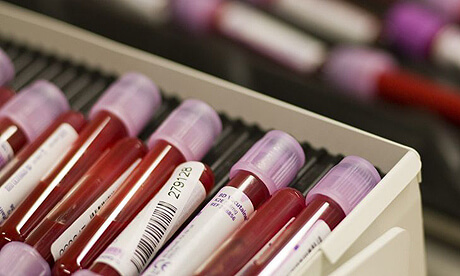
Billion dollar babies of the human genome

The Human Genome Project (HGP) deciphered the entirety of the human genetic code in just over a decade. Though science and medicine will take some time to sift through all of this information and make hay of it, the project, which cost US taxpayers nearly 4 billion dollars, has already had a tangible impact on the US economy by jumpstarting the booming genomics industry


Along with all of the supporting suppliers and technology companies, the industry has spawned hundreds of thousands of jobs and helped drive a total economic impact of nearly $800 billion, according to a study released yesterday (May 10) by Battelle, an independent science and technology research and development organization. “I can’t imagine a scientific undertaking sponsored by the federal government that has had this kind of fundamental impact and drive on the US economy,” said Simon Tripp of linkurl:Battelle,;http://www.battelle.org/ the report’s primary author. While it is impossible to attribute the entirety of the genomics and genomics-enabled industries to the HGP, he added, the overwhelming consensus among those in the field is that it was fundamental to their growth. “If you talk to people in the industry, they all say the HGP was foundational in building the genomics industry. You wouldn’t be able say that the entire internet is because of DARPA’s original expenditures in the ARPANET, but it was certainly foundational in its creation.”

View the original article here: Billion dollar babies of the human genome – The Scientist Magazine®

Genoeconomics: To uproar, researches say genetic diversity can predict economic success

genetic diversity
A yet-to-be-published article in an upcoming issue of the prestigious American Economic Review by two economics professors, peer reviewed by economists and biologists, argues that a country’s poverty could be the result of its citizens’ genetic make-up. It has already sparked charges of genetic determinism and racism–in some cases from critics who had not read the article–and has led to troubling calls to censor discussion of such issues on the grounds that such data “has the potential to be misused with frightening consequences to justify indefensible practices such as ethnic cleansing or genocide.”
 
Additional Resources:

DNA’s half-life identified using fossil bones

We are used to radioactive substances having a half-life, but DNA? Now a study of bones from extinct birds suggests the double helix too has a measurable half-life – and that we have underestimated its ability to survive in the fossil record.

“DNA degrades at a certain rate, and it therefore makes sense to talk about a half-life,” says Morten Allentoft at Copenhagen University, Denmark, who together with Mike Bunce at Murdoch University in Perth, Australia, and colleagues, extracted DNA from the leg bones of 158 extinct flightless birds called moas.

View the original article here: DNA’s half-life identified using fossil bones

Researchers link genetic mutation to psychiatric disease and obesity

McGill researchers have identified a small region in the genome that conclusively plays a role in the development of psychiatric disease and obesity. The key lies in the genomic deletion of brain-derived neurotrophic factor, or BDNF, a nervous system growth factor that plays a critical role in brain development.

To determine the role of BDNF in humans, Prof. Carl Ernst, from McGill’s Department of Psychiatry, Faculty of Medicine, screened over 35,000 people referred for genetic screening at clinics and over 30,000 control subjects in Canada, the U.S., and Europe. Overall, five individuals were identified with BDNF deletions, all of whom were obese, had a mild-moderate intellectual impairment, and had a mood disorder. Children had anxiety disorders, aggressive disorders, or attention deficit-hyperactivity disorder (ADHD), while post-pubescent subjects had anxiety and major depressive disorders. Subjects gradually gained weight as they aged, suggesting that obesity is a long-term process when BDNF is deleted.

View the original article here: Researchers link genetic mutation to psychiatric disease and obesity

Was Lamarck right? How epigenetics may work

Lamarck

While no biologist believes that organisms can willfully change their physiology in response to their environment and pass those changes on to their offspring, some evidence suggests that the environment can make lasting changes to the genome via epigenetic mechanisms—changes that may be passed on to future generations.

View the original article here: Was Lamarck right? How epigenetics may work

Australian perspective on Seralini affair

By now, you may have heard that eating genetically modified (GM) corn causes cancer. That alarming news is based on research published on 20 September, by Gilles-Eric Séralini and colleagues at the University of Caen, in France, and published in the Journal of Food and Chemical Toxicology. What you might not have heard is that last week two European food safety authorities dismissed the findings as scientifically unsound.

“The authors’ main statements are not sufficiently corroborated by experimental evidence, due to deficiencies in the study design and in the presentation and interpretation of the study results,” declared Germany’s Federal Institute for Risk Assessment, BfR. “EFSA is presently unable to regard the authors’ conclusions as scientifically sound,” echoed the European Food Safety Authority.

View the original article here: Australian perspective on Seralini affair

New DNA findings hold potential for cancer treatment

df x

Six years ago, Boise State University biology professor Greg Hampikian and computer science colleague Tim Andersen announced that they had identified tiny DNA and protein sequences that were absent in nature. Hampikian termed these sequences ‘nullomers’ and a headline in the New Scientist magazine proclaimed the sequences as “DNA Too Dangerous to Exist.”

View the original article here: New DNA Findings Hold Potential for Cancer Treatment – BioScholar News

Genetically engineered in California: A food label we don’t need, says pro-GM supporter

x

From “food miles” to farmers’ markets, it seems that consumers have never been more interested in the ways their food is grown. That’s one motivation for Proposition 37, an initiative on California ballots in the coming election that would require labeling of “genetically engineered” (GE) foods.

View the original article here: “Genetically Engineered” In California: A Food Label We Don’t Need – Forbes

Transgenic grains: Incentive measures for banning GMOs in all of Europe?

The debate about the possible harmful effects of GM foods came roaring back after a French scientific research linked the appearance of cancerous tumors in rats consuming GM corn. The study caused an uproar and the French Prime Minister, Jean-Marc Ayrault, came to announce incentive measures for banning GMOs (genetically modified organisms) in all of Europe, if it confirms the result of the harmfulness of the product.

In research published in the journal Food and Chemical Toxicology, 200 rats were fed for two years in different ways: the first group with NK603 grains of corn genetically modified and the pesticide Roundup, the second with the GMO, but without the pesticide, the third party without GMOs, but with the pesticide, and the fourth without GMOs or pesticides. The results showed a high mortality rate of the first three groups due to high incidence of cancer.

View the original article here: Transgenic grains: Incentive measures for banning GMOs in all of …

Insects shape the genetic landscape through plant defenses

The new study, involving aphids and the broccoli-like research plant Arabidopsis thaliana, provides the first measureable evidence that this selective process is driven, in part, by the pressure that multiple natural enemies exert on plants by forcing them to create diverse natural defenses to avoid being eaten.

Findings from the study, conducted with researchers in Switzerland, Denmark and England, will appear in the Oct. 5 issue of the journal Science.

“Our data demonstrate that there is a link between the abundance of two types of aphids and the continental distribution of Arabidopsis plants that are genetically different in terms of the biochemicals they produce to defend against insect feeding,” said UC Davis plant scientist Dan Kliebenstein.

View the original article here: Insects shape the genetic landscape through plant defenses …

Is the world ready for a GMO tomato?

If you would have posed that question to University of Florida tomato breeder Jay Scott back in the 1990s, he would have answered a resounding “yes.” After all, Calgene had just released Flavr Savr, the first genetically modified crop.

Scientists at the now defunct Davis, Calif.-based company had taken a gene responsible for ripening in the tomato, flipped it to the “off” position and reinserted it. Most consumers favored the transformation because they could buy truly vine-ripened tomatoes that still had shelf life. But Flavr Savr never really made it big because of inherent problems with the trait.

The world has changed and may not be as receptive to a GMO tomato as it once was. A small but very vocal group of opponents continues to play upon public fears to gain support of efforts to block genetically engineered crops.

View the original article here: Is the world ready for a GMO tomato? – TheGrower

The genetics of nearsightedness, stretch marks, and motion sickness

What do nearsightedness, stretch marks, and motion sickness have to do with each other? They don’t appear to be genetically related — at least not according to our in-house statistical geneticists — but all of them are relatively common and annoying. These three conditions are also making 23andMe scientists happy since all of them are hot on the research wagon!

Scientists at 23andMe are gearing up for the annual American Society of Human Genetics
(ASHG) meeting and will be presenting on all of these topics.

View the original article here: The Genetics of Nearsightedness, Stretch Marks, and Motion Sickness

Researchers develop new tool for making genetic engineering of microbial circuits reliably predictable

Synthetic biology is the latest and most advanced phase of genetic engineering, holding great promise for helping to solve some of the world’s most intractable problems, including the sustainable production of energy fuels and critical medical drugs, and the safe removal of toxic and radioactive waste from the environment. However, for synthetic biology to reach its promise, the design and construction of biological systems must be as predictable as the assembly of computer hardware.

View the original article here: Researchers develop new tool for making genetic engineering of microbial … – Phys.Org

Synthesizing life means faster cures, biologist says

e x

A leader in the field of synthetic biology, J. Craig Venter considers himself an optimist, but he can see the halfway point on the glass that’s not full.

Venter, a perennial candidate for the Nobel Prize, talked about investment into scientific research during The Atlantic Meets the Pacific forum in La Jolla, Calif., Monday. The event looks at the intersection of technology and ideas with society and human use.

“You can’t be a successful researcher and not be an optimist,” he said. “If you talk yourself out of doing the experiment, you’ll never get any research done.”

View the original article here: Synthesizing Life Means Faster Cures, Biologist Says – The Atlantic

Prop. 37 bad for farms, economy and families, says pro-GM supporter

Agriculture is the largest industry in California, and as a long-time Santa Maria farmer, I am deeply concerned about provisions in Proposition 37 that will harm our entire industry and mean higher grocery bills for California families.

Prop. 37 is a deceptive measure that will result in shakedown lawsuits, exempts huge categories of foods, and will increase bureaucracy, red tape and taxpayer costs — without providing any health or safety benefits.

View the original article here: Prop. 37 bad for farms, economy and families – Santa Maria Times

‘Genetic signatures’ may predict prostate cancer

blood test
Researchers have identified genetic “signatures” for aggressive prostate cancer (the second most common cause of death in men, after lung cancer). The findings could one day help improve patient treatment and outcomes. These genetic patterns were identified from simple blood tests, with no tissue or biopsy was needed.

Mosquito genetics may offer clues to malaria control

An African mosquito species with a deadly capacity to transmit malaria has a perplexing evolutionary history, according to discovery by researchers at the Fralin Life Science Institute at Virginia Tech. Closely related African mosquito species originated the ability to transmit human malaria multiple times during their recent evolution, according to a study published this week in PLoS Pathogens by Igor Sharakhov, an associate professor of entomology in the College of Agriculture and Life Sciences and Maryam Kamali of Tehran, Iran, a Ph.D. student in the department of entomology. The discovery could have implications for malaria control by enabling researchers to detect and target specific genetic changes associated with the capacity to transmit a parasite.

View the original article here: Mosquito genetics may offer clues to malaria control

Scientists share Nobel Prize for ‘groundbreaking’ stem cell work that ‘revolutionized’ science

f x

A British scientist has won the Nobel Prize for Medicine for his work in creating stem cells to battle hitherto untreatable diseases.

Sir John Gurdon, 79, shared the £750,000 prize with Japan’s Shinya Yamanaka for their ‘groundbreaking work’ that has revolutionised science’, the Nobel Assembly at Sweden’s Karolinska Institute said.

Their research has effectively offered a new way to create stem cells with the ability to become different types of tissue by effectively turning back the clock on adult cells, restoring them to a so-called ‘pluripotent’ state.

View the original article here: Brit and Japanese scientists share Nobel Prize for ‘groundbreaking’ stem cell … – Daily Mail