Stem cell tech may help mitochondrial disease

The following is an excerpt of a longer story.

Last week’s big news about production of genetically matched human embryonic stem cells holds potential for treating mitochondrial disease, because the matching is not precise. Somatic cell nuclear transfer, the method that produced Dolly the sheep, duplicates nuclear DNA from the donor nucleus, but not the mitochondria, which are those of the egg cell receiving the nucleus.

Mitochondria are the asterisk in the textbook explanation that all DNA is packaged into chromosomes in the nucleus. Mitochondria contain their own DNA, reproduce on their own, and scientific evidence strongly suggests they evolved from invading bacteria that became symbiotic. While mitochondria have a tiny number of genes, their function is essential for human life.

Embryonic stem cells generated by SCNT would have the same nuclear DNA as the donor cell, but healthy mitochondria. And that gives rise to the possibility of a new kind of gene therapy, said UC San Diego stem cell researcher Louise Laurant.

Read the full story here: Stem cell tech may help mitochondrial disease


Confusion – scientific and ethical – reigns in the wake of stem cell cloning landmark

a d dac

A scientific challenge which began a decade or so ago has finally been met: human stem cells have been cloned using the same cloning technique used to create Dolly the Sheep. Unfortunately, this scientifically important moment has become mired in confusion, hype, and a looming ethical firestorm.

The basics: Last week in the journal Cell, a team of scientists from Oregon Health and Science University declared their success in harvesting embryonic stem cells from human embryos cloned using somatic cell nuclear transfer. This technique involves implanting the nucleus of a patient’s cell into a donor egg cell whose nucleus has been removed, creating embryos (and therefore stem cells) that are a genetic match for the patient. A South Korean scientist had claimed success in 2004 but was revealed to be a fraud.

Scientific Confusion

Reactions have been mixed.

As The Boston Globe’s Carolyn Johnson points out, “the discovery would no doubt be a bigger deal if in 2007, scientists had not discovered that there was a different, simpler way to create stem cells.” This simpler way is the “reprogramming” of skin cells by flipping a genetic switch to trick them into becoming embryonic-like stem cells. These are induced pluripotent stem cells.

Induced pluripotent stem cells (IPSC) sidestep many of the ethical concerns surrounding the cloning of stem cells, and the developers won the Nobel Prize in 2012.

By and large, cloning has fallen out of favor in the scientific community, but it does offer at least once advantage: the reprogramming of skin cells does not affect the genetic material contained within the cell’s mitochondria. If the patient has a mitochondrial disorder—which can result in diabetes mellitus and deafness, multiple sclerosis, and dementia—then stem cells made from their skin will also have the genes that cause this disorder.

The cloning technique, by starting with a completely healthy donor egg, creates stem cells with healthy mitochondria that could, in theory, be used to help correct the cause of these mitochondrial disorders. But this is a purely hypothetical application of the new technique, and it alone hardly qualifies this paper for some of the outsized extrapolations it has received.

Journalistic Hype

Much of the blame for the more triumphant headlines might be traced back to Cell’s own press release, which seems to have overreached dramatically with the title “Major advance provides human embryonic stem cells for personalized medicine.” The Knight Science Journalism Tracker and HealthNewsReview.org both offer dissections of the disparate coverage, which varied from breathless (Fox News: “In medical breakthrough, scientists convert human skin cells into embryonic stem cells”) to tempered (Boston Globe: “Scientists clone human embryonic stem cells: feat but now seen as minor advance”).

Much of the hype hinges on two points: (1) that this is the first successful cloning of a human and (2) that this procedure could be a medical breakthrough. Both premises are contestable at best.

This is the first ever successful human cloning, but it isn’t: the scientists were only interested in cloning humans insofar as they could get embryos to develop enough to harvest stem cells from. Whether or not this technique could generate a healthy human clone, a Dolly the Human, is both a moot point to the researchers and a total unknown.

Shoukrat Mitalipov—who led the research at Oregon Health and Science University—told the Associated Press that he does not believe that the cloned embryos be developed into human babies.

The idea that this work might be a “breakthrough” is hectored by the fact the technique is difficult and far from ready for medical rollout, relies on ethically fraught egg donations, and may well remain outpaced and outshone by induced stem cell techniques. As Rudolf Jaenisch, biologist at MIT’s Whitehead Institute, told The Washington Post: “An outstanding issue of whether it [somatic cell nuclear transfer] would work in humans has been resolved,” but the feat “has no clinical relevance.”

Ethical Firestorm

Of course, the ethical tinder surrounding the idea of human clones is very, very combustible. This paper has provided more than enough spark to start sending up smoke from watchdogs like the Center for Genetics and Society. Despite Mitalipov’s doubts about and disinterest in the production of cloned human babies, CGS executive director Marcy Damovsky still had no trouble telling the Associated Press that this paper is a perfect excuse for the federal government to ban the use of cloning for reproduction.

Since the news broke, the Center for Bioethics and Culture Network has been in a near-frenzy, starting with the headlines “Human cloning is here!” and “Let the cloning obfuscation begin” and publishing a series of highly critical, emotionally charged stories decrying the “junk biology” behind “biotech types” and media that dare to make an ethical distinction between human “cloning” that cannot or will not produce a baby the production of cloned children.

Catholic groups, some of the loudest opponents to embryonic stem cell research, have responded as expected. Whether Reverend Tad Pcholczyk at the National Catholic Bioethics Center, the Conference on Catholic Bishops, or Cardinal Sean O’Malley of Boston—all who have been asked have reaffirmed the Church’s opposition to using “early human beings” to grow stem cells.

But it’s not only groups ideologically convinced (and chomping at the bit for any excuse to remind us) that human cloning would be an ethical disaster who have been fanning the flames. Even the New York Times invoked the specter of cloned babies:

Scientists have finally succeeded in using cloning to create human embryonic stem cells, a step toward developing replacement tissue to treat diseases but one that might also hasten the day when it will be possible to create cloned babies.

Whether not this turns into a full on bioethics wildfire remains to be seen, but you can bet that those with an interest are now primed and ready should anyone take the techniques used by Mitalipov and his colleagues and attempt to use them to develop cloned human babies.

Despite the generally subdued and skeptical reaction of the scientific community, those with an interest in science should brace themselves for the debates that are very likely to ensue. In the meantime, Carolyn Johnson offers a poetic punctuation mark on the scientific context of this ethically charged achievement:

And so a major quest in science comes to an end, in a saga that shows how a major scientific quest can fall to the wayside with advances in technology and knowledge. Moreover, grand scientific missions are often just the first step toward transforming human health. Even if the technique turns out to have some advantage over reprogramming, what lies ahead is the long road toward taking a technique and turning it into something that could be a useful therapy.

Kenrick Vezina is Senior Editor for the Genetic Literacy Project and a freelance science writer and educator based in the Greater Boston area. He has an M.S. in science writing from MIT.

Additional Resources:


Scientists sequence genome of ‘sacred lotus,’ which likely holds anti-aging secrets

The following is an excerpt.

A team of 70 scientists from the U.S., China, Australia and Japan today reports having sequenced and annotated the genome of the “sacred lotus,” which is believed to have a powerful genetic system that repairs genetic defects, and may hold secrets about aging successfully. The scientists sequenced more than 86 percent of the nearly 27,000 genes of the plant,Nelumbo nucifera, which is revered in China and elsewhere as a symbol of spiritual purity and longevity.

“The lotus genome is an ancient one, and we now know its ABCs,” said Jane Shen-Miller, one of three corresponding authors of the research and a senior scientist with UCLA’s Center for the Study of Evolution and the Origin of Life. “Molecular biologists can now more easily study how its genes are turned on and off during times of stress and why this plant’s seeds can live for 1,300 years. This is a step toward learning what anti-aging secrets the sacred lotus plant may offer.”

The research was published today in the journal Genome Biology.

Read the full story here: Scientists sequence genome of ‘sacred lotus,’ which likely holds anti-aging secrets

Angelina Jolie’s cancer decision highlights row over genetic technology

Angelina Jolie has had do x

The following is an excerpt.

Angelina Jolie‘s decision to speak out about her decision to have a preventive double mastectomy was intended to highlight the terrible risks of breast cancer. But the film star’s move also cast a spotlight on the far less known arena of patent battles over genetic technology which could have far more impact than Jolie’s widely applauded move.

Before the end of next month the US supreme court will issue a landmark decision in a case brought against the biotech firm Myriad Genetics, which is based in Utah, by the Association for Molecular Pathology.

The firm owns a patent on the BRCA1 gene, which Jolie carries and which is believed to carry a high risk of causing breast cancer. It also owns a patent on the similar BRCA2 gene.

Read the full story here: Angelina Jolie’s cancer decision highlights row over genetic technology

Human stem cell cloning: ‘Holy Grail’ or techno-fantasy?

The following is an excerpt.

There is definitely something special about this idea of “therapeutic cloning,” something that has a religious feel to it. We are told that there will be great medical benefits and that the risks that there will be cloned babies are small, but in truth it’s the other way round.

Read the full story here: Human Stem Cell Cloning: ‘Holy Grail’ or Techno-Fantasy?

Only way to prevent human clones is to prohibit new stem cell cloning technique

f ivf x

The following is an excerpt.

The Los Angeles Times has waded in to the junk biology game, assuring us that no embryos are threatened in human cloning — WHEN THE WHOLE POINT OF HUMAN CLONING IS TO CREATE AN EMBRYO! From the editorial, “The Specter of Human Cloning:”

Pay close attention: Dolly came from an “unfertilized egg” and became a sheep. Before that, she was a sheep embryo and a sheep fetus. The act of cloning does not get the egg to create stem cells, it produces an embryo. After that, the cloning is over and the question becomes what to do with the embryo, NOT WHAT TO DO WITH THE UNFERTILIZED EGG!

Read the full story here: Human Cloning Obfuscation 4

GMOs cause leukemia? Think again

The following article is an edited excerpt.

The Organic Consumers Association has gleefully announced: New Study Links GMO Food To Leukemia.  The paper, Hematotoxicity of Bacillus thuringiensis as Spore-crystal Strains Cry1Aa, Cry1Ab, Cry1Ac or Cry2Aa in Swiss Albino Mice, states: “Bt toxins are capable of targeting mammalian cells, particularly the erythroid (red blood cell) lineage, resulting in red blood cell changes indicative of significant damage, such as anemia. In addition, the study found that Bt toxins suppressed bone marrow proliferation creating abnormal lymphocyte patterns consistent with some types of leukemia.”

Except, the article doesn’t actually say that at all.

I have a few quick observations, then a rebuttal from Dr. David Tribe, and I wrap up this latest edition of whack-a-mole with a revelation. There’s a lot more to say about this paper, and hopefully we will learn more as time goes by, but this post is just a fast attempt to help people know that this is not a good paper to be pointing at.

Read the original article in its entirety here: GMOs cause leukemia? Think again. 

Is GM corn being sold at an LA farmers market?

The following is an edited excerpt. 

When you Google Monsanto, the website link has both the company’s name and its slogan — A Sustainable Agriculture Company. It’s a website that works very hard from the first click to reframe the conversation around the most controversial issue in worldwide agriculture. Perhaps with good reason. The search was prompted by overheard conversations at the market last week as customers eyed the season’s first corn with unmasked suspicion, asking if it was genetically modified. A quick survey of farm employees revealed that few even knew what GMO crops were. And the customers who asked didn’t know exactly why GMO corn might be bad for them. They had simply been told to avoid it, either by friends or via one of thousands of links on the Internet.

Read the original article in its entirety here: What’s in Season at the Farmers Market: GMO Blues + First Summer Corn


Former FDA official on GMO labeling: ‘Science doesn’t always win’


The following is an edited excerpt.

Whether the food industry likes it or not, when it comes to GMO labeling, the “train appears to have left the station”, according to former FDA associate commissioner of foods Dr David Acheson.

Read the original article in its entirety here: Former FDA official on GMO labeling: ‘Science doesn’t always win


California’s activist court rules that GM alfalfa is not a pest

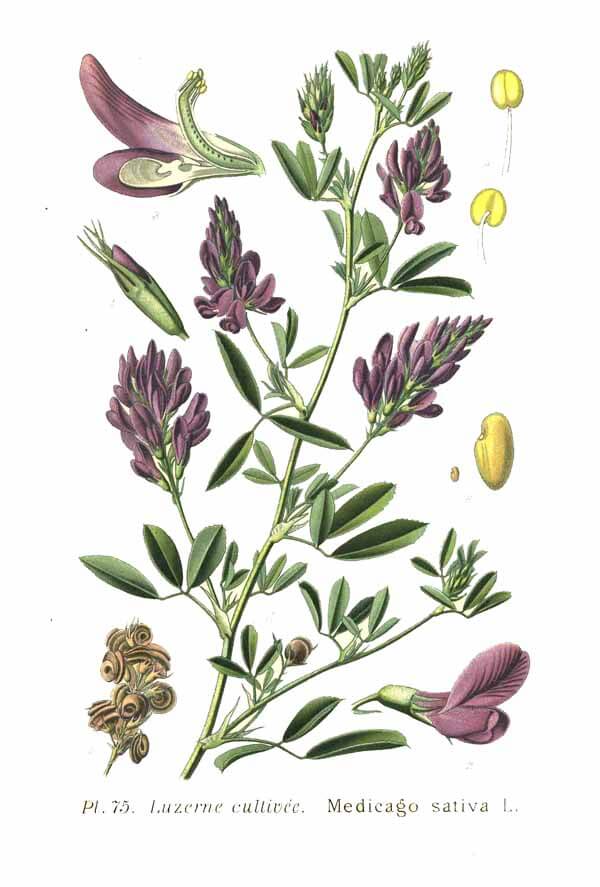
Medicago sativa L

The following is an editorial summary.

Despite a track record spotted with anti-science activist positions, California’s 9th Circuit Court of Appeals judges Mary Schroeder, Sidney Thomas and Randy Smith upheld the lower court’s determination that Roundup Ready Alfalfa was not a ‘plant pest’ under the Protection Act.

This case highlights the common practice of anti-science groups, from Union of Concerned Scientists to Greenpeace, to count on nuisance lawsuits to hurt businesses. They hire lobbyists to get arcane, conflicting laws in place and then hire lawyers to enforce the laws they get passed.

Read the full story here: 9th Circuit Court Of Appeals Denies Claim That GM Alfalfa Is A ‘Plant Pest’

Additional Resources:

Cass Sunstein: Don’t mandate labeling of genetically-altered food

The following is an edited excerpt.

In the abstract, the argument for compulsory labeling seems exceedingly powerful. But there is a risk that a compulsory label for GM food would confuse, mislead and alarm consumers, potentially causing economic harm, not least to consumers themselves.

To see the problem, we need to step back a bit. The World Health Organization defines GMOs as “organisms in which the genetic material (DNA) has been altered in a way that does not occur naturally.”

As a result of the underlying technology, sometimes called “recombinant DNA technology” or “genetic engineering,” certain individual genes are transferred into one organism from another.

GM food can potentially grow faster, taste better, resist diseases, lower reliance on pesticides, cost less and prove more nutritious.

Read the original article in its entirety here: Don’t mandate labeling of genetically-altered food.

Latest anti-GMO conspiracy theory: GMOs are causing mass death of bees

The following is an edited excerpt.

What is happening to California’s bees? Are GMOs causing these deaths? I have reason to believe that this is the case. Why are the powers that be claiming the increase in bee deaths are a complete mystery?

This story made the front page of the New York Times recently: Mystery Malady Kills More Bees, Heightening Worry on Farms.

Do you know how important our bees are to our own livelihood and nation’s food supply? The EPA must have an idea because they sent their acting assistant administrator for chemical safety and two top chemical experts here, to the San Joaquin Valley of California, for discussions recently.

Read the original post in its entirety here: What is Happening to California’s Bees? Are GMOs Causing These Deaths?

Microbiome: How the bacterial genes in our gut impact us

mag microbiome t CA articleLarge

The following is an editorial summary.

It turns out that we are only 10 percent human: for every human cell that is intrinsic to our body, there are about 10 resident microbes. To the extent that we are bearers of genetic information, more than 99 percent of it is microbial. Out body contains 100s of trillions of microbial bacteria, weighing several pounds, which form a vast, largely uncharted interior wilderness that scientists are just beginning to map. It appears increasingly likely that this “second genome,” as it is sometimes called, exerts an influence on our health as great and possibly even greater than the genes we inherit from our parents.

View the original article here: Some of My Best Friends Are Germs

Additional Resources:

Organic industry’s credibility eroded by misinformation about GE foods

e k e

Many consumers—especially those who consider themselves ‘progressive’—have come to embrace the hard-edged beliefs, promoted by factions of the organic industry, that gene-altered crops are less safe, nutritious and sustainable than organic crops and foods.

The chief promoter of anti-biotechnology claims is the Organic Consumers Association led by Ronnie Cummins, with some help from foodies like Michael Pollan and Mark Bittman. The OCA has campaigned relentlessly against conventional agriculture, but it’s greatest ire is reserved for biotech crops and foods.

The OCA’s home page promotes a litany of anti-science posts—mostly tirades written by Cummins or from well-known anti-biotech advocacy groups, usually with no reputable sources linked. The centerpiece of its current campaign is a guide titled “GMO Myths and Truths.” If only to ridicule them, OCA lists claims made by prominent scientists and endorsed by every major science organization of note in the world, including in Europe where politicians, but not scientists, have promoted bans and restrictions. According to OCA, these miscreants falsely believe genetically modified crops:

  • Are safe to eat and can be more nutritious than naturally bred crops
  • Are strictly regulated for safety
  • Increase crop yields
  • Reduce pesticide use
  • Benefit farmers and make their lives easier
  • Bring economic benefits
  • Benefit the environment
  • Can help solve problems caused by climate change
  • Reduce energy use
  • Will help feed the world.


According to every leading national and international science body, those statements are accurate, although the specifics of each claim are complicated and worthy of nuanced discussion. But one won’t find that kind of serious dialogue at the OCA site. Rather, it promotes blind anti-biotech advocacy and non-education, making the sweeping and false statement that “a large and growing body of scientific and other authoritative evidence shows that these claims are not true.”

The OCA’s “authoritative evidence” is contained in “GMO Myths and Truths,” written by anti-biotech Earth Open Source, a British NGO that bills itself as committed to “collaborative approaches for sustainable foods.” Like OCA, it is a campaigning organization that has no scientists of any note on staff and no track record of serious science analysis or journalism.

From a science perspective OCA and its associated groups are a mess of a resource for anyone interested in a discussion of the data on the environmental and health impacts of biotech crops and food—let alone an honest appraisal of the benefits and limitations of organic agriculture. Unfortunately for public discourse, the OCA’s misinformation campaigns have become templates for other organic and foodie groups, obscure and mainstream.

Organic anti-biotech campaigners

Just last week, for example, the popular website Eating Local and Organic published a bizarre post purportedly addressing the question “What is GMO?”  Its sole example: gene-altered tomatoes. It claims that the tomato was modified by process that causes tumors in rodents, killing them, implying that humans faced the same fate. “The foreign DNA ends up inside the good bacteria in our gut that’s responsible for digestion,” the unnamed writer for the site writes. “Have you wondered why so many people are needing pro-biotics these days? What about all of those Activia commercials to ‘make you regular?’”

This is fear mongering at its baldest; Health problems including the threat of gastronomic suicide must ultimately be caused by conventional agricultural products containing GMOs!

In this case, the anti-biotech argument focuses on a product that is not even in available—the Flavr Savr tomato. The source for this outrageous claims is a “documentary” called “The Future of Food” produced by an anti-biotech front group founded and funded by Cummins’ OCA. Like almost all anti-biotech claims by radical NGOs, it has a speck of truth embedded in exaggerations and flat out misstatements. In 1994, the Food and Drug Administration approved the first commercially grown genetically altered food for human consumption, a tomato called the Flavr Savr, which was altered to slow the ripening process, preventing it from softening, while still allowing it to retain its natural color, flavor and nutritional value. The tomato was evaluated extensively by independent and industry scientists, as well as by the Food and Drug Administration, and found healthful and environmentally benign.

To get those characteristics into the tomato and into transgenic crops, geneticists use what’s called a “promoter”, which is a nucleotide sequence that acts like a motor driving production of a genes’ message. The article on the organic site—and similar claims on hundreds of other foodie and anti-biotech web pages—makes the alarmist claim that something weird and dangerous must be going on because the promoter is carried by a virus and in this instance because it commonly infects cauliflowers (known as the cauliflower mosaic virus or CaMV).

In fact, viral vectors are key to bioengineering; they have been rendered noninfectious, are just transporters and are utterly harmless. The FDA extensively evaluated the Flavr Savr tomato, concluding that it “is as safe as tomatoes bred by conventional means” and that the process used to make it is “safe for use as a processing aid in the development of new varieties of tomato, rapeseed oil and cotton intended for food use.”

Despite the new tomato’s obvious benefits activists campaigned against it, calling it a “mutant veggie.” It never caught on and was eventually discontinued. A safe and nutritious food was removed from the market by a disinformation campaign. Even today, palpably false accusations about the tomato’s safety are re-circulated by Cummins and by other anti-biotech campaigners, such as Jeffrey Smith, who falsely claim that the Flavr Savr tomato or its ingredients killed rats in lab tests. (In fact, in lab tests, some rats fed an exclusive diet of tomatoes did show esophageal lesions, which speaks to the acidity of tomatoes; there was certainly no evidence of toxicity as Cummins and Smith have implied).

A sad twist in the fevered efforts of anti-biotech advocates is the degrading of the integrity and credibility of more mainstream organic groups. Although the leaders of the Organic Trade Association sometimes distance themselves from Cummins’ anti-science guerilla tactics, they now swim in the same cesspool of pseudoscience. The OTA no longer publicly rebukes his outrageous statements, and in fact they end up circulating many of his insinuations or outright falsehoods.

The OTA’s primary vector is its regular “consumer survey” that trumpets the anti-biotech beliefs of its green washed supporters. It’s latest tracking poll, released in March, indicated “32 percent of parents who learned about GMOs in the news are significantly more likely to increase their organic purchases.” Those numbers have risen in recent years—not because of any new data suggesting biotech crops are harmful. Rather, it’s the result of scare campaigns, which the OTA, like its less reputable cousin OCA, encourages.

“Results from the latest consumer survey conducted for the Organic Trade Association (OTA) reveal that as U.S. families are becoming increasingly aware of the presence of unlabeled genetically modified organisms (GMOs) in foods in the marketplace, they turn to organic as the food labeled by law to not have been made with genetically engineered ingredients,” the OTA boasts in its press release. That news release drove hundreds of news articles and thousands of posts that ricocheted through the Internet echo chamber.

Organic crops no more nutritious and less sustainable

The organic industry has been growing in part by promoting the false claim that organic products are more nutritious than conventional varieties. According to its latest survey, “Families continue to cite their desire for healthful options, especially for their children, in choosing organic foods,” the survey notes. That’s green washing; study after study, going back to the 1960s, has found that organic foods are neither safer nor more nutritious alternatives to conventionally grown crops. The most recent, considered definitive—and in line with all major past studies—examined 237 scientific reports over the past 50 years evaluating the nutrient content of organic and conventional foods. Researchers at Stanford University concluded that organically and conventionally produced foodstuffs are comparable in their nutrient content.

Organic supporters also ignore the sustainability contradictions at the heart of their passion. Although organic farming may be environmentally benign when producing small quantities of crops for regional markets, they are environmentally precarious on a large scale. In 2008, as part of its Census of Agriculture, the USDA conducted the Organic Production Survey, the largest every study of organic farming yields. As Ramez Naam has written in his recent book on sustainability, The Infinite Resource, it takes one and a half times to two times as much land in the U.S. to grow food organically than it does to grow food via conventional methods. That, in turn, puts more pressure on farmers around the world to grow more. In the developing world, that often means slashing and burning forest into farmland, a process that emits a tremendous amount of carbon dioxide into the atmosphere and harms both the water cycle and species that live in forests.”

In other words, although organic farming might require the use of fewer pesticides (genetically modified crops also use far less pesticides, of course), its broader impact could be environmentally disastrous: it would require more acres cut out from virgin woodlands and an estimated 5 to 6 billion additional head of cattle to produce enough manure to fertilize that farmland—and there are only about 1.3 billion cattle in the world today.

“Clearing that much land would produce around 500 billion tons of CO2, or almost as much as the total cumulative CO2 emissions of the world thus far,” Naam summarizes. “And the cattle needed to fertilize that land would produce far more greenhouse gasses, in the form of methane, than all of agriculture does today.

Organic activists led by the OCA, OTA and foodies may believe they are on the side of the angels, but their campaigns are often ignorant of science, selfishly focused on the desires of the affluent and ultimately destructive. Their policies also drive up costs to many consumers who cannot afford the price premiums charged by the organic industry for what is largely, in scientific terms, a ‘feel good’ purchase. Even worse, their efforts if emulated in the developing world could seriously damage world food security, resulting in an increase in malnutrition and even premature deaths.

The organic industry has a direct commercial interest in sowing confusion and doubt about genetically engineered crops and food ingredients derived from them.  Anything that creates doubt or concern about foods that may have genetically modified ingredients in them, or are labeled “May Contain Genetically Engineered Ingredients” is doing the organic industry’s marketing work for it and driving confused consumers to higher-priced products.

Jon Entine, executive director of the Genetic Literacy Project, is a senior fellow at the Center for Health & Risk Communication and STATS (Statistical Assessment Service) at George Mason University.

Ellen Jorgensen is dragging genetic engineering away from the scare stories

The following is an edited excerpt.

Biohackers are rare — costs have kept genetic engineering in the realm of big pharma and university labs. But Ellen Jorgensen, a PhD molecular biologist, sees a tipping point: “You can sequence genes on a computer, email them to a lab and a week later, for $100, receive a vial of DNA,” she says. “That’s close to a revolution.”

This near-revolution led Jorgensen and half a dozen other alt biologists to foundGenspace, a public biohacking collective in Brooklyn, New York, to help fight ignorance about genetic technology. “People need to get their hands dirty,” she says. “Imagine policy debates about computers if only a few guys in white coats had ever actually touched one.”

“The technology is incredibly powerful,” says Jorgensen. “But it’s not inherently good or evil — it’s what you use it for.”

Read the original story in its entirety here: Ellen Jorgensen is dragging genetic engineering away from the scare stories


Germany’s state-owned news service: ‘US Government in GM industry’s pocket’

The following is an edited excerpt.

US diplomats lobbied aggressively to support its genetically-modified food industries, a campaign group has revealed in a new report. The US even pushed EU countries to change laws to allow GM crops in.

The diplomatic cables were published two years ago by Wikileaks, and most of them weren’t even marked secret. But now US campaigners Food and Water Watch have collated and analyzed 926 State Department cables (covering 113 countries and five years, from 2005 to 2009) to reveal the extraordinary extent to which the US has been lobbying in support of its biotech industry across the world. Their conclusions were published on Tuesday.

As well as lobbying in the developing world – persuading Kenya to commercialize GM crops and helping the Ghanaian and Nigerian governments to push through lax GM legislation – the US PR campaign was also aimed at legislators in the European Union, where a de facto moratorium has limited the production, import, and sale of most GM crops until now.

Probing the genetics of intelligence

The following is an excerpt of a longer story.

Researchers in China will scour the genomes of 1,600 super-smart people in an attempt to find common genetic variants associated with intelligence, reported Nature. But some geneticists argue that the sample size remains too small, and intelligence too complex, for the study to produce any meaningful conclusions.

“If they think they’re likely to get much useful data out of this study, they’re almost certainly wrong,” geneticist Daniel MacArthur of the Massachusetts General Hospital told Nature.

Read the full story here: Probing the Genetics of Intelligence

Ghana needs biotech intervention to improve food security

The following is an excerpt of a longer story.

In many parts of the country anaemia and stunted growth are common phenomena. However, the many preventable and avoidable diseases that kill children indicate that as a country we need an intervention to improve food security.

With population growth rate, drought, climate change, impoverished soils, change in taste and lifestyle, biotechnology which is defined as a scientific method to produce genetically modified crops resistant to pests and diseases and increased yields would complement breeding efforts to ensure food security.

Read the full story here: Ghana needs biotech intervention to improve food security

Philippines: Biotech is worth pursuing

The following is an edited excerpt.

Citing the potential of biotechnology to increase agricultural productivity, Department of Science and Technology chief Mario Montejo said the “cause is worth pursuing,” adding that the department supports a science-based method of evaluating the risks and benefits of genetically modified crops.

Sec. Montejo’s remark came at the heels of biotechnology milestone in global agricultural history when developing countries in 2012 achieved a remarkable achievement. For the first time, farmers from the developing world, including the Philippines, produced more biotechnology crops, or biotech crops, than farmers from highly developed and more technologically advanced nations.

Read the original article in its entirety here: Biotech is worth pursuing, DOST chief says