Egg recalls, salmonella-linked jalapeños and a spike in cyclospora cases have dominated headlines this year, but the U.S. food-safety system isn’t unraveling — it’s just louder, according to a University of Florida food scientist interviewed by UF/IFAS News writer Lourdes Mederos.
Keith Schneider, professor of food safety at the University of Florida Institute of Food and Agricultural Sciences (UF/IFAS), says the volume of recall and outbreak headlines reflects modern media more than any real surge in unsafe food.
Asked whether the number of recalls and outbreaks has actually grown, Schneider said: “Not necessarily. We tend to hear about them much more often because we have much greater access to information. We now have 24-hour news and social media, so when there is an outbreak or recall, people can hear about it repeatedly throughout the day.”
He put the numbers in context: the U.S. sees roughly 1.2 million salmonella cases and 20 million norovirus cases every year — both typical. Cyclospora is the exception. The usual 1,000 to 2,000 annual cases has climbed past 20,000 this year, which Schneider called genuinely “concerning.”
Mis- and disinformation are distorting science and public policy. Subscribe to our Daily and Weekly Digests for incisive coverage of ‘disruptive’ innovations in AI, agricultural biotechnology, food, chemicals, nuclear energy, vaccines, and other disruptive innovations.
Does a steady drumbeat of recalls mean the food system is getting less safe? “No,” Schneider said. “In many cases, a recall is evidence that the food-safety system is working as it was designed to work.” He explained that cheaper, faster pathogen-detection tools now catch illnesses, like cyclospora infections, that once went unidentified, and that recalls from large distributors simply reflect their scale rather than laxer safety standards.
Schneider also pointed to social media’s role in amplifying isolated incidents into perceived category-wide dangers. “That increased visibility, combined with misinformation and speculation online, can make individual incidents seem like evidence of a growing problem when they may actually reflect a longstanding pattern,” he said.
His advice to worried shoppers: skip the social feeds and check the specific product, brand and lot number through the CDC or FDA before assuming an entire food category is unsafe.
At least six major U.S. hospitals have signed deals with the Department of Justice agreeing to stop providing gender-affirming hormones and surgery to transgender minors, and to make payments to the federal government, as the Associated Press’s Geoff Mulvihill reports.
The settlements involved NYU Langone Hospitals, which agreed to pay $8.5 million, and the University of Pittsburgh Medical Centers, which agreed to pay $950,000. Both will no longer offer puberty blockers, hormones or surgery to patients under 19. Similar deals since May involved Cleveland Clinic, Connecticut Children’s Hospital, Mount Sinai Health System and Texas Children’s Hospital. None admitted wrongdoing.
“The Department of Justice is fighting to protect our nation’s children and working tirelessly to reach agreements with hospitals to end so-called ‘gender-affirming care’ for minors,” U.S. Attorney General Todd Blanche said in a statement.
For most of the hospitals, the deals formalize changes they had already made, either because of state bans or after President Trump’s January 2025 executive order. Mount Sinai is the only one that hadn’t announced its decision beforehand.
Mis- and disinformation are distorting science and public policy. Subscribe to our Daily and Weekly Digests for incisive coverage of ‘disruptive’ innovations in AI, agricultural biotechnology, food, chemicals, nuclear energy, vaccines, and other disruptive innovations.
A major incentive for settling is that the agreements end federal subpoenas seeking patient records, including names. NYU Langone said settling removes “the threat that NYU Langone would have to provide the confidential information previously demanded about patients under 18 who received gender-affirming care at our institution.” Most hospitals had won subpoena fights in district courts, but a 2-1 ruling last month from the 9th U.S. Circuit Court of Appeals gave the government’s case a boost.
The medical debate continues. A Trump administration review published last year recommended therapy alone for youth, while the American Medical Association and the American Academy of Pediatrics support keeping treatment available. At least 27 states restrict the care.
“It’s a really dangerous precedent when the federal government is allowed to politicize any one group of people’s care and end it,” said Eliel Cruz, a cofounder of the Gender Liberation Movement.
Newly unsealed court filings show that Microsoft and OpenAI executives privately described their AI models as trained on stolen work and warned that the technology could collapse the very web it depends on, as Ashley Belanger for Ars Technica reports.
The documents surfaced in The New York Times’ copyright lawsuit against OpenAI and Microsoft, after a federal judge in the Southern District of New York unsealed exhibits tied to the Times’ motion for summary judgment. Among them: a Microsoft memo warning that the company’s “AI content strategy has started a ‘doom loop’ that will hurt the performance of our models and the entire web at the same time.”
Brent Hecht, Microsoft’s director of applied science, went further, telling colleagues that AI companies’ hoovering up of online content amounted to “an astonishing theft of unprecedented proportions” — later calling it “the largest theft of labor in human history.” In another filing, Hecht warned that “it is highly unusual that an end-product threatens the economic foundations of its essential suppliers, but that is the situation we have created for our LLM business with respect to its ‘content supply chain.'”
Mis- and disinformation are distorting science and public policy. Subscribe to our Daily and Weekly Digests for incisive coverage of ‘disruptive’ innovations in AI, agricultural biotechnology, food, chemicals, nuclear energy, vaccines, and other disruptive innovations.
The filings also detail the scale of the scraping: OpenAI’s training sets held more than 91,692 copies of Times articles, and a separate Microsoft dataset, code-named Project Mango, drew on roughly 160,903 works from news publishers. Microsoft’s Copilot, meanwhile, allegedly sent Times click-through rates plunging by as much as 93 percent.
Not every Microsoft or OpenAI voice sounded alarmed. CEO Satya Nadella testified in a deposition that “anything that is paywalled should be licensed by anyone who wants to use it…for grounding or training,” suggesting a licensing fix rather than an admission of wrongdoing.
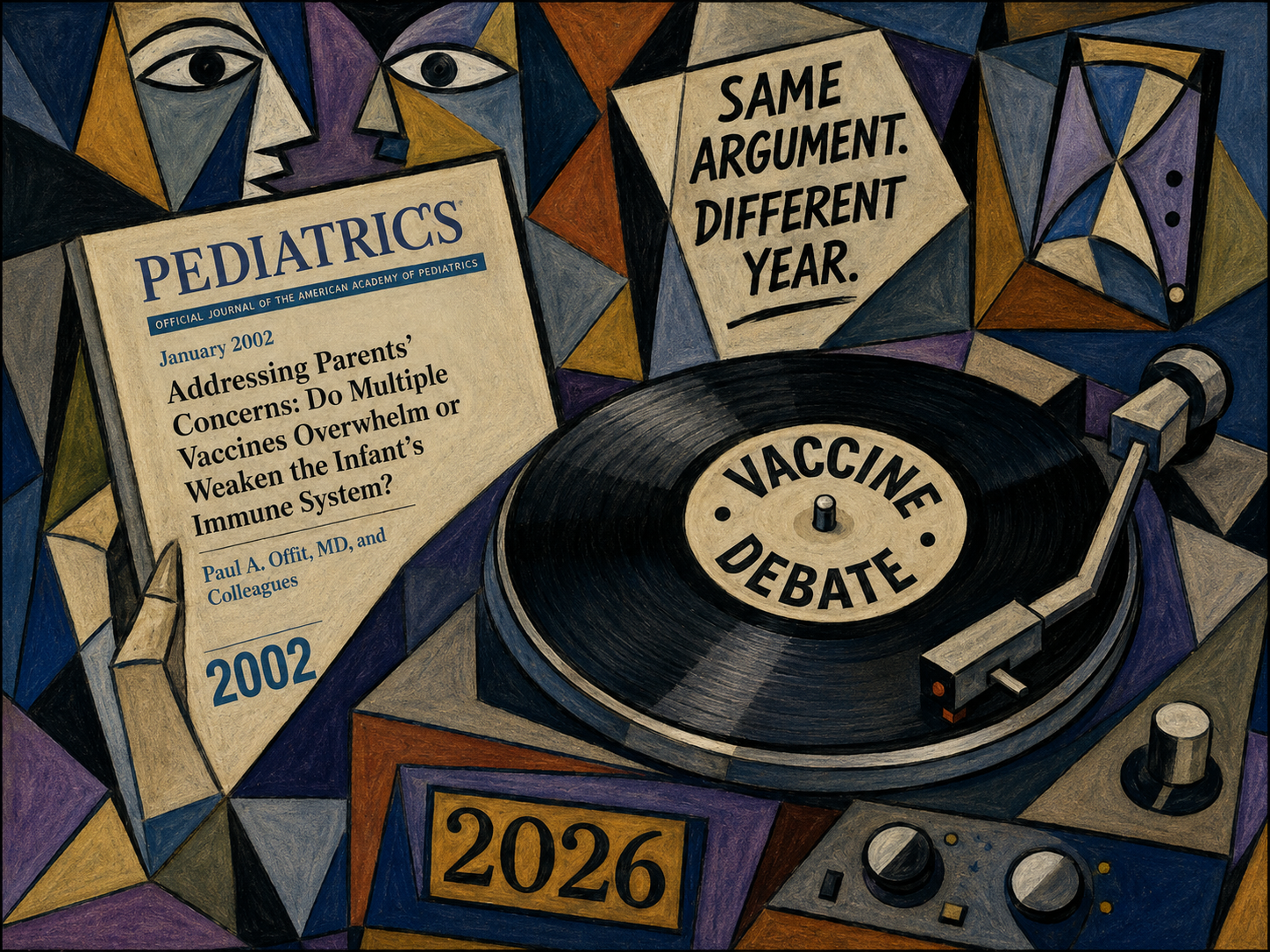
For inexplicable reasons, the vaccine spacing debate has popped up yet again, courtesy of President Trump’s executive order revisiting childhood vaccine policy. But this isn’t a new question. It was addressed 25 years ago in a Pediatrics paper by Paul Offit and colleagues. Here we go again.
In matters of vaccine science, immunology, and virology, there are several schools of thought. For convenience, I’ll divide them into two categories: “Paul Offit” and “wrong.”
That’s only partly tongue-in-cheek. I spent much of my career in antiviral drug discovery, and I’ve known Offit and his work for decades. And if I had to ask a single person for vaccine advice (I did just that during COVID), it would be him.
That said, I don’t want to get into the current argument; others have already done so. Instead, let’s go back 25 years and look at this very same issue. It’s rather eye-opening how little has changed on both sides of the vaccine “debate.”
Of particular interest is the January 2002 article in Pediatrics by Offit and colleagues entitled “Addressing Parents’ Concerns: Do Multiple Vaccines Overwhelm or Weaken the Infant’s Immune System?”
Mis- and disinformation are distorting science and public policy. Subscribe to our Daily and Weekly Digests for incisive coverage of ‘disruptive’ innovations in AI, agricultural biotechnology, food, chemicals, nuclear energy, vaccines, and other disruptive innovations.
Recent surveys found that an increasing number of parents are concerned that infants receive too many vaccines.
Offit et al., Pediatrics 2002
So, what did Offit and his colleagues report 25 years ago? Here’s a summary.
Immature ≠ incompetent
For starters, an infant’s immune system is immature, but hardly incompetent. Newborns already have a functioning immune system, including the ability to produce antibodies, and young infants can respond to multiple vaccines at the same time.
But could too many vaccines overwhelm that system? The authors did the math. Using conservative assumptions about the number of B cells (white blood cells that produce antibodies) available and the number needed to respond to vaccine antigens (the parts of a vaccine that trigger an immune response), they calculated that an infant could theoretically respond to about 10,000 vaccines at once. Even eleven vaccines given simultaneously would require only about 0.1% of the immune system’s capacity. And since these immune cells are continually replenished, vaccines don’t “use up” the immune system.
2. More = less
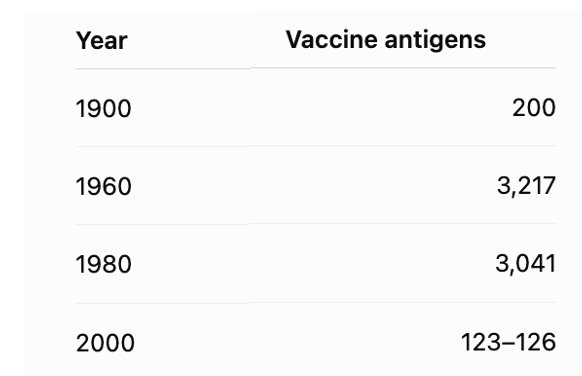
More vaccines don’t necessarily mean more antigen exposure. In fact, the opposite was true (Table 1). In 1960, childhood vaccines contained an estimated 3,217 antigens, about 3,000 of them from the old whole-cell pertussis vaccine alone. By 2000, children were being vaccinated against more diseases, yet the total had fallen to about 125.
Table 1. Adapted from Offit et al., Pediatrics 2002
3. Together ≠ overwhelmed
Most relevant to today’s argument about vaccine spacing is that this question has already been put to the test.
Offit and his colleagues reviewed various combinations of MMR, varicella, DTP, Hib, polio, hepatitis B, influenza, and pneumococcal vaccines. The result was straightforward: antibody responses were similar whether the vaccines were given together or at different times.
Why is this important? Because the “overwhelmed immune system” hypothesis makes a testable prediction:
If vaccines overwhelmed or weakened the immune system, then one would expect lesser immune responses when vaccines are given at the same time as compared with when they are given at different times.
That didn’t happen.
That was January 2002.
Where are we now?
Twenty-five years later, we’re once again debating whether giving children multiple vaccines at the same time somehow overwhelms their immune systems and whether spacing them out would be safer. There may be new vaccines and new schedules, but there’s nothing new about the argument.
Science is always open to new evidence. But endlessly reopening an old question isn’t the same thing as producing new evidence. Until someone shows that spacing vaccines provides a benefit that the recommended schedule does not, we’re not advancing vaccine science, just spinning our syringes.
Enough already.
Josh Bloom is ACSH’s Director of Chemical and Pharmaceutical Science. Josh earned his Ph.D. in organic chemistry at the University of Virginia, followed by postdoctoral training at the University of Pennsylvania. Find Josh on X @JoshBloomACSH
A version of this article was originally posted at American Council on Science and Health and has been reposted here with permission. Any reposting should credit the original author and provide links to both the GLP and the original article. Find American Council on Science and Health on X @ACSHorg
This story was originally published by ProPublica.
The number of women who died after an ectopic pregnancy has spiked in recent years, a ProPublica analysis found. The mounting deaths in Centers for Disease Control and Prevention data have drawn little scrutiny or response.
Such deaths typically occur in the first trimester, after a pregnancy fails to properly implant in the uterus and begins to develop elsewhere, most commonly inside a fallopian tube. The embryo grows until it causes the organ to rupture, triggering catastrophic bleeding.
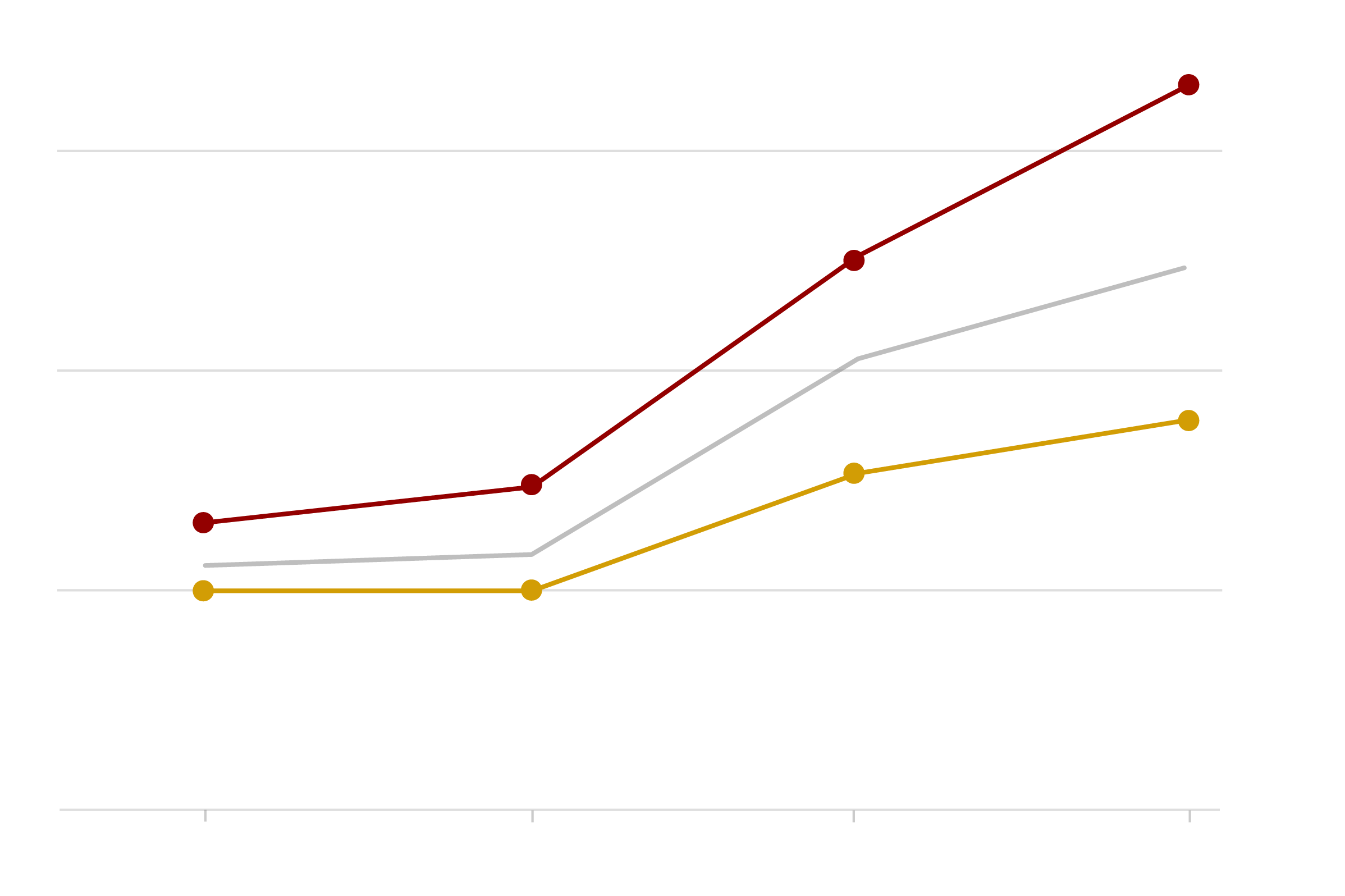
With prompt and appropriate medical care, maternal health experts say, women should not die. Yet ProPublica’s analysis found a stark and baffling increase: Almost 200 women with the condition died from 2020 to 2025, compared with about 100 in the previous six years.
“A death related to ectopic pregnancy should really be a never event,” said Dr. Alice Abernathy, an OB-GYN in Philadelphia.
Deaths involving an ectopic pregnancy are presented as a rate within three-year intervals to meet data suppression thresholds. Source: ProPublica analysis of CDC WONDER multiple cause of death and natality data. Lucas Waldron/ProPublica
While chaos and access issues at hospitals during the COVID-19 pandemic likely contributed to at least some of the deaths, the surge has persisted, raising serious questions about the role of the most significant disruption to maternal healthcare in the years since: state restrictions on abortion.
To treat an ectopic pregnancy, which is almost never viable, doctors must terminate it. But lawsuits and federal complaints have alleged that some medical providers are hesitating or flat-out refusing to do that in states where they face criminal penalties for performing an abortion. Patients described their terror.
“I genuinely thought I was going to die,” said Kyleigh Thurman, whose right fallopian tube ruptured after she struggled to get ectopic care in Texas in 2023.
“There were a few times I asked my husband if I was going to die,” Leitaea Lowrimore of Oklahoma said in a lawsuit after being denied treatment for an ectopic pregnancy at multiple hospitals in February. “I kept thinking about our kids.”
To determine whether these issues go beyond anecdotes, ProPublica analyzed the data collected from every state by the CDC to look for patterns. The analysis shows a growing divide for women in states with strict abortion bans compared with those without.
While the uptick in ectopic deaths occurred nationwide, the climb has been much steeper in states that banned abortion after the Supreme Court overturned Roe v. Wade in 2022.
Deaths involving an ectopic pregnancy are grouped into three-year periods to meet data suppression thresholds. States with abortion bans that begin at six weeks of pregnancy or earlier are considered to have a strict ban. For the list of states in each group, see the methodology. Source: ProPublica analysis of CDC WONDER multiple cause of death and natality data. Lucas Waldron/ProPublica
ProPublica shared its analysis with more than a dozen maternal health experts, including leaders in the field, who were unaware of the spike; early pregnancy complications are chronically underresearched.
While they cautioned that abortion bans alone can’t explain the national rise, maternal health experts said any examination of the spike should include the documented delays in care caused by the laws, including for ectopic pregnancies.
In Thurman’s case, despite clear signs of an ectopic pregnancy, two emergency departments sent her home without resolving the complication. Regulators in 2025 found that one of the hospitals, Ascension Seton Williamson, failed to properly screen Thurman for a suspected ectopic pregnancy and did not call in an OB-GYN, in violation of the hospital’s own policies and federal law that requires emergency departments to treat and stabilize patients before discharging them. Thurman has an ongoing lawsuit against Ascension Seton Williamson and the other hospital, Ascension Seton Highland Lakes, for medical malpractice.
Thurman had to have her fallopian tube removed after it ruptured. (Thurman is not related to Amber Thurman, who died in Georgia, which also has an abortion ban, after doctors delayed treating different pregnancy complications in 2022.)
“I’ve never been in a situation where I didn’t get healthcare when I needed it,” Thurman told ProPublica, comparing the condition to having “a time bomb you can’t control.”
A spokesperson for the Ascension Seton hospitals said in a statement, “When a patient experiences a serious or life-threatening condition during pregnancy, our clinicians provide medically indicated treatment, including treatment for an ectopic pregnancy.” The hospital has denied Thurman’s malpractice allegations in a court filing.
Ectopic pregnancies, while rare, have long been recognized as the leading cause of maternal deaths in the first trimester. The condition impacts up to 2% of pregnancies in the U.S. Because government agencies don’t require hospitals to track or report overall ectopic diagnoses, it is impossible to know whether the condition itself is becoming more common.
While rates for other pregnancy-related deaths also increased during the pandemic, those climbs have largely subsided.
Experts aren’t sure why ectopic deaths have continued to rise. Ectopic pregnancies are more common among older women, but the increase in deaths has been even more stark among younger women, the analysis showed.
Mis- and disinformation are distorting science and public policy. Subscribe to our Daily and Weekly Digests for incisive coverage of ‘disruptive’ innovations in AI, agricultural biotechnology, food, chemicals, nuclear energy, vaccines, and other disruptive innovations.
Anti-abortion groups have suggested that the use of abortion pills prescribed online is leading to more undiagnosed ectopics because telehealth patients don’t receive an ultrasound. But studies havefound that ectopic rates are far lower among people who seek medication abortions than in the general population. Telehealth clinics ask questions that filter out patients at higher risk of ectopic pregnancy and follow up with those they treat to screen for symptoms, said Ushma Upadhyay, a researcher at the University of California, San Francisco, who studies telehealth abortion administration.
Experts told ProPublica that more research is required to determine the role of the abortion bans in the rise of ectopic-related deaths. Many states with bans, which generally provide less Medicaid funding and coverage to low-income women, have long had poorer maternal outcomes. “It’s a real challenge to try and tease out one thing out of the array of factors that undermine women’s health in these states,” said Eugene Declercq, a public health researcher at Boston University.
But experts said ProPublica’s data analysis, along with stories about delays in ectopic care, underscores the need to find out what is driving the deaths.
“Reproductive health is unusual across medicine when we consider how swiftly policy changes affect the care patients can receive,” said Dr. Courtney Schreiber, a professor of obstetrics and gynecology.
Caitlin Myers, an economist at Dartmouth College who studies abortion policy, said the deaths should be investigated: “This is a potentially profound consequence of the regulation,” she said.
How Abortion Bans Interfere With Ectopic Care
Many state abortion bans include exceptions for ectopic pregnancies. But experts have worried that doctors are hesitating to offer treatment without an ironclad diagnosis, which clinicians say can take time and increase risks to the mother.
Ectopic pregnancy symptoms often begin with abdominal pain and bleeding, which send women to emergency rooms. There, doctors use ultrasounds to locate where the pregnancy has implanted.
However, embryos are often not visible on an ultrasound early in pregnancy. That could mean the pregnancy is ectopic, but it may also be a miscarriage or normal pregnancy that’s too small to see. Doctors can also assess whether the pregnancy is likely ectopic through blood tests over multiple days.
If the pregnancy is ectopic, the risk of rupture increases the longer treatment is delayed. In a state without a ban, a patient could decide at any point that that risk is not worth taking and opt to terminate the pregnancy.
In a state with a ban, however, that option may not exist. If doctors can confirm the pregnancy is ectopic through an ultrasound, they can protect themselves from having their decision to terminate questioned, perhaps by a zealous prosecutor. But waiting for this can delay treatment by days or even weeks.
“Seeing a mass is not the only reason to have high suspicion for an ectopic pregnancy,” said Dr. Rebecca Nerenberg, an emergency medicine doctor in New York and the clinical director at Access Bridge, which educates ER doctors on reproductive healthcare and has released evidence-based guidelines for diagnosing possible ectopic pregnancies.
Experts say that doctors should be able to offer treatment when other symptoms are present, such as plateauing pregnancy hormone levels, bleeding and abdominal pain. Patients can be treated with a procedure or a cancer drug that stops cells from growing.
But for women in states with abortion bans, getting that treatment can be difficult.
Lowrimore, who lives near the state border in Oklahoma, sought care at an Arkansas emergency department in February after experiencing abdominal pain and significant bleeding. She was sent home and told to return for more tests after being diagnosed with a “pregnancy of unknown location,” because an ultrasound could not show where her pregnancy had implanted, according to a lawsuit.
Lowrimore visited three different hospitals across both states over the following week as she began passing blood clots and the pain intensified, radiating up the left side of her body, according to the lawsuit.
The fact that the states’ abortion bans make exceptions for ectopic pregnancies did not help her, even though doctors acknowledged that was a possible diagnosis. In each visit, they didn’t treat her for that condition. One told her that intervening in her pregnancy could land him jail time — “10 years in the poky,” according to the suit. “I felt like my life was a risk he couldn’t afford,” she said in the lawsuit filing.
After consulting a lawyer, Lowrimore finally drove to a hospital in Kansas, where abortion is legal, and got an injection of the cancer drug called methotrexate within hours of arrival.
Lowrimore’s lawsuit, in which an OB-GYN and six women who were denied care are seeking to block the Arkansas abortion ban, is ongoing. Lowrimore also filed complaints under the same emergency medicine law as Thurman against the three hospitals. Regulators cited Mercy Hospital in Fort Smith, Arkansas, for failing to provide care during the eight hours Lowrimore waited to be seen. The other two hospitals were not found to have violated that law, and they did not respond to requests for comment.
A spokesperson for Mercy Hospital declined to comment on the case, saying that, “in tragic situations when a mother suffers from an urgent, life-threatening condition during pregnancy, Mercy provides all medically indicated treatment to save her life.”
Many experts predicted that ordeals like the ones Lowrimore and Thurman described would occur when abortion bans took effect. To see if more women with ectopic pregnancies are experiencing severe health outcomes, ProPublica analyzed hospital data from Texas, the most populous state to ban abortion.
In this new analysis, ProPublica found that 310 more patients in Texas experienced substantial blood loss after an ectopic pregnancy in 2023 and 2024 compared with 2018 and 2019, an increase of about 29%. Similar to ectopic deaths, the rise appeared to begin during the COVID pandemic, but the rate of complications remained elevated after hospital systems stabilized and the state passed its restrictive law. ProPublica is working to acquire similar data from states without abortion bans.
But new guidance from the Texas Medical Board includes only a case study with an ectopic pregnancy that can be seen in an ultrasound, remaining silent on the difficulty of early ultrasounds to detect where a pregnancy has implanted. This leaves open the possibility that a prosecutor could question whether such a case was really ectopic, in a state where doctors face up to 99 years in prison for performing illegal abortions.
A spokesperson for the Texas Medical Board said the course is not intended to cover all scenarios and that it “explains that imminent harm is unnecessary and specifically states that physicians who follow evidence-based medicine, standard emergency protocols, and proper documentation face minimal risk.” Asked whether a conclusive ultrasound image is necessary for an ectopic diagnosis, the spokesperson said, “The Board has consistently stated that providing commentary on every possible situation would be impractical.”
But Michelle Maloney, an attorney who represents Thurman and 13 other Texas women or their families who say they were denied care — including seven with ectopic pregnancies — said she still gets frequent calls from women who say they were denied care for pregnancy complications. “I don’t think specific exemptions address the massive gray areas that arise in pregnancy,” she said.
Solutions are unlikely to come from the states themselves. A previous ProPublica investigation found that states with strict bans are not studying whether their laws are contributing to maternal deaths. And others have not followed Texas in attempting to amend their bans.
Gaps in Research, Training and Awareness
One of the biggest challenges to reducing ectopic pregnancy deaths nationwide is the lack of awareness, research and data.
No one, for example, is tracking whether women who experienced ectopic pregnancies also had one or more common risk factors, like a history of ectopic pregnancies, infertility or use of hormonal intrauterine devices, according to ProPublica’s review of maternal health statistics and interviews with experts.
Nor has any published research addressed the connection between recent ectopic pregnancy death rates and untreated infections like gonorrhea and chlamydia, which increased substantially during the first years of the pandemic before declining again. Those infections can cause pelvic inflammatory disease, which causes fallopian tube scarring and raises the long-term risk of developing an ectopic pregnancy.
It is unclear why the CDC and other federal agencies across two administrations have failed to publicly respond to the increase in deaths despite having access to the same information ProPublica analyzed. But experts say the country’s capacity to respond to it has been greatly reduced under President Donald Trump.
Robert F. Kennedy Jr., secretary of the Department of Health and Human Services, told Congress in April that improving maternal health outcomes is a priority. But the Trump administration has eliminated much of the staff devoted to researching the topic and cut hundreds of millions of dollars in government funding for healthcare research.
The CDC’s Division of Reproductive Health, for example, lost most of its 100 employees, according to a lawsuit filed by more than a dozen states’ attorneys general last year. The entire team that ran the Pregnancy Risk Assessment Monitoring System, a significant source of data for state and local governments as well as maternal health researchers, is on paid administrative leave. That includes many researchers who would have been responsible for investigating the rise in ectopic pregnancy deaths, according to current and former CDC employees.
“You’re losing the capacity to know what’s going on with pregnant women,” Lee Warner, the former chief of the Women’s Health and Fertility Branch at the CDC, said of the cuts at the division. “It’s going to take decades to build this capacity back.”
Funding cuts have also impacted efforts to raise awareness about the condition. Because ectopic pregnancies usually cause complications before standard prenatal care begins around 10 weeks, patients often rely on emergency departments, where doctors don’t typically have specialized training in pregnancy care. Experts say more training on high-risk early pregnancy conditions could help combat rising maternal mortality rates.
The CDC in 2025 also stopped funding a partnership with the American College of Obstetricians and Gynecologists to educate emergency medicine doctors about reproductive healthcare. The initiative, “Obstetric Emergencies in Nonobstetric Settings,” offers resources for emergency departments on caring for pregnant patients with cardiovascular disease, hypertension and eclampsia. An ACOG spokesperson said its foundation now funds the project, and that the organization is working on a set of guidelines for diagnosing and managing tubal ectopic pregnancies in the emergency department.
A spokesperson for HHS said the agency continues to track maternal mortality trends, investigate their causes and provide funding for research. “This important work is being accelerated across the Department to support healthy mothers, healthy babies, and strong families,” the spokesperson said.
The United Kingdom’s response to a similar spike in ectopic deaths during the pandemic shows just how much the U.S. is failing to do.
Researchers and officials there identified a surge in deaths in 2021 and 2022 in the U.K. and Ireland; 12 women died of an ectopic pregnancy during those years, which, as in the U.S. during this period, represented a near doubling of the death rate compared with previous years.
They investigated the causes and found a range of culprits, including overstretched emergency services and inadequate early pregnancy screenings, says Marian Knight, a professor at the University of Oxford who leads the U.K.’s maternal mortality reporting.
In 2024, Knight co-authored a maternal mortality report that focused on those deaths and offered policy recommendations. Knight worked with policymakers and a U.K. charity to raise awareness and help doctors and the general public recognize ectopic pregnancy symptoms. Officials also changed how patients experiencing ectopic pregnancy symptoms are prioritized when they call for an ambulance, leading to faster response times.
But the first step, said Knight, was identifying and investigating the issue. “If we’re not tracking and not just understanding the numbers, but understanding the why behind the numbers, we have no ability to respond,” Knight said.
The U.S. doesn’t do national maternal mortality reviews, said Boston University’s Declercq, who serves on the Massachusetts Maternal Mortality and Morbidity Review Committee. Instead, CDC epidemiologists review death and birth records to establish accurate national totals of pregnancy-related deaths, largely leaving state and local maternal mortality committees to take an in-depth look at individual cases and make recommendations to lawmakers and medical providers.
Declercq said his committee has not identified a notable increase in deaths from ectopic pregnancies in Massachusetts in recent years. In most states, these deaths are sporadic enough that they don’t, in isolation, show a notable trend.
It’s only at the national level that this increase in avoidable deaths becomes visible.
ProPublica’s analysis “raises concern that young women are dying from a preventable cause at an increasing rate,” Schreiber, the professor of OB-GYN, said. “That is not what we should be seeing in the United States of America.”
Agnel Philip is a data reporter at ProPublica. Find Agnel on X @agnel88_philip
Andrea Suozzois a data reporter specializing in nonprofits and maternal health. Find Andrea on Bluesky
A version of this article was originally published by ProPublicaand is reposted here with permission. Any reposting should credit both the GLP and original article. Find ProPublica on X @propublica
A blistering rebuttal to the BBC’s recent case against IQ testing argues the corporation got nearly every point wrong, as Timothy Bates, a professor of differential psychology at the University of Edinburgh, writes for Aporia Magazine.
Bates is responding to BBC Science Focus reporter Claire Asher, who argued IQ scores should be scrapped because they oversimplify a complex trait. Bates counters that the opposite is true: the Wechsler Adult Intelligence Scale, a leading IQ test, recently expanded from 15 subtests to 17, precisely because researchers insist on measuring cognition from many angles. Those tasks reliably correlate with each other, producing what psychologists call the g-factor, a general intelligence measure that captures roughly half the variance in cognitive performance and reliably predicts outcomes in school, work, and life.
Mis- and disinformation are distorting science and public policy. Subscribe to our Daily and Weekly Digests for incisive coverage of ‘disruptive’ innovations in AI, agricultural biotechnology, food, chemicals, nuclear energy, vaccines, and other disruptive innovations.
Bates is particularly unsparing about the BBC’s supporting arguments. “The lengths of whataboutery in IQ hit pieces is, to be honest, staggering,” he writes, dismissing the notion that a poor score “might” become a self-fulfilling prophecy as speculative reasoning stacked against decades of predictive data. He also rejects the claim that IQ correlates only loosely with academic achievement, noting the two are linked at .80 when measured as latent factors.
On the more contentious question of national IQ comparisons, Bates points to large-scale assessments like PISA and TIMSS, which he says confirm smaller IQ studies rather than undermine them. He closes by tying the debate to U.S. college admissions, where schools that dropped the SAT — “which functions as a very good IQ test” — have struggled to identify capable students. “IQ scores out-predict all other measures of performance,” he writes, concluding that ability tests are one of the few objective tools available to people from disadvantaged backgrounds seeking to prove their talent.