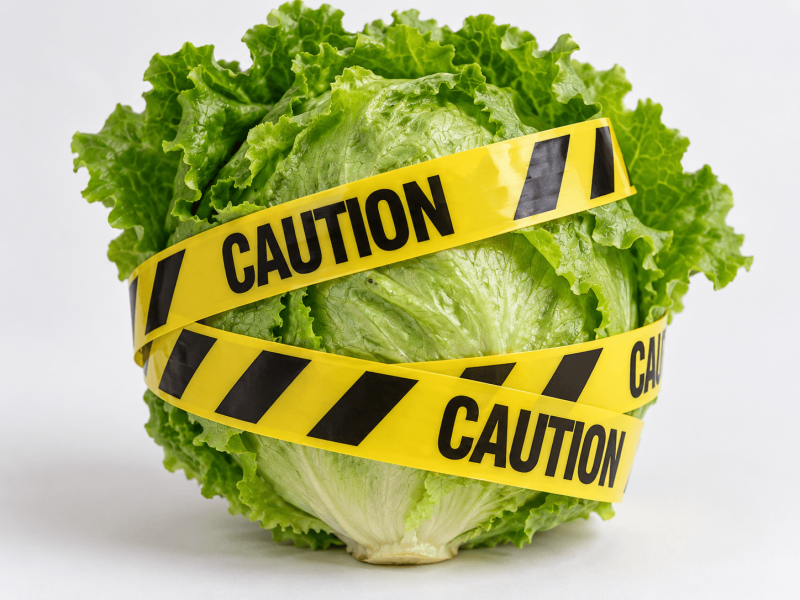
There has been a slew of recent reports of food recalls and foodborne outbreaks. Do we face an escalating problem?

Egg recalls, salmonella-linked jalapeños and a spike in cyclospora cases have dominated headlines this year, but the U.S. food-safety system isn’t unraveling — it’s just louder, according to a University of Florida food scientist interviewed by UF/IFAS News writer Lourdes Mederos.

Keith Schneider, professor of food safety at the University of Florida Institute of Food and Agricultural Sciences (UF/IFAS), says the volume of recall and outbreak headlines reflects modern media more than any real surge in unsafe food.

Asked whether the number of recalls and outbreaks has actually grown, Schneider said: “Not necessarily. We tend to hear about them much more often because we have much greater access to information. We now have 24-hour news and social media, so when there is an outbreak or recall, people can hear about it repeatedly throughout the day.”

He put the numbers in context: the U.S. sees roughly 1.2 million salmonella cases and 20 million norovirus cases every year — both typical. Cyclospora is the exception. The usual 1,000 to 2,000 annual cases has climbed past 20,000 this year, which Schneider called genuinely “concerning.”

Mis- and disinformation are distorting science and public policy. Subscribe to our Daily and Weekly Digests for incisive coverage of ‘disruptive’ innovations in AI, agricultural biotechnology, food, chemicals, nuclear energy, vaccines, and other disruptive innovations.

Does a steady drumbeat of recalls mean the food system is getting less safe? “No,” Schneider said. “In many cases, a recall is evidence that the food-safety system is working as it was designed to work.” He explained that cheaper, faster pathogen-detection tools now catch illnesses, like cyclospora infections, that once went unidentified, and that recalls from large distributors simply reflect their scale rather than laxer safety standards.
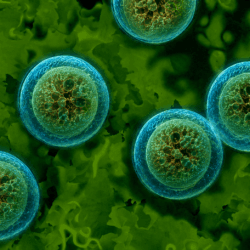
Schneider also pointed to social media’s role in amplifying isolated incidents into perceived category-wide dangers. “That increased visibility, combined with misinformation and speculation online, can make individual incidents seem like evidence of a growing problem when they may actually reflect a longstanding pattern,” he said.

His advice to worried shoppers: skip the social feeds and check the specific product, brand and lot number through the CDC or FDA before assuming an entire food category is unsafe.


Read the original article here

Related Articles

Infographic: Global regulatory and health research agencies on whether glyphosate causes cancer

Infographic: Global regulatory and health research agencies on whether glyphosate causes cancer

Does glyphosate—the world's most heavily-used herbicide—pose serious harm to humans? Is it carcinogenic? Those issues are of both legal and ...

Most Popular

ChatGPT-Image-Mar-10-2026-01_39_01-PM
Viewpoint—“Miracle molecule” debunked: Why acemannan supplements don’t work
Screenshot-2026-09-17-at-1.07.08-PM
'We are dangerously addicted to antidepressants': Should we heed RFK Jr.’s sobering warning?
Screenshot-2026-09-03-at-10.51.20-AM
Viewpoint: Why do online health lies outlive the evidence that debunks them? Read "Everyone Else Is Lying to You"
ChatGPT-Image-Sep-23-2026-01_52_03-PM
Viewpoint: 4 very real AI doomsday scenarios
ChatGPT-Image-Sep-2-2026-02_03_32-PM
How much of a problem is AI’s water use?
Screenshot-2026-09-23-at-3.15.09-PM
Anti-GMO activists in Pakistan rev up their campaign of dire warnings
Screenshot-2026-09-22-at-11.40.28-AM
After Idaho criminalized abortion providers in 2022, one-third of obstetricians fled. Health care advocates are making rural health the case for repealing the ban
ChatGPT-Image-Aug-26-2026-12_46_16-PM
Viewpoint: The fake controversy over whether combining childhood vaccines is dangerous— a debate science resolved 25 years ago
ChatGPT-Image-Sep-22-2026-10_32_46-AM
There has been a slew of recent reports of food recalls and foodborne outbreaks. Do we face an escalating problem?
Screenshot-2026-09-23-at-11.55.01-AM
How can we know if social media bans actually help teens?
Screenshot-2026-09-17-at-12.00.30-PM
Investigative group ProPublica finds links between ectopic pregnancy deaths and abortion bans
Screenshot-2026-09-10-at-12.20.19-PM
'Jet fuel didn't melt the steel': 9/11 conspiracy theories debunked
glp menu logo outlined

Get news on human & agricultural genetics and biotechnology delivered to your inbox.