


Daily Human Digest

Genetics of depression: Could a test have prevented the Germanwings catastrophe?
Major depression affects an estimated 10 percent of the population and often runs in families. Could a genetic test could ...
Individuality might be a measureable genetic trait
Benjamin de Bivort's lab at Harvard University is Groundhog Day for fruit flies. In de Bivort’s version, a fly must choose to ...
Rabies virus becomes unlikely tool for mapping brain networks
Humans have a long tradition of turning things that harm us into things that help us. We made bears into ...
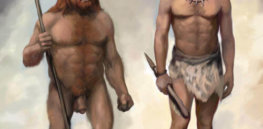
Early Europeans closer to Neanderthals than expected
One of Europe’s earliest known humans had a close Neanderthal ancestor: perhaps as close as a great-great-grandparent. The finding, announced ...
Archaeologists reveal native Alaskans’ roots
As humans spread out of Africa and settled the rest of the world tens of thousands of years ago, one ...
Claims that technology is making children autistic are unfounded
Here we go again. Recently, British newspapers: The Telegraph, The Independent and The Metro (a paper given out free on public transport right across the ...
Can Apple’s foray into open-source DNA data succeed?
A new rumor is spreading that Apple may be leveraging its ubiquity to encourage iPhone owners to participate in DNA ...
In medicine, listening to the patient matters
Medicine is dominated by the quants. We learn about human health from facts, and facts are measurable. A disease is ...
Public needs to be more informed on human germline gene editing
The news that scientists have edited the genomes of human embryos induced a predictable sharp intake of breath. The work ...
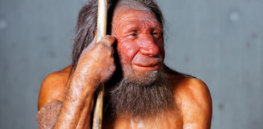
More mystery about Neanderthal and modern humans: How reliable is ancient DNA analysis?
Modern humans share swaths of DNA with long-extinct Neanderthals. But what does this mean? New and complicated dating techniques and ...
In Yellowstone’s hot springs, biotechnology revolution was born
Arguably, the most important enzyme ever discovered was found in a bacterium that lived in one of Yellowstone's hot springs ...
Scientists reverse evolution in birds to make them more like dinosaurs
The past hundred million years or so have not been kind to the dinosaurs. Once formidable “terrible lizards,” their closest modern descendant is the distinctly unimpressive chicken. Now ...
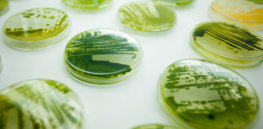
Sustainable household products? Not if anti-GMO “green” groups have their way
The latest “green” household cleaning products are using cutting-edge biotechnology to become more environmentally friendly—but criticism from “green groups” could ...
Celiac disease linked to nerve damage, but doctors still not sure why
Celiac disease, an autoimmune disorder that causes intestinal damage when a person eats gluten, is still something of a medical mystery ...
What will happen if humans are created in a laboratory?
Consider a future in which human babies are created in a test tube. What happens when women no longer have ...
Scientist who discovered CRISPR/Cas9 weighs future of new technology
Three years ago, Jennifer A. Doudna, a biochemist at the University of California, Berkeley, helped make one of the most monumental ...
Transgender teen finds support in family and community
“Now I feel I don’t have to hide,” said 17-year-old Matt Dawkins, who came out to his family as a ...
New stem cell type could allow growing human organs in animals
A newly discovered type of stem cell could help provide a model for early human development — and, eventually, allow ...
Should human germline gene editing even be considered for future use?
Rumors about human germline editing experiments prompted scientists to gather in January in Napa, Calif. Discussions there led two groups ...
Typhoid fever threat growing as antibiotic-resistant bacteria spreads
An antibiotic-resistant "superbug" strain of typhoid fever has spread globally, driven by a single family of the bacteria, called H58, ...
You leave traces of your microbiome everywhere you go
When you touch a surface, you leave behind fingerprints—distinctive swirling patterns of oils that reveal your identity. You might also ...
Chain of evolution isn’t as neat as it’s made out to be
Anyone familiar with evolution knows that humans (relatively complex organisms) evolved from simpler forms of life over the course of ...
Can Myriad Genetics maintain hold on breast cancer tests two years after loss of patents?
Myriad Genetics Inc., used a patent-protected monopoly to become one of the most successful and controversial DNA testing companies in the world ...

Can’t have a baby? Is choosing your child’s genetic parents’ characteristics racism, vanity or eugenics?
Many people choose gametes--donated eggs and sperm--so that their child will look like them but also have a certain IQ ...

Assisted reproduction may help same-sex couples conceive, but won’t end stigma towards non-traditional families
A new study from Cambridge University and the Weizmann Institute of Science predicts the use of skin cells and stem cells to create biological ...
Mammoth genes could be used to create new species of ‘Arctic’ elephant
Unlike their elephant cousins, woolly mammoths were creatures of the cold, with long hairy coats, thick layers of fat and ...
First baby born through promising new IVF technique using stem cells
Doctors in Canada have begun a new chapter in medical history, delivering the first in a wave of babies through ...
