


Science Literacy Project Daily Digest

Glyphosate, Monsanto and Europe: How science and reason almost lost out to hysteria and emotion
The glyphosate saga is a fascinating case study in how easily politics can derail science. In watching the glyphosate issue ...

Podcast: CRISPR co-creator Jennifer Doudna addresses ethics of human genome editing
In this episode of the Waking Up podcast, Sam Harris speaks with Jennifer Doudna about the gene-editing technology CRISPR/Cas9. They ...
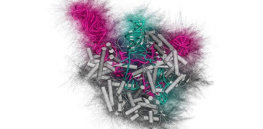
Can we solve the patent issues that threaten CRISPR research?
[Editor's note: Lawrence Horn is President and CEO of MPEG LA, which provides licenses for standards and other technology platforms.] Although recent ...
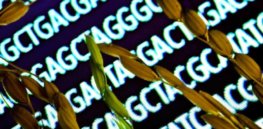
CRISPR and agriculture: Technology improving crop yields, nutrition and stress tolerance
The present study reviews agricultural applications related to the use of CRISPR systems in plants from 52 peer-reviewed articles published ...

Insecticide resistance threatens to derail malaria control in Africa
The largest genetic study of mosquitoes has found their ability to resist insecticides is evolving rapidly and spreading across Africa, ...
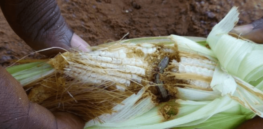
Kenya field trail shows promise of GMO insect-resistant Bt corn to combat fall armyworm African invasion
Scientists in [Kenya] have successfully tested genetically modified maize samples that are resistant to stem borer and are drought tolerant ...

How France, Italy and Belgium would profit if glyphosate is banned or restricted
If Paris and Rome carry through with their plans to ban glyphosate, a small group of French, Italian and Belgian ...
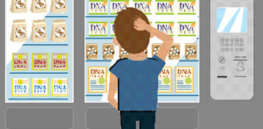
Health or ancestry? How to choose the right genetic test for you
Every so often, someone asks me which [genetics] test I recommend. And my answer boils down to one question: What ...

How our autistic ancestors helped shape human evolution
[W]hen we talk about the autism spectrum – we are all “a bit autistic” – and we all fit somewhere ...

Chimeras: The genetics behind this amazing-looking ‘two-faced’ cat
Meet Quimera the cat—she’s no ordinary feline! You’ve probably never seen any animal quite like her. Her furry face is ...

Evidence Earth is billions of years old abounds, so why don’t creationists believe it?
[Editor's note: Sabine Hossenfelder is a physicist and Research Fellow at the Frankfurt Institute for Advanced Studies.] Planet Earth formed around ...

Higher prices and uncertain benefits: Are organic foods worth it?
Consumers have been paying a lot to eat organic; foods with the certification sometimes costs twice as much as conventional products. The premium prices may not be ...

Mom was right: Teenagers’ brains can’t process what’s important and what’s not
Adults are generally pretty good at being able to tell when a situation is worthy of extra time or concentration ...

Sharpening CRISPR gene-editing accuracy with ‘molecular glue’
[A]lthough [CRISPR] technology reliably finds and cuts the targeted stretch of DNA sequence, fixing that cut as desired has been ...
GMO sugar beets help farmers reduce herbicide, water and fuel use, improve soil
You could say sugar-beet sugar runs through the blood of Luke Adams. “I grew up a sugar beet farmer,” Adams ...

Kissing cousins: Understanding the genetic risks and benefits when close relatives marry
Endogamy––the marriage of relatives––is a controversial cultural practice. It can play surprising roles in health and disease ...

‘Unmitigated disaster’: South Australian farmers enraged by government’s GMO crop ban
South Australia’s farmers are unlikely to have access to genetically modified (GM) crops until at least 2025 after a bill to extend ...

UN FAO, African Union urge governments to adopt biotech to address food insecurity, malnutrition
The African Union Commission and the Food and Agriculture Organization (FAO), urged African governments to proactively employ science, technologies and innovations – ...

Vote to approve glyphosate herbicide shakes up German, EU politics
European Union countries found themselves at odds on Monday [Nov. 27] over weed killer. After a long deadlock over renewing the ...

Why life-saving gene therapy isn’t available yet to children who need it most
[The first patient to permanently edit his DNA,] Brian Madeux, 44, of Arizona, is part of a clinical trial testing ...

Should we ‘genetically modify’ humans to fit the demands of space travel?
It takes something special to be an astronaut – an extraordinary combination of bravery, fitness, intelligence, lightning-fast decision-making and calmness ...

Senator Chuck Schumer sounds alarm over personal genomics privacy
[W]ith the holiday season in full swing, Sen. Chuck Schumer, D-N.Y., on [November 26] called for more scrutiny into popular ...

Why did 5 leukemia patients die in 2016 CAR-T trial?
More than a year after five leukemia patients died from an experimental treatment involving genetically engineered immune cells, its developer ...

Brain addiction: Why stopping drug use is so difficult
Drug addiction is a commonly misunderstood disease. Once addicted, it’s not only about pleasure seeking or choice, but chemical reactions ...

Viewpoint: France shows its irrationality in embracing nuclear power but rejecting glyphosate safety
[Editor's note: Cécile Philippe is an economist and Director-General of the Molinari Economic Institute.] In France, a glyphosate ban for ...

Long neglected by breeders, Africa’s staple ‘orphan crops’ undergoing a genetic revolution
Cassava and sweet potatoes. Lablab beans and water berries. Bitter gourds and sickle sennas. Elephant ears and African locusts. ... All ...

Hepatitis B treatable with unique new strategy—using bacterial DNA
Two hepatitis B virus vaccines are currently on the market. Earlier in November, however, the Food and Drug Administration licensed ...
