


MIT Technology Review
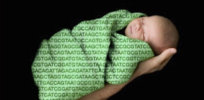
Expanded genetic testing of newborns could help us get the most out of new gene therapies
The company behind [spinal muscular atrophy drug] AveXis, is seeing the most dramatic results in children who are treated in ...

Will this ‘germ game’ help us prepare for a terror attack using a bioengineered virus?
In June 2001, a group of government officials and journalists play-acted their way through a “germ game,” a fictional scenario ...

This journalist lost a bet, and now he has to put his DNA results on the internet
It all started after the arrest of the alleged Golden State Killer in April. Police had uploaded crime-scene DNA to ...

Can we reverse aging in dogs through gene therapy? If so, humans could be next.
The world’s most influential synthetic biologist is behind a new company that plans to rejuvenate dogs using gene therapy. If ...
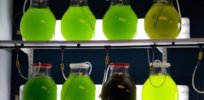
Once-promising field of advanced biofuels is in ‘shambles’—can it be revived?
[Jay Keasling, a synthetic biologist at the University of California, Berkeley, and chief executive of the Joint BioEnergy Institute] did ...

No words needed: AlterEgo prototype allows communication with computer as if by thought
Controlling your gadgets by talking to them is so 2018. In the future, you won’t even have to move your ...
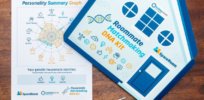
Viewpoint: Why you should be wary of ‘personalized’ DNA lifestyle tests
A wave of new [DNA] tests claim to make all sorts of personalized lifestyle recommendations—from what skin-care products you should ...

Beta thalassemia patients could be freed from life of blood transfusions by one-time gene therapy
A one-time, experimental treatment for an inherited blood disorder has shown dramatic results in a small study. It’s a major ...

So we can clone our pets—are we moving closer to humans?
The story that sent shivers up my spine...was about Monni Must, a Michigan portrait photographer who paid to clone Billy ...

We are entering the era of artificial intelligence—how should we get ready for it?
If the US were to draw up a new AI master plan, what should it aim to do? Funding AI ...

Gene therapy and rare diseases: ‘Is curing patients a sustainable business model?’
An analyst at Goldman Sachs asked a troubling question...about gene therapy. “Is curing patients a sustainable business model?” In social media, reactions ...

Viewpoint: We need to know if CRISPR works in monkeys and possible off-target effects before we start human trials
Sometime this year, people in the US and Europe will start getting treated for diseases using the gene-editing tool CRISPR, but ...

The story behind the looming $30-billion-a-year synthetic DNA data storage market
[Emily] Leproust is cofounder and CEO of Twist Bioscience, a five-year-old startup that is, by some estimates, the world’s largest ...

MIT Media Lab halts relationship with startup Nectome over storing their brains in fatal ‘brain uploads’
The MIT Media Lab will sever ties with a brain-embalming company that promoted euthanasia to people hoping for digital immortality ...
Precision education: DNA test for intelligence could be on the horizon
Ready for a world in which a $50 DNA test can predict your odds of earning a PhD or forecast ...
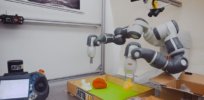
Improved ‘brains’ grant robots dexterity that could soon rival humans
It might not look that special, but the robot above is, according to a new measure, the most dexterous one ...

Battling ‘fatty liver’ disease obesity by identifying and gene-silencing mutations
The search for mutations that conjure medical superpowers has turned up people who are resistant to liver disease, even if ...

Building an Alzheimer’s early warning system through artificial intelligence
[A flat white box attached to the wall] knows when [David Graham] gets out of bed, gets dressed, walks to ...
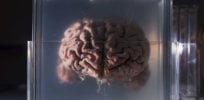
Thousand-year mind preservation with a twist: Startup Nectome’s procedure is ‘100 percent fatal’
The startup accelerator Y Combinator is known for supporting audacious companies in its popular three-month boot camp. There’s never been ...
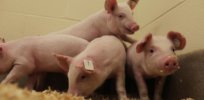
Counting on Trump: Approval of biotech animals may rely on circumventing FDA
The lobbying effort to get the FDA out of the way of biotech animals is under way. ... [Recombinetics] is ...

Saving critically ill babies through lightning-fast genome sequencing
Usually it takes weeks for scientists to sequence an entire genome. But [neurologist Jennifer] Friedman and her colleagues at Rady [Children’s ...
DNA fortune telling: Genetic tests could determine disease destiny from birth
There’s never been data available on as many people’s genes as there is today. And that wealth of information is ...

Dystopian ‘Black Mirror’ scenarios predict dark future for artificial intelligence
[A] new report by more than 20 researchers from the Universities of Oxford and Cambridge, OpenAI, and the Electronic Frontier Foundation warns that ...

‘Fully customizable’ genome: Replacing yeast’s 12.5 million base pairs piece by piece
Homo sapiens has had a tight relationship with Saccharomyces cerevisiae, the unicellular fungus better known as brewer’s yeast. … That doesn’t mean S ...
Huntington’s patients find new hope in ‘gene-silencing’ drug
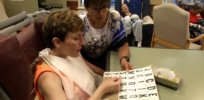
Huntington’s is a genetic disorder that causes nerve cells in the brain to gradually break down, leading to irreversible brain ...

Perfecting microbes to biomanufacture cells like computer chips
[Researcher Alec] Nielsen heads a startup called Asimov that is trying to automate the design of sophisticated genetic modifications. Its software, called ...

Searching for sleep: Genome mining project looks for insomnia links
In a genetic study of unprecedented size, scientists have searched for inherited causes of insomnia in the DNA [of] 1,310,010 ...

Gene therapy setback? Animal deaths in treating muscular dystrophy spark new concerns over high doses
An influential scientist involved in gene therapy’s biggest setback, the death of a study volunteer 19 years ago, has issued a ...
