


Psychology Today

Viewpoint: How ‘fake news’ shapes our behavior?
In recent years, the spread of fake news—particularly in the health domain—has become a significant concern. Misinformation about medical treatments, vaccines, ...

Speculation on how our brains may have evolved to invent the idea of gods
Recent archaeological and neurobiological evidence suggests that as the human brain evolved, specific cognitive abilities appeared that paralleled the invention ...

Can culture evolve through natural selection?
For well over a century, Darwin’s theory of natural selection has served as biology’s grand unifying framework, explaining how species ...

RFK, Jr. and his vaccine-skeptical acolytes at the CDC are recommending that we split childhood vaccines to allegedly prevent autism. That’s a scientifically dangerous idea
As anti-vaccine sentiment rises nationally, prominent people have proposed splitting combination vaccines into individual shots. For example, the new acting ...

‘Doing your own research’ using AI? Watch out for hallucinations, delusions and misinformation
As a result of such immersive interactions with AI chatbots, many people are said to have “lost jobs, destroyed marriages ...

Why evolution hasn’t eliminated human susceptibility to depression as it has for other diseases
Depression feels weird compared to things like fear or anger, which help us survive by warning us of danger or pushing us into action ...

Hyper-communication: How our phones, emails and social media are reshaping evolution
Intuition says that the astonishing speed with which this era of hyper-communication has occurred must change us in some way or other, but ...

Humans may need to evolve faster than nature intended if civilization hopes to survive. What are our chances?
Throughout most of human history, evolution progressed slowly. Small genetic changes took thousands of years to permeate populations. Natural selection ...
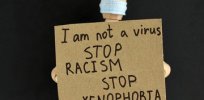
Tribalism and politics: America, a surge in xenophobia and a path forward
I wish that xenophobia were not a foundational characteristic of our evolved psychology, But it is (see Wilson, 2019). To the best ...

What does it mean to say an animal has consciousness? What about AI?
Consciousness is a private affair. There is no way of directly knowing what it is like to be another. We ...

How much did the Neanderthals penchant for cannibalism lead to their extinction?
Neanderthals went extinct about 30,000 years ago. They lived successfully in Europe, Asia, and Africa for hundreds of thousands of ...

Viewpoint: Are warnings on alcoholic drinks necessary? Will they save lives?
Will Cancer Warnings on Alcoholic Beverages Save Lives? Maybe, but probably far fewer than public health officials hope. Here’s why ...
Viewpoint: Would super-intelligent AI find humans boring?
The merging of human and artificial intelligence raises questions about the future of humanity and the essence of being human ...
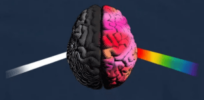
Can AI accurately guess your sexual orientation by scanning your brain?
A recent study investigated whether sexual orientation can be reliably predicted, based solely on a brief five-minute brain scan ...

Mythos and logos: Are people programmed to ‘need’ religion?
Justification systems: science is one, religion can be thought of as another, while humans are ultimately justifying creatures ...

God question: Did Neanderthals practice religion or have ‘rich symbolic lives’?
As Rebecca Sykes notes, ”Neanderthals neither ignored corpses nor treated them like rubbish.” ...

Tracing the history of evolutionary psychology all the way back to Charles Darwin
Evolutionary psychology can be traced back to Darwin's own work. Several variants have emerged on the scene over the decades ...
Is religion an artifact of small-brained superstition or a mark of our evolutionary advancement?
By about ten to seven thousand years ago, modern Homo sapiens were domesticating animals and plants and creating stable civilizations ...

Evolution of humor: Smiles are silent — so why do we hear laughter?
Laughter: Auditory signals were probably more effective in communicating feelings of mutual vulnerability during play ...

Searching for answers: Why asking questions make us uniquely human
Evolution of propositional speech: Human self-consciousness is about generating justification systems for one's self and others ...

Pair bonding: How wedding vows have contributed to human evolution
An evolutionary perspective on pair-bonding can help people to understand wedding vows at a deeper level, even generic vows turn ...

Prospective planning: Are humans the only animals capable of preparing for the future?
Humans can plan for their future needs: We must choose between satisfying our current desires and postponing our gratification to ...

Psychological differences between women and men are often the largest in gender egalitarian cultures. Why?
Psychological differences between women and men are often the largest in cultures that are the most gender egalitarian ...

‘Will you have sex with me?’ How evolution has shaped differences between male and female desire
Human sexual psychology evolved to cope with ancestral adaptive problems over millions of years. Males and females face different evolutionary ...

Dog breeds do not always determine behavior: Inside the quest to recategorize dog lineages
Genetic studies of dogs have often found that breed does not determine a dog's behavior. New research suggests lineages, not ...

‘Getting shunned by others could have been deadly’: An evolutionary explanation for ‘cancel culture’
Social media plays a major role in today’s cancel culture. We can think of a public cancellation as a large-scale ...
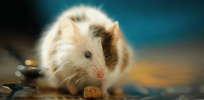
Cancer vaccine progress: CRISPR-developed shot stops brain tumors in mice
Cancer of the brain and nervous system accounted for over 250,000 deaths worldwide in 2020 ...

How Artificial Intelligence can predict severity of psychiatric disorders
AI uses genetics to predict psychiatric disorders: The AI deep learning model can also predict the severity of multiple disorders ...
