Can culture evolve through natural selection?

Gemini_Generated_Image_xkok9cxkok9cxkok

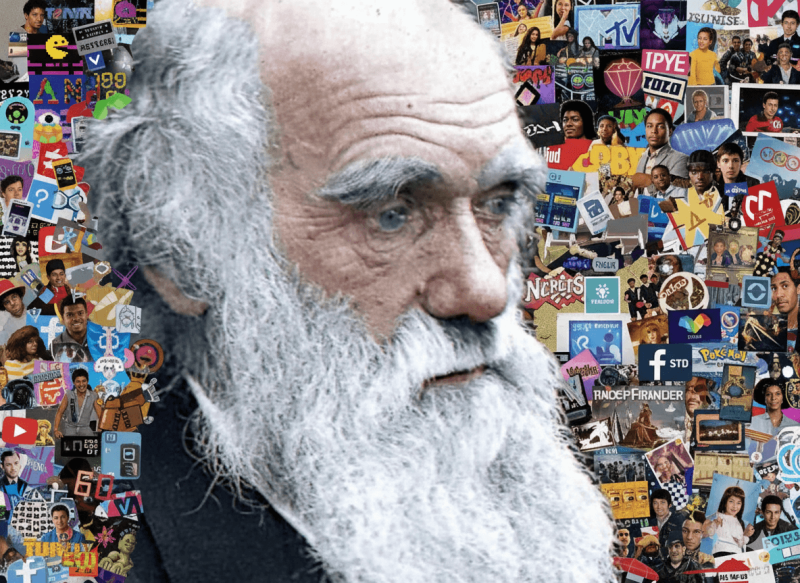
For well over a century, Darwin’s theory of natural selection has served as biology’s grand unifying framework, explaining how species adapt and evolve through the differential replication of randomly generated variations. Given the success of the theory of natural selection in biology, it’s natural to wonder whether it might explain another kind of evolution we see all around us: that of human culture. 

Cultural innovations such as technologies, artistic styles, and social practices build on earlier ones, and tend to benefit their bearers, and become more useful over time. Culture exhibits cumulative, adaptive change; it evolves. The question is: How? What kind of scientific framework can accommodate it?

Follow the latest news and policy debates on sustainable agriculture, biomedicine, and other ‘disruptive’ innovations. Subscribe to our newsletter.

Culture doesn’t face the problem Darwin’s theory was designed to solve, the problem of how change accumulates despite acquired changes getting obliterated each generation. Once someone invented a teapot handle, teapots could thereafter have handles. If we apply natural selection to culture, we’re trying to use a framework specifically designed to explain evolution in systems where acquired traits aren’t transmitted, to explain evolution in a system where they are.

This is an excerpt. Read the original post here

{{ reviewsTotal }}{{ options.labels.singularReviewCountLabel }}
{{ reviewsTotal }}{{ options.labels.pluralReviewCountLabel }}
{{ options.labels.newReviewButton }}
{{ userData.canReview.message }}

Related Articles

Infographic: Global regulatory and health research agencies on whether glyphosate causes cancer

Infographic: Global regulatory and health research agencies on whether glyphosate causes cancer

Does glyphosate—the world's most heavily-used herbicide—pose serious harm to humans? Is it carcinogenic? Those issues are of both legal and ...

Most Popular

Screenshot-2026-05-01-at-1.29.41-PM
Viewpoint: What happens when whole grains meet modern food manufacturing? Labels don’t tell the whole story.
S
As vaccine rejectionism spreads, measles may be taking a more dangerous turn
ChatGPT-Image-Apr-13-2026-02_20_22-PM
Viewpoint: Misinformation infodemic? Why assessing evidence is so challenging 
Screenshot-2026-04-20-at-2.26.27-PM
Viewpoint — Food-fear world: The latest activist scientists campaign: Cancer-causing additives
ChatGPT-Image-Mar-27-2026-11_47_30-AM-2
FDA’s expedited drug reviews are hailed in some quarters but other approval practices are problematic
Screenshot-2026-03-13-at-12.14.04-PM
The FDA wants to make many popular prescription drugs OTC—a great idea. Here’s why it’s unlikely to happen
bigstock opioids on chalkboard with rol
GLP podcast: 'Safe injection sites': enabling drug addiction or saving lives?
circular-bioeconomy-should-focus-on-sustainable-wellbeing
GLP podcast: What's wrong with 'doomsday' environmentalism? It's false.

Farmers can talk to plants
Farmers are a major source of misinformation—about farming

Sorry. No data so far.

glp menu logo outlined

Get news on human & agricultural genetics and biotechnology delivered to your inbox.