How do identical twins develop different personalities?

The following is an excerpt. Find a link to the full story below.

Despite having the same genetic makeup, identical twins have their own distinctive personalities. Just how their individuality emerges has remained a bit of a mystery. But now, researchers have found that life experiences affect brain development — and this may help us understand how personalities form.

View the full story here: The Mystery of How Identical Twins Develop Different Personalities

Study assesses impact of pending landmark US Supreme Court case on gene patents

The following is an excerpt. Find a link to the full story below.

(Phys.org) —As the U.S. Supreme Court moves closer to a decision this summer in the landmark gene patent case against Myriad Genetics, a study, led by Colorado State University, is shedding light on what may be at stake.

Gregory Graff, associate professor of Agricultural and Resource Economics at CSU, and a team of researchers at University of Minnesota and Pennsylvania State University analyzed U.S. patents to find that the case may not have the dramatic impact that some in the  fear it will. However, they caution, the Supreme Court’s decision may have unanticipated impacts on patents that claim sequences from species other than just humans.

Read the full story here: Study assesses impact of pending landmark US Supreme Court case on gene patents

Conservative immigration scholar claims genetic component to racial disparities in IQ

The following is an excerpt. Find a link to the full story below.

Jason Richwine, the coauthor of the conservative Heritage Foundation’s controversial study on the supposed $6.3 trillion cost of comprehensive immigration reform, has received much attention and criticism for his 2009 Harvard dissertation that argued there was “a genetic component” to racial disparities in IQ. But this dissertation wasn’t the first time Richwine had expressed such views publicly. In 2008, he told an audience at the American Enterprise Institute that “major” ethnic or racial differences in intelligence between the Irish, Italian, and Jewish immigrants who flocked to the United States at the turn of the 20th century and the immigrants coming to the US today justified severely restricting immigration.

Read the full story here: Conservative Immigration Scholar: Black and Hispanic Immigrants Are Dumber Than European Immigrants

Precision StemCell: sellings stem cells and treating people as guinea pigs

The following is an excerpt. Find a link to the full story below.

When journalists and health researchers write about patients seeking access to unproven stem cell interventions, they typically examineinternational travel to clinics located in China, India, Mexico, and elsewhere. In contrast, most domestic companies marketing unlicensed and untested stem cell procedures attract less scrutiny. This oversight is perplexing because numerous U.S. clinics advertise stem cell interventions for amyotrophic lateral sclerosis, multiple sclerosis, dementia, and other diseases. Such businesses promote and provide stem cell-based biologics that are not backed by credible safety and efficacy data and have not been reviewed and approved by the FDA. Precision StemCell, based in Gulf Shores, Alabama, is one example of a domestic clinic marketing stem cell interventions that appear to violate federal regulations.

Read the full story here: Precision StemCell: Selling Stem Cells & Treating Individuals With ALS as Human Guinea Pigs

Ten responses to “Ten reasons we don’t need GMOs”

The following is an excerpt. Find a link to the full article below.

You may have run across this article “10 Reasons We Don’t Need GM Foods” on the FoodConsumer website.  It’s been making its rounds on social media (Facebook and Twitter). I would like to address some of the inaccuracies in this article – point by point.

1. GM foods won’t solve the food crisis

Well, surprisingly enough, I agree with this one.  Or at least with the statement: GM foods ALONE won’t solve the food crisis…

View the full story here: “10 ‘reasoned’ responses” to “10 reasons we don’t need #GMOs”

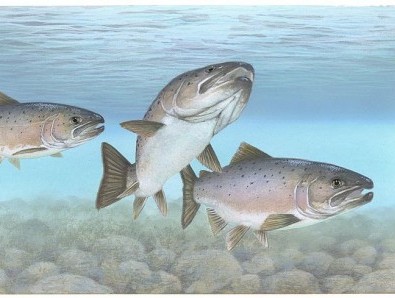
AquAdvantage salmon: “Frankenfish” or “Wunderfish”?

Atlantic salmon Atlantic fish e

The following is an excerpt. Find a link to the full story below.

Just in time for salmon season, the FDA is on the verge of ok’ing genetically modified salmon, dubbed “frankenfish,” by some and considered a wunderfish by others.

The salmon would be the first-ever transgenic animal (one that carries a foreign gene that has been inserted into its DNA) to be available to both U.S. and world consumers. It looks like any other salmon…but there is a definite twist.

Exacerbating criticism, current laws and initial reports suggest the fish would not be required to be labeled, a point the FDA has not yet determined. “A decision has not yet been made regarding labeling for AquAdvantage Salmon,” a spokeswoman for the FDA told MSN News last week.

View the full article here: GMO salmon debate: ‘Frankenfish’ or Wunderfish?

Additional Resources:

What role will genetics play in a biology-based approach to psychiatry?

f b bfd z e

The following is an editorial summary.

In anticipation of the publication of the DSM-V — the fifth edition of psychiatry’s “Bible” — many, many articles have been written calling out the manual’s apparent refusal to adopt a more biologically-based approach to mental illness. Even in a world of increasingly sophisticated neuroscience, biochemistry, and genetics, the authors of the manual climb to a nebulous, symptom-focused approach to diagnosing and treating mental illness.

While several articles, including this New York Times piece, offer a thorough breakdown of the larger controversy, very few are focusing on what, exactly a biology-based psychiatry would look like. Genetics is almost universally invoked as one of the disciplines that should play a key role, but just how prepared genetics is to tackle the issue of mental illness is an open question. The folks at the DNA Exchange deserve special mention for examining how a biology-based psychiatry with a strong element of genetics would impact the work of genetic counselors and the field of psychiatry more generally.

Additional Resources:

Could genetic engineering save the citrus industry?

The following is an edited excerpt of a longer story. Find a link to the full story below.

A pandemic is destroying orange groves in Florida. The disease, called citrus greening, is also spreading to citrus groves in Texas and California, threatening a more than $3 billion per year industry.

If left unaddressed, the entire U.S. citrus industry could be wiped out. Citrus greening disease is spread by bacteria that block trees’ nutrient and water channels and prevent fruit from ripening.

Pesticides have been of some use in controlling the psyllids but researchers are concerned the insects will develop resistance. And biocontrols – siccing good bugs to prey on the bad ones – have proven ineffective because the psyllids simply outbreed their predators.

That’s where David Gang enters the scene.

Gang’s lab in the Washington State University Institute of Biological Chemistry focuses on using new technologies like genomics and proteomics to study plant defense mechanisms. 

View the full story here: Genetic engineering hopes in citrus disease battle

Montana: Food fight brewing over genetically modified ingredients

The following is an edited excerpt of a longer story. Find a link to the full story below.

A new bill requiring labels on foods with genetically modified ingredients is dividing Montana farmers and consumers.

The federal bill, dubbed the “Genetically Engineered Food Right-to-Know Act,” mandates that all food containing genetically modified organisms, or GMOs, be clearly labeled. It has bipartisan support in the U.S. Senate, including from that body’s lone farmer, Sen. Jon Tester, D-Mont.

It’s a bill for which consumer groups have lobbied for more than a decade, but also one that most Montana farm groups oppose. In communities like Billings, non-GMO labels already appear on grocery store shelves, while irrigated fields bordering the city are seeded with genetically modified corn, sugar beets and alfalfa.

View the full story here: Food fight brewing over genetically modified ingredients

Seeds of biotech resentment part 4: Distrust of science

The following is an edited excerpt of a longer story. Find a link to the full story below.

After nearly 20 years of safe use, you might think we could move on – that there would no longer be questions about genetically engineered seed. Yet, the debate over GM is becoming even more polarized, as witnessed during a recent event at the University of Illinois.

Despite 600 scientific studies that verify biotech safety, we’re still talking about this.

Many of the arguments we heard against biotech were familiar: Somehow, it must be dangerous. It must be hurting other farmers, or ruining our soil and productivity and sustainability. In the debate, the anti-tech folks cited the same scientists, sounded the same alarms, and touted the same research we’ve been hearing for years.

A colleague who witnessed the debate made a good point: ‘Science,’ as most of us understand the word, is no longer trusted. In fact, she argued, science and research, which should be unbiased, is now abused and biased.

View the full story here: Seeds of Biotech Resentment: Part Four



Exposing the tyranny of the food fascists

The following is an edited excerpt of a longer story. Find a link to the full story below.

Like backseat drivers and pebbles in our shoes, the “food police” are annoying. They’re know-it all ninnies who nag us about what we should or shouldn’t be eating. Even worse, they are eager to have the government batter us into compliance. Subsidize veggies. Ban large sodas. Re-engineer school lunches. Stop biotechnology. Promote organic. Tax fat.

An example of the rationale for such interventions was a recent op-ed, “Three Cheers for the Nanny State,” by Sarah Conly, which lauded the sort of governmental over-protectiveness and gratuitous intrusion into our lives that define the “nanny state.”

A worthy antidote to the Sarah Conlys of the world is The Food Police, a new book by agricultural economist Jayson Lusk. In it, Lusk exposes the sophistry of current food movements that seek a return to a romantic but imaginary view of “nature.”

View the full story here: Exposing The Tyranny of The Food Fascists

How to recognize questionable information about genetically modified organisms

Eugène Atget Wheat Google Art Project

The following is an editorial summary. Find a link to the full story below.

Mary Mangan — a genomics scientist with credentials in microbiology, immunology, plant cell biology, and mammalian cell, developmental, and molecular biology (PhD) — offers tips to the lay reader on how to separate the wheat from the chaff in the sea of misinformation about genetically modified organisms. An excerpt:

There’s an astonishing amount of misinformation propagated about GMOs. Most of it is so clearly science fiction and conspiracy theory that it’s just laughable. Sometimes, though, the information comes from what seems like a trustworthy source, such as a scientific journal. Even if it is published in a respectable journal, sometimes the statistics and results do not withstand scrutiny.

Another source of confusion can be the “gray literature“. Gray literature consists of publications such as reports that have generally not gone through the peer-review process that scientific studies generally do. Some gray literature is useful and valuable, and quite neutral. Sometimes, though, there are reports that come out that are definitely not neutral, and represent merely the cherry-picked and distorted views of an industry or activist viewpoint, sometimes both.

Read the full story here: GMO Wheat and shouting “fire” in a crowded theater

Additional Resources:

Bioethics: An attack on academic freedom?

The following is an edited excerpt of a longer story. Find a link to the full story below.

Some bioethicists are complaining about an attack on academic freedom. Udo Schüklenk, of Queen’s University, in Ontario, who is also the editor of Bioethics, a distinguished international journal, complained bitterly that “bioethics journals are under increasing and sustained fire from political activists” of all stripes, from “the left, feminists, disability activists [to] religious conservatives”.

He singles out two gadflies: The first is Wesley J. Smith, the editor of the Human Exceptionalism blog on the website of the US magazine National Review Online. The other is the editor of BioEdge, whose “outputs are routinely picked up by search engines such as Google’s news service, thereby arguably providing the site with a larger real-world impact than most bioethics journals could dream of”.

View the full story here: An attack on academic freedom?

Genetically modified crops are overregulated

The following is an edited excerpt of a longer story. Find a link to the full story below.

The overregulation of genetically modified crops is a response not to scientific evidence, but to a global campaign that disseminates misinformation and fear about these food sources, said University of Illinois food scientist Bruce Chassy at the American Association for the Advancement of Science meeting.

Farmers have witnessed the advantages of GM crops firsthand through increases in their yields and profit, and decreases in their labor, energy consumption, pesticide use and greenhouse gas emissions, Chassy said.

Despite these benefits, various regulatory agencies require newly developed GM crops to be put to the test with rigorous safety evaluations that include molecular characterization, toxicological evaluation, allergenicity assessments, compositional analysis and feeding studies. This extensive testing takes five to 10 years and costs tens of millions of dollars, and Chassy argues that this process “wastes resources and diverts attention from real food safety issues.

View the full story here: Food science expert: Genetically modified crops are overregulated

Entire European continent shares ancestry

The following is an excerpt of a longer story. Find a link to the full story below.

Europeans all shared a common ancestor just 1,000 years ago, new genetic research reveals.

Scientists drew this conclusion, detailed May 7 in the journal PLOS Biology, by calculating the length of regions of shared DNA from 2,000 Europeans.

The same technique hasn’t been applied to other continents, but people in other parts of the world are just as likely to be closely related, the researchers said.

“In fact, it’s likely that everyone in the world is related over just the past few thousand years,” said study co-author Graham Coop, a geneticist at the University of California, Davis.

View the full story here: European DNA Study Links People Across Continent To Shared Common Ancestor

Brazil aims to sway China on GM soy, corn

The following is an edited excerpt of a longer story. Find a link to the full story below.

Brazil, the world’s No. 2 soy exporter, will lobby top buyer China to speed approval for imports of three new gene-modified varieties of soybean, and one of corn, in a bid to prevent another lost season of planting, a Brazilian official said.

Nearly 90 percent of Brazil’s soybean crop is genetically modified, and the country is banking on increased planting of gene-modified varieties to further boost output, as it looks to overtake the United States as top soybean producer this year.

Firms such as global seed giant Monsanto Co have rolled out new GM seeds for planting in the next season, but without a green light from China, which buys 70 percent of Brazil’s soybeans, farmers and exporters in the South American nation could face a major headache.

View the full story here: Brazil aims to sway China on GM soy, corn approvals

Silk and cellulose can be used in stem cell cartilage repair

The following is an excerpt of a longer story. Find a link to the full story below.

Over 20 million people in Europe suffer from osteoarthritis which can lead to extensive damage to the knee and hip cartilage. Stem cells offer a promising way forward but a key challenge has been to design a ‘smart material’ that is biologically effective for cartilage tissue regeneration. Now researchers have identified a blend of naturally occurring fibres such as cellulose and silk that makes progress towards affordable and effective cell-based therapy for cartilage repair a step closer. The EPSRC-funded study, published in Biomacromolecules and undertaken by University of Bristol researchers, explored the feasibility of using natural fibres such as silk and cellulose as stem cell scaffolds — the matrix to which stem cells can cling to as they grow.

Both cellulose and silk are commonly used in textiles but the researchers demonstrated an unexpected use for the two natural polymers when mixed with stem cells. The team treated blends of silk and cellulose for use as a tiny scaffold that allows adult connective tissue stem cells to form into preliminary form of chondrocytes — the cells that make healthy tissue cartilage — and secrete extracellular matrix similar to natural cartilage.

View the full story here: Silk and cellulose biologically effective for use in stem cell cartilage repair

Male, female – ah, what’s the difference?

The following is an editorial summary. Find a link to the full story below.

What distinguishes males and females? The cultural differences may be obvious, as well as the secondary sexual characteristics (beards, breasts) in humans, but the full answer is a mix of genetics and evolution that is anything but simple.

View the full story here: Male, female – ah, what’s the difference?

Somatic mutation links port-wine birthmarks, SWS, and melanoma of the eye

The following is an excerpt of a longer story. Find a link to the full story below.

Researchers have identified the gene mutation responsible for the rare neurological condition Sturge-Weber syndrome (SWS) and port-wine birthmarks. The scientists, from the Kennedy Krieger Institute and the Sturge-Weber Foundation, claim that this is the most significant medical advance in the pursuit of a cure for SWS.

Sturge-Weber syndrome is a rare neurological disorder characterized by a facial port-wine birthmark and neurological abnormalities, including seizures and glaucoma. Port-wine birthmarks occur in 3 in 1,000 newborns, and estimates for SWS range between one in 20,000 to 50,000 newborns. Prior to this latest research there was no known cause for the disorder, the scientists say. Treatments are available for many of the complications of the disease, but more research is needed to understand how to prevent the medical and developmental problems resulting from it.

View the full story here: Somatic Mutation Links Port-Wine Birthmarks, SWS, and Melanoma of the Eye