Gaia “health food” blog launches new anti-biotech scare campaign

The following is an edited excerpt.

I knew this day would come. I suppose it’s been here for a while, but this is the day I researched it and came with so much evidence, it was nauseating.

Bottom lime, GMOs are starting to show up in our organic food supply, in various forms. For example, organic farms can find their product cross pollinated by GMO farms nearby, and also through other means, like downright deceit.

Deceit in the sense of, as an example, a truckload of supposedly organic corn is expected to be delivered to an organic wholesaler. Upon analysis of the corn kernels, it was found that 1/5 of the corn kernels are GMO. And no one knows how they got there. Monsanto, you’re killing me………..literally.

Read the original post in its entirety here: I knew this day would come: GMO is contaminating our organic food supply…. sigh.

Turkey suspends official who falsely reported GMO in rice, stirring scare

The following is an edited excerpt.

There is no genetically modified rice that is being traded in the world and there is none in Turkey, Food, Agriculture, and Animal Husbandry minister Mehdi Eker firmly stated last Thursday.

Eker said the İstanbul Technical University (İTÜ), which in a report said that GMOs were detected in rice seized at the border, was guilty of releasing an erroneous report. He said İTÜ later announced that the report was invalid, and even the individual in charge of the report was suspended indefinitely.

Read the original article in its entirety here: Agriculture minister denies reports on GMO in rice


Experts: Patients should have right to control genomic health information

The following is an excerpt of a longer story.

May 9, 2013 — Doctors should not have the right or responsibility to force-feed their patients with genomic information about their future health risks, according to bioethicists writing on May 9 in Trends in Biotechnology, a Cell Press publication. They write in response to controversial recommendations from the American College of Medical Genetics and Genomics (ACMG) on the reporting of incidental findings in clinical genome sequencing.

View the full story here: Patients Should Have Right to Control Genomic Health Information, Experts Say

The lurker: How a virus hid in our genome for six million years

The following is an excerpt of a longer story.

In the mid-2000s, David Markovitz, a scientist at the University of Michigan, and his colleagues took a look at the blood of people infected with HIV. Human immunodeficiency viruses kill their hosts by exhausting the immune system, allowing all sorts of pathogens to sweep into their host’s body. So it wasn’t a huge surprise for Markovitz and his colleagues to find other viruses in the blood of the HIV patients. What was surprising was where those other viruses had come from: from within the patients’ own DNA.

View the full story here: The Lurker: How A Virus Hid In Our Genome For Six Million Years

Bill would regulate ‘biosimilar’ drugs

The following is an excerpt of a longer story.

SACRAMENTO — Two of the nation’s largest biotech companies — Amgen Inc. of Thousand Oaks and Genentech Inc. of South San Francisco — are fighting in Sacramento to keep a tight grip on some of their most lucrative drugs.

At stake is a potential market worth tens of billions of dollars for pricey biological medicines they make from human blood, serums, bacterial cultures, viruses and other microorganisms. They are used to treat cancers, immune disorders and many other complex diseases.

View the full story here: Bill would regulate ‘biosimilar’ drugs

A minimalist genome: Sometimes “junk” DNA really is junk

Bladderwort trap

The following is an editorial summary.

Whether or not “junk” DNA is actually useful has been a topic of debate. Recent findings from the ENCODE project suggested that junk DNA might, in fact, be extremely useful. Not everyone agreed. Now a new paper in Nature examining the genome of a carnivorous plant provides evidence that, at least in some cases, “junk DNA” really is junk.

As Ed Yong writes at his National Geographic blog:

Take the floating bladderwort. This flesh-eating water plant is a genetic minimalist, adrift in a world of hoarders. The onion, for example, has around five times more DNA than you do, with a genome that’s around 15 billion DNA letters long. 

The bladderwort, however, has a paltry 82 million letters in its genome—40 times fewer than you.

By sequencing the bladderwort genome, Enrique Ibarra-Laclette from the CINESTAV institute in Mexico City has shown that it’s largely junk-free. Its genes are squashed together and around three-quarters of its DNA codes for proteins. The extraneous sequences between them are few and far between. And yet, the plant survives. “Our results suggest that “junk” DNA is not necessary for the function of complex organisms,” says Luis Herrera-Estrella who led the study.

View the full story here: Flesh-Eating Plant Cleaned Junk From Its Minimalist Genome

Additional Resources:


Biological basis of mental illness challenged

The following is an editorial summary of a longer story.

This blog post combines two competing views on the nature of mental health research: should we be trying to change the way we classify and treat these ailments on a biological basis, or is the current methodology of psychiatry fundamentally sound?

View the full story here: Do we need to change the way we are thinking about mental illness?

Creepy or cool? Portraits derived from DNA in hair and gum found in public places

The following is an excerpt of a longer story.

It started with hair. Donning a pair of rubber gloves, Heather Dewey-Hagborg collected hairs from a public bathroom at Penn Station and placed them in plastic baggies for safe keeping. Then, her search expanded to include other types of forensic evidence. As the artist traverses her usual routes through New York City from her home in Brooklyn, down sidewalks onto city buses and subway cars—even into art museums—she gathers fingernails, cigarette butts and wads of discarded chewing gum.

Dewey-Hagborg’s odd habit has a larger purpose. The 30-year-old PhD student, studying electronic arts at Rensselaer Polytechnic Institute in Troy, New York, extracts DNA from each piece of evidence she collects, focusing on specific genomic regions from her samples. She then sequences these regions and enters this data into a computer program, which churns out a model of the face of the person who left the hair, fingernail, cigarette or gum behind. 

View the full story here: Creepy or Cool? Portraits Derived From the DNA in Hair and Gum Found in Public Places

Egg genome reprogrammed to match sperm’s with or without a parental genome

The following is an excerpt of a longer story.

Researchers from Huntsman Cancer Institute (HCI) at the University of Utah have discovered that while the genes provided by the father arrive at fertilization pre-programmed to the state needed by the embryo, the genes provided by the mother are in a different state and must be reprogrammed to match. The findings have important implications for both developmental biology and cancer biology.

View the full story here: Egg Genome Is Reprogrammed To Match Sperm’s With Or Without A Paternal Genome

New generation of herbicide-tolerant crops face regulatory delays

d d a

The following is an editorial summary of a longer story.

Monsanto and Dow Chemical face delays in selling biotech crops engineered to survive older weedkillers after the the U.S. Department of Agriculture announced increased scrutiny of the genetically modified plants. The new crops will be evaluated in separate environmental impact statements — a longer and more intensive review process than the environmental assessments previously used by the USDA to evaluate biotech crops.

The GLP has written previously about the dangers of over-regulation for biotech crops and foods with regards to the AquAdvantage GM salmon and the so-called “Monsanto Protection Act.”

You can read the USDA’s statement on the new regulatory approach here.

View the full story here: Monsanto, Dow Crops Face Delays as U.S. Increases Scrutiny


Additional Resources:

  • “Environmental Statements Could Hold Back Dicamba, 2,4-D Tolerant Crops,” Farm Futures


Jewish researcher attacks DNA evidence linking Jews to Israel

ff f z

It’s one of the consequences of the ongoing conflict between Israel and its neighbors that the origins of the “Jewish people” periodically surfaces as an issue of great controversy. It’s particularly troublesome when a scientist—in this case, an Israeli molecular geneticist whose motivations appear more personal and ideological than scientific—stokes the contretemps.

The current brouhaha arises over a recent study by Eran Elhaik and is accompanied by his personal attacks on more mainstream scientists who have eviscerated his work. In the face of overwhelming evidence from dozens of studies over twenty years from geneticists and historians around the world, Elhaik is aggressively stumping on behalf of his belief that most Jews trace their seminal ancestry not to the Middle East but to the Caucusus and Eastern Europe.

Khazarian myth

Elhaik, who is now a post-doctoral researcher at Johns Hopkins, is recirculating the debunked “Khazarian hypothesis” promoted by journalist Arthur Koestler in his 1976 book, The Thirteenth Tribe, written before scientists had the tools to compare genomes and challenge his conclusion.

The Khazarian myth was more recently recycled (to great applause by anti-Israeli activists and some pro-Palestinian groups) in no less convincing form by Israeli French historian Shlomo Sand in The Invention of the Jewish People, published in 2008—a book panned by both historians and geneticists.

Elhaik reengaged the faux controversy late last year when the Oxford journal Genome Biology and Evolution published his study, “The Missing Link of Jewish European Ancestry: Contrasting the Rhineland and the Khazarian Hypotheses.” The young Jewish researcher challenged the so-called “Rhineland hypothesis”—the broadly accepted genetic and historic evidence that about 80 percent of Jewish Ashkenazi males trace their ancestry to a core population of approximately 20,000 Eastern European Jews who originated in the Middle East. Elhaik wrote that the Khazars converted to Judaism in the eighth century, although historians believe and genetic evidence confirms that only a fraction of the population converted, including almost certainly royalty and some members of the aristocracy.

A paper published in 2000 by geneticists Harry Ostrer, a professor of genetics at the Albert Einstein College of Medicine, and University of Arizona geneticist Michael Hammer showed that most Ashkenazis, Italians, North Africans, Iraqi, Iranian, Kurdish and Yemenite Jews share common Y-DNA haplotypes that are also found among many Arabs from Palestine, Lebanon and Syria.  Only a small percentage of the Y-DNA of Jews originated outside of the Middle East—some in the Caucusus.

The competing Rhineland and Khazarian theories were most recently discussed by Ostrer in two studies published in 2012 and in his well received book, Legacy: A Genetic History of the Jewish People. He found that geographically and culturally distant Jews still have more genes in common than they do with non-Jews around them, and that those genes can be traced back to the Levant, an area including modern-day Israel. “All European [Ashkenazi] Jews seem connected on the order of fourth or fifth cousins, Ostrer has said.

The concept of the “Jewish people” remains controversial. The Law of Return, the Israeli law that established the right of Jews around the world to settle in Israel and which remains in force today, was a central tenet of Zionism. The DNA that links Ashkenazi, Sephardi and Mizrahi, three prominent culturally and geographically distinct Jewish groups, could conceivably be used to support Zionist territorial claims —except, as Ostrer has pointed out, some of the same markers can be found in Palestinians, distant genetic cousins of the Jews, as well. Palestinians, understandably, want their own ‘right of return’.

That disagreement over the interpretations of Middle Eastern DNA also pits Jewish traditionalists against a particular strain of secular Jewish ultra-liberals who have joined with anti-Israeli Arabs and many non-Jews to argue for an end to Israel as a Jewish nation. Their hero is the Austrian-born Shlomo Sand—and now Elhaik. His study gained buzz in neo-Nazi websites and radical anti-Israeli and more radical pro-Palestinian blogs. For example, the notorious former Ku Klux Klansman David Duke actually attacked Elhaik in his latest anti-Jewish rant—Duke’s anti-Semitic beliefs hang on the fact that Jews are genetically cohesive and conspiratorial. “The disruptive and conflict-ridden behavior which has marked out Jewish Supremacist activities through the millennia strongly suggests that Jews have remained more or less genetically uniform and have … developed a group evolutionary survival strategy based on a common biological unity — something which strongly militates against the Khazar theory,” Duke wrote in his blog in February.

While Elhaik’s work has provided ideological support for those seeking the destruction of Israel, it’s fallen flat among established scientists, who peer reviewed his work and found it sloppy at best and political at worst.

“He’s just wrong,” said Marcus Feldman of Stanford University, a leading researcher in Jewish genetics. “If you take all of the careful genetic population analysis that has been done over the last 15 years… there’s no doubt about the common Middle Eastern origin,” he said. He added that Elhaik’s paper “is sort of a one-off.”

“It’s an unrealistic premise,” said University of Arizona geneticist Michael Hammer, one of the world’s top Y-chromosomal researchers.

Discover’s Razib Khan did a textured critique in his Gene Expression blog, noting the study’s historical fuzziness and its selective use of data to come up with what seems like a pre-cooked conclusion. As Razib writes, it’s hardly surprising that we would find a small but sizable Khazarian contribution to the “Jewish gene pool”. In fact the male line of my own family traces to the Caucusus, suggesting I’m one of the 20 percent or so of Jews whose lineage traces to converted royal Khazarians. But that view is widely acknowledged by Ostrer, Hammer, Feldman, Michael Thomas and every major researcher in this area—as summarized in my book, Abraham’s Children: Race, Identity and the DNA of the Chosen People.

The rebuke of Elhaik’s study apparently has irked the beleaguered and brash researcher. He’s launched a new offensive—the double entendre is intentional—as chronicled in the Jewish Forward. Elhaik is now calling the world’s top geneticists “liars” and “frauds.” When I weighed in on the magazine’s discussion board, Elhaik responded with academic restraint, claiming my reporting was no better than the geneticists he trashed, saying it shared “common ground with the Nazism (sic) ideology.”

Judaism’s tribal roots

Unlike Christianity and Islam, Judaism is not solely a faith-based religion. Its origins, as is the case with the other prominent surviving ancient religion, Zoroastrianism, are tribal. The blood connections mentioned endlessly in the Hebrew Bible are not just symbolic; the Jews of ancient Israel were a clan of connected tribes who coalesced over hundreds of years. While Jesus and later Mohammad transformed the notion of “blood” into “faith”—one could become a Christian or Muslim through faith alone—Judaism has always retained an ancestral component.

In the Torah, that blood link is patrilineal, passed on from father to son. That tradition is preserved today in the Jewish priesthood, known as the Aaronite line. According to the Bible (and we have no way to know if this is historical or apocryphal), Aaron was anointed as the first Jewish priest and his sons and their descendants became the seed population of the Jewish priesthood. Jewish Cohanim—the word means ‘priests’ in Hebrew—supervised the inner sanctum until the destruction of the Second Temple in the first century, after which the Aaronite line was preserved by tradition, with Cohanim having special privileges and responsibilities to this day.

Are present day Cohanim descended from Aaron? That question is unanswerable; we do not even know for certain that Aaron or Moses even existed. However, DNA studies of the Y chromosome have determined that a majority of self-proclaimed Cohanim (it’s an oral tradition) has a set of genetic markers that trace back approximately three thousand years to a single common ancestor. In other words, if there was no Aaron, there was certainly a High Priest early in the Jewish tradition whose ancestors have retained evidence of that tradition in their DNA.

As discussed in Abraham’s Children, Judaism has always retained its tribal roots even as faith-based religions flourished. In the centuries after the destruction of the Second Temple in the first century, Jewish lineage became defined through the mother rather than the father. Jewishness is now based on a triple helix: belief in God (although many Jews are agnostic or atheist); recognition of ancient Israel as a Biblical homeland; and literal blood connection with other Jews, passed on from generation to generation.

To many people—including and especially Jews sensitive to the Nazi branding of Jews as a race, which led to the near extinction of the religion—acknowledging the genetic cohesiveness of Judaism is uncomfortable. Anything that marks Jews as essentially different runs the risk of stirring either anti- or philo-Semitism. But that doesn’t mean we can ignore the factual reality of what Ostrer calls the “biological basis of Jewishness” and “Jewish genetics.” Acknowledging the genetic distinctiveness of Jews is “fraught with peril,” but we must grapple with the hard evidence of “human differences” if we seek to understand their implications of the age of genetics.

Jon Entine, executive director of the Genetic Literacy Project, is a senior fellow at the Center for Health & Risk Communication and STATS (Statistical Assessment Service) at George Mason University.

Peru crop biotech ban highlights botched debate over biodiversity

ddac fc e z

Last week, Peru became the first country in the Americas to ban genetically engineered crops, instituting a ten-year moratorium.

Anti-biotechnology campaigners link the success of their efforts to the focus on the latest demonizing code word: biodiversity, or the lack thereof, which they claim is being ushered in by the spread of gene-altered crops.

“Not only are GMOs dangerous for the environment and humans, agree many local experts and farmers, but they also threaten to decimate the rich biodiversity that has sustained the many civilizations of Peru for millennia,” wrote trueactivist.com in its “coverage” of the Peruvian vote.

Christian Science Monitor, in its story, goes so far as to transform a regional celebrity chef into a biotechnology and farming expert. “They’re a big monoculture, which is why people usually end up using GMOs,” CSMMonitor.com quotes Chef Pedro Miguel Schiaffino about the detriments of biotechnology-based farming based on the American model. “[W]hen you have monocultures, the crops end up getting diseases and you have to look for these extreme ways to fix them.”

The ‘go to’ hero for the biodiversity argument has been Vandana Shiva, an Indian environmental activist who has no expertise in this area but has become a favorite of anti-biotech campaigners. “Monocultures and monopolies symbolize a masculinization of agriculture,” she has written, which offers a window into the credibility of her arguments. “The war mentality underlying military-industrial agriculture is evident from the names given to herbicides which destroy the economic basis of the survival of the poorest women in the rural areas of the Third World.”

Now, Shiva’s theme is being amplified by a study in the journal Agronomy for Sustainable Development titled “Feeding the world: genetically modified crops versus agricultural biodiversity.” The article is premised on a genuine crisis: global population will exceed nine billion within coming decades. Already, billions of people are malnourished or starving. In the next 40 years, the demand for food around the world is expected to rise by 70%, with much of that being demand for more meat and dairy products. How do we address this worldwide crisis?

In the 1950s and 60s, when efforts were first marshaled to address global food security, industrialized countries launched the Green Revolution, backed by modern technology—advanced tilling techniques and the introduction of targeted, lower impact chemicals that increased yields by 10 to 100 times. It has saved billions of lives.

With the world population continuing to surge, the challenge remains. What tools are available? Clearly organic agriculture, which is flourishing in wealthy countries, can play a role, although a small one. Organic corn has around 70% of the yield of conventional corn. Organic rice has 59% of the yield of conventional rice. Organic spring wheat has 47% of the yield of conventional spring wheat. Organic cabbage has 43% of the yield of conventional cabbage. Across the board, it takes one and a half times to two times as much land in the United States to grow food organically than it does to grow food via conventional methods. Conventional agriculture enhanced by the latest technology, including biotechnology, needs to play a primary role. But you’d not read that if you restrict your sources to anti-science websites, campaigners like Shiva or Agronomy for Sustainable Development. Their conclusion: genetically modified crops should be abandoned in pursuit of agricultural biodiversity, driven mostly by organic farming methods.

Danish anti-biotech activists author study

The “study” was well publicized by the usual array of anti-biotechnology websites and campaigners. Does it hold any scientific weight? The authors—well known Danish anti-biotech campaigners—show their ideological stripes by framing the issue in adversarial terms, creating a controversy that does not exist among global food security experts. There is an important question here—What role could or should genetically modified crops play in developing strategies to feed the world’s growing population? But instead the authors falsely pose the issue as choice—between biodiversity and the use of biotechnology. Ramez Naam, author of The Infinite Resource: The Power of Ideas on a Finite Planet and GLP contributor, offered his thoughts via email.

“Is there really a conflict? The paper argues that there’s a conflict between emphasis on research into genetically engineered crops and efforts to boost the diversity of crops grown. I don’t see that this is the case. Currently in labs we have work not only on GMO corn, wheat, cotton, soy, and rice, but also on cassava, bananas, plantains, potatoes, apples, and other crops. Genetic engineering necessarily moves one crop at a time. That doesn’t mean that we can’t have a diversity of crops.”

The Agronomy for Sustainable Development article is filled with hyperbolic claims with few supporting footnotes. “The first obstacle [to understanding this issue] is the claim that genetically modified crops are necessary if we are to secure food production within the next decades,” they write. “This claim has no scientific support but is rather a reflection of corporate interests.” They provide no backing for their rant.

They go on to claim that “an objective view of current knowledge places GM crops far down the list of potential solutions in the coming decades.” Objective by whose measure? What are better options? Again, they provide no backing for their rant.

The article proceeds in that fashion. It never actually engages the issue of what constitutes biodiversity and what measures could be used to promote it. In the end, the summary article—bizarrely political for a science journal—is little more than a platform to attack biotechnology, while pushing “small scale” farming as an alternative—which pretty much everyone outside of the organic and anti-biotech communities knows would be a disaster.

As Nam has written, organic methods cause their own measure of environmental harm. “Organic farming is environmentally kinder to every acre of land,” he has written. But it requires more acres. The trade-off is a harsh one. If we wanted to reduce pesticide use and nitrogen runoff by turning all of the world’s farmland to organic farming, we’d need around 50% more farmland than we have today. Nobel Prize winner Norman Borlaug, whose work helped triple crop yields over the last 50 years and arguably saved billions from starvation, estimated before his death that the world would need an additional 5 to 6 billion head of cattle to produce enough manure to fertilize that farmland. There are only an estimated 1.3 billion cattle on the planet today.”

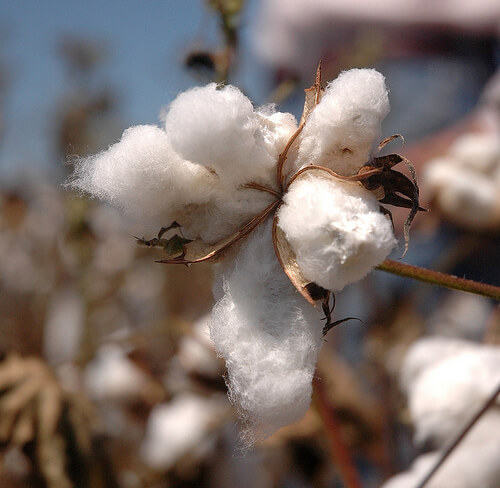
Objective studies—the kind the Danish authors offer lip service about but do not actually cite—have found that GM crops can actually increase biodiversity. For example, scientists in China have published a research study reporting that transgenic cotton bred to resist pests actually boosts biodiversity since it reduces the amount of insecticide sprayed on fields. The researchers have collected data from 1990 to 2010 at 36 sites in six provinces of northern China and the study revealed that there is a marked increase in abundance of three types of generalist arthropod predators (ladybirds, lacewings, and spiders) and a decreased abundance of aphid pests associated with widespread adoption of Bt cotton and reduced insecticide sprays in this crop. Moreover, scientists also found evidence that the predators might provide additional bio-control services spilling over from Bt cotton fields onto neighboring crops (maize, peanut and soybean).

What is biodiversity?

The Danish authors, echoing claims by foodie author Michael Pollan, make unsupported claims that biotechnology makes crops more vulnerable to pests and pathogens. “A monoculture is a field planted with genetically similar individuals,” they write. “Traditional agriculture makes use of monocultures by replacing a field that had many species with a field containing only one: just rice, just corn, etc. GM crops take this one step farther. Not only is the field planted with only one species, but all the individuals within the species are genetically identical because they all came from one genetically modified source plant.”

That’s just too simplistic, however. Biodiversity depends on the crop, the modification and the environment the crop is planted in. Planting different wheat or corn or soybean crops does not in itself address the challenges linked to monoculture farming.

“The problem with this story,” notes Matthew DiLeo at the Scientist Gardener blog in addressing Pollan sweeping claims, “is that plants varieties that look very different don’t necessarily have different disease and pest resistance genes. Just like humans, which are known for tremendous phenotypic diversity, can be extremely susceptible to the same flu and HIV germs across all ethnicities, all the multicolored potatoes in the above picture may be similarity susceptible to diseases like late blight.”

Plant breeders, including organic farmers, have moved to protect their crops from parasites through breeding, “by introgressing (moving) key resistance genes from wild relatives of crops into the crops themselves. This process has actually made modern industrial tomatoes more genetically diverse than either traditional Latin American or U.S./European heirloom varieties (although the traditional and heirloom varieties look more diverse).”

The central scientific problem with the Danish paper, however, is the simplistic view of biodiversity. Agricultural biodiversity might be a good thing insofar as increasing the resilience of farm fields and crops, but the authors argue boldly that extensive agriculture (i.e. using more land) is better—in terms of sustainability—than intensive agriculture, which produces higher yields with less land use.

This is patently untrue. Clearing forests for the sake of agriculture—no matter how diverse—always results in a net loss of biodiversity. To say nothing of the fact that extensive agriculture isn’t a failsafe method to improve crop yields and resilience in the first place—sometimes the damage from the loss of a forest is such that it nullifies the benefit of expanded fields.

The biodiversity discussion—no, it’s not a debate between two opposing sides—is critical for the future of farming and food. Prominent experts such as plant geneticist Pamela Ronald and her husband, organic farmer Raoul Adamachak, addressed this issue eloquently in their co-authored book, Tomorrow’s Table.: Organic Farming, Genetics, and the Future of Food. And the post-ideological scientists flocking to Biology Fortified regularly debate the hopeful links between biotechnology and sustainability every day.

Examining the political landscape of GM crops as compared to other techniques is fair game and welcomed as part of a healthy dialogue. But Shiva’s campaigning in this embarrassing new review by Danish activist scientists are corrosive to public discourse. It’s anti-science. We have a world to feed, and to exclude any potentially useful technique on ideological grounds is criminal.

Kenrick Vezina is senior editor of the Genetic Literacy Project and a freelance science writer based in the Greater Boston area. He has an M.S. in science writing from MIT.

Jon Entine, executive director of the Genetic Literacy Project, is a senior fellow at the Center for Health & Risk Communication and STATS (Statistical Assessment Service) at George Mason University.

Study assesses impact of pending landmark US Supreme Court case on gene patents

The following is an excerpt. Find a link to the full story below.

(Phys.org) —As the U.S. Supreme Court moves closer to a decision this summer in the landmark gene patent case against Myriad Genetics, a study, led by Colorado State University, is shedding light on what may be at stake.

Gregory Graff, associate professor of Agricultural and Resource Economics at CSU, and a team of researchers at University of Minnesota and Pennsylvania State University analyzed U.S. patents to find that the case may not have the dramatic impact that some in the  fear it will. However, they caution, the Supreme Court’s decision may have unanticipated impacts on patents that claim sequences from species other than just humans.

Read the full story here: Study assesses impact of pending landmark US Supreme Court case on gene patents

Engineered mosquitoes stymie malaria’s spread with bacteria

The following is an excerpt. Find a link to the full story below.

Scientists have engineered mosquitoes to carry a bacterium that confers resistance to the malaria parasite — a long-sought advance that could eventually curb malaria cases in humans.

A team led by Zhiyong Xi, a medical entomologist at Michigan State University in East Lansing, infected Anopheles stephensi mosquitoes withWolbachia bacteria to produce insects that could pass the infection on to their offspring. Female mosquitoes that carried Wolbachia also bred with uninfected mates, the researchers report today inScience, swiftly spreading the malaria-blocking bacterium to entire insect populations within eight generations.

Read the full story here: Sickly mosquitoes stymie malaria’s spread

Conservative immigration scholar claims genetic component to racial disparities in IQ

The following is an excerpt. Find a link to the full story below.

Jason Richwine, the coauthor of the conservative Heritage Foundation’s controversial study on the supposed $6.3 trillion cost of comprehensive immigration reform, has received much attention and criticism for his 2009 Harvard dissertation that argued there was “a genetic component” to racial disparities in IQ. But this dissertation wasn’t the first time Richwine had expressed such views publicly. In 2008, he told an audience at the American Enterprise Institute that “major” ethnic or racial differences in intelligence between the Irish, Italian, and Jewish immigrants who flocked to the United States at the turn of the 20th century and the immigrants coming to the US today justified severely restricting immigration.

Read the full story here: Conservative Immigration Scholar: Black and Hispanic Immigrants Are Dumber Than European Immigrants

Precision StemCell: sellings stem cells and treating people as guinea pigs

The following is an excerpt. Find a link to the full story below.

When journalists and health researchers write about patients seeking access to unproven stem cell interventions, they typically examineinternational travel to clinics located in China, India, Mexico, and elsewhere. In contrast, most domestic companies marketing unlicensed and untested stem cell procedures attract less scrutiny. This oversight is perplexing because numerous U.S. clinics advertise stem cell interventions for amyotrophic lateral sclerosis, multiple sclerosis, dementia, and other diseases. Such businesses promote and provide stem cell-based biologics that are not backed by credible safety and efficacy data and have not been reviewed and approved by the FDA. Precision StemCell, based in Gulf Shores, Alabama, is one example of a domestic clinic marketing stem cell interventions that appear to violate federal regulations.

Read the full story here: Precision StemCell: Selling Stem Cells & Treating Individuals With ALS as Human Guinea Pigs

Ten responses to “Ten reasons we don’t need GMOs”

The following is an excerpt. Find a link to the full article below.

You may have run across this article “10 Reasons We Don’t Need GM Foods” on the FoodConsumer website.  It’s been making its rounds on social media (Facebook and Twitter). I would like to address some of the inaccuracies in this article – point by point.

1. GM foods won’t solve the food crisis

Well, surprisingly enough, I agree with this one.  Or at least with the statement: GM foods ALONE won’t solve the food crisis…

View the full story here: “10 ‘reasoned’ responses” to “10 reasons we don’t need #GMOs”

AquAdvantage salmon: “Frankenfish” or “Wunderfish”?

Atlantic salmon Atlantic fish e

The following is an excerpt. Find a link to the full story below.

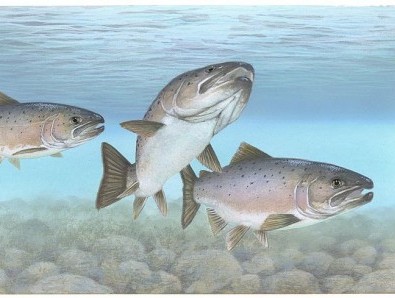
Just in time for salmon season, the FDA is on the verge of ok’ing genetically modified salmon, dubbed “frankenfish,” by some and considered a wunderfish by others.

The salmon would be the first-ever transgenic animal (one that carries a foreign gene that has been inserted into its DNA) to be available to both U.S. and world consumers. It looks like any other salmon…but there is a definite twist.

Exacerbating criticism, current laws and initial reports suggest the fish would not be required to be labeled, a point the FDA has not yet determined. “A decision has not yet been made regarding labeling for AquAdvantage Salmon,” a spokeswoman for the FDA told MSN News last week.

View the full article here: GMO salmon debate: ‘Frankenfish’ or Wunderfish?

Additional Resources:

How do identical twins develop different personalities?

The following is an excerpt. Find a link to the full story below.

Despite having the same genetic makeup, identical twins have their own distinctive personalities. Just how their individuality emerges has remained a bit of a mystery. But now, researchers have found that life experiences affect brain development — and this may help us understand how personalities form.

View the full story here: The Mystery of How Identical Twins Develop Different Personalities