Is the search for “IQ genes” a fool’s errand?

dn

Science writer David Dobbs has definitively described the voracious appetite of the “selfish gene” meme, pointing out that the notion of individual genes exercising power on the outcome of events has been so good at mass producing itself, that “the selfish gene has become a selfish meme.”

At the Center for Genetics and Society, we have another name for this phenomenon: the gene of the week.

All “genes of the week” have something in common: they never actually live up to their billing. For starters, it is never true that a single gene just does something. Genes work together, and genomes work with their environments. But this inconvenient reality has done amazingly little to stem genetic determinism, or the funding of research that relies upon its framework.

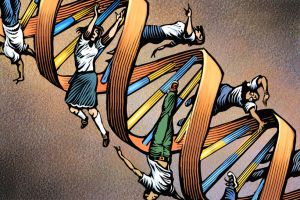
There are some people who really want to find the genetic basis of intelligence. The sole effort of BGI’s Cognitive Genomics Lab, for example, is to investigate the genetics of human cognition. The fascinating documentary film DNA Dreams sheds light on the hopes of those involved with this project. They harbor no doubt that there is a genetic basis for intelligence; the only question is when they’ll uncover it and how limitless the possibilities will be once they do. Embryo selection and modification to ensure smarter babies are among the future scenarios they envision.

Read full original article: The Stupidity of the “Smart Gene”

GMO farming abject “failure” claims Center for Food Safety–Is it?

Screen Shot at AM

In response to the recent New Yorker profile of Vandana Shiva, The Center for Food Safety’s (CFS) posted a blog by International Programs Director, Debbie Baker, “Debunking Popular Myths about GE Crops Portrayed in the Media,” on what the CFS sees as misinformation perpetrated by Michael Specter and proponents of crop biotechnology, which they claim is an abject ‘failure’.

The frame of this particular article presents Vandana Shiva, Ph.D., as the leader of an international movement in opposition to GE crops at the expense of science-based solutions to feed the world’s poor. However, it is the failure of this technology— not Luddite fear mongering—that has prompted scientists, academics, policymakers, governments and regular people to question the biotech industry.

The CFS seizes on a number of supposed failures of crops bred specifically for the developing world to address hunger and malnutrition as evidence that biotech breeding programs have fallen short of their promises. They outline what they see are six major myths perpetrated by biotech supporters:

  • Myth: Genetically Engineered (GE) Crops are a Solution to Hunger and Malnutrition—After spending hundreds of millions of dollars and over 30 years of research, the promises that GE crops would feed the world and provide enhanced nutrition have failed.
  • Myth: GE Crops Use Fewer and Safer Chemicals—Instead, GE crops have increased overall usage of pesticides by hundreds of millions of pounds, and next generation GE crops will further increase pesticide usage of even stronger, more toxic herbicides such as 2,4-D and dicamba.
  • Myth: GE Crops Increase Yields—Research has demonstrated that herbicide-resistant corn and soybeans in the U.S. have shown no yield increases. Yield increases seen in Bt crops, including The New Yorker article’s citation of yield increases for Bt cotton in India, are primarily due to conventional breeding or other factors, not genetic engineering.
  • Myth: GE Crops Are a Solution to Hunger and Malnutrition—The New Yorker article cites golden rice as an example of a GE crop that could alleviate malnutrition in poor countries. For at least two decades, biotech proponents have promoted golden rice—engineered to have high levels of carotenoids, which are precursors of vitamin A—as the solution to blindness due to vitamin A deficiency.
  • Myth: GE Crops Use Fewer and Safer Chemicals— Over 99 percent of GE crop acres are either: 1) herbicide-resistant (HR) crops that withstand repeated broad spectrum dousing of one or more herbicides to kill weeds without harming the crop; and/or 2) insect-resistant, Bacillus thuringiensis (Bt) crops that produce toxins in their tissues that kill target pests.
  • Myth: GE Crops Increase Yields—Biotech corporations claim that GE crops result in higher yields and thus are an important tool for feeding the world and raising farmer incomes. An important precursor to discussing yield data is to note that the majority of today’s GE crops are not grown for humans but are instead cultivated for livestock feed and ethanol for cars.

The authors argue that “agroecology”—a trendy-in-anti-GMO circles but ill-defined farming concept similar to the loosey-goosey green term “sustainability”—offers higher yields at lower ecological costs. (Ironically, some  conceptions of agroecology embrace the use of genetically modified crops because of their reduced use of toxic inputs.). To illustrate the ideological shallowness of some of their “myths”, we flipped their arguments, substituting the word ‘agroecology’ for each of their derisive references to GE crops.

Center for Food Safety

Let’s look more closely at some of their claims. They assert that GE crops have resulted in greater herbicide use:

A recent, peer-reviewed assessment based on pesticide data from U.S. Department of Agriculture (USDA) shows that Roundup Ready crops have resulted in 527 million pounds more herbicides being sprayed in the U.S. than would likely have been the case without these crops (based on figures from 1996 to 2011).

This relies on faulty premise of looking only at total pounds without taking into account that by allowing for the substitution of more environmentally benign herbicides has lowered the environmental impact in ways that looking at raw pounds used cannot capture and that the large decrease in insecticide use is of greater environmental consequence than increased herbicide use. The report that they really on pegged the reduction in insecticide use at 64.2 million pounds over the 13 years. A more thorough report by the consulting firm PG Economics and based on peer reviewed papers by the authors, published this year that took the relative environmental impact into account came to much different conclusions:

GM traits have contributed to a significant reduction in the environmental impact associated with insecticide and herbicide use on the areas devoted to GM crops (Table 6). Since 1996, the use of pesticides on the GM crop area was reduced by 503 million kg of active ingredient (8.8 percent reduction), and the environmental impact associated with herbicide and insecticide use on these crops, as measured by the EIQ indicator, fell by 18.7 percent.

In absolute terms, the largest environmental gain has been associated with the adoption of GM insect resistant (IR) technology. GM IR cotton has contributed a 25.6 percent reduction in the volume of active ingredient used and a 28.2 percent reduction in the EIQ indicator (1996-2012) due to the significant reduction in insecticide use that the technology has facilitated, in what has traditionally been an intensive user of insecticides. Similarly, the use of GM IR technology in maize has led to important reductions in insecticide use, with associated environmental benefits.

The volume of herbicides used in GM maize crops also decreased by 203 million kg (1996-2012), a 9.8 percent reduction, whilst the overall environmental impact associated with herbicide use on these crops decreased by a significantly larger 13.3 percent. This highlights the switch in herbicides used with most GM herbicide tolerant (HT) crops to active ingredients with a more environmentally benign profile than the ones generally used on conventional crops.”

They also bring up new and pending herbicide resistant crops paired with the herbicides, 2,4 D and dicamba. This is the actually the strongest point they raise about herbicide resistant crops, and deserves it’s on piece to address. Those are issues that require a fair amount of unpacking and I plan on taking them on in the near future.

They also state that GE crops have not increased yields.

Biotech corporations claim that GE crops result in higher yields and thus are an important tool for feeding the world and raising farmer incomes. An important precursor to discussing yield data is to note that the majority of today’s GE crops are not grown for humans but are instead cultivated for livestock feed and ethanol for cars.

Regarding yield, a landmark report, Failure to Yield, by Dr. Doug Gurian-Sherman, found that herbicide- resistant (GE) corn and soybeans have shown no yield increase in the U.S.28 This report and a major peer-reviewed research paper also show that since GE corn was introduced in 1996, the majority of increased corn productivity was due to conventional breeding and improved cultivation. Data from Europe suggests that productivity increases of corn have been about as high as in the U.S. without using genetic engineering.

This is a common, but specious misrepresentation of the data. It hinges on looking at what is called “intrinsic yield” which is the amount that a crop can be expected to produce under ideal conditions.  The two main GE traits are meant to prevent loss, not increase yield. The idea being that you can get the same yield under ideal conditions and better yield under adverse conditions, using fewer inputs, with less environmental impact or health risk to the farmer. Ask any farmer who is paying the premium for these seeds, preventing losses under real world conditions means better yields. That’s why penny pinching farmers adopted this technology faster than any other agricultural innovation, with little sign of diminishing enthusiasm.

I’d like to really focus on one set of claims that they make about the supposed failure of GE crops with improve nutrition and geared towards the developing world.

CFS’ Debbie Baker correctly points out that only recently have breeders achieved acceptably high levels of beta-carotene in Golden Rice and that yields still lag the varieties that Golden Rice will hopefully replace.

However, golden rice is not on the market because a host of intellectual property issues and technical problems have inhibited its development for over a decade. Only a few months ago, the International Rice Research Institute (IRRI)—charged with research, analysis, and testing of golden rice—released a report revealing that the “average yield [of GE golden rice] was unfortunately lower than that from comparable local varieties already preferred by farmers.

Then, like a dog on a bone, they write:

IRRI also stated: “It has not yet been determined whether daily consumption of golden rice does improve the vitamin A status of people who are vitamin A deficient and could therefore reduce related conditions such as night blindness.””

That sounds like the viability of Golden Rice has been challenged. But CFS fails to provide the context. It hasn’t yet been determined because the necessary trials can’t take place until the crop has been approved–and anti-GMO organizations like CFS are doing everything in its power to prevent that. Meanwhile, feeding trials have shown that the uptake of beta-carotene in Golden Rice is superior to spinach and that a single small bowl can provide 60% of a child’s daily needs.

There is no reason to believe that Golden Rice would not provide this level of nutrition on a daily basis and we should be applauding the IRRI for setting such high standards in demonstrating the efficacy of their product. It’s far more than is asked of the billion dollar supplement or alternative medicine industries. The IRRI recognizes that they have an ethical responsibility to make sure that Golden Rice solves the problem it is meant to address and not give false confidence to consumers. Again, they should be applauded for this, rather than opportunistically discredited for their fastidiousness.

CFS criticizes research from 2000 on a GE virus-resistant sweet potato carried out by African plant pathologist Florence Wambugu in Kenya. The work was highly touted in the press, but not by Wambugu or by biotech scientists, in hyperbolic terms as potentially ending poverty in Kenya. Unfortunately, the project failed and was abandoned in 2004. They write that a competing project by conventional breeders “in Uganda and Mozambique successfully developed disease-resistant sweet potatoes with high beta-carotene content using conventional breeding, and which also had much higher productivity.”

Here’s some context. There is no low hanging fruit left in field of crop breeding. At this point, every problem that breeders of any stripe are trying tackle is a hard problem. Contemporary breeding is a long, resource intensive process with many dead ends, whether one uses recombinant DNA or not. Difficult challenges will sometimes lead to successful products and sometimes not.

Golden Rice is a breeding project that has been in the works for 15 years. This is hardly an unusual time horizon for a breeding puzzle. Take for example Frank Kutka’s nearly 15 year quest to breed conventional corn which is impervious to cross-pollination. This trait would give organic growers protection against outcrosses from GE corn. In the Civil Eats profile of the project linked above, although Kutka has been working on this new corn variety without success since 2001, the article no where suggests that the fact that he has not yet succeeded is an indictment of traditional breeding. Because it’s not. Meanwhile, in a similar time frame, Golden Rice has had to contend with organizing security for field trials, field trials destroyed by activists, and, of course, needing to wait for regulatory approval for field trials–challenges that traditional breeders do not have to contend with. In the arc of developing novel, high impact crops, 15 years is par for the course.

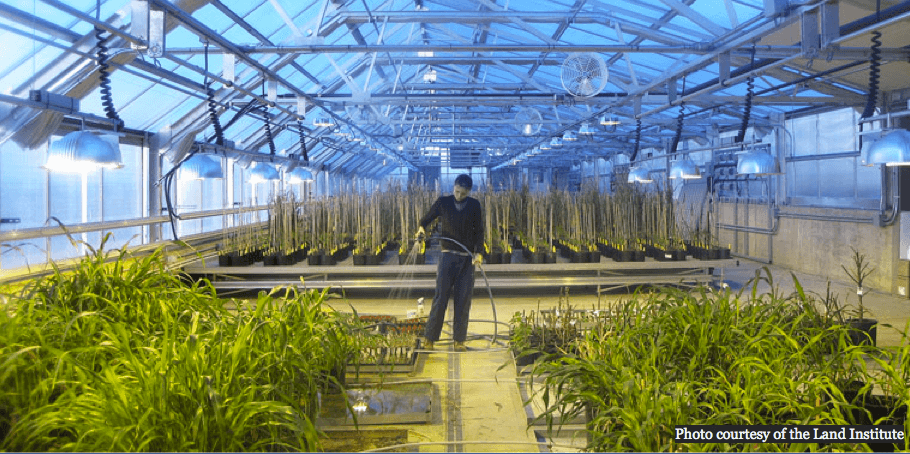
For one ambitious group of breeders, deciphering a puzzle that only took 15 would be seen as child’s play. Consider The Land Institute’s pursuit of perennial grains. The Land Institute is a non-profit group headed by Wes Jackon and based in Salina, Kansas. Jackson started as an academic, with a masters in botany and a PhD in genetics, going on to found the first environmental studies program at California State University, Sacramento. In 1976, he returned to his native Kansas to found the Land Institute in order to pursue research into agroecological farming, settling on a focus on perennials begining in 1978. Jackson’s group has now been attempting to breed viable perennial wheat for 36 years. Breeding perennials that can compete with annuals on yield and return on investment is a monumental task and Jackson believes the project should be envisioned over a 50-75 year time horizon. Instead of being characterized as a failure of traditional breeding, Jackson’s work is touted as that of a scrappy visionary. I’ve never seen a supporter of biotech breeding trying to make hay out of the difficulty of the task the Land Institute has taken on, or the high standards of efficacy they have set for themselves. People may scratch their heads at the quixotic nature of the project, you never see the kind of circling vulture glee in detailing every failed trial. There is no doubt that in 35 years, the Land Institute has abandoned specific projects as Florence Wambugu was forced to do. There just isn’t any one trying to score points on those failures.

What the Center for Food Safety has done is to play a game where they seize on hyperbolic statements by journalists trying tell a dramatic story, combine this with their audience’s naivety about what successful breeding takes and then claim that biotech breeding is no silver bullet. Nobody has really ever said that it was a silver bullet (except maybe in some marketing materials or in early reporting). It’s one tool in the toolbox to help us tackle some incredibly hard problems. Supporters believe we need the full toolbox, critics twist themselves into pretzels explaining why one tool should be abandoned if it can’t fix everything.

But we do need the full toolbox. In the realm of crop breeding, easy is over. Hard has just begun.

Marc Brazeau is a writer and agriculture editor for the Genetic Literacy Project. He blogs at Food and Farm Discussion Lab. Follow Marc on Twitter @realfoodorg

Instead

East African plant project targets tackle climate change, pests and diseases.

Screen Shot at AM

East African crop scientists have embarked on a five-year project to conserve indigenous plant genetic resources to improve food security across East Africa. Association for Strengthening Agricultural Research in Eastern and Central Africa (Asareca) executive director Dr Fina Opio said the $8.5 million project funded by the Swedish International Development Corporation Agency, will see scientists across East Africa, including Somalia, Madagascar, and South Sudan collect, store and share information on the available plant genetic resources.

“The project will also enhance the utilisation of the conserved materials by completing the characterisation, evaluation and documentation of the accessed materials,” Dr Opio said.

According to the managing director of Ethiopia-based Climate and Natural Resources Management Consulting, Dr Abebe Demissie Tefera, East Africa has various crops with wild relatives (wild plants closely related to the domestic plant) that exhibit a large gene pool, which could help tackle climate change, pests and diseases.

For example, Uganda, Ethiopia, Kenya, Eritrea and Sudan have a wide collection of genetic resources, including cereals, legumes, oils crops, millets and forage species as well as those with high pharmaceutical values such as Prunus Africana, Warbugia ugandensis, and Fagara macrophilla.

Dr Abebe said sorghum and millet are unusually drought tolerant crops, whose potential can be harnessed to increase production in African countries in response to climate change.

“The wild relatives of these crops probably hold the key to food security and increased agricultural productivity in the region as sources of genes for adaptive traits in the wake of climate change,” Dr Abebe said.

Read full, original article: $8.5m gene project for food security

Why the US was so unprepared to handle Ebola

It was a small victory in a grim and runaway catastrophe. In July, Kent Brantly and Nancy Writebol, both American medical workers in Liberia, became stricken with Ebola hemorrhagic fever after treating dozens suffering from the disease, which has a mortality rate of 50 percent to 90 percent.

They were rushed doses of an experimental cocktail of Ebola antibodies called ZMapp, flown home via a Gulfstream III on separate flights on August 2 and 5, and each isolated inside a special tent called an “aeromedical biological containment system.”

The U.S. Department of State and the Centers for Disease Control and Prevention (CDC) coordinated the flights, operated by Phoenix Air, a private transport company based in Georgia. Cared for in a special ward at Emory University in Atlanta, they recovered within the month and later met with President Obama. It appeared to be a win for the White House.

Mapp Biopharmaceutical, the San Diego company that developed ZMapp, is also in a way a White House project. It’s supported exclusively through federal grants and contracts that go back to 2005. The antibody mixture hadn’t yet passed its first phase of human clinical trials, but after the two Americans were infected with Ebola, the Food and Drug Administration granted emergency access to ZMapp.

It’s too early to say whether ZMapp was vital to the Americans’ survival. There were a limited number of doses available. Mapp ran out after having given doses to the two Americans, a Spanish priest, and doctors in two West African countries, although it declined to say how many. And that raised fair questions: Why hadn’t the promising treatment gone through human clinical trials sooner, and why were there so few doses on hand?

Read full original article: How the U.S. Screwed Up in the Fight Against Ebola

New generation Kansas Christian farm family addresses GMO truths and myths

Screen Shot at AM

Now, some of you may think you know a lot about GMOs. Others may have no idea what I am talking about. There is an abundance of misinformation out there on GMOs, especially on the Internet, and much of it is agenda driven from both sides of the argument. This means it can be heavily skewed one way or the other through methods such as photoshop, video editing, and twisting of words and data.

Take everything you read on the Internet (including what I have to say) with a HUGE grain of salt! If you’ve never stepped foot in a field of GM Crops, never talked in person with real GM Crop farmers, or never spoken in person to any sort of GMO experts (from both sides of the argument) you are putting yourself at the risk of being misinformed by agenda driven information. What I would like for everyone reading this blog to do is to try and put aside everything you’ve heard about GMOs up until this point and try to see if you can keep an open mind on the subject. We are first going to talk about some facts of GMOs. Facts. A.K.A. Truth. A.K.A. information that can be backed up by reliable proof. In other words, I don’t believe that this information can really be argued against.

What are GMOs?

GMOs, or genetically modified organisms, will also be referred to in this blog as GM Food, GM Crops, GM Products, Genetic Engineering, and Biotechnology. Biotechnology in plant agriculture is the process of intentionally making a copy of a gene for a desired trait from one plant or organism and using it in another plant. Humans have been intentionally changing the genetics of crops since the beginning of their existence. In fact, every single fruit, vegetable, and grain that is grown by farmers today has been genetically altered (through hybrids and selective breeding) to produce better taste, yield, or disease/drought/insect resistance. While GMOs are slightly different than hybrids, they are simply the newest form of this type of technology and have been around since the early 1990s.

The project contains other blog posts linked from the main page which is organized according to this outline:

  • Introduction
  • What are GMOs?
  • Video: What do GM Crops look like? Are GM Crops “poisonous” or “toxic?”
  • What are GMOs not? (Fact Based)
  • Why do farmers use technologies such as GMOs and herbicides/pesticides? What are the acknowledged issues? (Fact Based)
  • My perspective on the safety and sustainability of GMOs (Opinion based on facts)
  • My perspective as a Christian on GMOs (Opinion based on facts)
  • Questions and comments from readers answered

Read full, original post: Greg Peterson – Advocate for Truth: GMOs

GMO opponents worry Big Six ag companies monopolize global food supply

GMOBigSix

What the next chapter in the evolution of agriculture has produced, is something akin to the pharmaceuticalization of food. Six multinational companies — Monsanto, DuPont, Bayer, BASF, Syngenta and the Dow Chemical Co. — control the rapidly growing GMO market. And, like their Big Pharma counterparts, these multibillion-dollar companies have been accused of bullying and/or lobbying anyone that gets in the way.

Monsanto, for one, has sued some 100 farmers for patent infringement, winning judgments against farmers found to have made use of the company’s genetically engineered (GE) seed without paying required royalties, according to a 2013 Reuters story.

Some GMO opponents are concerned the Big Six are positioning themselves to monopolize the world’s food supply. They worry that the companies’ vast wealth and power — like that wielded by the pharmaceutical industry — will lead to favoritism and laws designed to protect Big Ag over organic and conventional farmers.

These opponents have legitimate reasons to be concerned. In a political system where important decisions about regulating the food supply are largely made by power players rotating through the revolving door that separates government and the private sector, it’s difficult not to be cynical.

Read full, original article: Are GMOs Safe?

Can the same regulatory systems that now oversee GMOs work for synthetic biology?

c c b o

As I wrote in a GLP post during the summer we’re on the cusp of another wave of biotechnology culture wars. Synthetic biology, which is different from other biotechnology disciplines because it can entail the creation of entirely novel genes and organisms, is poised to move from labs to our lives. I focused on the public relations side of synthetic biology. What about regulations?

Biotech critic Pete Shanks, writing for the Center for Genetics and Society, has raised an interesting question to consider as we reevaluate existing regulations and devise new ones to deal with the oncoming rush of synthetic biology:

How can we ensure that social, economic, ethical and other factors are considered? For too long safety has been very narrowly interpreted, and substantial equivalence far too broadly assumed.

While some biotech applications such as genetically modified foods do undergo stringent “safety” review — GM crops have taken on average six to eight years before they have been approved and AquaBounty’s GM salmon has been undergoing regulatory review for more than 12 years now —Shanks’s concern about biotechnology is nonetheless a very real one. This is especially important in the United States where public perception can be more important than the science when it comes to policy decisions.

Right now, there is a great deal of public suspicion about our regulatory agencies and processes when it comes to the GM crops and foods. Many anti-GMO activists believe that existing oversight bodies are in the pocket of Monsanto and Big Ag; worse than insufficient, they think existing regulation is corrupt. Synbio, which entails even more dramatic genetic modification, is likely to engender similar suspicions as the public becomes more aware.

Shanks raises concerns partly in response to a new 60-page, federally funded report on synthetic biology regulation called “Synthetic Biology and U.S. Biotechnology Regulatory System: Challenges and Options.” GenomeWeb has posted an overview of the report, which argues that existing regulatory systems are, by and large, sufficient to handle synthetic biology:

The three authors from the J. Craig Venter Institute, the University of Virginia, and the European Molecular Biology Organization pointed out in the report that the US Department of Agriculture, the Food and Drug Administration, and the Environmental Protection Agency have already overseen genetically engineered organisms for years.

Ever since the first recombinant DNA-based products began hitting the market in the 1980s, these agencies have been reviewing genetically engineered products for environmental, health, and safety concerns, and have issued regulations and industry guidelines.

Of course the question here isn’t whether the USDA, FDA and EPA have been overseeing genetically engineered organisms, but whether or not they’ve been doing a good job of it.

To this end, Shanks says ‘no’: “[O]ur present institutions are less than adequate to oversee the new processes — and all but the most starry-eyed boosters agree that they are.”

To be fair, the “Challenges and Options” report identifies at least two potentially problematic areas moving forward. First, synthetic biology is now capable of producing plants that don’t fit under the jurisdiction of any existing agencies. Second is that the “expected influx of genetically engineered microbes, particularly those used in the environment, could overwhelm the capabilities of the EPA’s Biotechnology Program, in terms of funding and expertise, to keep pace,” reports GenomeWeb.

That last line captures, I think, the source of most of the precaution from critics like Shanks. Technology, they worry, is moving faster than regulation and policy can adapt. (Indeed, Shanks wrote a piece for CGS in Novemeber titled” Synthetic Biology: Scientific Advances Outstrip Policy Discourse.”)

This is hardly a new fear, or a new criticism. It’s the precautionary principle, and many people supportive of biotechnology worry that it will stifle innovation through a regulatory morass. It’s easy to to understand biotech advocates’ fears in light of the tortured story of the AquaBounty salmon, which seems trapped in regulation purgatory due to public fear and political pressure despite the fact that all of the science-based evaluations of the salmon’s safety for environment and consumption have been passed. Ironically, both Shanks and the critics as well as the staunchly pro-biotech crowd agree that existing regulatory systems won’t cut it, though one group wants more regulation and one wants less.

Reports like “Challenges and Options,” for all their good intent, seem to neglect the gap in perception between the public and critical perceptions of synthetic biology and the perceptions of the scientists, entrepreneurs, and regulators who often write these reports.

It’s this perception gap that is actually the biggest obstacle to the effective regulation of synthetic biology. Until it is addressed, no regulatory system will be able to operate effectively in a democratic country.

Kenrick Vezina is Gene-ius Editor for the Genetic Literacy Project and a freelance science writer, educator, and naturalist based in the Greater Boston area. Follow him on Twitter @Rickken.

Additional Resources:

Persistence of the massive microbiome myth

e b d b z

By now, most people who follow science and health news know of the importance of the bacterial companions that live in our guts and their importance for our metabolisms and disease. It’s likely we’ve also heard the estimate of the vast magnitude of our own microbial populations: they out number the cells in our body by ten to one.

That estimate is as old and potentially false as the idea that ‘humans only use 10 percent of their brains,’ writes Peter Andrey Smith at the Boston Globe. His research shows the idea originated from a 1972 paper  by microbiologist Thomas Luckey who made his count using cells counted in a gram of human feces.

But interestingly, the old and famous figure still resides somewhere in the range of estimates calculated using more modern methods NIH researcher Judah Rosner says:

Recent estimates, he pointed out, suggest the human gut contains between 30 trillion and 400 trillion microorganisms, whereas the human body has an estimated 37 trillion cells—with a considerable range that goes from 5 to 724 trillion. Based on these approximations, the human body could have nearly the same number of cells as microbes or, at the more extreme end, nonhuman cells might outnumber our own almost 100 to 1.

That is a really wide range, two orders of magnitude. And, it’s likely that there would be wildly individual variation as people would have a range of cells in their bodies and a further range in their microbiome. Other researchers Smith contacted seemed to focus on a three to one ratio, although as NYU’s Martin Blaser pointed out, more modern studies need to be done.

But the persistence and virulence of this factoid begs the question: How do we get these ideas in the first place and why do they persist for so long? Even other scientists have been reported using the figure over the last decades. Maybe it’s just the startling incongruity of the idea that we are far less ‘human’ than we thought. That parallels other ‘false facts’ like the 10 percent brain function idea or, in a harmful case, the idea that vaccines could cause disease.

At least the ten to one microbiome factoid is innocuous (and sort of correct if you use the more modern estimate range), says Smith, and it proves the right point:

Perhaps the crude estimate endures because it serves the practical purpose of astonishing those who hear it, in the same way that bogus Martian canals inspired a greater curiosity about the solar system, or the myth that all humans only access 10 percent of their brains might foster a greater appreciation for neuroscience. Rather than trumpet how great we are, in this case, the insistence is on being outnumbered, as if we we’re not as human as, maybe, we are. After all these years, we’ve been won over by the microbial perspective.

Meredith Knight is editor of the human genetics section for Genetic Literacy Project and a freelance science and health writer in Austin, Texas. Follow her @meremereknight.

Additional Resources:

Stress caused by poverty reduces mom’s ability to nurture—and may be passed on in genes

image

From the inside, nothing in the world feels more powerful than our impulse to care for helpless children. But new research shows that caring for children may actually be even more powerful than it feels. It may not just influence children’s lives—it may even shape their genes.

One of the most important recent discoveries in biology is that this process of translating genes into cells can be profoundly influenced by the environment. New studies suggest a vicious multigenerational circle that affects a horrifyingly large number of children, making them more vulnerable to stress when they grow up and become parents themselves.

In a groundbreaking 2004 Nature paper, Michael Meaney at McGill University and his colleagues looked at a gene in rats that helps regulate how an animal reacts to stress. A gene can be “methylated” or “demethylated”—a certain molecule does or doesn’t attach to the gene. This changes the way that the gene influences the cell.

In carefully controlled experiments Meaney discovered that early caregiving influenced how much the stress-regulating gene was methylated. Rats who got less nuzzling and licking from their mothers had more methylated genes. In turn, the rats with the methylated gene were more likely to react badly to stress later on. And these rats, in turn, were less likely to care for their own young, passing on the effect to the next generation.

Read full original article: Poverty’s Vicious Cycle Can Affect Our Genes

Unapproved GMO wheat again found, this time in Montana

o MONTANA WHEAT facebook

Unregulated genetically modified wheat has popped up at a Montana research facility east of Billings, the U.S. Agriculture Department said late last week.

No genetically engineered wheat has been approved for U.S. farming, and the discovery of unapproved varieties can pose a potential threat to U.S. trade with countries that have concerns about genetically modified foods.

The USDA said last week that the incident is on a smaller scale than a similar finding in Oregon last year that prompted several Asian countries to temporarily ban U.S. wheat imports. The herbicide-resistant wheat was found on less than three acres at the Montana State University Southern Ag Research Center in Huntley.

Controlled tests on herbicide-resistant wheat were conducted at the research facility 11 years ago with the USDA’s approval. Because federal officials were aware of the experiments and the site was closely monitored for years afterward, the circumstances surrounding the Montana finding were different than the unexpected 2013 discovery of herbicide-resistant wheat in an Oregon field. The genetically modified plants in Oregon were spread over more than 100 acres, where GMO wheat was never known to be planted.

Read full, original source: USDA says unapproved GMO wheat found in Huntley

Former Colorado ag commish: Vote ‘No’ on Colorado GMO labeling law

Colorado voters are faced with an important decision on the November 2014 ballot. As a former Colorado commissioner of agriculture, I strongly oppose Proposition 105 and hope you will join me in voting “no.”

Proposition 105 is a complex and poorly written food-labeling proposal that would give Colorado consumers inaccurate, unreliable and misleading information about foods we buy due to the arbitrary labeling requirements and multitude of exemptions written into the proposition. It would severely harm Colorado’s vital agricultural economy, put our state’s farmers and food producers at a competitive disadvantage in the national marketplace, and increase food costs for Colorado families.

Proposition 105 purports to inform consumers about which food products contain GMO ingredients and which do not — but it fails. Proposition 105’s labeling requirements are so unscientific, inaccurate and arbitrary that it would require thousands of food products to be labeled as “genetically engineered” even when they have no GMO content. Conversely, thousands of other foods would be arbitrarily exempted from the measure’s labeling requirements even when they do contain, or are made with, genetically engineered ingredients.

Consumers already have reliable options to choose foods made without GE ingredients. They can select from thousands of foods labeled “organic” or “non-GMO” under existing federal labeling standards. Any manufacturer can label products as GMO-free if they meet these national guidelines. Proposition 105’s requirements conflict with these existing nationwide standards which already provide consumers a more reliable way to know which foods are made without GE ingredients.

Read full, original article: Should Colorado voters approve Proposition 105 (GMO food labeling measure)? No

Photographic romance of GMO breeding

Screen Shot at AM

The genetic modification of foods is not the sort of topic that inspires ambivalence. When photographer  Murray Ballard first visited the John Innes Centre in Norfolk, England—Europe’s “largest independent research facility for the study of plant science and microbiology”—he thought he’d already picked a side.

Genetic modification happens on a scale that our eyes can’t see. Most often, scientists represent it visually through diagrams and graphs, which “people find very hard to imagine,” leading to mistrust, Ballard said. “We’re inherently suspicious of things we can’t see or understand, so the idea was to present these genetic modification experiments in a very simple way and photograph what it looks to our eyes,” he said.Dr. Cathie Martin's Desk

Initially, the work Ballard was making was “more playful and a slightly more abstract interpretation of the facility as a whole.” That changed, however, when he selected three experiments at the facility to focus on: the first, an effort to increase the nutritional content in tomatoes, the second, an attempt to eradicate blight in potatoes, and the third, a project to engineer drought-resistant barley.

At that point, his work became more concerned with education than pure aesthetics. “The whole idea of me getting involved with genetic modification was to understand it better and then communicate that to the public. There became a responsibility to communicate this to a broad audience, people not from a scientific background,” he said.

Dr. Simon Foster checking the GE potato trial.Eventually, Ballard’s opinion about genetic modification changed.

“I walked into the place sort of suspicious of it, but once I understood some of the science behind it, it made a lot more sense and it wasn’t the sinister science I imagined,” he said.

Genetic modification happens on a scale that our eyes can’t see. Most often, scientists represent it visually through diagrams and graphs, which “people find very hard to imagine,” leading to mistrust, Ballard said. “We’re inherently suspicious of things we can’t see or understand, so the idea was to present these genetic modification experiments in a very simple way and photograph what it looks to our eyes,” he said.

In addition to visual clarity, Ballard strove for representation of the human element in the scientific process, one that is rarely seen or imagined in conversation about genetic modification. Photographs of genetically modified tomatoes on a scientist’s messy desk, for instance, make them appear less foreign and more commonplace.

Read full, original post: How to Genetically Modify a Tomato and Other Things We Eat

Deconstructing Dr. Oz misrepresentations on pesticide exposure danger

DrOzFeathers

Andrew Kniss, a scientist with an expertise in pesticides and weed control, addressed a segment on the Dr. Oz show in which he blows feathers all over the stage to try to scare consumers about the alleged dangers of pesticide drift.

Although this is a powerful visual demonstration, it grossly misrepresents the actual amount of off-target pesticide movement that we would expect when crop fields are sprayed. And we know this because there is a large (and continually growing) body of research on this very topic. 

I recently addressed one aspect of off-target pesticide movement in response to an EWG report. In a nutshell I concluded that:

…even if [a] 20 kg child ran around in the sprayed field continuously for 24 straight hours, they would only be exposed to a maximum of 0.0097 mg/day, 14 times less than what would be considered safe using EWG’s proposed standard. So even if we assume very high estimates of air concentration, assume very high breathing rates of children, assume a very small child, assume unrealistically high exposure time, and assume an unrealistically close proximity between the child and the treated area, there is nothing to indicate the children would be exposed to unsafe concentrations of the herbicide. If we use more realistic values for each step (proximity, concentrations, breathing rates), the chronic exposure would be almost negligible.

In his recent comments to the Senate panel, Dr. Oz said: “When we write a script, we need to generate enthusiasm and engage the viewer.”

It seems to me, that those goals shouldn’t preclude also being accurate.

Read full original article: Dear Dr. Oz: We Don’t Spray Feathers

Mainstream consumers don’t appear concerned about GMOs

It’s starting to look like the average eater doesn’t care about GMOs.

At the very beginning of 2014, General Mills announced that it was making its original Cheerios without any genetically engineered ingredients.

A few days after the General Mills announcement, and without any media fanfare, Post Foods put a GMO-free label on its Grape Nuts. While Cheerios boxes noted their GMO-free status discreetly on the side panel below the nutrition facts, Grape Nuts put a Non-GMO Project sticker on front. Now that’s a more interesting experiment: Do customers know/care enough to look for GMO information? Does slapping a notice on the front of a box change anything?

We received a little more data the other day, when 98 percent of General Mills shareholders voted against going GMO-free with the rest of its foods. When I asked General Mills how Cheerios sales were, they gave me exactly the same line they’d been saying since March.

“The consumer response has been largely positive, but we really haven’t seen any positive impact on sales.”

Read full original article: GMO-free cereal? Middle America shrugs

Prenatal genetic testing not appropriate choice for all

A clinical trial led by UC San Francisco has found that when pregnant women are educated about their choices on prenatal genetic testing, the number of tests actually drops, even when the tests are offered with no out-of-pocket costs.

The findings underscore the need for clear information on all prenatal testing options and their possible outcomes, including the option of no testing, before pregnant women decide whether or not to have genetic testing, the authors said.

The study also suggests that some women may have undergone prenatal screening for Down syndrome without having full information about the implications of testing, the authors said.

The article is published in the September 24, 2014 issue of JAMA, the Journal of the American Medical Association.

“Our findings show that prenatal testing is not appropriate for everyone, and that all women need information that is readily understood and unbiased to enable them to make informed choices reflecting their own preferences and values,” said lead author Miriam Kuppermann, PhD, MPH, professor and vice chair for clinical research at the UCSF Department of Obstetrics, Gynecology and Reproductive Sciences.

“Decisions about prenatal testing are personal and should be reflective of the patient’s own values and preferences, not those of her health-care providers,” said Kuppermann.

Read full original article: Women better informed about prenatal genetic testing choose fewer tests

How misleading headlines distort scientific studies

Last week I gave a talk in Brazil called Why Is It So Hard To Think About The Brain?, Well, no sooner have I returned than a story appeared that illustrates my point all too well.

A neuroscience paper made headlines around the world on Friday. Here’sTime‘s take:

“One Dose of Antidepressant Changes the Brain, Study Finds

One dose of antidepressant is all it takes to change the brain, finds a small new study published in the journal Current Biology.

The study authors took brain scans of 22 healthy people. Some were randomized to take a dose of the most common kind of antidepressant, an SSRI (selective serotonin reuptake inhibitor). After another brain scan three hours later, researchers saw a dramatic change: a widespread drop in connectivity throughout the brain, except where it was enhanced in two brain regions, the cerebellum and thalamus…”

My concern here is over the headlines, in particular that phrase “changes the brain.” This statement sounds like a meaningful (and perhaps alarming) report of a scientific finding. But, in fact, it’s vague and ambiguous.

Read full original article: Warning: This Post Will Change Your Brain

National Academy of Sciences releases videos of GMO panel presentations, schedules public webinar

Screen Shot at PM

The National Academy of Sciences’ National Research Council has posted videos of the presentations and discussions from the September 15-16 genetically engineered crop panel charged with preparing a report entitled A Science-Based Look a Genetically Engineered Crops. The report is schedule for publication in the spring of 2016.

Here is the NRC’s Statement of Task:

Building on and updating the concepts and questions raised in previous NRC reports addressing food safety, environmental, social, economic, regulatory, and other aspects of genetically engineered (GE) crops, an ad hoc committee will conduct a broad review of available information on GE crops in the context of the contemporary global food and agricultural system. The study will:

  • Examine the history of the development and introduction of GE crops in the United States and internationally, including GE crops that were not commercialized, and the experiences of developers and producers of GE crops in different countries.
  • Assess the basis of purported negative effects of GE crops and their accompanying technologies, such as poor yields, deleterious effects on human and animal health, increased use of pesticides and herbicides, the creation of “super-weeds,” reduced genetic diversity, fewer seed choices for producers, and negative impacts on farmers in developing countries and on producers of non-GE crops, and others, as appropriate.
  • Assess the basis of purported benefits of GE crops and their accompanying technologies, such as reductions in pesticide use, reduced soil loss and better water quality through synergy with no-till cultivation practices, reduced crop loss from pests and weeds, increased flexibility and time for producers, reduced spoilage and mycotoxin contamination, better nutritional value potential, improved resistance to drought and salinity, and others, as appropriate.
  • Review the scientific foundation of current environmental and food safety assessments for GE crops and foods and their accompanying technologies, as well as evidence of the need for and potential value of additional tests. As appropriate, the study will examine how such assessments are handled for non-GE crops and foods.
  • Explore new developments in GE crop science and technology and the future opportunities and challenges those technologies may present, including the R&D, regulatory, ownership, agronomic, international and other opportunities and challenges, examined through the lens of agricultural innovation and agronomic sustainability.

In presenting its findings, the committee will indicate where there are uncertainties and information gaps about the economic, agronomic, health, safety, or other impacts of GE crops and food, using comparable information from experiences with other types of production practices, crops, and foods, for perspective where appropriate. The findings of the review should be placed in the context of the world’s current and projected food and agricultural system. The committee may recommend research or other measures to fill gaps in safety assessments, increase regulatory clarity, and improve innovation in and access to GE technology.

The committee will produce a report directed at policymakers as well as derivative products designed for a lay audience.

While there were presentations from seven scientists in relevant fields (including Gilles-Éric Séralini, whose seminal paper on the ‘dangers’ of GMOs was retracted and republished without peer review) and two academics from the fields of anthropology and sociology, most presenters were staffers from NGOs, including the only farmer group, which represented organic farmers. There were no farmers among the presenters.

Groups highly critical of GMOs were over-represented among the ten NGOs, including Food and Water Watch, ETC Group, the Consumers Union, Greenpeace, Jeffery Smith who runs the one-man Institute for Responsible Technology and both Douglas Gurian-Sherman and Bill Freese of the Center for Food Safety.

In his presentation, the Genetic Literacy Project’s Jon Entine addressed the danger of the committee giving too much weight to the scientifically marginal views of advocacy critics:

GE Crops: Meeting 1, Day 2, Jon Entine.

The committee has open registration for the next phase of its inquiry, a public webinar scheduled for October 1, 2014. Speakers include:

  • Dominic Reisig, Associate Professor & Extension Specialist, North Carolina Cooperative Extension
  • Mohamed Khan, Professor & Extension Sugarbeet Specialist, North Dakota State University and University of Minnesota
  • Rick Kersbergen, Extension Professor, University of Maine Cooperative Extension
  • Ben Beale, Extension Educator-Agricultural Sciences, University of Maryland Extension

Marc Brazeau is a writer and editor for the Genetic Literacy Project. Follow Marc on Twitter @realfoodorg

Additional resources:

PBS’s John Hockenberry challenges Vandana Shiva on GMO misstatements

Screen Shot at PM

The Takeaway host John Hockenberry interviews anti-GMO activist Vandana Shiva on Monsanto, Bt cotton and global trade, pesticide use, farmer suicides, health risks, and industrial agriculture.

She was at her most cogent speaking about the success of Indian cotton exports over the last decade:

JH: What do you make of the success on cotton production in India that is a result directly of genetically engineered seeds?

VS: Unfortunately, that too is not true. The Cotton Research Institute of India, which is the premiere institute, has done studies.

JH: But the World Trade Administration says that India is one of the biggest producers of cotton, and that was never the case even 10 years ago.

VS: No, that’s not true. India was the biggest producer of cotton. Through history we domesticated cotton. We got freedom through Gandhi spinning cotton. We lost cotton through the colonialism when cotton based on slavery shifted to the U.S. Then during the civil war cotton production moved back to India. During the 10 years, pre-GMOs, was 10 years when the U.S. was subsidizing cotton up to $4 billion a year.

This was the subject of the collapse of the Cancun meetings of the World Trade Organization because the Africans said you are killing us with these subsidies. These subsidies became the issue of dispute in the WTO. Brazil won the case against the U.S. and as long as the subsidies were in place a lot of dumping was taking place, which meant that countries like India couldn’t export. When it’s the subsidy factor and the trade factor that was changed, India could start exporting again.

JH: So the success…

VS: The success is actually the removal of the subsidy distortions.

JH: Nothing to do with the GMOs…

VS: Nothing to do with the GMOs at all. And where we have increased cotton production is because we have increased acreage. And it’s the same story with the green revolution. India produced more rice and wheat, but we increased acreage of rice and wheat, and have had debates with the Borlaug Foundations that we have shown that the land and irrigation explain the increase in production. The idea of miracle seeds and chemicals and now miracle GMOs is covering up the real roots of where production increases.

Read full original transcript: Vandana Shiva & the Anti-GMO Debate

Uncovering human history in Ethiopia, world’s oldest graveyard

Charles Darwin knew humans evolved from apes, but he died before the strongest fossils that prove our connection with primates had been discovered.

In The Descent of Man he wrote, “Those regions which are the most likely to afford remains connecting man with some extinct ape-like creature, have not as yet been searched by geologists.”

A century later, Lucy helped confirm Darwin’s conjecture. By that time, a vision of our origin had been born, and her skeleton was assumed to fit the story. It’s one that (wrongly) persists today: Apes climbed out of the trees and ambled onto their feet, dragging their fists, as the climate warmed and turned forests into grasslands. Yet it was clear to paleontologists that many more fossils were needed to test this hypothesis. That’s around when Ethiopian paleontology by Ethiopians got started in earnest.

The bones of distant members of our human family are buried in tumbles of sand in Africa, and Ethiopia has unbeatable archives. The pages of human prehistory are preserved in its layers of mud, bones, and basalt. In the Afar, the magma that periodically bubbles to the surface serves as a timepiece because the chemical composition of every volcanic rock betrays the stone’s age. Over time, the ratio of the gases trapped within it changes at a fixed, known decay rate, so you can determine whether it covered the land 4 million years ago or yesterday. Fossils located between two layers of volcanic ash and lava were left by animals that lived within that time range. Individuals belonging to Lucy’s and Salem’s species have been found in layers dating from almost 4 million to 3 million years ago. That means they lasted five times the duration of our own species so far.

“Can we do at least as good as this primitive species?” Alemseged asked.

Read full original article: Digging Through the World’s Oldest Graveyard