


It was a small victory in a grim and runaway catastrophe. In July, Kent Brantly and Nancy Writebol, both American medical workers in Liberia, became stricken with Ebola hemorrhagic fever after treating dozens suffering from the disease, which has a mortality rate of 50 percent to 90 percent.
They were rushed doses of an experimental cocktail of Ebola antibodies called ZMapp, flown home via a Gulfstream III on separate flights on August 2 and 5, and each isolated inside a special tent called an “aeromedical biological containment system.”
The U.S. Department of State and the Centers for Disease Control and Prevention (CDC) coordinated the flights, operated by Phoenix Air, a private transport company based in Georgia. Cared for in a special ward at Emory University in Atlanta, they recovered within the month and later met with President Obama. It appeared to be a win for the White House.
Mapp Biopharmaceutical, the San Diego company that developed ZMapp, is also in a way a White House project. It’s supported exclusively through federal grants and contracts that go back to 2005. The antibody mixture hadn’t yet passed its first phase of human clinical trials, but after the two Americans were infected with Ebola, the Food and Drug Administration granted emergency access to ZMapp.
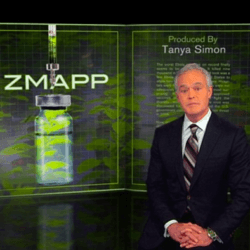




It’s too early to say whether ZMapp was vital to the Americans’ survival. There were a limited number of doses available. Mapp ran out after having given doses to the two Americans, a Spanish priest, and doctors in two West African countries, although it declined to say how many. And that raised fair questions: Why hadn’t the promising treatment gone through human clinical trials sooner, and why were there so few doses on hand?
Read full original article: How the U.S. Screwed Up in the Fight Against Ebola























