Answers for home gardeners about GMOs

Screen Shot at AM

I would like to clear up for home gardeners: there are no GMO home vegetable seeds available now, and there never have been. Unfortunately, some seed companies are trying to take advantage of some gardeners’ concern by advertising that they do not sell GMO seeds. No seed companies sell GMO seeds to home gardeners — whether the company publicly states it or not.

The implication by some seed companies that GMO seeds are available to home gardeners is misleading. It makes gardeners worry that they might be purchasing GMO seeds unless the company specifically describes their product as non-GMO.

There are good reasons GMO cultivars are not available to home gardeners. GMO cultivars are very expensive to develop. Generally, only large-scale agronomic crops (corn, soybeans, rice, cotton, etc.) generate enough money to make this worth doing by a seed company. The only GMO vegetable cultivars I can find are sweet corn, squash and papaya. But these are only available to commercial growers — not home gardeners. GMO seeds are highly regulated, and farmers must sign agreements with the seed company and follow EPA regulations when planting GMO crops.

It’s a violation of the EPA’s requirements to provide any genetically engineered seed to non-commercial growers. Even without EPA regulations, a seed company would never sell GMO seeds to home gardeners for use in backyard gardens. The unique genes inserted into the GMO cultivars would then be out of the control of the seed company, and the value of the exclusive GMO cultivars would be lost to the company.

Read the full, original article: What every home vegetable gardener needs to know about GMO seeds, hybrid and F1 hybrid plants

How misleading headlines distort scientific studies

Last week I gave a talk in Brazil called Why Is It So Hard To Think About The Brain?, Well, no sooner have I returned than a story appeared that illustrates my point all too well.

A neuroscience paper made headlines around the world on Friday. Here’sTime‘s take:

“One Dose of Antidepressant Changes the Brain, Study Finds

One dose of antidepressant is all it takes to change the brain, finds a small new study published in the journal Current Biology.

The study authors took brain scans of 22 healthy people. Some were randomized to take a dose of the most common kind of antidepressant, an SSRI (selective serotonin reuptake inhibitor). After another brain scan three hours later, researchers saw a dramatic change: a widespread drop in connectivity throughout the brain, except where it was enhanced in two brain regions, the cerebellum and thalamus…”

My concern here is over the headlines, in particular that phrase “changes the brain.” This statement sounds like a meaningful (and perhaps alarming) report of a scientific finding. But, in fact, it’s vague and ambiguous.

Read full original article: Warning: This Post Will Change Your Brain

Developing new antibiotics from human microbiome

No novel classes of antibiotic drugs have been produced for 25 years and, though scare stories about the consequences of emerging resistance to old ones are often exaggerated (the disappearance of bacterial diseases in rich countries in the 20th century owed far more to better public health and vaccines than to antibiotics), resistance is indeed on the rise. A bigger armoury would therefore be welcome.

Natural antibiotics are weapons used by one microorganism against another, so it is among micro-organisms that antibiotics-hunters hunt. But at the moment, they do so using a technique described by some, rather scathingly, as “grind and find”. Microbes are picked almost at random from the wild (one successful antibiotic, for example, began with a sample collected on Easter Island), then grown in laboratory conditions to see what turns up. If you are looking for weapons against human pathogens, though, surely the best place to look is in the human microbiome itself, for this collection of bugs that live on people’s skins and in their guts are the ones most likely to have evolved chemicals designed to deal specifically with interlopers invading their human territory.

Read full original article: Set a thief…

How the world has fumbled the Ebola crisis

The Centers for Disease Control and Prevention (CDC) recently projected that if trends continue unimpeded, cases of Ebola could pass the million mark by January. While that’s an unlikely scenario, many are still wondering: how on earth did it get this bad?

There was a period in April when it appeared that the Ebola outbreak had subsided, prompting a collective sigh of relief. Guinea’s Ministry of Health even said that country’s caseload appeared to be under control. But the outbreak didn’t subside. Instead, it barreled through interconnected towns and villages in more populated areas of Guinea, Liberia and Sierra Leone. And after the outbreak’s perceived lull, however, came one of the largest flare-ups. Some scientists say that during that time, their warnings were ignored.

In a recent paper published in the New England Journal of Medicine, Peter Piot, director of the London School of Hygiene and Tropical Medicine and one of the original researchers to discover Ebola in 1976, writes:

“Ebola has reached the point where it could establish itself as an endemic infection because of a highly inadequate and late global response. … It was not until five months and 1,000 deaths later that a public health emergency was declared, and it was nearly another two months before a humanitarian response began to be put in place.”

Read full original article: The 5 Biggest Mistakes in the Ebola Outbreak (So Far)

Prenatal genetic testing not appropriate choice for all

A clinical trial led by UC San Francisco has found that when pregnant women are educated about their choices on prenatal genetic testing, the number of tests actually drops, even when the tests are offered with no out-of-pocket costs.

The findings underscore the need for clear information on all prenatal testing options and their possible outcomes, including the option of no testing, before pregnant women decide whether or not to have genetic testing, the authors said.

The study also suggests that some women may have undergone prenatal screening for Down syndrome without having full information about the implications of testing, the authors said.

The article is published in the September 24, 2014 issue of JAMA, the Journal of the American Medical Association.

“Our findings show that prenatal testing is not appropriate for everyone, and that all women need information that is readily understood and unbiased to enable them to make informed choices reflecting their own preferences and values,” said lead author Miriam Kuppermann, PhD, MPH, professor and vice chair for clinical research at the UCSF Department of Obstetrics, Gynecology and Reproductive Sciences.

“Decisions about prenatal testing are personal and should be reflective of the patient’s own values and preferences, not those of her health-care providers,” said Kuppermann.

Read full original article: Women better informed about prenatal genetic testing choose fewer tests

Uncovering human history in Ethiopia, world’s oldest graveyard

Charles Darwin knew humans evolved from apes, but he died before the strongest fossils that prove our connection with primates had been discovered.

In The Descent of Man he wrote, “Those regions which are the most likely to afford remains connecting man with some extinct ape-like creature, have not as yet been searched by geologists.”

A century later, Lucy helped confirm Darwin’s conjecture. By that time, a vision of our origin had been born, and her skeleton was assumed to fit the story. It’s one that (wrongly) persists today: Apes climbed out of the trees and ambled onto their feet, dragging their fists, as the climate warmed and turned forests into grasslands. Yet it was clear to paleontologists that many more fossils were needed to test this hypothesis. That’s around when Ethiopian paleontology by Ethiopians got started in earnest.

The bones of distant members of our human family are buried in tumbles of sand in Africa, and Ethiopia has unbeatable archives. The pages of human prehistory are preserved in its layers of mud, bones, and basalt. In the Afar, the magma that periodically bubbles to the surface serves as a timepiece because the chemical composition of every volcanic rock betrays the stone’s age. Over time, the ratio of the gases trapped within it changes at a fixed, known decay rate, so you can determine whether it covered the land 4 million years ago or yesterday. Fossils located between two layers of volcanic ash and lava were left by animals that lived within that time range. Individuals belonging to Lucy’s and Salem’s species have been found in layers dating from almost 4 million to 3 million years ago. That means they lasted five times the duration of our own species so far.

“Can we do at least as good as this primitive species?” Alemseged asked.

Read full original article: Digging Through the World’s Oldest Graveyard

Oregon GMO label advocates release first TV ads

The Yes on 92 campaign, the largest proponent of Oregon’s labeling measure, launched its first two ads on September 23.

The ad buy represents an early shot in what is expected to be an expensive battle. Last year’s more-than-$30-million fight over a similar measure in neighboring Washington turned into the most costly ballot contest in that state’s history, with roughly three of every four dollars raised coming in after Sept. 1, according to a review of contribution data. Local reports suggest the same may end up being true of the Oregon measure, with about $3 million raised on both sides so far, according to state data.

One ad features Oregon family farmers and another features Michael Hansen, senior scientist at Consumer Reports, the nonprofit that offers comprehensive product reviews.

“Our job is giving consumers unbiased information, so we’ve read the fine print and we strongly endorse Measure 92,” Hansen says in the ad embedded below. Labeling has not increased food costs in countries that have passed similar measures, and so it won’t in Oregon, he says.

Read full, original article: The biggest proponents of GMO labeling in Oregon launch their first ads

Will EU countries be allowed to opt out of approved biotech crops?

After four years of uncertainty, an EU Commission proposal to permit individual countries to opt out of allowing the planting of biotech drops may be approved by the end of the year. According to a report by Inside U.S. Trade, Italian Agriculture Minister Maurizio Martina recently told the European Parliament the Italian presidency of the Council of the EU plans to begin negotiations with Parliament. Regardless of the outcomes of the talks, the EU policies on biotech crops will not become less controversial.

The EU Commission first made its proposal in July 2010 to permit countries to not allow the cultivation of EU-approved biotech crops. The reasoning was that by providing assurances that countries would not be required to allow planting of biotech crops, they would not oppose approvals for the rest of the EU. Many industry people and political watchers have questioned whether it is politically possible for an EU country official to vote for approval of a biotech crop at the EU level while opposing it for planting at home.

The U.S. Agricultural Attaches in the EU have identified a group of opposed countries (Austria, Croatia, Greece, Hungary, Italy, and Slovenia) that believe that biotech crop cultivation could not coexist with other types of agriculture. They would be dooming their agricultures to fall further and further behind the rest of the EU if others used biotech crops and they did not.

Read full, original article: Cultivating biotech crops in the EU

Apes R’ Us: Online misogynists wrongly hide behind the veil of ‘human nature’

a e z

If you’re a woman with a public persona, life on the internet can get pretty difficult. “To be a woman in this kind of public life today, you basically have to have the skin of a rhinoceros,” Politico editor Susan Glasser said in an interview shortly after being named to the top spot at the publication. Hilary Clinton has also used the quote as someone who intimately knows the sting of public criticisms turning to the personal.

The last few months have seen several internet-bullying attacks targeting women specifically for their womanhood. The feminist blogging site Jezebel and its sister sites disabled comments because men were posting videos of rape and sexual violence. Writers on the site are responsible for managing their own comments section, and were forced to see them, again and again, as they struggled to delete them.

If you’re a woman who writes or speaks about woman’s issues hatred comes more easily your direction. Actress Emma Watson, an outspoken feminist, was threatened with release of nude photographs by an online hacker group for her support of women’s rights in what ultimately proved to be a rather enigmatic hoax. And, of course, several famous celebrities were recently the targets of a nude photo release, simply because they were women and had photos vulnerable to hacking.

Eric Michael Johnson, a evolutionary biologist and columnist at Slate, scoured internet comments after the nude photo leak and documented several posters who justified their behavior as a natural birthright for human men:

In discussion threads among men on Reddit devoted to [the leak], a common justification is that there is “something inherent about human nature that makes this kind of thing inevitable,” as one user named TheHunter234 wrote. Likewise, according to colourofawesome, “It seems everyone is so quick to attribute the interest to some misogynistic perversion, but it’s really just human nature.”

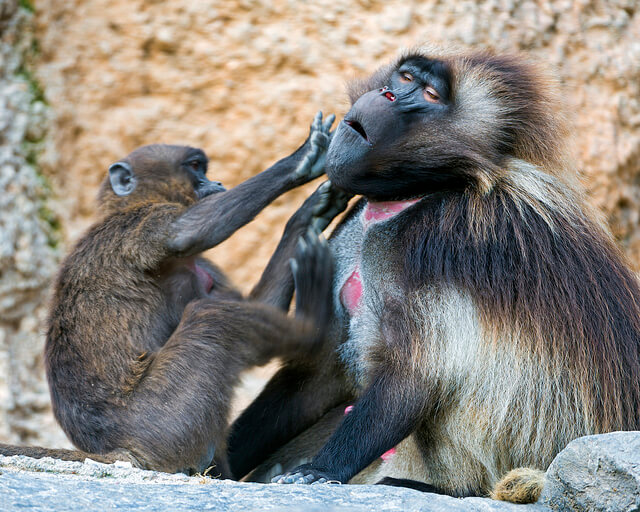
But that’s a bogus claim, Johnson writes. Culture determines these behaviors, and in a much shorter time frame than one might expect. A baboon experiment shows how. There were once two baboon troops living near each other in Kenya, the forest troop and the garbage dump troop. The garbage troop had access to meat from the dump, so some of the forest troop males, the most aggressive ones, began raiding the dump and taking meat for themselves. Little did they know that the dump was also germ central. The baboons who used it got tuberculosis and died.

This meant that the aggressive males in forest troop died out, and females subsequently outnumbered males two to one. Johnson describes what happens next:

The social consequences were startling. According to Stanford University primatologist Robert Sapolsky, who documented the event and followed the troop for the next 20 years, the brutal hierarchy that was common among male baboons disappeared, and the amount of affiliative behaviors—such as males and females grooming one another—increased markedly. What was most surprising was what followed over the intervening years. Males always migrate to other troops at puberty, and new immigrant males to the Forest Troop adopted the local culture that they encountered. Even though none of the original population is alive today, this highly cooperative baboon society remains intact. As Sapolsky wrote in Foreign Affairs, “Forest Troop’s low aggression/high affiliation society constitutes nothing less than a multigenerational benign culture.”

And those results are not limited to our primate relatives; you can find them in humans, too. Among public health officials, economists and lawmakers the ‘girl effect’ is well studied. “Investment in girls’ education may well be the highest return investment available in the developing world,” wrote former World Bank Economist Lawrence Summers, himself not immune to sexist comments. Women’s access to finance, the political system and education decrease infant mortality and increase a country’s GDP. These are measurable effects that have been documented within a matter of decades.

Human culture can, indisputably, change. Men are not beholden to their ancestral Y chromosomes to determine how they react in any situation, whether that involves the image of a naked woman or the anonymity of the internet. And it is the responsibility of other men in these forums, who perhaps just observe, to call out violent, misogynistic behaviors and make spaces safer for women, Johnson argues:

If female empowerment is ultimately better for everybody, then male Internet users would be helping themselves by opposing misogyny and harassment in online forums. A supportive environment would go hand-in-hand with increasing the number of women in those spaces currently dominated by bitter baboons. Patriarchy gains support from the passive acceptance of men who are actively hurt by its influence. If baboon societies are able to change the interaction between males and females based on the influence of culture, surely we can too.

Meredith Knight is editor of the human genetics section for Genetic Literacy Project and a freelance science and health writer in Austin, Texas. Follow her @meremereknight.

Additional Resources:

 

Stem cells pinpoint how mutation common in East Asians increases heart disease risk

More than 500 million people worldwide carry a genetic mutation that disables a common metabolic protein called ALDH2. The mutation, which predominantly occurs in people of East Asian descent, leads to an increased risk of heart disease and poorer outcomes after a heart attack. It also causes facial flushing when carriers drink alcohol.

Now researchers at the Stanford University School of Medicine have learned for the first time specifically how the mutation affects heart health. They did so by comparing heart muscle cells made from induced pluripotent stem cells, or iPS cells, from people with the mutation versus those without the mutation. IPS cells are created in the laboratory from specialized adult cells like skin. They are “pluripotent,” meaning they can be coaxed to become any cell in the body.

“This study is one of the first to show that we can use iPS cells to study ethnic-specific differences among populations,” said Joseph Wu, MD, PhD, director of the Stanford Cardiovascular Institute and professor of cardiovascular medicine and of radiology.

“These findings may help us discover new therapeutic paths for heart disease for carriers of this mutation,” said Wu. “In the future, I believe we will have banks of iPS cells generated from many different ethnic groups. Drug companies or clinicians can then compare how members of different ethnic groups respond to drugs or diseases, or study how one group might differ from another, or tailor specific drugs to fit particular groups.”

Read the full, original story: Scientists use stem cells to learn how common mutation in East Asians affects heart health

Biohackers turning mushrooms into furniture show promise, concerns about synthetic biology

Screen Shot at AM

How do you transform mushrooms into furniture, or re-wire algae to conduct electricity? Biohacking, the practice of rewiring the biology of living organisms for practical uses, is evolving from a fringe science to a more legitimate academic discipline. 

Biohacking is a fairly new practice that could lead to major changes in our life. You could it call citizen or do-it-your-self biology. It takes place in small labs — mostly non-university — where all sorts of people get together to explore the potential of manipulating DNA. That could mean figuring out how the DNA in plants affects their growth or how to manipulate genes from another source to make a plant glow in the dark.

It often is aimed at producing a product, like the chairs and building blocks that artist Philip Ross makes by feeding mushrooms a meal of sawdust or peanut shavings. It is experimenting on the cheap, usually without the benefit of a fancy university laboratory, and it often involves DNA and genes. If you don’t know enough biology to take part at first, you learn it along the way.

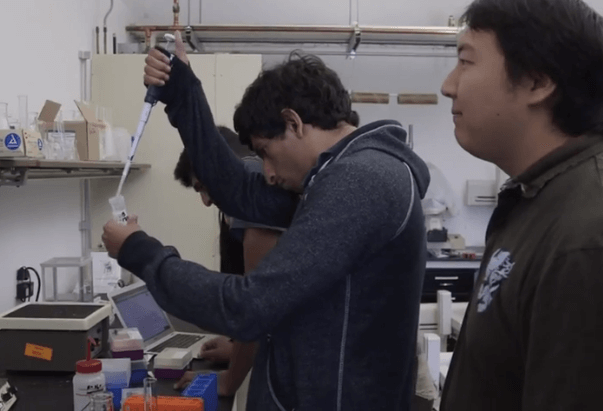
Ron Shigeta runs Berkeley Biolabs, a biohacking site in Berkeley, California, where dozens of would-be biologists gather frequently to hack around. He says biohacking is “a freedom to explore biology, kind of like you would explore good fiction.”

As for the hacking part, “hacking is kind of like the freedom to sort of dig deep into something, just because you’re interested in it. … The whole idea of biohacking is that people feel entitled, they feel the ability to just follow their curiosity — where it should go — and really get to the bottom of something they want to understand.”

But just as the movement is gathering converts, it’s also attracting controversy. PBS Newshour special correspondent Spencer Michels reports:

Watch the full, online video: How hackers transform biology into building material


Cancer genome sequencing advancing personalized treatment

As the cost of DNA sequencing plummets, the possibility of testing all cancer patients’ tumor genomes is becoming a reality. For just $1,000 or so, a doctor might submit most any malignant specimen for a complete genetic work-up.

The sample might be a core needle biopsy taken from a breast, a blood sample from a person with leukemia, or a snippet of a sarcoma removed in an operating room. In principle, checking a tumor for genetic changes should be straightforward, do-able.

But most cancer patients undergo surgery and other treatment long before their doctors consider sending a biopsy for full molecular evaluation. A recent published survey among oncologists at two prestigious Boston teaching hospitals suggests that a significant proportion of specialists have a low level of confidence about their knowledge of cancer genomics. Aside from some kinds of lymphoma and leukemia, some lung cancers and a few other malignancies, examining cancer cells for genetic mutations is not routine in oncology practice.

Carolyn Hutter, an epidemiologist and co-leader of The Cancer Genome Atlas (TCGA), has been working on tumor genomics for some time. The TCGA project, a collaborative work by NIH’s Cancer and Human Genome Research Institutes, aims to characterize over 10,000 human tumors at the molecular level. Sequencing genes in tumor cells – and seeing how those differ from a person’s germline, or inherited DNA segments – helps us to better understand the biological causes of cancer, she said in a phone interview. “It’s also useful because it can point to new targeted therapies.”

Read the full, original story: Cancer genome sequencing will mean more targeted therapies

GMO cotton has transformed India into world’s largest cotton exporter

India’s cotton economy has undergone a radical and unheralded transformation over the past decade. From being a net importer of cotton 10 years ago, India is set to become the world’s largest cotton producer, surpassing China this year, according to recent projections of the U.S. Department of Agriculture (USDA). Cotton production in the country has more than doubled over the past decade, and the surge, led both by rising yields and increased acreage, has lifted farm incomes and profits for millions of farmers living in some of the most resource-poor parts of the country.

There are few crops in which India has achieved such a turnaround in so short a time, and the cotton boom offers important lessons for the future of agriculture in the country.

There have been two key drivers of the cotton boom: improved water management in Gujarat, the leading cotton-producing state, and the introduction of genetically modified (GM) cotton, which has boosted yields and profits of growers. The success story of water harvesting and micro-irrigation projects in the dry regions of Gujarat is well-known. What is less widely acknowledged is the role of India’s first and only genetically modified crop, Bt (Bacillus thuringiensis) cotton in driving the cotton boom, by preventing pest attacks, reducing costs and making cotton farming more remunerative than earlier.

The dominant narrative on GM crops in India has been shaped by a small band of activists, who have deemed such crops to be unsafe and unsuitable for Indian farmers, disregarding reams of evidence which contradict their claims. An overwhelming majority of cotton growers have made their choice clear over the past decade: they prefer Bt cotton to any other alternative.

Read full, original article: Lessons from India’s cotton boom

Who makes better space travelers–introverts or extroverts?

Screen Shot at PM

Is the long-run future of civilization to select for those who are introverts? Is intro/extroversion genetically mediated?

We don’t have enough evidence at the moment to draw any reliable conclusions here, so I won’t hedge. However, I will explain some recent findings that extroverts release more dopamine than introverts in response to their physical environment.

Research published last year in the journal Frontiers in Human Neuroscience demonstrated (within the confines of the study) different processing styles between those classified as ‘extroverts’ and those classified as ‘introverts.’ There are a few caveats about the study: The classification of the participants was subjective; and brain scans (e.g., fMRI) have not yet proved their relevance and usefulness at establishing clear differences in behavior or motivations.

Now, a study commissioned by NASA and led by Suzanne Bell, organizational psychologist at DePaul University in Chicago, has found that extroverts may pose a unique challenge to longterm space travel. From Bell’s research highlights, the study is “characterized by extended periods of isolation and confinement with a small team living and working in a constrained environment… You’re talking about a very tiny vehicle, where people are in very isolated, very confined spaces. Extroverts have a little bit of a tough time in that situation.”

The researchers reviewed previous studies of teams which had to function in relative isolation (simulating long-term space missions); some ran several months in duration and have taken place all around the world, including Antarctica (part of this is to impress on the subjects a real stress trigger of being physically isolated to an uncomfortable degree, where it can’t just be immediately ‘switched-off’).

Where does this leave us? Certainly, there will be demographic sensitivities as part of any official program launch. We will also need to amass more evidence in the interim to support or refute this idea of social disposition and space travel. Also far from clear is a true association of genetics and extro/introversion, which could leave future long-term space mission planning dependent upon using psychosocial questionnaires, candidate self-disclosures and psychological assessments in the absence of a rigorous method to biologically screen the astronauts for optimal behaviorial characteristics.

And, if it turns out that there is a true genetic basis for extroversion, and future long-run space missions use that knowledge to reduce its impact as a potential risk factor, they could unintendedly select-out a portion of the genetic diversity of Earth’s population for future colonizations. In other words, the space travelers best suited to get us to where we want to go may not be the best choice to populate our new colonies. What seemed like science fiction only two decades ago, I now find myself writing about with a very real probability.

Ben Locwin, PhD, MBA is a Contributor to the Genetic Literacy Project and is an author of a wide variety of scientific articles for books and magazines. He is also a researcher and consultant for a variety of industries including behavioral and psychological, food and nutrition, pharmaceutical, and academic. Follow him at @BenLocwin.

Farmer asks, Why are scientists sitting on the sidelines in the GMO debate?

Screen Shot at AM

It’s perhaps too easy to laugh off the whole GMO issue: the opponents so over the top, the proponents, including Monsanto, so earnest and ineffective. Because the scientific evidence is so overwhelmingly in favor of GMO safety, many mainstream scientists have essentially checked out of the debate, disgusted by the tactics of GMO opponents. Although Monsanto and others have finally realized there is a problem, it really is late in the game.

GM advocates have been slow to respond, or don’t want to counter misinformation at all. I was recently on a panel with an expert on plant breeding. He was eloquent, authoritative, witty, and an effective advocate for science and more particularly the science of plant breeding. I had not met or spoken to him before the event, and afterwards congratulated him on his contributions to our discussion. I also asked if he’d be willing to speak to other groups about biotechnology. He grimaced and said: “only if it would do some good.”

In a recent electoral debate here in Missouri about GMOs, pro-GMO groups approached a leading plant research facility in the state, asking for a public statement about the importance of genetic engineering to the future of agriculture. The institute, which is endowed with hundreds of millions of dollars and is doing important research in the field, declined to take a public position.

According to Jon Entine, the head of the Genetic Literacy Project, the last year has seen a realization among many in the media that the case against GMOs is without merit. The European Union is moving toward allowing more of the technology, and even India will soon allow GMO trials. Entine references a recent article in an Italian science journal, compiling some 1,783 studies done in the last decade about biotechnology. Researchers found “little to no evidence” that GM crops have a negative environmental impact on their surroundings.

Entine believes opinion leaders across the developed world have finally accepted the technology. I’ve visited with other astute observers of agriculture and technology who make the same observation. According to them, what we are seeing is nothing more than the kind of ruckus that surrounds any new technology, and we are well on our way as a society to accepting modern plant breeding.

I’m not so sure.

Read full, original article: Scientists sit out genetic engineering debate

A new kind of sex? Strange micro-organism makes imperfect clones of itself

oxytricha sem

Oxytricha trifallax lives in ponds all over the world. Under an electron microscope it looks like a football adorned with tassels. The tiny fringes are the cilia it uses to move around and gobble up algae. What makes Oxytricha unusual, however, is the crazy things it does with its DNA.

Unlike humans and most other organisms on Earth, Oxytricha doesn’t have sex to increase its numbers. It has sex to reinvent itself.

When its food is plentiful, Oxytricha reproduces by making imperfect clones of itself, much like a new plant can grow from a cutting. “If they’re well fed, they won’t mate,” said Laura Landweber, a molecular biologist at Princeton University and lead author of a recent study on Oxytricha genetics. But when Oxytricha gets hungry or stressed, it goes looking for sex.

When two cells come together (as in the image above), the ultimate result is: two cells. “They’ve perfected the art of sex without reproduction,” Landweber said. The exterior of the two cells remains, but each cell swaps half of its genome with the other. “They’re entering into this pact where each one is going to be 50 percent transformed,” Landweber said. “They emerge with a rejuvenated genome.”

In size, Oxytricha’s genome is roughly comparable to ours. It has about 18,500 genes, compared to 20,000 or so for humans. But that’s one of the few things we have in common with this pond-dwelling protist.

Read the full, original story: This bizarre organism builds itself a new genome every time it has sex

Mothers contribute more to human gene pool than fathers

neaderthal bone tumor human x

Mothers outnumbered fathers throughout much of human history, a new DNA analysis of people around the world shows.

The genetic findings offer evidence for polygyny, when one man has many wives, and other reproductive customs, as people migrated out of Africa.

“[Historically] more of the women were reproducing than the men,” study researcher Mark Stoneking, a professor of biological anthropology at the Max Planck Institute for Evolutionary Anthropology in Leipzig, Germany, told Live Science in an email. “This often happens in human societies, because not all men are able to afford wives, or sometimes a few men will have many wives.”

These practices resulted in females making a larger genetic contribution to the global population than males did, the researchers found.

Stoneking and colleagues used a new method to scrutinize genetic variation within the male Y-chromosome. By looking at one part of the Y chromosome, they found all of the genetic variants, or slight differences in the order of DNA’s “letters,” within that region.

Previous studies had only looked at some of the variants, leading to unreliable data, because “you only find out about genetic variants that you already know about, and not about new genetic variants,” Stoneking said.

Read the full, original story: Humanity has more mothers than fathers, DNA reveals

General Mills shareholders reject proposal to dump GM foods

gmcheer

General Mills Inc. has made strong commitments this year to natural and organic foods. It took genetically modified ingredients out of its signature cereal brand Cheerios and then doubled down on its organic lineup by striking an $820-million deal for Annie’s, a stalwart of the organic and natural foods industry.

But when the industrial food behemoth’s shareholders were presented with a proposal to dump all genetically modified ingredients from the company’s vast lineup of brands, they responded with a resounding “No.”

The rejection of the proposal also shows shareholders aren’t convinced it’s unsafe to consume genetically modified organisms, better known as GMOs, which are created in labs by altering plant genes. This is often done to resist disease and pests. Though there is no definitive science showing such plants are harmful to human health, it has become one of the most contentious issues in modern food policy. Critics say the effect of widespread genetically modified crops may not be felt for years.

“We’ve studied all the research that’s been done around the world, we are very aware of the numerous regulators globally who have studied GMOs and who have said they are safe,” said General Mills Chief Executive Ken Powell, according to the Pioneer Press. “And of course we know and believe GMOs are very safe.”

Read full, original article: General Mills shareholders reject proposal to dump GMOs

Genetically engineered E.coli used for clean, efficient propane production

A team of scientists has transformed E.coli bacteria into a propane factory.

In their Nature magazine article, researchers from the University of Turku (Finland) and Imperial College (United Kingdom) described a new metabolic pathway for producing propane from Escherichia coli (E.coli).

In “normal” E.coli, a biological process exists that turns fatty acids into cell membranes. In their September 2014 article, Dr. Pauli Kallio, et. al. describe a way to shift this pathway so that the bacteria produce propane instead. This shift is achieved by using enzymes to channel the fatty acids that previously made cell walls and, instead, use them to make propane that is engine-ready.

Propane is the bulk component of liquid petroleum gas. LP gas is used around the world, for activities including cooking and heating in India and some rural areas of the United States. Used in its gas form, but frequently stored as a more energy-dense liquid, LP gas is perhaps best known for its role on campsites and outdoor BBQ grills. LP gas is also used as a gasoline alternative (“autogas”) in motor vehicles.

The scientists ultimately want to insert this engineered propane-producing system into photosynthetic bacteria. The system would then be capable of directly converting solar energy into a chemical fuel that is engine-ready. No processing or refining required.

Read the full, original story: Researchers produce propane using E.coli bacteria