Indian scientists criticize government for leaving GMO seeds ‘sitting on the shelf’

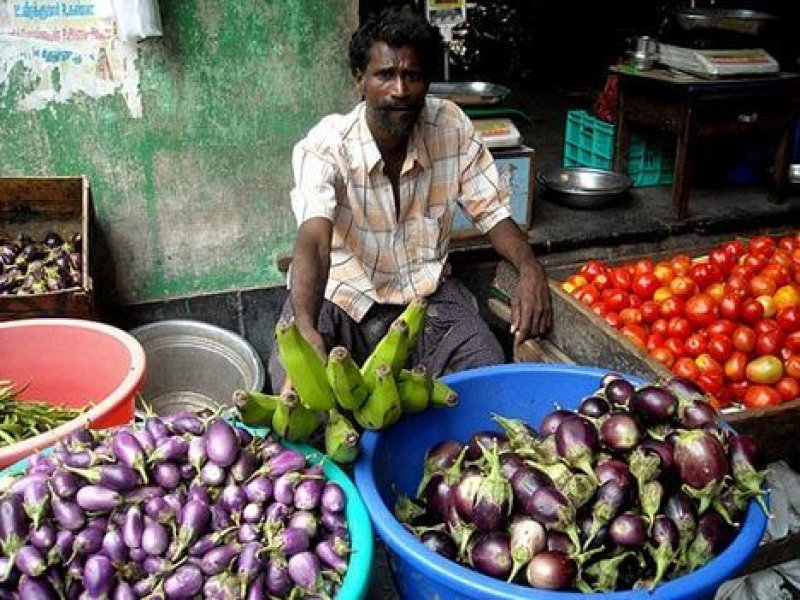
india eggplant market
Image credit: Sistak/Flickr

Farming may go high-tech, but unless seeds keep pace, all improvements will be cosmetic. Or thatโ€™s what scientists at research institutes think. โ€œTill the government allows farmers to adopt genetically modified (GM) crops, there is little chance of an agricultural transformation that we are talking about,โ€ says P. Ananda Kumar, director of the Indian Institute of Rice Research.

But isnโ€™t GM bad? … Kumar sees little benefit in the endless debate. โ€œAfter all,โ€ he says in a matter-of-fact way, โ€œit is already working in 28 countries covering 185 million hectares and 15 crops.โ€

Modified seeds for brinjal [eggplant] and mustard have been argued about for years now. โ€œIt is time that the Indian government or the political leadership heed the advice of its own scientists than some vested interests using scare-mongering tactics in the media,โ€ says Kumar caustically. Elsewhere, K.K. Narayanan, founder and chairman of Kottaram Agro-Foods, gets agitated when I ask about Bt brinjal [eggplant]. These technologies, which can add Rs 60,000 crore every growing season, are left โ€œsitting on the shelfโ€, he says. Bhagirath Choudhary, founder director of New Delhi-based South Asia Biotechnology Centre, adds that farmers themselves will not have any problem shifting to GM seeds once they see profits flowing in. โ€œUnfortunately, that is not happening because no one is allowed to demonstrate the benefits of GM crops to the farmers,โ€ he says.

Read full, original post:ย Reimagining agriculture

{{ reviewsTotal }}{{ options.labels.singularReviewCountLabel }}
{{ reviewsTotal }}{{ options.labels.pluralReviewCountLabel }}
{{ options.labels.newReviewButton }}
{{ userData.canReview.message }}

Related Articles

Infographic: Global regulatory and health research agencies on whether glyphosate causes cancer

Infographic: Global regulatory and health research agencies on whether glyphosate causes cancer

Does glyphosateโ€”the world's most heavily-used herbicideโ€”pose serious harm to humans? Is it carcinogenic? Those issues are of both legal and ...

Most Popular

Screenshot-2026-04-22-at-12.21.32-PM
Viewpoint: Why the retracted Monsanto glyphosate study doesnโ€™t change the scienceโ€”the worldโ€™s most popular herbicide is safeย 
Picture1
The FDA couldnโ€™t find a vaccine safety crisis, so it buried its own research
ChatGPT-Image-May-7-2026-12_32_36-PM
Viewpoint: The state of U.S. vaccine policy? Dismal nationally, but some states are stepping up.
placebo
Viewpoint โ€” Alternative medicine and the placebo effect: Selling a reassuring illusion of health
_20250221_nib_rfk_trump
Viewpoint: 'Crisis of public trust': Autism support community shocked RFK continues to peddle false claims about the danger of vaccines
ChatGPT-Image-May-18-2026-01_45_05-PM-2
Newest hantavirus conspiracy: Online disinformation turns outbreak into latest ivermectin grift
Screenshot-2026-04-13-at-1.39.26-PM
Viewpoint: โ€˜Safer for children?โ€™ Stonyfield yogurt under fire for deceptive organic marketing
Screenshot-2026-04-22-at-10.46.29-AM
Viewpoint: How to counter science disinformation? Science journalist offers 12 practical tips
the magic of mRNA
Viewpoint: Anti-vax fake โ€˜turbo cancerโ€™ claims threaten cancer treatment breakthroughs
ChatGPT-Image-May-7-2026-12_16_37-PM-2
Viewpoint: Are cancer rates โ€˜skyrocketingโ€™ as RFK, Jr. and MAHA claim? The evidence says mostly the opposite
ChatGPT-Image-May-18-2026-12_06_18-PM-2
Defying death: The immortality movement goes mainstream
glp menu logo outlined

Get news on human & agricultural genetics and biotechnology delivered to your inbox.