Vaccine diplomacy: China hopes its vaccine development and outreach to the developing world will refurbish its image

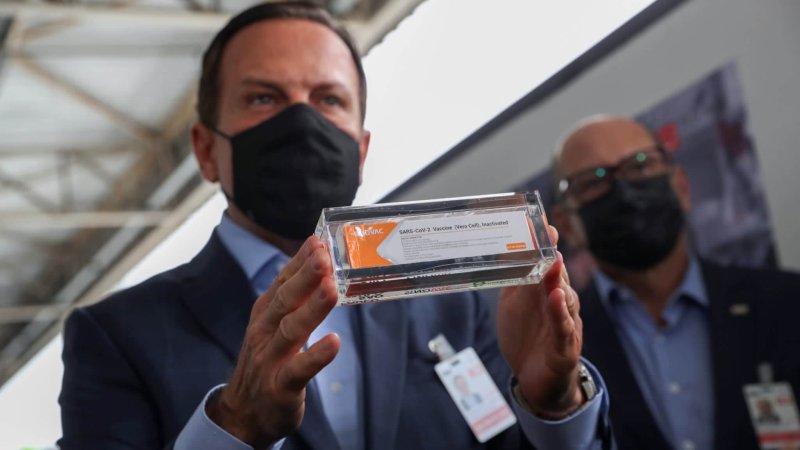
Sao Paulo Gov. Joao Doria holds a box of China's CoronaVac vaccine. Credit: Reuters

Brazil is among the countries worst hit by the pandemic, with over six million cases and nearly 170,000 deaths.

China has promised that 6 million doses of CoronaVac, made by the biotech firm Sinovac, will reach Brazil by January. São Paulo’s highly respected Butantan Institute, which is testing the vaccine, will get raw materials to make millions more.

The shipments to Brazil are part of a campaign of vaccine diplomacy that Beijing has mounted around the world. The fallout from the spread of Covid-19 has fuelled mistrust of China internationally, and damaged the global appetite for the exports which helped drive its growth.

Follow the latest news and policy debates on sustainable agriculture, biomedicine, and other ‘disruptive’ innovations. Subscribe to our newsletter.

A successful vaccine, provided at an affordable price, offers a potential route to address resentment and criticism of China’s early handling of the virus, as well as a financial boost for the country’s biotech firms. China manufactures around a fifth of the world’s vaccines at the moment but those are mostly for domestic use.

“The idea that the Chinese vaccine is going to be a global public good is very important for China right now, because it became the way they are fighting the propaganda war in the pandemic,” said Maurício Santoro, a professor at the State University of Rio de Janeiro who specialises in China-Brazil relations.


Read the original post

{{ reviewsTotal }}{{ options.labels.singularReviewCountLabel }}
{{ reviewsTotal }}{{ options.labels.pluralReviewCountLabel }}
{{ options.labels.newReviewButton }}
{{ userData.canReview.message }}

Related Articles

Infographic: Global regulatory and health research agencies on whether glyphosate causes cancer

Infographic: Global regulatory and health research agencies on whether glyphosate causes cancer

Does glyphosate—the world's most heavily-used herbicide—pose serious harm to humans? Is it carcinogenic? Those issues are of both legal and ...

Most Popular

Picture1
The FDA couldn’t find a vaccine safety crisis, so it buried its own research
Screenshot-2026-04-22-at-12.21.32-PM
Viewpoint: Why the retracted Monsanto glyphosate study doesn’t change the science—the world’s most popular herbicide is safe 
ChatGPT-Image-May-7-2026-12_32_36-PM
Viewpoint: The state of U.S. vaccine policy? Dismal nationally, but some states are stepping up.
placebo
Viewpoint — Alternative medicine and the placebo effect: Selling a reassuring illusion of health
_20250221_nib_rfk_trump
Viewpoint: 'Crisis of public trust': Autism support community shocked RFK continues to peddle false claims about the danger of vaccines
ChatGPT-Image-May-18-2026-01_45_05-PM-2
Newest hantavirus conspiracy: Online disinformation turns outbreak into latest ivermectin grift
Screenshot-2026-04-13-at-1.39.26-PM
Viewpoint: ‘Safer for children?’ Stonyfield yogurt under fire for deceptive organic marketing
ChatGPT-Image-May-18-2026-12_06_18-PM-2
Defying death: The immortality movement goes mainstream
Defense_Secretary_Ash_Carter_tours_the_Microsoft_Cybercrime_Center_in_Seattle_March_3_2016
How criminals are using AI to target social media users and steal their money and confidential data
glp menu logo outlined

Get news on human & agricultural genetics and biotechnology delivered to your inbox.