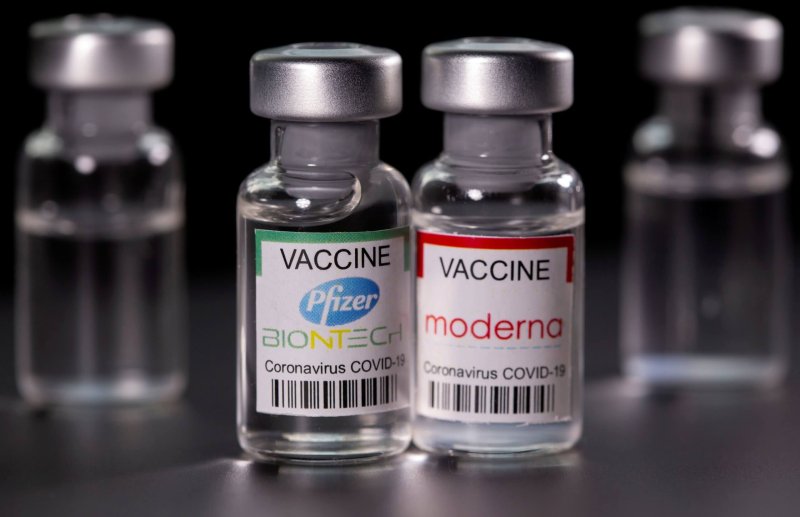
Pfizer and Moderna vaccine recipients may not need booster shots for years — if COVID variants don’t evolve too much beyond the virus’ original form

Credit: Dado Ruvic/Reuters

[A recent] study bolsters growing evidence that most people immunized with the mRNA vaccines may not need booster shots, with one key caveat: That the virus and its variants don’t evolve too much beyond the virus’ original form.

“It’s a good sign for how durable our immunity is from this vaccine,” Ali Ellebedy, an immunologist at Washington University in St. Louis, who led the study, told The New York Times.

Follow the latest news and policy debates on sustainable agriculture, biomedicine, and other ‘disruptive’ innovations. Subscribe to our newsletter.

After an infection or a vaccination, a specialized structure called the germinal center forms in lymph nodes, the researchers explained. This structure is where [antibody-producing] B-cells are trained. After infection with the coronavirus, the germinal center forms in the lungs. But after vaccination, the cells’ education takes place in lymph nodes in the armpits, within reach of researchers.

Ellebedy’s team found that 15 weeks after the first dose of vaccine, the germinal center was still highly active in all 14 study participants, and that the number of memory cells that recognized the coronavirus had not dropped.

“The fact that the reactions continued for almost four months after vaccination — that’s a very, very good sign,” Ellebedy told the Times, because terminal centers typically peak one to two weeks after immunization, and then wane.


Read the original post

{{ reviewsTotal }}{{ options.labels.singularReviewCountLabel }}
{{ reviewsTotal }}{{ options.labels.pluralReviewCountLabel }}
{{ options.labels.newReviewButton }}
{{ userData.canReview.message }}

Related Articles

Infographic: Global regulatory and health research agencies on whether glyphosate causes cancer

Infographic: Global regulatory and health research agencies on whether glyphosate causes cancer

Does glyphosate—the world's most heavily-used herbicide—pose serious harm to humans? Is it carcinogenic? Those issues are of both legal and ...

Most Popular

ChatGPT-Image-May-7-2026-12_32_36-PM
Viewpoint: The state of U.S. vaccine policy? Dismal nationally, but some states are stepping up.
Screenshot-2026-04-22-at-10.46.29-AM
Viewpoint: How to counter science disinformation? Science journalist offers 12 practical tips
Screenshot-2026-04-13-at-1.39.26-PM
Viewpoint: ‘Safer for children?’ Stonyfield yogurt under fire for deceptive organic marketing
the magic of mRNA
Viewpoint: Anti-vax fake ‘turbo cancer’ claims threaten cancer treatment breakthroughs
ChatGPT-Image-May-7-2026-12_16_37-PM-2
Viewpoint: Are cancer rates ‘skyrocketing’ as RFK, Jr. and MAHA claim? The evidence says mostly the opposite
Defense_Secretary_Ash_Carter_tours_the_Microsoft_Cybercrime_Center_in_Seattle_March_3_2016
How criminals are using AI to target social media users and steal their money and confidential data
ChatGPT-Image-May-7-2026-01_23_27-PM-2
Viewpoint: Will AI democratize personalized cancer treatment or fuel medical misinformation?
artificial intelligence brain think illustration md
Viewpoint — Digital gods and human extinction: Will we be the first species ever to design our own descendants?
Picture1-1
Cooling the planet with balloons: Could a geoengineering gamble slow global warming?
RFKjr-Tech-Vax-Misinfo
As U.S. officials spread medical misinformation, scientists fact check online
Screenshot-2026-04-23-at-11.00.36-AM
Regulators' dilemma: Thalidomide, Metformin, and the cost of getting drug approvals wrong
ChatGPT Image May 12, 2026, 01_21_30 PM
How big health brands are funding online medical misinformation 
glp menu logo outlined

Get news on human & agricultural genetics and biotechnology delivered to your inbox.