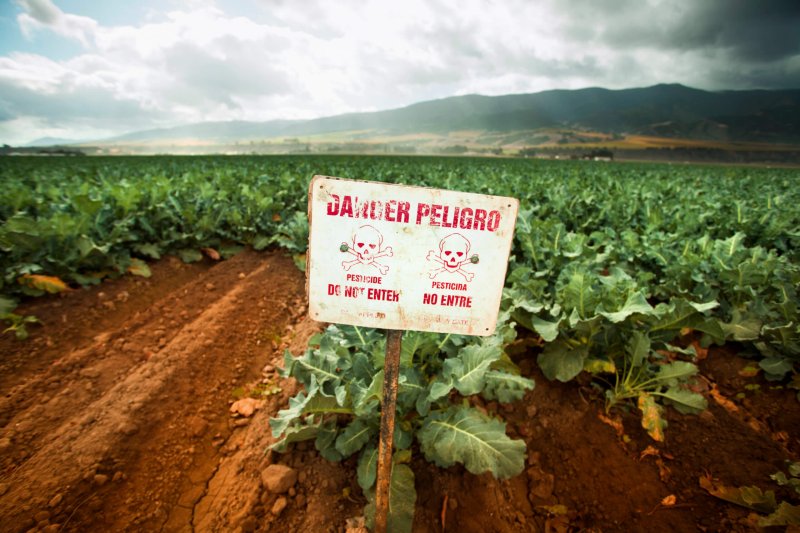
Viewpoint: Here’s how activist scientists use exaggerated fears of trace chemicals as a subterfuge to try to derail crop biotechnology

Credit: iStock
Credit: iStock

Environmental Health published on August 3, 2021 “Commentary: Novel strategies and new tools to curtail the health effects of pesticides” by Charles Benbrook, Melissa J. Perry, Fiorella Belpoggi, Philip J. Landrigan, Michelle Perro, Daniele Mandrioli, Michael N. Antoniou, Paul Winchester and Robin Mesnage.

Here is the summary:

Follow the latest news and policy debates on sustainable agriculture, biomedicine, and other ‘disruptive’ innovations. Subscribe to our newsletter.

Preventing adverse public health effects triggered or exacerbated by exposure to pesticides will require changes in risk assessment policies and procedures, a science freer from industry influence, and innovative strategies that combine traditional methods with new tools and mechanistic knowledge.

It’s dripping with good thinking! But these new strategies and these new tools “to limit the effects of pesticides on health” are a fig leaf to hide another objective: that of making the approval of plant protection products almost impossible.

Consider the list of authors.

Lead author Charles Benbrook is a “scientist for hire“, a paid scientist who works primarily for the organic farming industry and occasionally for Greenpeace.

Melissa J. Perry? Involved as an expert in “litigation” on one or more pesticides. It is probably not necessary to dig deeper to know which side.

[Editor’s note: This article was originally published in French and has been translated for clarity.]


This is an excerpt. Read the original post here.

{{ reviewsTotal }}{{ options.labels.singularReviewCountLabel }}
{{ reviewsTotal }}{{ options.labels.pluralReviewCountLabel }}
{{ options.labels.newReviewButton }}
{{ userData.canReview.message }}

Related Articles

Infographic: Global regulatory and health research agencies on whether glyphosate causes cancer

Infographic: Global regulatory and health research agencies on whether glyphosate causes cancer

Does glyphosate—the world's most heavily-used herbicide—pose serious harm to humans? Is it carcinogenic? Those issues are of both legal and ...

Most Popular

Picture1
The FDA couldn’t find a vaccine safety crisis, so it buried its own research
Screenshot-2026-04-22-at-12.21.32-PM
Viewpoint: Why the retracted Monsanto glyphosate study doesn’t change the science—the world’s most popular herbicide is safe 
ChatGPT-Image-May-7-2026-12_32_36-PM
Viewpoint: The state of U.S. vaccine policy? Dismal nationally, but some states are stepping up.
Screenshot-2026-05-19-at-11.23.34-AM
West-originated vaccine disinformation sparks murders of health care workers across Africa
_20250221_nib_rfk_trump
Viewpoint: 'Crisis of public trust': Autism support community shocked RFK continues to peddle false claims about the danger of vaccines
placebo
Viewpoint — Alternative medicine and the placebo effect: Selling a reassuring illusion of health
Screenshot-2026-04-13-at-1.39.26-PM
Viewpoint: ‘Safer for children?’ Stonyfield yogurt under fire for deceptive organic marketing
ChatGPT-Image-May-18-2026-01_45_05-PM-2
Newest hantavirus conspiracy: Online disinformation turns outbreak into latest ivermectin grift
ChatGPT-Image-May-18-2026-12_06_18-PM-2
Defying death: The immortality movement goes mainstream
Screenshot-2026-04-22-at-10.46.29-AM
Viewpoint: How to counter science disinformation? Science journalist offers 12 practical tips
glp menu logo outlined

Get news on human & agricultural genetics and biotechnology delivered to your inbox.