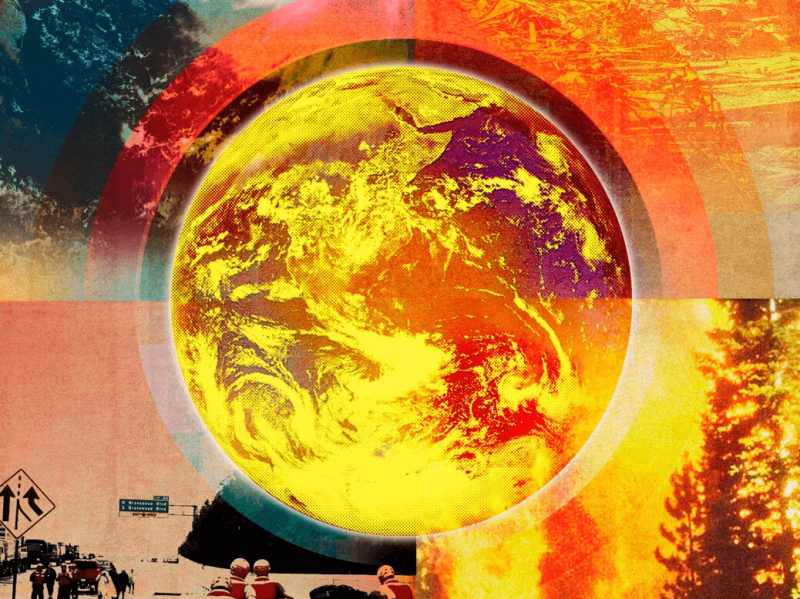
‘We can’t simply innovate our way out of danger’: Can biotechnology and other innovations help soften the blow of climate change?

x

Can technology save us from the worst effects of climate change? Probably not, reports a new study, “Does Directed Innovation Mitigate Climate Damage? Evidence from US Agriculture,” published last month in the Quarterly Journal of Economics.

The study showed that “we cannot simply innovate our way out of danger,” said co-author Jacob Moscona, a Prize Fellow in Economics, History, and Politics at Harvard.

Follow the latest news and policy debates on sustainable agriculture, biomedicine, and other ‘disruptive’ innovations. Subscribe to our newsletter.

New technology development has mitigated about 20 percent of the potential economic damage from climate change since 1960, the researchers estimate. Whether that is seen as considerable or negligible varies. As the paper’s co-author, Karthik Sastry, also a Prize Fellow, noted, both sides have validity: “Twenty percent is far from 0 percent,” he said.

However, Moscona also pointed out that this research studied agriculture in the U.S. “It’s a best-case scenario,” he said. “In other parts of the world, particularly low-income countries, there aren’t necessarily going to be the same incentives to develop technologies that help people adapt because the ability to pay for them is going to be substantially lower, and there isn’t always a large local public sector that’s really able to see and respond to the demands.”


This is an excerpt. Read the original post here

{{ reviewsTotal }}{{ options.labels.singularReviewCountLabel }}
{{ reviewsTotal }}{{ options.labels.pluralReviewCountLabel }}
{{ options.labels.newReviewButton }}
{{ userData.canReview.message }}

Related Articles

Infographic: Global regulatory and health research agencies on whether glyphosate causes cancer

Infographic: Global regulatory and health research agencies on whether glyphosate causes cancer

Does glyphosate—the world's most heavily-used herbicide—pose serious harm to humans? Is it carcinogenic? Those issues are of both legal and ...

Most Popular

ChatGPT-Image-May-7-2026-12_32_36-PM
Viewpoint: The state of U.S. vaccine policy? Dismal nationally, but some states are stepping up.
Screenshot-2026-04-22-at-10.46.29-AM
Viewpoint: How to counter science disinformation? Science journalist offers 12 practical tips
Screenshot-2026-04-13-at-1.39.26-PM
Viewpoint: ‘Safer for children?’ Stonyfield yogurt under fire for deceptive organic marketing
the magic of mRNA
Viewpoint: Anti-vax fake ‘turbo cancer’ claims threaten cancer treatment breakthroughs
ChatGPT-Image-May-7-2026-12_16_37-PM-2
Viewpoint: Are cancer rates ‘skyrocketing’ as RFK, Jr. and MAHA claim? The evidence says mostly the opposite
ChatGPT-Image-May-7-2026-01_23_27-PM-2
Viewpoint: Will AI democratize personalized cancer treatment or fuel medical misinformation?
Defense_Secretary_Ash_Carter_tours_the_Microsoft_Cybercrime_Center_in_Seattle_March_3_2016
How criminals are using AI to target social media users and steal their money and confidential data
artificial intelligence brain think illustration md
Viewpoint — Digital gods and human extinction: Will we be the first species ever to design our own descendants?
Picture1-1
Cooling the planet with balloons: Could a geoengineering gamble slow global warming?
ChatGPT-Image-May-12-2026-08_39_41-PM
GLP podcast: Big Pharma, Big Ag, Big Food—health harming industries or life-saving innovators?
RFKjr-Tech-Vax-Misinfo
As U.S. officials spread medical misinformation, scientists fact check online
ChatGPT Image May 12, 2026, 01_21_30 PM
How big health brands are funding online medical misinformation 
Screenshot-2026-04-23-at-11.00.36-AM
Regulators' dilemma: Thalidomide, Metformin, and the cost of getting drug approvals wrong
glp menu logo outlined

Get news on human & agricultural genetics and biotechnology delivered to your inbox.