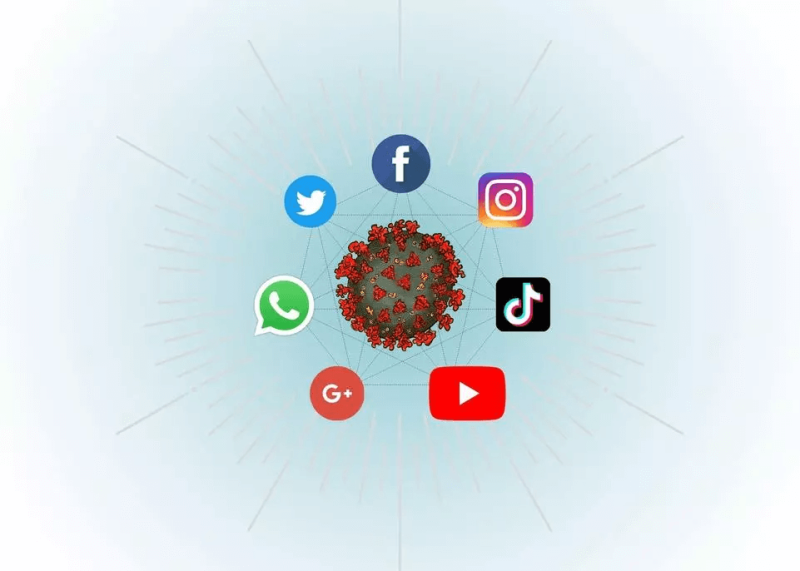
So, the health department conducted something called an online “sentiment search,” which gauges how certain words are perceived on social media. The tool found that many people in Oklahoma City didn’t like the word “vaccinate” — a term featured prominently in the health department’s marketing campaign.
“If you don’t know how your message is resonating with the public,” Maytubby said, “you’re shooting in the dark.”
Across the country, health officials have been trying to combat misinformation and restore trust within their communities these past few years, a period when many people haven’t put full faith in their state and local health departments. Agencies are using Twitter, for example, to appeal to niche audiences, such as NFL fans in Kansas City and Star Wars enthusiasts in Alabama. They’re collaborating with influencers and celebrities such as Stephen Colbert and Akbar Gbajabiamila to extend their reach.
Some of these efforts have paid off. By now, more than 80% of U.S. residents have received at least one shot of a covid vaccine.
But data suggests that the skepticism and misinformation surrounding covid vaccines now threatens other public health priorities. Flu vaccine coverage among children in mid-December was about the same as December 2021, but it was 3.7 percentage points lower compared with late 2020, according to the Centers for Disease Control and Prevention. The decrease in flu vaccination coverage among pregnant women was even more dramatic over the last two years: 18 percentage points lower.
Other common childhood vaccination rates are down, too, compared with pre-pandemic levels. Nationally, 35% of all American parents oppose requiring children to be vaccinated for measles, mumps, and rubella before entering school, up from 23% in 2019, according to a KFF survey released Dec. 16. Suspicion swirling around once-trusted vaccines, as well as fatigue from so many shots, is likely to blame.
Part of the problem comes down to a lack of investment that eroded the public health system before the pandemic began. An analysis conducted by KHN and The Associated Press found local health department spending dropped by 18% per capita between 2010 and 2020. State and local health agencies also lost nearly 40,000 jobs between the 2008 recession and the emergence of the pandemic.
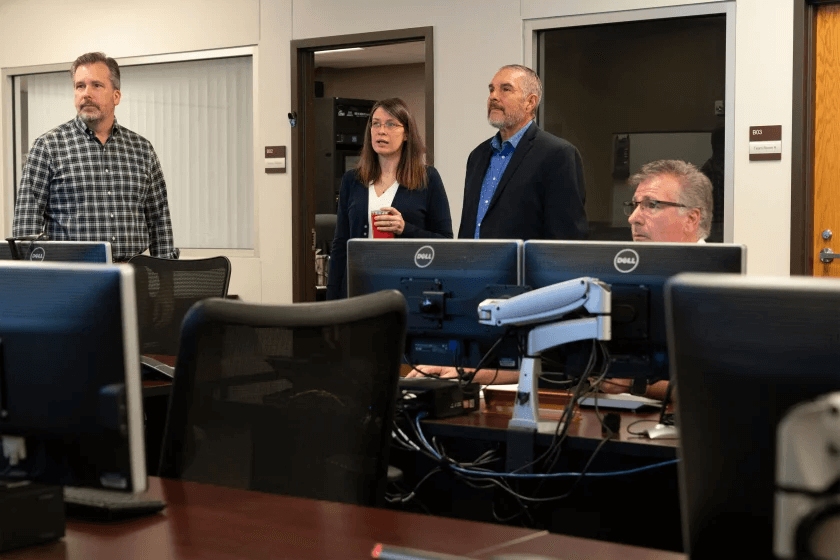
This made their response to a once-in-a-century public health crisis challenging and often inadequate. For example, during covid’s early days, many local health departments used fax machines to report covid case counts.
“We were not as flexible as we are now,” said Dr. Brannon Traxler, director of public health at the South Carolina Department of Health and Environmental Control.
At the start of the pandemic, Traxler said, only two people worked on the media relations and public outreach team at South Carolina’s health department. Now, the team has eight.
The agency has changed its communication strategies in other ways, too. Last year was the first year, for example, that South Carolina published data on flu vaccinations every two weeks, with the goal of raising awareness about the effectiveness of the shots. In South Carolina, not even one-quarter of adults and children eligible for a flu shot had been vaccinated by early December, even as flu cases and hospitalizations climbed. The flu vaccine rate across all age groups in the U.S. was 51.4% last season.
Those who have opted out of both the covid and flu shots seem to be correlated, Traxler said.
“We’re really just trying to dispel misinformation that’s out there,” Traxler said. To that end, the health department has partnered with local leaders and groups to encourage vaccinations. Agency staffers have also become more comfortable talking to the press, she said, to better communicate with the public.
But some public health experts argue that agencies are still failing on messaging. Scientific words such as “mRNA technology,” “bivalent vaccine,” and “monoclonal antibodies” are used a lot in public health even though many people find them difficult to understand.
A study published by JAMA found that covid-related language used by state-level agencies was often more complex than an eighth-grade reading level and harder to understand than the language commonly used by the CDC.
“We have to communicate complex ideas to the public, and this is where we fail,” said Brian Castrucci, CEO of the de Beaumont Foundation, a charitable group focused on strengthening public health. “We have to own the fact that our communication missteps created the environment where disinformation flourished.”
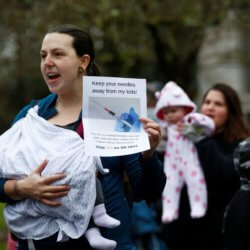
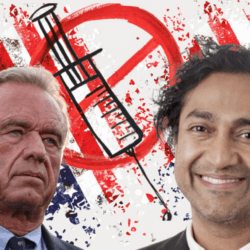


Most Americans support public health, Castrucci said. At the same time, a small but vocal minority pushes an anti-science agenda and has been effective in sowing seeds of distrust, he said.
The more than 3,000 public health departments nationwide stand to benefit from a unified message, he said. In late 2020, the foundation, working with other public health groups, established the Public Health Communications Collaborative to amplify easy-to-understand information about vaccines.
“The good guys need to be just as well organized as those who seek to do harm to the nation,” he said. “One would think we would learn from this.”
Meanwhile, a report published in October by the Pew Research Center found 57% of U.S. adults believe “false and misleading information about the coronavirus and vaccines has contributed a lot to problems the country” has faced amid the pandemic.
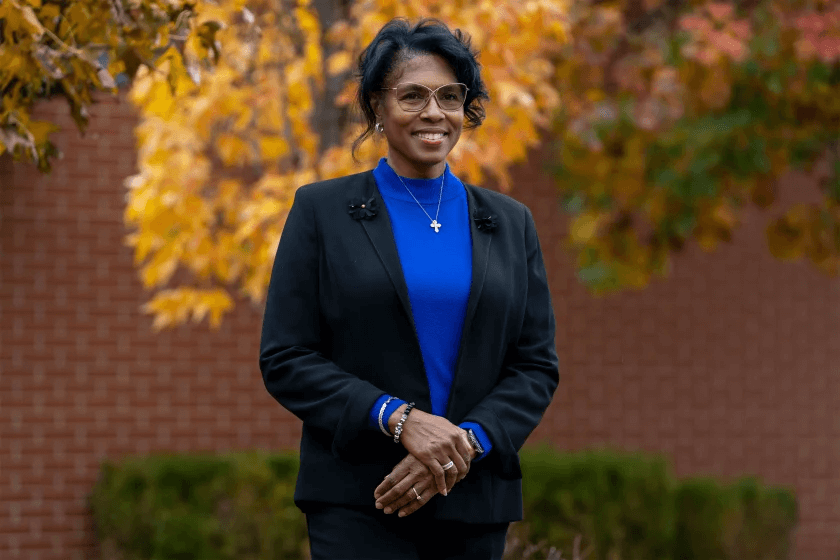
“I was leery like everyone else,” said Davie Baker, 61, an Oklahoma City woman who owns a business that sells window treatments. When the shots became widely available in 2021, she thought they had been developed too quickly, and she worried about some of the things she’d read online about side effects. A pharmacist at Sam’s Club changed her mind.
“She just kind of educated me on what the shot was really about,” Baker said. “She cleared up some things for me.”
Baker signed up for her first covid shot in May 2021, around the same time the health department in Oklahoma City not 5ced the number of vaccines administered daily was starting to decline.
The department updated its marketing campaign in early 2022. Instead of using the word “vaccinate” to encourage more people to get their covid shots — the term the agency’s social media analytics revealed people didn’t like — the new campaign urged people to “Choose Today!”
“People don’t trust like they used to,” Maytubby said. “They want to make up their own minds and make their own decisions.” The word “choose” acknowledged this preference, he said.
Maytubby thinks the “Choose Today!” campaign worked. A survey of 502 adults in Oklahoma City conducted during the first half of 2022 found fewer than 20% of respondents reacted negatively or very negatively to a sample of “Choose Today!” advertisements. And an estimated 86.5% of adults in Oklahoma City have received at least one dose of a covid vaccine — a rate higher than the state average of about 73%.
Other factors are likely at play that have helped bolster Oklahoma City’s vaccine numbers. In the same survey of Oklahoma City adults, some people who were recently vaccinated said family members or church leaders urged them to get the vaccine, or they knew someone who had died from covid. One person said money was the motivation — they received $900 from their employer for getting the covid vaccine.
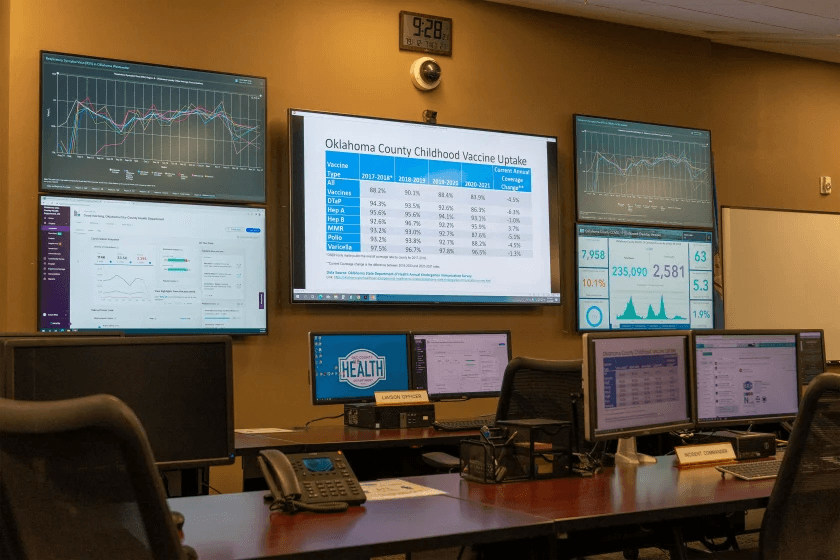
Meanwhile, the war against misinformation and disinformation wages on. Childhood vaccination rates for the immunizations students typically need to enter kindergarten are down 4.5% in Oklahoma County since the 2017-18 academic year as parents increasingly seek exemptions to the requirements.
That worries Maytubby. He said the primary tactic among those trying to sow distrust about vaccinations has been to cast doubt — about everything from the science to their safety.
“In that aspect, they’ve been pretty successful,” Maytubby said. “Misinformation has changed everything.”
Lauren Sausser, South Carolina Correspondent, covers health care across the South as a member of KHN’s Southern Bureau. She is based in Charleston, where she previously spent nine years covering health care at The Post and Courier. A graduate of Clemson University and Columbia University, she has received awards from the Association of Health Care Journalists, the Society of Professional Journalists, and other groups. In 2016, she was part of a team of reporters who were named finalists for the Pulitzer Prize for Breaking News. In 2017, she was recognized as Reporter of the Year by the South Carolina Press Association. Find Lauren on Twitter @laurenmsausser
KHN (Kaiser Health News) is a national newsroom that produces in-depth journalism about health issues. Together with Policy Analysis and Polling, KHN is one of the three major operating programs at KFF (Kaiser Family Foundation). KFF is an endowed nonprofit organization providing information on health issues to the nation. Find KHN on Twitter @KHNews