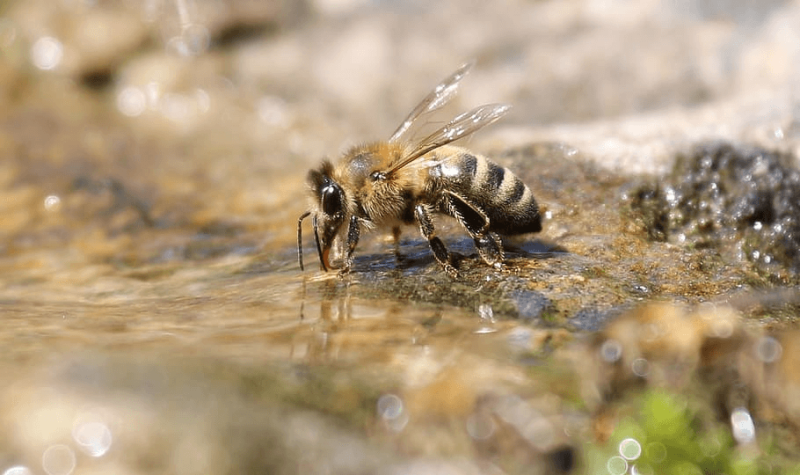
“Save the bees,” you will hear, at ice cream shops and farmers markets. A study touting the latest death rates will go viral, and pollinator protection bills will buzz out of state legislatures in response. This is also precisely where the quagmire is at its deepest, where the lines between truth, misconception, and misdirection blur.
The problem of bees in America is not a question of peace with the environment. It’s not really even a matter of conservation, per se. The bees most folks believe ought to be saved are neither natural to the land nor essential to it. They are, instead, integral to our agricultural system, grocery stores, refrigerators, and pantries.
In the mid-2000s Claire Kremen, a sustainability scientist who’d been working in Madagascar, cowrote a series of articles contending that, for the better part of a century, U.S. agriculture had been dependent on the honeybee and also killing it. The thinking essentially went that as the U.S. crept toward an over-reliance on mono-agriculture, it eroded native pollinator populations, forcing the country to rely more and more on a species (European honeybees) that is both invasive and increasingly unstable.

…
“The fallacy is we don’t have to grow crops that way. That’s the way we often do grow crops, but we don’t have to,” [said Kremen.]