Thailand becomes 25th country to formally approve gene edited crops

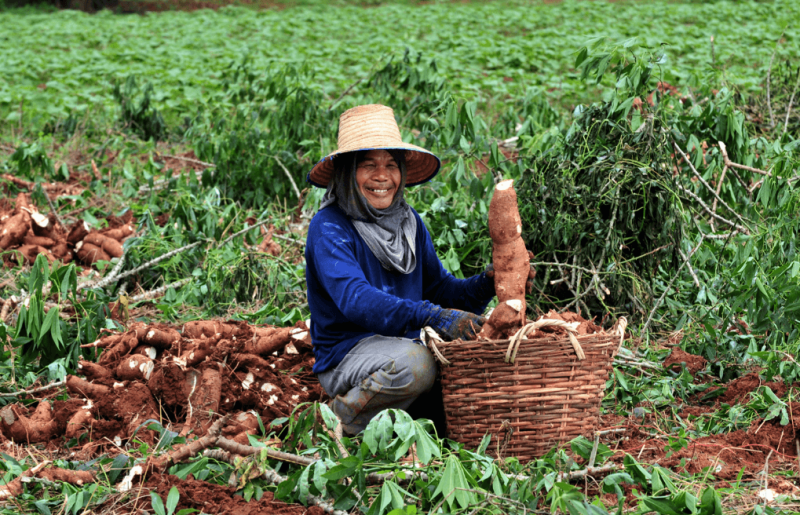
Cassava harvesting near Khorat, Thailand.
Credit: CIAT and NeilPalmer via CC-BY-SA-2.0
Cassava harvesting near Khorat, Thailand. Credit: CIAT and NeilPalmer via CC-BY-SA-2.0

Thailand has approvedย Genome Editingย (GEd) technology for advanced plant breeding to increase yields while using fewer chemicals in the farming industry, according to the Department of Agriculture.

DoA chief Rapeepat Chansriwong on [July 15] said that the announcement to legalise a GEd technique under a ministerial regulation was approved by the agriculture minister and published in the Royal Gazette.

Follow the latest news and policy debates on sustainable agriculture, biomedicine, and other ‘disruptive’ innovations. Subscribe to our newsletter.

He said that GEd plants are not genetically modified organisms (GMOs). GEd has been approved in many countries, such as Canada, the United States, Brazil, Japan, the United Kingdom, Russia, the Philippines and more, he said.

He said he was confident that GEd would help upgrade the country’s competency in plant breeding, which could increase farmers’ income three-fold within four years.

Moreover, the country will be a hub for GEd technology, he said. The method is expected to apply to animals as well, he said.
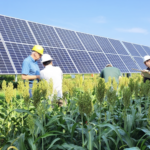

“It will help elevate the country’s farming knowledge until the country can become the world’s food hub,” Mr Rapeepat said, adding that maize, soybean, and sugar cane will be among the country’s first piloted economic plants using GEd technology.


[Check out the Genetic Literacy Project’s (GLP) global tracker to keep up to date on gene editing regulations.]

This is an excerpt. Read the original post here

{{ reviewsTotal }}{{ options.labels.singularReviewCountLabel }}
{{ reviewsTotal }}{{ options.labels.pluralReviewCountLabel }}
{{ options.labels.newReviewButton }}
{{ userData.canReview.message }}

Related Articles

Infographic: Global regulatory and health research agencies on whether glyphosate causes cancer

Infographic: Global regulatory and health research agencies on whether glyphosate causes cancer

Does glyphosateโ€”the world's most heavily-used herbicideโ€”pose serious harm to humans? Is it carcinogenic? Those issues are of both legal and ...

Most Popular

ChatGPT-Image-May-7-2026-12_32_36-PM
Viewpoint: The state of U.S. vaccine policy? Dismal nationally, but some states are stepping up.
Screenshot-2026-04-13-at-1.39.26-PM
Viewpoint: โ€˜Safer for children?โ€™ Stonyfield yogurt under fire for deceptive organic marketing
Screenshot-2026-04-22-at-10.46.29-AM
Viewpoint: How to counter science disinformation? Science journalist offers 12 practical tips
ChatGPT-Image-May-7-2026-12_16_37-PM-2
Viewpoint: Are cancer rates โ€˜skyrocketingโ€™ as RFK, Jr. and MAHA claim? The evidence says mostly the opposite
the magic of mRNA
Viewpoint: Anti-vax fake โ€˜turbo cancerโ€™ claims threaten cancer treatment breakthroughs
ChatGPT-Image-May-7-2026-01_23_27-PM-2
Viewpoint: Will AI democratize personalized cancer treatment or fuel medical misinformation?
artificial intelligence brain think illustration md
Viewpoint โ€” Digital gods and human extinction: Will we be the first species ever to design our own descendants?
Defense_Secretary_Ash_Carter_tours_the_Microsoft_Cybercrime_Center_in_Seattle_March_3_2016
How criminals are using AI to target social media users and steal their money and confidential data
Picture1-1
Cooling the planet with balloons: Could a geoengineering gamble slow global warming?
Screenshot-2026-04-23-at-11.00.36-AM
Regulators' dilemma: Thalidomide, Metformin, and the cost of getting drug approvals wrong
ChatGPT Image May 12, 2026, 01_21_30 PM
How big health brands are funding online medical misinformationย 
glp menu logo outlined

Get news on human & agricultural genetics and biotechnology delivered to your inbox.