The world’s wine production has dropped 10% mostly because of droughts, fire and ‘extreme environmental conditions’. China turns to AI for a solution

cellar-asia-top-chinese-wineries-768-1-75.jpg

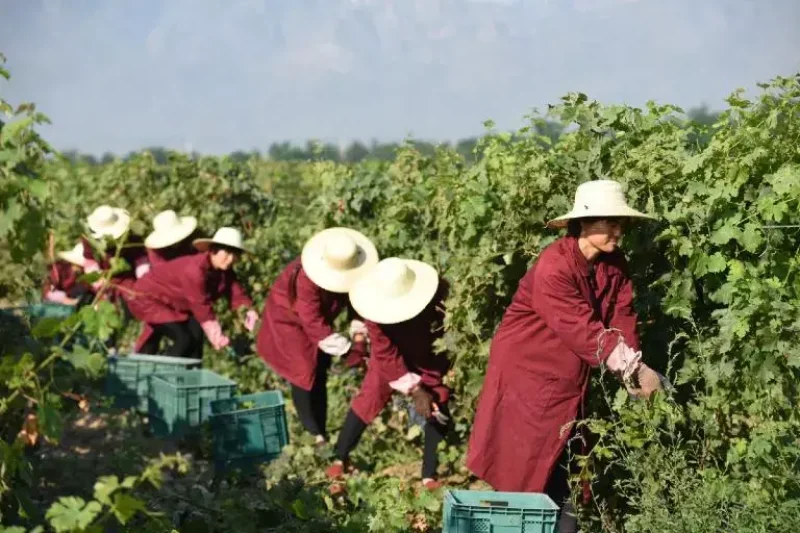
At a laboratory in Beijing, purple and green hybrid-species grapes are laid out on a board for testing, part of the strategy China’s nascent wine industry is using to try to combat climate challenges. Scientists are using genetics and artificial intelligence to address imperfect weather conditions, as well as anticipate future problems that might be wrought by rising global temperatures.

The world’s wine production dropped 10 percent last year mostly because of “extreme environmental conditions” such as droughts and fires, according to a leading industry body. Scientists say climate change driven by greenhouse gas emissions is making extreme weather more frequent and intense.

Follow the latest news and policy debates on sustainable agriculture, biomedicine, and other ‘disruptive’ innovations. Subscribe to our newsletter.

Global warming is also affecting grape quality, a recent review in [the] science journal Nature said, meaning “the suitability of current winegrowing areas is changing, and there will be winners and losers”.

Each year, the lab has the potential to produce around 20,000 new genotypes through crossbreeding, all of which must be evaluated.

Previously this was done manually, but now scientists use AI image recognition software to record aspects like colour, shape and size in seconds, cutting the time needed to identify candidates for further cultivation.


This is an excerpt. Read the original post here

{{ reviewsTotal }}{{ options.labels.singularReviewCountLabel }}
{{ reviewsTotal }}{{ options.labels.pluralReviewCountLabel }}
{{ options.labels.newReviewButton }}
{{ userData.canReview.message }}

Related Articles

Infographic: Global regulatory and health research agencies on whether glyphosate causes cancer

Infographic: Global regulatory and health research agencies on whether glyphosate causes cancer

Does glyphosate—the world's most heavily-used herbicide—pose serious harm to humans? Is it carcinogenic? Those issues are of both legal and ...

Most Popular

ChatGPT-Image-May-7-2026-12_32_36-PM
Viewpoint: The state of U.S. vaccine policy? Dismal nationally, but some states are stepping up.
Screenshot-2026-04-13-at-1.39.26-PM
Viewpoint: ‘Safer for children?’ Stonyfield yogurt under fire for deceptive organic marketing
Screenshot-2026-04-22-at-10.46.29-AM
Viewpoint: How to counter science disinformation? Science journalist offers 12 practical tips
the magic of mRNA
Viewpoint: Anti-vax fake ‘turbo cancer’ claims threaten cancer treatment breakthroughs
ChatGPT-Image-May-7-2026-12_16_37-PM-2
Viewpoint: Are cancer rates ‘skyrocketing’ as RFK, Jr. and MAHA claim? The evidence says mostly the opposite
ChatGPT-Image-May-7-2026-01_23_27-PM-2
Viewpoint: Will AI democratize personalized cancer treatment or fuel medical misinformation?
artificial intelligence brain think illustration md
Viewpoint — Digital gods and human extinction: Will we be the first species ever to design our own descendants?
Defense_Secretary_Ash_Carter_tours_the_Microsoft_Cybercrime_Center_in_Seattle_March_3_2016
How criminals are using AI to target social media users and steal their money and confidential data
Picture1-1
Cooling the planet with balloons: Could a geoengineering gamble slow global warming?
Screenshot-2026-04-23-at-11.00.36-AM
Regulators' dilemma: Thalidomide, Metformin, and the cost of getting drug approvals wrong
ChatGPT Image May 12, 2026, 01_21_30 PM
How big health brands are funding online medical misinformation 
glp menu logo outlined

Get news on human & agricultural genetics and biotechnology delivered to your inbox.