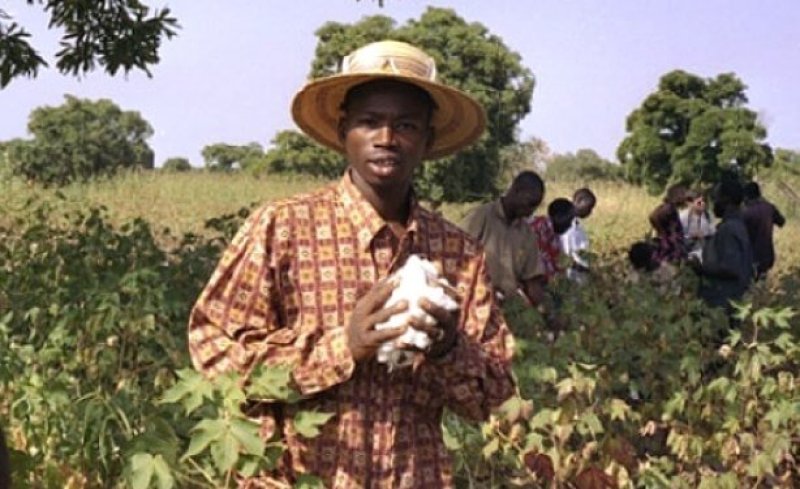
Zimbabwean farmers push for GMO cotton approval after South Africa, Sudan, Botswana, Malawi and Burkina Faso see increased outputs and poverty reduction

Credit: Nick Rabinowitz/Oxfam

[Cotton] is the second most important cash crop in Zimbabwe (after tobacco) in terms of export earnings (earnings of US$30,1 million in 2020) and income generation to farmers.

Cotton is mainly grown by smallholder farmers under rain fed agriculture in the natural Region 4 from November to April. This makes the crop very susceptible to climate change before other factors leading to low production are considered. 

Follow the latest news and policy debates on sustainable agriculture, biomedicine, and other ‘disruptive’ innovations. Subscribe to our newsletter.

On the continent, Burkina Faso is the largest producer of cotton with over 270 000mt produced in 2019. Mali (233 000mt), Ivory Coast (132 000), Sudan (98 000mt) and Egypt (91 000mt) complete the top five. More than 90% of cotton grown in the main cotton producing countries (US, India, and China) is now genetically-modified (GMO).

Currently, small holder farmers in South Africa, Sudan, Botswana, Malawi and Burkina Faso grow genetically modified cotton and it has proved that yields have increased. Since 2006, the Zimbabwean government banned the importation of GMO food and seeds on the basis that it is harmful to the soil and the environment. This position would need to be revised with key input from producers and other stakeholders.


This is an excerpt. Read the original post here.

{{ reviewsTotal }}{{ options.labels.singularReviewCountLabel }}
{{ reviewsTotal }}{{ options.labels.pluralReviewCountLabel }}
{{ options.labels.newReviewButton }}
{{ userData.canReview.message }}

Related Articles

Infographic: Global regulatory and health research agencies on whether glyphosate causes cancer

Infographic: Global regulatory and health research agencies on whether glyphosate causes cancer

Does glyphosate—the world's most heavily-used herbicide—pose serious harm to humans? Is it carcinogenic? Those issues are of both legal and ...

Most Popular

ChatGPT-Image-May-7-2026-12_32_36-PM
Viewpoint: The state of U.S. vaccine policy? Dismal nationally, but some states are stepping up.
Screenshot-2026-04-22-at-10.46.29-AM
Viewpoint: How to counter science disinformation? Science journalist offers 12 practical tips
Screenshot-2026-04-13-at-1.39.26-PM
Viewpoint: ‘Safer for children?’ Stonyfield yogurt under fire for deceptive organic marketing
the magic of mRNA
Viewpoint: Anti-vax fake ‘turbo cancer’ claims threaten cancer treatment breakthroughs
ChatGPT-Image-May-7-2026-12_16_37-PM-2
Viewpoint: Are cancer rates ‘skyrocketing’ as RFK, Jr. and MAHA claim? The evidence says mostly the opposite
Defense_Secretary_Ash_Carter_tours_the_Microsoft_Cybercrime_Center_in_Seattle_March_3_2016
How criminals are using AI to target social media users and steal their money and confidential data
ChatGPT-Image-May-7-2026-01_23_27-PM-2
Viewpoint: Will AI democratize personalized cancer treatment or fuel medical misinformation?
artificial intelligence brain think illustration md
Viewpoint — Digital gods and human extinction: Will we be the first species ever to design our own descendants?
Picture1-1
Cooling the planet with balloons: Could a geoengineering gamble slow global warming?
ChatGPT-Image-May-12-2026-08_39_41-PM
GLP podcast: Big Pharma, Big Ag, Big Food—health harming industries or life-saving innovators?
RFKjr-Tech-Vax-Misinfo
As U.S. officials spread medical misinformation, scientists fact check online
Screenshot-2026-04-23-at-11.00.36-AM
Regulators' dilemma: Thalidomide, Metformin, and the cost of getting drug approvals wrong
glp menu logo outlined

Get news on human & agricultural genetics and biotechnology delivered to your inbox.