



Ancestry & Evolution

Genetics of depression: Could a test have prevented the Germanwings catastrophe?
Major depression affects an estimated 10 percent of the population and often runs in families. Could a genetic test could ...
Individuality might be a measureable genetic trait
Benjamin de Bivort's lab at Harvard University is Groundhog Day for fruit flies. In de Bivort’s version, a fly must choose to ...
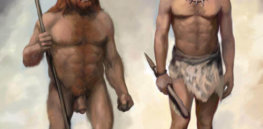
Early Europeans closer to Neanderthals than expected
One of Europe’s earliest known humans had a close Neanderthal ancestor: perhaps as close as a great-great-grandparent. The finding, announced ...
Archaeologists reveal native Alaskans’ roots
As humans spread out of Africa and settled the rest of the world tens of thousands of years ago, one ...
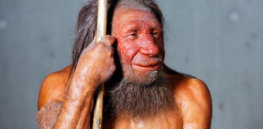
More mystery about Neanderthal and modern humans: How reliable is ancient DNA analysis?
Modern humans share swaths of DNA with long-extinct Neanderthals. But what does this mean? New and complicated dating techniques and ...
Scientists reverse evolution in birds to make them more like dinosaurs
The past hundred million years or so have not been kind to the dinosaurs. Once formidable “terrible lizards,” their closest modern descendant is the distinctly unimpressive chicken. Now ...
Scientist who discovered CRISPR/Cas9 weighs future of new technology
Three years ago, Jennifer A. Doudna, a biochemist at the University of California, Berkeley, helped make one of the most monumental ...
Mammoth genes could be used to create new species of ‘Arctic’ elephant
Unlike their elephant cousins, woolly mammoths were creatures of the cold, with long hairy coats, thick layers of fat and ...
Chain of evolution isn’t as neat as it’s made out to be
Anyone familiar with evolution knows that humans (relatively complex organisms) evolved from simpler forms of life over the course of ...
Newly discovered DNA base added to genetic code
A sixth DNA base has been identified by researchers, adding to the five that were known to occur in the ...
Genes might explain differences in how we experience emotions
Your genes may influence how sensitive you are to emotional information, according to new research by a UBC neuroscientist. The ...
Do we have the answer to the origin of life?
There's a problem at the heart of biology. It is: No one knows why all complex life is so similar ...
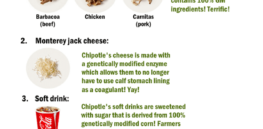

Two decades of GMO crops in the US in infographics and charts
The use of GMOs is undoubtedly widespread. Since GMOs were approved for commercial use, and then first planted in the ...
Newly discovered organism may bridge evolutionary gap between simple and complex cells
The discovery of a new microorganism may help bridge the knowledge gap between simple and complex cellular organisms, also shedding ...

Humans and dolphins: Same big brains, separate evolutionary paths
Until our upstart genus surpassed them, dolphins were probably the largest brained, and presumably the most intelligent, creatures on the ...
Cellular ‘doughnut’ marks most important stage of human development
Embryos of many organisms grow from two cells to four, then eight, and so on until there are thousands in ...
Scientists tracing Ebola’s mutations hope to answer questions about latest outbreak
The picture is not yet complete, but intriguing discoveries have been made. Virus mutations first detected in Sierra Leone were ...

How modern health care stems from basic human evolutionary needs
It is now accepted that the expression of certain genes can have a significant impact on both normal and abnormal ...
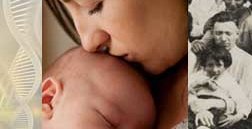
How DNA testing transformed matchmaking in Orthodox Jewish community
In 1983, the wife of ultra-orthodox Brooklyn rabbi Yosef Eckstein, gave birth to their fifth child. But the couple’s happiness ...
Evolving big heads made childbirth hard on humans
In hominids, upright walking evolved 4-5 million years ago. The human pelvis was affected by these changes and evolved accordingly ...
What do ants and your brain have in common?
Each of the brain’s 86 billion neurons can be connected to many thousands of others. When a neuron fires, it ...

Radiophobia: Dental x-rays can kill you!–and other sage advice from the Land of Oz
We evolved in an environment that provides constant low level radiation. Our cells are good at dealing with it, and ...
Is it possible to bring the extinct woolly mammoth back to life?
Extinction, it seems, may no longer be for ever. Recently, scientists in George Church’s lab at Harvard University announced that ...
Viruses point forensic scientists to bodies’ location of origin
Certain events can pose enormous challenges in identifying the deceased. The huge scope of mass casualty events such as wars, ...
Can deeply religious Muslim students be taught the theory of evolution?
Certain problematic attitudes towards science have been imported into Muslim societies as a part of rapid globalization and modernization — ...
