


Ancestry & Evolution
Could humans have evolved on other planets, too?
Could it be that our species is the principal indigenous race in the Universe – that Homo sapiens, or something ...
Viewpoint: Why gene editing is so much like ‘nature’ — and therefore should not be tightly regulated
At what point do regulatory experts possess sufficient knowledge on innovative technologies and their potential impacts, both beneficial and adverse, ...
Omicron contains dozens of new mutations — but that doesn’t mean the variant is more dangerous
The Omicron variant of the coronavirus has alarmed many scientists because of the sheer number of genetic mutations it carries ...
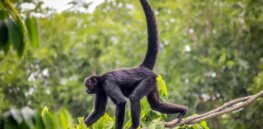
Why don’t humans have tails?
Why did some primates keep their tails, while humans and apes didn't? Tail loss is thought to be part of ...

This story is crap: A history of human excrement
If there’s one thing we have in common with our ancestors, it’s that they were just as dismayed with their ...
Evolution doesn’t stop: Hundreds of new traits have developed in humans in recent centuries
A new study from Europe has identified 755 traits that have changed in the past 2-3,000 years of human evolution ...
‘Life as we made it’ book review: Why ‘intervening in nature’ is not new and should not be feared
Life as We Made It by Beth Shapiro, an exploration of biotechnology, human evolution and our significant and often unwelcome impact ...
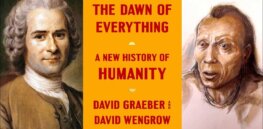
Will ‘The Dawn of Everything’ rewrite human history, as the book’s authors (modestly) claim?
“The Dawn of Everything” — which weighs in at a whopping 704 pages, including a 63-page bibliography — aims to ...

Could CRISPR gene editing be a solution to antibiotic-resistant superbugs?
The fast rise in antibiotic resistance is one of the world's most concerning health issues. Antibiotic-resistant infections kill about 700,000 ...
Omicron: What we know so far — and what lies ahead
Since early in the COVID pandemic, the Network for Genomics Surveillance in South Africa has been monitoring changes in SARS-CoV-2. This ...

Evolutionary thinking: What would a world without humans look like?
Humanity's fingerprint can be seen across the planet today, from the towering skyscrapers that define our modern metropolises to the ...
Why did Neanderthals lose their battle for survival to modern humans? Here’s a new theory
Our hypotheses surrounding the Neanderthals’ fate have... changed over time. The longest-standing theory is that we outcompeted them: We were ...
Hundreds of dog breeds have disappeared over the centuries. Could — and should — we bring them back?
The World Canine Organization officially recognises around 370 different breeds, including the fashion-victim Chinese Crested, with its nude, greyish body ...
98.6°F: American body temperatures have been dropping for 200 years. Why?
Early last year, researchers in the United States combed Civil War veteran records and national health surveys and found temperatures ...

Is there an evolutionary explanation for recent surge in child-free pet parenting?
I’m an anthropologist who studies human-animal interactions, a field known as anthrozoology. I want to better understand the behavior of ...
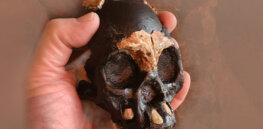
Mystery envelops Homo naledi child skull fragments found in South African cave
Named “Leti,” this is the first known skull belonging to a Homo naledi child—a fossil that’s shedding new light onto ...

Maybe the universe had no beginning
In the beginning, there was … well, maybe there was no beginning. Perhaps our universe has always existed — and ...
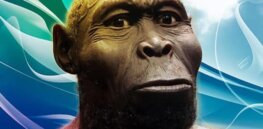
Discovery of new species Homo bodoensis may clean up — or muddle — the human family tree
A new ancestor of Homo sapiens has been named by scientists as part of an effort to clean up our ancestry. Homo ...
5 global guidelines for DNA research on human remains: Proposal issued by 60 scientists in 30 countries
Institutional or governmental guidelines for obtaining permission to analyse ancient individuals vary and do not always ensure ethical and engaged ...
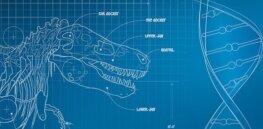
Skepticism grows over dinosaur DNA discovery claims
A team has extracted what could be DNA molecules from a 125-million-year-old fossil dinosaur, according to a study published [September ...

Natural GMOs: Is it dangerous, as critics claim, to ‘transfer’ genes from other species? Nature doesn’t think so
Grass crops are able to bend the rules of evolution by borrowing genes from their neighbours, giving them a competitive ...
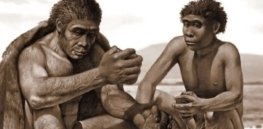
Homo bodoensis: New ancient human species might have been identified — but not all experts agree
A new species of extinct human has been named: Homo bodoensis. The species hasn’t been identified based on new fossils, ...
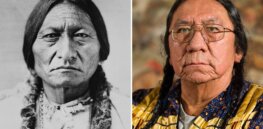
DNA confirms legendary Lakota leader Sitting Bull has a living descendant
A man’s claim to be the great-grandson of legendary Native American leader Sitting Bull has been confirmed using DNA extracted ...
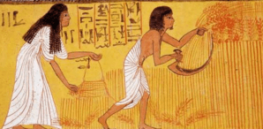
From mixing urine in wine to peeing on barley: A history of pregnancy tests
Trying to figure out if you’re pregnant is probably as old as humanity itself. People had some pretty weird methods, ...
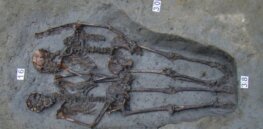
How should scientists handle DNA extracted from ancient sites? Researchers have now crafted guidelines
As ancient DNA research sweeps the globe, ballooning from zero genomes sequenced as of 2009 to more than 6,000 as ...
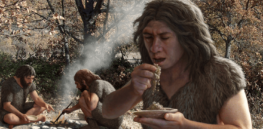
What did ancient humans eat?
Unearthed from the graves of children, ceramic baby bottles from thousands of years ago would look perfectly at home in ...
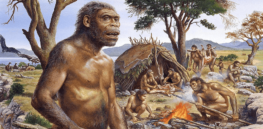
Excavations in Israel have sparked renewed debate over why Homo erectus migrated out of Africa
What exactly pushed—or pulled—H. erectus out of Africa is a matter of fierce debate. Was it some innate adaptability, such ...
