From mixing urine in wine to peeing on barley: A history of pregnancy tests

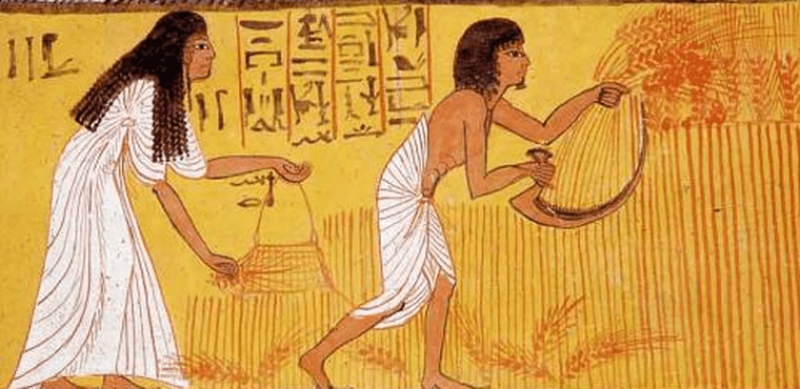
Ancient egyptians used barley and wheat as pregnancy tests. Credit: Medium

Trying to figure out if you’re pregnant is probably as old as humanity itself. People had some pretty weird methods, like urinating on wheat and barley seeds (which kind of worked!), or mixing urine with wine for divination by a “wine prophet,” or shoving an onion into a patient’s vagina to see if it gave her bad breath. (This does NOT work, Gwyneth Paltrow. Do not recommend this.)

These days, people who think they might be pregnant can pee on testing sticks that check for the hormone human chorionic gonadotropin (HCG). But nearly a century ago, when reliable HCG testing was being developed, it looked about as bizarre as the “wine prophet” and was so expensive only wealthy people could afford it.


Mis- and disinformation are distorting science and public policy. Subscribe to our Daily and Weekly Digests for incisive coverage of ‘disruptive’ innovations in AI, agricultural biotechnology, food, chemicals, nuclear energy, vaccines, and other disruptive innovations.

The urine of a possibly pregnant person was bottled and sent to a lab, where it was repeatedly injected subcutaneously into five female mice over five days. They were then killed and autopsied. If the mice had enlarged ovaries or signs of recently ovulating, then the test subject was pregnant.


This is an excerpt. Read the original post here.

Related Articles

Infographic: Global regulatory and health research agencies on whether glyphosate causes cancer

Infographic: Global regulatory and health research agencies on whether glyphosate causes cancer

Does glyphosate—the world's most heavily-used herbicide—pose serious harm to humans? Is it carcinogenic? Those issues are of both legal and ...

Most Popular

Screenshot-2026-09-16-at-2.26.42-PM
Viewpoint: How to ecologically damage America’s forests: Ban glyphosate
ChatGPT-Image-Mar-10-2026-01_39_01-PM
Viewpoint—“Miracle molecule” debunked: Why acemannan supplements don’t work
Screenshot-2026-09-20-at-9.03.54-AM
From Malaysia to the world: A pioneering science communicator reimagines global science communication for a digital age
ChatGPT-Image-Sep-17-2026-12_28_43-PM
Vitamin D, omega-3 fish oil and glucosamine supplements could cause brain damage 
ChatGPT-Image-Sep-18-2026-10_49_24-AM
‘Symptom borrowing’: Young people are copying health problems they see on TikTok
ChatGPT-Image-Sep-2-2026-02_03_32-PM
AI data centers and water usage: It’s a genuine and growing problem
Screenshot-2026-09-20-at-4.31.28-PM
White House drafting executive order to control what OMB Director Vought claims are “woke” NIH science grants
ChatGPT-Image-Sep-11-2026-01_53_42-PM
Should doctors engage in social media to counter misinformation?
Screenshot-2026-08-12-at-11.31.46-AM
AI is helping develop new vaccines
ChatGPT-Image-Sep-20-2026-04_22_32-PM
What’s Trump’s ‘AI Force’? Administration rushes to announce ill-defined watchdog agency and czar amid criticism of its resistance to curb AI acceleration
ChatGPT-Image-Sep-16-2026-11_28_54-AM
Viewpoint: Study links childhood vaccination to autism!!! Here’s how anti-vaxxers twist evidence to corrupt science
Screenshot 2026-09-18 at 10.26
Slowdown AI development? China acknowledges serious risks but sees warnings as U.S. ploy to control the technology
Screenshot-2026-08-19-at-6.19.42-PM
Facts & Fallacies podcast: 'Regenerative farming'? RFK Jr.’s federal push romanticizes the past and risks food security
glp menu logo outlined

Get news on human & agricultural genetics and biotechnology delivered to your inbox.