

By 2024, I was exhausted.
For more than a decade, I had carried The Petri Dish through the realities of running a niche science publication in Malaysia. The Petri Dish is a Malaysian-based science literacy publication. Launched in Feb 2011 by the nonprofit Malaysian Biotechnology Information Centre (MABIC), it initially focused on biotechnology and the life sciences, publishing accessible reporting on agriculture, GM and gene-edited crops, food security, health, environmental issues, and STEM. Served as a bridge between scientists, policymakers, companies, educators, and the public—while also giving scientists a place to develop science-communication skills.
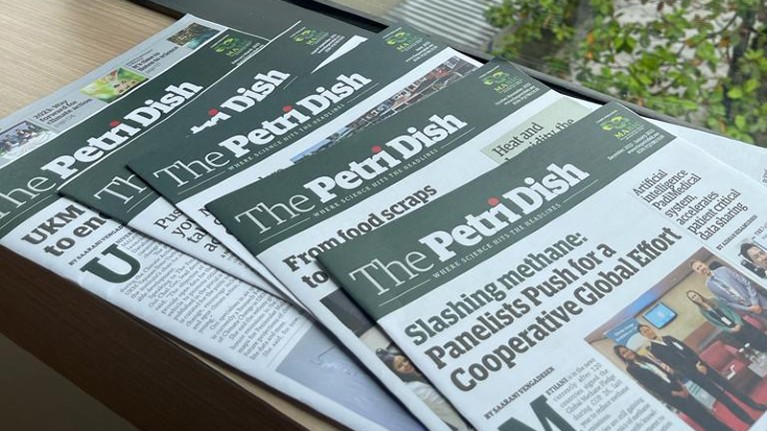
Keeping an ambitious science engagement project fresh and alive was never easy. We had no dedicated marketing department and a specialised readership. Advertising was always a challenge. There were times when I used my own money to keep the publication going and ensure that our staff could be paid. Yet, The Petri Dish served its purpose for a good 15 years.
Eventually, in 2025, I began to wonder whether it was time to stop.
Selling The Petri Dish was not realistic. Science media is a small and difficult market, and several people whose advice I valued told me to let it go. They suggested that I should focus on my own career and reputation as a science communicator instead of continuing to carry the weight of a publication.
I was seriously considering walking away.
What made that decision so difficult was that The Petri Dish had become much more than a newspaper.
My idea for the project was straightforward: I wanted to make science visible and accessible. It had taken shape on Christmas Eve in 2010, when I was sitting with a journalist friend, Joseph Masilamany. We talked about whether it was possible to start a project devoted entirely to science.
Fifteen years ago, science was largely invisible in Malaysia’s mainstream media unless there was a crisis, a spectacular breakthrough or a Nobel Prize announcement. Scientists were producing valuable knowledge, but much of it remained within universities, research institutions and academic journals.
I had also become increasingly aware of another problem. Good research did not automatically become useful innovation. Between a scientific discovery and something that reaches society lie funding decisions, policies, regulations, industry partnerships, technology transfer, entrepreneurship and, ultimately, public acceptance.
I believed communication had a role to play in connecting these worlds.
So, in February 2011, The Petri Dish was born as Malaysia’s first science newspaper. The name reflected where I wanted the publication to begin: the laboratory, where experimentation and discovery take place.
Our first issue was just 12 pages, with 8,000 copies printed. Eventually, we grew to a 20-page publication with a nationwide circulation of about 23,000.
Our subscribers included universities, research institutes, ministries and government agencies, corporations and individual readers; and it was circulated to Starbucks outlets nationwide, shopping malls, hotels, private hospitals, car service centres, golf courses, and airports.
Although biotechnology was our original focus, the scope of the newspaper grew alongside Malaysia’s science, technology and innovation ambitions. We began covering artificial intelligence, robotics, advanced manufacturing, precision medicine, renewable energy, food technology, space and other emerging technologies.
But the real story of The Petri Dish was never simply the number of pages we printed. It was what happened when science was taken out of the laboratory and put into the hands of people who had previously found it inaccessible.
In 2017, we launched a website, but it was a modest one. With resources always tight, I could only invest a fraction of what a professional website would normally cost.
Learning to speak beyond the laboratory
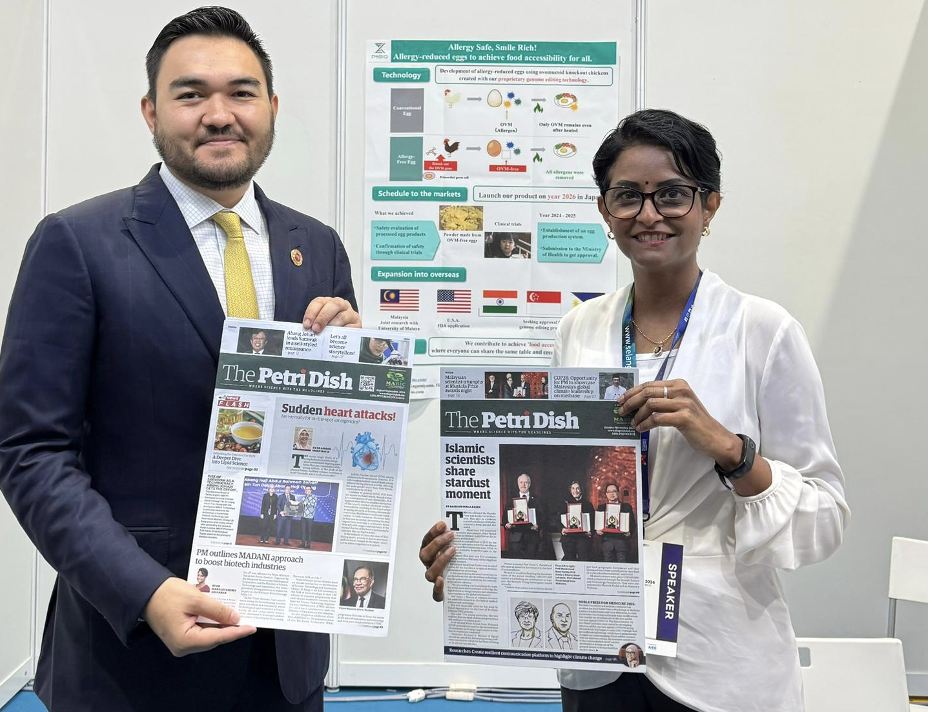
One of the things I value most about The Petri Dish is the number of scientists who learned that communicating their research was not an optional extra.
I remember a postdoctoral researcher who approached us with a manuscript he wanted to publish. His research was highly specialised, but the article was written almost entirely for people within his field. For a general reader, it was difficult to understand.
Although the topic was important, he found it challenging to make it accessible to a wide audience. I gave him a choice. I could rewrite the article for him, or he could revise it himself and learn how to communicate his science for a wider audience.
He chose the second option. We went through several rounds of editing, and a new window of wisdom and opportunity opened up for The Petri Dish.
His article was eventually published. But for me, the more important outcome was that he had acquired a skill that he could use for public engagement. The Petri Dish’s mission had expanded.
Today, scientists who once struggled to explain their work to a general audience have become regular contributors. Some of our former interns and staff members have gone on to proudly become science communicators.
That, to me, is an expanding part of the legacy of the publication.
Science communication is not simply about translating complicated concepts into simpler ones. It changes the relationship between scientists and society. It teaches researchers to ask not only, “What did I discover?” but also, “Why should anyone outside my field, or the public, care?”
Science communication is a matter of trust
Then came COVID-19. The pandemic forced us to stop printing, but it did not allow us to stop communicating.
We moved our efforts online and focused heavily on vaccine awareness at a time when misinformation and disinformation were spreading rapidly. Scientific evidence does not automatically translate into public trust.
A vaccine can be scientifically sound, but people will still have questions. A gene-editing technology can work technically, but society may still debate whether it should be used. Artificial intelligence can offer enormous benefits, while communities simultaneously assess its consequences.
The same is true of technologies such as gene therapy, precision medicine and nuclear energy.
The challenge is not only whether we can develop a technology. It is whether people understand it, trust the institutions behind it and believe they have a voice in how it is used.





That is why science communication matters to innovation. It creates the space for scientists, policymakers, industry, educators, and communities to understand one another. Without that conversation, even scientifically sound innovations can struggle to move forward.
The day I almost gave it up, and The Petri Dish’s reinvention
The Petri Dish was already on life support for many years, even before the pandemic, given the scarce resources for science communication and science media. After years of using my own financial resources to keep it going, the pandemic gave me a sudden jolt and made me realise that I could no longer carry on with business as usual.
Just as I was reevaluating the feasibility of the newspaper, a lifeline came in 2022, when the Environmental Defense Fund (EDF), a U.S.-based organisation that uses science, economics and policy to create practical environmental solutions, approached us to run its methane mitigation campaign.
Methane is a potent greenhouse gas that traps 28 to 30 times more heat than carbon dioxide and is responsible for about 30% of global warming. It is produced by the oil and gas, livestock, and agricultural sectors.
The partnership brought in much-needed revenue and, for a while, gave The Petri Dish a fresh lease of life. We were able to bring back the print edition, and I began to believe that perhaps we could keep going after all.
Who gets to see themselves in science?
We also learnt that making science accessible is not only about language. It is about representation.
Over the years, students wrote to tell us that reading The Petri Dish had encouraged them to consider careers in science, technology, engineering and mathematics.
That mattered because young people need more than information. They need to see possibilities. They need to see scientists who look like them, speak their language, and come from communities they recognise.
This became particularly important when we began reaching communities often overlooked by mainstream science communication.
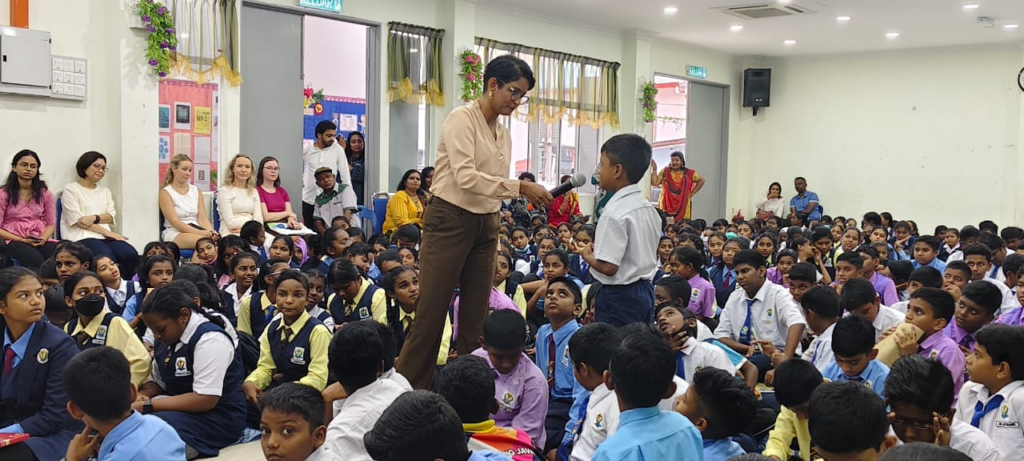
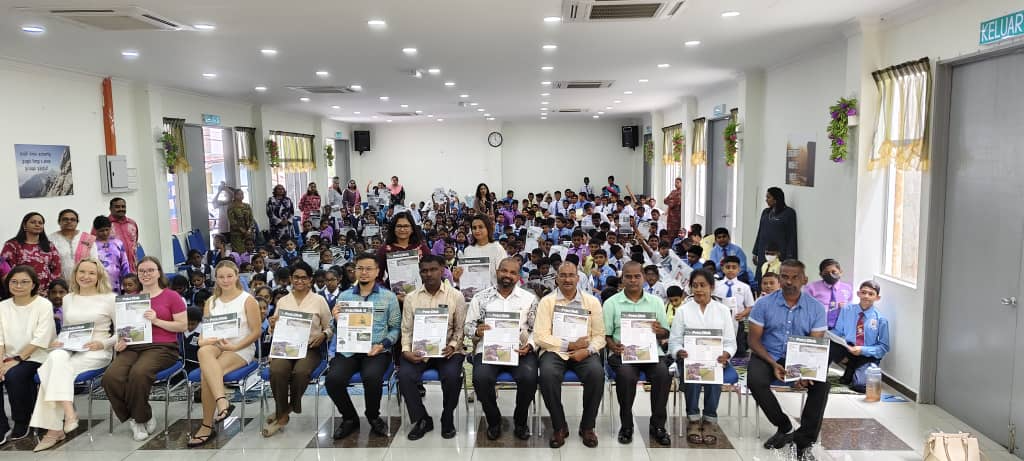
With funding from a government agency supporting the socioeconomic advancement of Indian Malaysians, we produced a four-page Tamil-language pullout that was distributed to 525 Tamil schools across Malaysia from Oct 2023 – June 2025. We also organised a nationwide competition, “Who wants to be a Scientist?”
The objective was not simply to translate science into Tamil. We wanted students to encounter subjects they might otherwise have considered inaccessible while introducing them to scientists whose work and achievements they might never have encountered.
The experience reinforced something I had begun to understand: science communication is also about access. Children cannot aspire to a future they cannot see.
Non-conventional way to communicate science
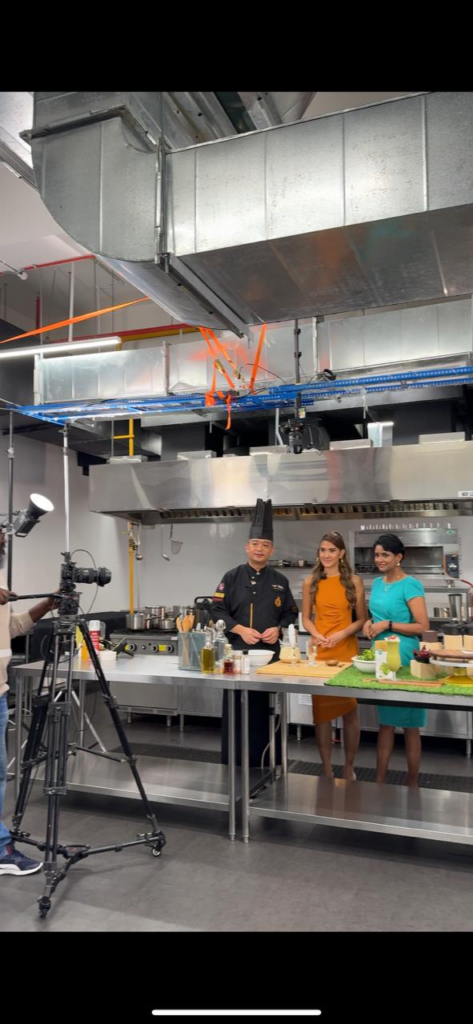
In 2024, I pitched another project to the Malaysian Palm Oil Council to create awareness of palm oil, as it is always plagued with mis- and disinformation.
I collaborated with a university culinary school and communicated the health benefits of palm oil through cooking shows and published scientific information in The Petri Dish.
But by the end of 2024, we had hit a wall again. After years of keeping the publication alive, I was overwhelmed. The print edition was becoming too costly to produce, and I could no longer convince myself that I had the stamina and resources to maintain it at its established high level.
Some people around me, even good friends, were encouraging me to walk away. Perhaps they were right.
Then former parliamentarian Manogaran Marimuthu introduced me to Digital Vibes Asia. They saw something in The Petri Dish that I had temporarily lost sight of: the potential to leverage a platform that, over the decade, had become a credible and influential science communication outlet.
They believed the publication could have another life, proposing a partnership to build a modern digital platform. And that changed the conversation. Instead of asking whether The Petri Dish could survive as a newspaper, we began asking what it could become next.
A different kind of science platform
Today, The Petri Dish has moved from partially a print news organization to exclusively digital. The transition is more than a change in format. It has made me think differently about the purpose and reach of the platform.
If my plans are realized, it will have an expanding mission. I want it to connect people and ideas across borders, including between the Global North and the Global South, particularly Asian countries, one of the fastest-growing economic regions.
My underlying motivation remains the same as it was in 2011: science should not remain confined to laboratories and academic journals. It should be questioned, discussed, shared. What has changed is the scale at which we can achieve that.
The new digital platform allows us to reach far beyond the physical and geographical limitations of print. It allows us the opportunity to experiment with new forms of storytelling, including video and podcasts.
Most importantly, it gives The Petri Dish another chance to do what it has always tried to do: bring science closer to people.
I nearly walked away from The Petri Dish, exhausted by what it took to sustain it. Now the science publication that I founded and I are ready for a new chapter.
Perhaps that is what science itself teaches us. Some experiments fail. Some ideas need to be redesigned; some take much longer to develop than expected.
And occasionally, when you think an experiment has reached its end, you discover that it is poised to become something else again.
The Petri Dish is one of those experiments.
Mahaletchumy Arujanan is the Executive Director of the Malaysian Biotechnology Information Centre. Contact Mahaletchumy on X and LinkedIn
The Petri Dish is now a free digital science, technology and innovation platform, sourced at www.thepetridish.my. The platform is also developing new formats, including Petri Dish TV and podcasts accessible to all.
Scientists, researchers, universities, research institutions, industry, startups, science communicators, policymakers, international organisations, sponsors and other partners interested in strengthening science communication are welcome to engage with the platform. Contact: Dr Mahaletchumy Arujanan, [email protected]