
Bayer is betting that gene editing can wean the world’s staple grains off synthetic fertilizer. As Bloomberg’s Sonja Wind reports, the German crop science and pharmaceutical giant has obtained a commercial license for a University of California, Davis, technology that edits grain DNA so plant roots can partner with soil bacteria that turn nitrogen from the air into a usable form.
Soybeans and other legumes do this naturally. Corn, wheat and rice, which together supply nearly half the world’s daily calories, can’t, so they lean on synthetic nitrogen fertilizer. “This is one of the holy grails in our field. So it is a really big deal,” said Matthias Berninger, Bayer’s head of public affairs and sustainability.
The timing is pointed. Supply disruptions tied to the Iran war have sent fertilizer prices soaring, and Berninger noted the European Union still gets nearly a quarter of its urea imports from Russia. Bayer also sees a business case: a slice of the $85 billion urea market, plus farmers with more cash left for its seeds and crop protection products.
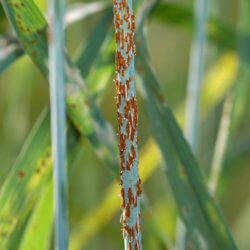
UC Davis researchers have already shown the concept in wheat. In a study published in Plant Biotechnology Journal, plant scientist Eduardo Blumwald’s lab used CRISPR to make wheat release more apigenin through its roots, coaxing soil bacteria into fixing nitrogen the plants could use. Europe’s new framework for gene-edited crops, approved by EU lawmakers this year, could smooth the path to market.
Don’t expect self-fertilizing fields soon. Products likely won’t arrive before the next decade, and the next step is testing the technology outside the greenhouse. Bayer is hedging, too: in October it partnered with Stanford spinout Switch Bioworks, which engineers root-dwelling microbes rather than the plant itself.



“We are well aware that this also could ultimately turn out not to work as intended,” Berninger said, “but this is such a big opportunity that we believe it’s now time to double down.”