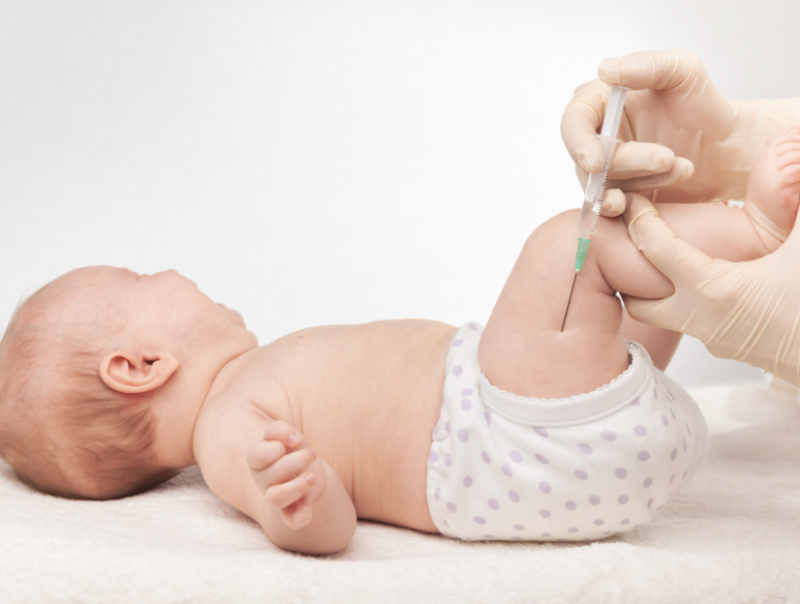

Scrapping the universal hepatitis B shot for newborns could sharply increase chronic infections in American children, a new modeling study finds — and as TIME’s Veronique Greenwood reports, the damage grows the fewer babies get vaccinated.
Hepatitis B can be a silent killer. Passed from mother to child at birth or through infected blood, it can lurk unnoticed until the liver fails or cancer appears. Up to 90% of babies infected before age 1 develop chronic, potentially lifelong infections, and untreated early infections carry a 1 in 4 lifetime chance of liver cancer.
In December 2025, the CDC under the Trump administration stopped recommending a birth dose for babies whose mothers test negative, shifting to shared decision-making with a first dose shortly after birth or “no earlier than 2 months of age.” Babies of mothers who test positive or have unknown status still get an immediate dose.
Researchers simulated infections over 20 years for one year’s worth of U.S. births — roughly 3.6 million children. The study, published in Annals of Internal Medicine, found that if only about 26% of children are vaccinated, chronic cases would jump 225%. Even with a 2-month delay and 75% coverage, chronic cases would still rise 19%.
“It’s been challenged in many states and by professional societies, but we wanted to add some evidence to the conversation,” said study author Dr. Amir Mohareb, an infectious-disease researcher at Harvard Medical School and Massachusetts General Hospital. And that’s a single birth cohort: “Imagine that happening year after year after year after year.”
 Viewpoint: Killing children, RFK, Jr.-CDC-Trump administration’s plan to roll back hepatitis birth dosing will skyrocket cases and lead to preventable diseases
 Viewpoint: Win for politicized junk science—Vaccine crisis escalates as RFK, Jr.’s hand-picked cronies gut life-saving hepatitis B shot recommendation

The American Academy of Pediatrics still recommends a birth dose for all infants, and 15 states have sued over the schedule changes. Two other recent models agree: one found prenatal screening would need a substantial boost, while another estimated a 2-month delay would add $16.4 million in health care spending on new infections. “All three of these studies complement each other, in a good way,” Mohareb said.