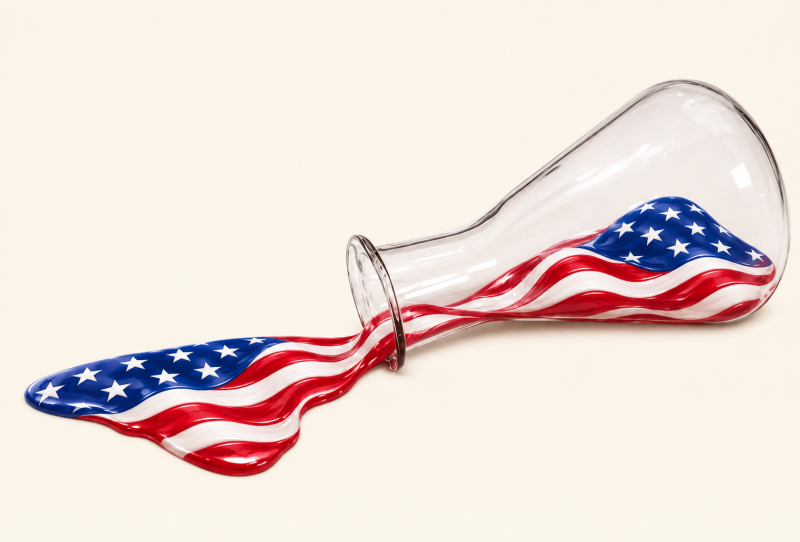

Washington is still spending about $200 billion a year on research, roughly what past administrations spent. But beneath that headline number, the federally funded science system that helped make the United States a superpower is buckling under Trump administration policies, as The New York Times’ Christopher Flavelle and colleagues report in the first installment of a series on how the administration has upended American science.
The strain shows up almost everywhere. Defense Department research labs lost about 14 percent of their staff, and a Pentagon review published this summer warned of “potentially grave consequences for the future of national defense.” The Energy Department has lost more than 1,000 scientists and technical staff, the National Science Foundation has withheld more than $1 billion, and the NIH delayed or canceled more than 2,000 grants on Alzheimer’s, cancer and other diseases.
The Times traces the damage to three forces: DOGE-driven job cuts and grant cancellations, funding pressure on research universities, and budget director Russell Vought’s push for political control over money Congress appropriates. A rule proposed in May would let political appointees approve which researchers get funded.
Even projects with no ideological angle got caught in the net. Georgia Tech psychologist Randall Engle lost Office of Naval Research funding for tests that help the Navy pick air traffic controllers. “There was no wokeness,” he said.
The talent pipeline is feeling it, too. Ph.D. applications from foreign students fell 21 percent this year at leading universities, and total admissions dropped. Meanwhile, citations of Chinese research papers have caught up with U.S. work, and Australia, Canada and even China are actively recruiting American scientists.
“Science is the long game,” said Marcia McNutt, former president of the National Academy of Sciences. “By the time we no longer win any Nobel Prizes, we will have lost the capacity to ever recover.”


The White House rejects that picture. “President Trump is ushering in a new golden age of American science by modernizing our research institutions, refocusing on ambitious national missions, and fully leveraging super intelligence for scientific discovery,” said spokeswoman Liz Huston.
Not everyone is buying the golden-age pitch. At a July House science committee hearing, Rep. Gabe Amo, Democrat of Rhode Island, put it bluntly: “All I see is tarnish and deterioration.”