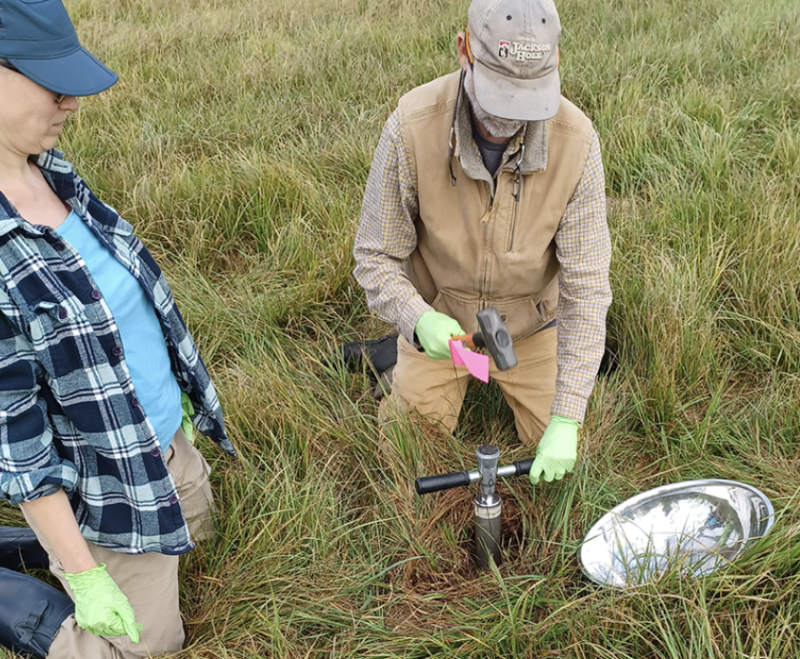


Most of the PFAS — or “forever chemicals” — on Minnesota farms came from somewhere else, according to a new national report by Council for Agricultural Science and Technology.
The paper, “PFAS in Agriculture: Science, Uncertainty, and Risk Communication,” released this month, advises farmers to test what they bring onto their land and to keep paperwork.
According to the definition from the EPA, PFAS — which is short for per- and polyfluoroalkyl substances — are “widely used, long-lasting chemicals, components of which break down very slowly over time.” The agency lists more than 21,000 compounds on its PFAS list. Evidence of harm is strongest for two of them, according to the CAST report, PFOA and PFOS, mostly at high exposures.
“For the most part, farmers don’t put that PFAS there,” said Mark McDaniel of TechLaw Consultants Inc., one of the report’s authors, during a CAST webinar on Oct. 19. “They’re just unintentional receivers of that contamination.”
Jon Entine of the Genetic Literacy Project and Thomas Redick of Global Environmental Ethics Counsel LLC also wrote the report.
PFAS usually reaches farms in biosolids, compost, irrigation water or feed, according to the paper. Biosolids — which are the solid leftovers from wastewater treatment plants — are sometimes spread on operations as farmers use them as fertilizer.
Land application is one of the main outlets for biosolids, according to the CAST report, which calls them a “a valuable and often necessary nutrient source” for agriculture.
Minnesota is one of the only states that tests at the farm level for PFAS, since September 2025, when the Minnesota Pollution Control Agency required PFAS testing on biosolids before they’re spread. The report calls that a model for the country and said that although Minnesota has found more farm contamination than many states, it’s likely because it has looked harder.
The CAST report recommends growers test inputs, especially biosolids, in a way that results can be broken down by compound, since a detection alone doesn’t mean a hazard, according to the report.
Under voluntary 2026 draft guidance, the EPA recommends spreading biosolids on lower-exposure crops such as grain, fiber crops or corn for ethanol, and away from drinking water, fishable waters and areas children under 5 can reach.




For farms that applied biosolids in good faith, the EPA has said it won’t pursue punishment, according to the report, but future administrations could change that.
“For agriculture, the parallel is that farmers who can demonstrate they have proactively managed inputs, tested for PFAS, and documented their practices are in a fundamentally stronger position — both legally and with buyers — than those who have not,” the report says.
In food testing, the USDA’s Food Safety and Inspection Service found PFAS in fewer than 0.1% of 3,199 meat and poultry samples, according to the report, and the FDA found none in 97% of about 800 food samples, though seafood ran higher.
The USDA can’t set PFAS limits for soil, water or crops.
“As counsel for growers, I don’t have a lot of advice right now to tell them,” Redick said.
Noah Fish is an agriculture reporter for Agweek. Find Noah on X @noahfishnws
A version of this article was originally posted at Agweek and has been reposted here with permission. Any reposting should credit the original author and provide links to both the GLP and the original article. Find Agweek on X @AgweekMagazine