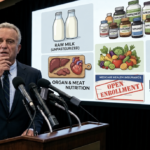
Ever wonder why AI can so easily be duped into manufacturing health misinformation?    

Credit: NHPHA
Credit: NHPHA

Generative AI isn’t just one more pipe that health misinformation flows through. It shapes every stage of the problem, from cooking up false claims to catching, correcting and amplifying their fallout. That’s the conclusion of a new review by University of Maryland communication researcher Xiaoli Nan, as Ophelia Keating reports for Bioengineer.

Nan’s review, published in Frontiers in Medicine, maps how large language models operate across what she calls the health misinformation lifecycle. “A central paradox emerges: generative AI functions both as a driver of misinformation and as a potential tool for mitigation,” she writes.

On the production side, the trouble starts with fluency. Chatbots can churn out polished, expert-sounding health content at scale, complete with hallucinated facts, outdated advice and fabricated references. Medical models can be manipulated through data poisoning and adversarial prompts, while deepfakes can put convincing words in the mouths of health officials.

Detection is a mixed bag. AI can flag dubious claims, cite evidence and sort narratives, but it errs in both directions, performs unevenly across languages and can be dodged with simple paraphrasing. Nan argues it should support human fact-checkers rather than act as the final judge.

Mis- and disinformation are distorting science and public policy. Subscribe to our Daily and Weekly Digests for incisive coverage of ‘disruptive’ innovations in AI, agricultural biotechnology, food, chemicals, nuclear energy, vaccines, and other disruptive innovations.

Correction shows promise. Tailored, conversational rebuttals can reduce belief in falsehoods under some conditions and may boost vaccine confidence. But they also risk users trusting a chatbot over their doctor, or debated science being presented as settled.
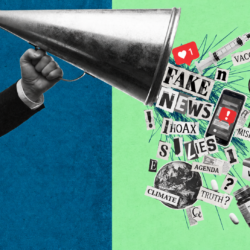
The stakes are real. AI-generated misinformation has been linked to lower adherence to health guidelines and higher vaccine hesitancy, and labeling content as AI-made doesn’t reliably dull its persuasive pull. Vulnerable communities that lean heavily on conversational AI may be hit hardest, and accountability for misleading outputs from proprietary models remains murky.

Nan calls for coordinated, multilevel strategies that address AI’s simultaneous roles “while preserving human oversight, institutional accountability, and public trust.”


Read the original article here

Related Articles

Infographic: Global regulatory and health research agencies on whether glyphosate causes cancer

Infographic: Global regulatory and health research agencies on whether glyphosate causes cancer

Does glyphosate—the world's most heavily-used herbicide—pose serious harm to humans? Is it carcinogenic? Those issues are of both legal and ...

Most Popular

Bayer Crop Circle in Golden Wheat
Making fertilizer from thin air: Bayer’s gene-editing innovation could dramatically cut chemical fertilizer use in growing food
Picture1
Viewpoint: How badly is the U.S. food-safety net fraying? FDA’s bungled handling of the tainted lettuce crisis deepens concerns over cuts to disease tracking and response
Screenshot-2026-11-03-at-12.31.18-PM
Gene editing once viewed with suspicion by UK  farmers, upwards of 90% now open to their sustainability benefits
Smiling-Woman-Over-Teal-Abstract-Shapes
Viewpoint: RFK Jr.’s latest foray into junk science: Even Kennedy’s hand-picked NIH director balks at appointment of crackpot mental health director
Reaching Through the Woven Sky
Challenging genetic modification rejectionists: Our evolving food system has relied on science for thousands of years
Neon Genome_ Fetal Dreamscape
The race to genetically engineer babies
Screenshot-2026-10-29-at-11.18.34-AM
Viewpoint: ‘Just the flu’: Skipping your child’s flu shot could be a fatal mistake
Screenshot-2026-11-02-at-11.34.28-AM
Farmers are collateral damage in the PFAS “forever chemicals” crossfire. Here’s what they need to know.
ChatGPT-Image-Mar-10-2026-01_39_01-PM
Viewpoint—“Miracle molecule” debunked: Why acemannan supplements don’t work
Glossy Plastic Bag of Tokens and Labels
Viewpoint: How CNN got played by environmental activists pushing a plastics scare and litigation agenda
Screenshot 2026-10-27 at 10.32
“Do your own research”: What Medicare’s annual open enrollment circus teaches us about the seductive trap of DIY health and science
Red and Green Embroidered Campaign Caps
Viewpoint: The fragile (and often bizarre) MAHA-MAGA-far left health-and-chemicals coalition is fracturing. Here’s why
Screenshot-2026-10-21-at-11.30.51-AM
Viewpoint: Yes, our food system stinks, but the attack of ultra-processed foods is often misplaced
glp menu logo outlined

Get news on human & agricultural genetics and biotechnology delivered to your inbox.